 Vietnamnet.vn

 Podcast



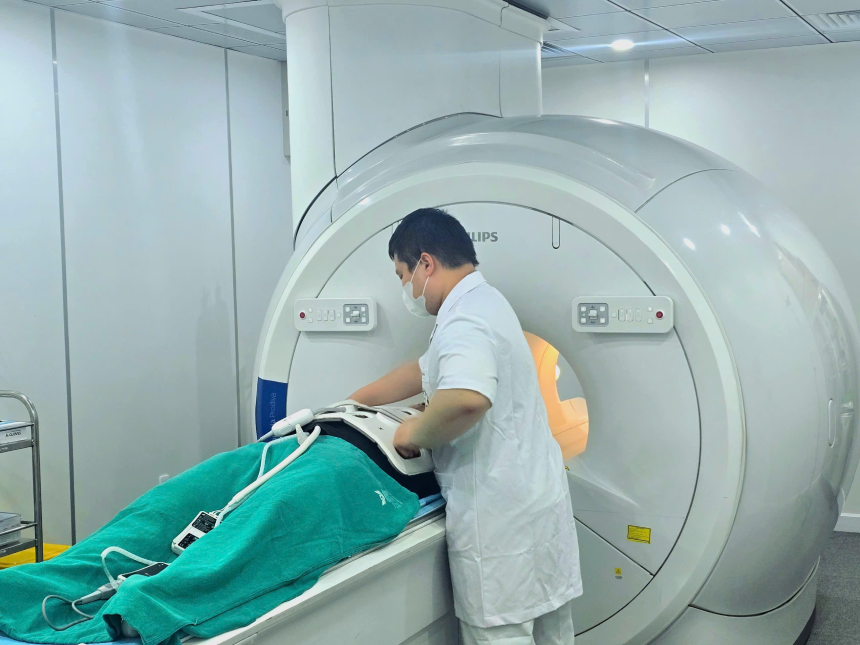
The Ministry of Health (MOH) is seeking feedback on a project to develop medical tourism that aims to create high-quality complexes that combine medical treatment with resort services. This is viewed as a strategic move to retain about 40,000 local Vietnamese patients who travel abroad for treatment each year as well as a way to attract international visitors.
According to MOH, Vietnam’s medical tourism market is estimated at about $700 million in 2024 and could grow to nearly $4 billion by 2033, with an average growth rate of around 18 percent per year.
A key direction is to pilot an integrated medical tourism model combining hospitals, hotels and resorts in localities with advantages such as Hanoi, HCMC, Da Nang, Quang Ninh and Khanh Hoa.
The Administration of Medical Examination and Treatment believes that medical tourism brings economic value but also contributes to enhancing the national position.
Many countries in the region have already generated significant revenue from this model. Thailand attracts hundreds of millions of USD annually thanks to cardiac surgery and aesthetic services at competitive costs, while South Korea and Japan achieve billions of USD in revenue from specialized treatment combined with cultural promotion.
Before the Covid-19 pandemic, Vietnam recorded about 300,000 international visitors arriving for medical examination and treatment each year.
With the Asia-Pacific region accounting for up to 40 percent of the global medical tourism market share, Vietnam is facing a great opportunity but also suffers from competitive pressure from strong "rivals" like Singapore or Thailand.
Inland, many localities have begun to accelerate their medical capacity. In Hanoi, the health sector is focusing on investing in infrastructure, equipment, human resource training, and the application of AI in early diagnosis.
A number of major projects such as Oncology Hospital Campus 2, Hanoi Heart Hospital, Saint Paul Hospital, and Hanoi Children's Hospital Phase 2 are being implemented, aiming to form modern care-recovery-therapy complexes.
The HCMC health sector has organized many survey trips to medical units and high-end healthcare service facilities to assess potential, thereby forming all-inclusive medical tourism product packages, preparing for a wide introduction in late 2025 and 2026.
Prof Nguyen Van De, Chair of the Vietnam Private Hospital Association, said the health sector is gradually participating deeply in the tourism chain combined with healthcare, not only promoting but also directly providing services to tourists.
The main strength of Vietnamese healthcare is reasonable costs and humane treatment, helping patients easily access services without too much financial pressure.
More importantly, the professional quality of Vietnamese healthcare has made long strides. After more than 30 years of development, the health sector has improved its diagnostic and treatment capacity, gradually approaching regional levels. People no longer have to go abroad for expensive treatment but can use domestic services with equivalent effectiveness.
Competitive costs, unique culture
Vo Thanh Phong, MA, from HCMC University of Medicine and Pharmacy, believes that traditional medicine is a special advantage of Vietnam with minimally invasive, safe, and highly personalized methods. Trafitional medicine offers treatment but also a "healing" model combining therapy and resort stays, which is growing rapidly worldwide.
Experience from countries like China, South Korea, and Thailand shows that the success of medical tourism lies not only in technique but also on "cultural export." Vietnam has a great advantage with a rich treasure of indigenous knowledge, from medicinal herbs to the heritage of famous physicians such as Tue Tinh or Hai Thuong Lan Ong.
In the field of assisted reproduction, Vietnam has very good professional expertise but lacks post-treatment resort and recovery services, causing the length of stay for international guests to be shorter. This is a gap that needs to be filled to increase tourist spending, experts said.
With an increasingly solid professional foundation, competitive costs and unique cultural potential, medical tourism is expected to become a new "gold mine" for Vietnam.
Thanh Minh
.svg)
