 Vietnamnet.vn

 Podcast



It was just a sheet of A4 paper. But behind it lies a chain reaction - from fuel tanks to supermarket shelves, and ultimately, to family meals.
In just over a month, the market has gone through 11 fuel price adjustments. At one point, RON95 gasoline approached VND34,000 per litre (US$1.40), while diesel neared VND40,000 (US$1.65).
Against that backdrop, the government’s decision to advance VND8 trillion (US$320 million) from the central budget surplus of 2025 into the fuel price stabilisation fund signals a clear policy stance: prioritising stability in livelihoods and production.
A buffer against cascading costs
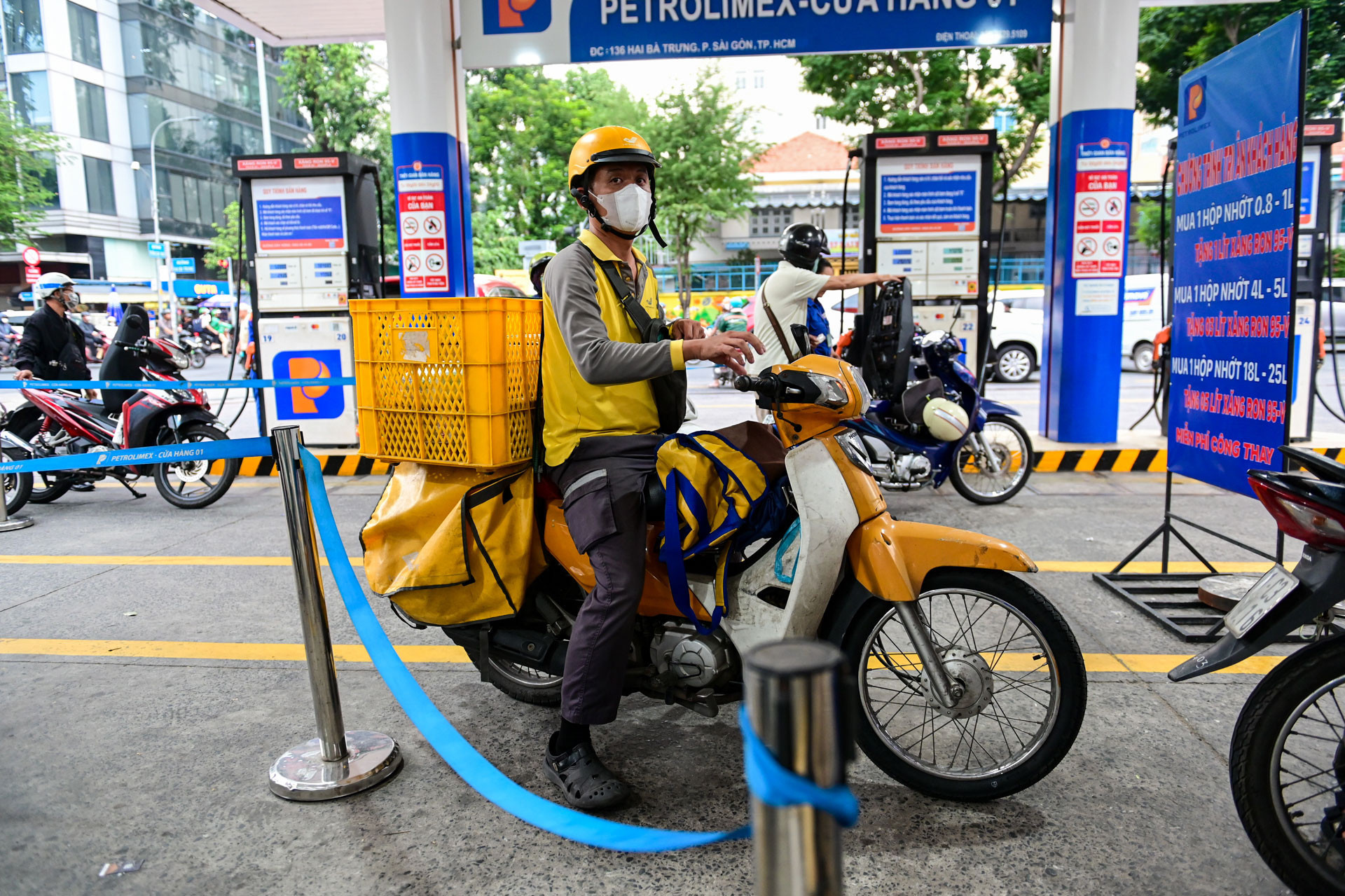
In times of global energy volatility, what concerns both households and businesses is not only rising fuel prices, but the domino effect that follows - higher transport costs, more expensive raw materials, rising food prices, and mounting logistics expenses.
At that critical juncture, the VND8 trillion injection becomes a cushion, giving the economy time to absorb external shocks instead of immediately passing the full burden onto consumers and enterprises.
For businesses - especially in logistics, manufacturing, retail, import-export and processing - fuel costs remain one of the most sensitive variables. A sharp increase sustained over weeks can wipe out profit margins, halt expansion plans and force price adjustments downstream.
A comprehensive policy response
The stabilisation fund is only one part of a broader, coordinated policy response.
In recent days, the government has moved to reduce multiple taxes and fees on fuel to near-zero levels. Environmental protection tax has been cut to VND0, special consumption tax reduced to 0%, and value-added tax temporarily suspended. Preferential import tariffs have also been lowered to 0%.
These measures effectively return a portion of purchasing power to both households and businesses, especially considering that fuel prices previously carried tax and fee burdens of around 30%.
The trade-off is significant. Reducing these taxes alone is estimated to lower state revenue by about VND7.2 trillion (US$290 million) per month.
Yet the policy direction is clear: accept short-term revenue losses to sustain consumption, preserve business cash flow and protect the recovery momentum of the economy.
A proactive approach to market stability
Notably, the decision reflects forward-looking governance. The existing stabilisation fund still holds over VND5.6 trillion (US$230 million), but that amount would only sustain current support levels for about 15 days.
By mobilising surplus revenue from the previous year, the government is effectively recycling the gains of growth to safeguard present stability.
Beyond fiscal measures, additional steps have been taken to secure supply. The Prime Minister has engaged directly with international partners to diversify oil sources, with around 4 million barrels already factored into supply plans. Efforts are also underway to accelerate the development of a strategic petroleum reserve at Nghi Son.
Protecting the everyday economy
For ordinary citizens, the significance of these decisions is immediate.
With average monthly income hovering around VND8.4 million (US$340), many households have limited financial buffers. A spike in fuel prices quickly translates into higher food costs, transport fees and everyday services.
By stepping in to soften the shock, the government helps prevent those thin incomes from being eroded too rapidly.
A sound fiscal decision is not always measured in large infrastructure projects or massive investment packages. Sometimes, its value lies in keeping a small eatery from raising lunch prices, allowing a delivery truck to run without surcharges, or sparing a family from recalculating every essential expense.
In that sense, the policy reflects a consistent governing philosophy: economic gains must ultimately return to where they are most tangibly felt - in people’s daily lives.
If a timely budget intervention can steady those rhythms, it represents a distinctly Vietnamese approach to governance - ensuring that no one is left behind in moments of greatest difficulty.
Tu Giang
.svg)
