 Vietnamnet.vn

 Podcast



Globally, the economic order was repeatedly disrupted. Strategic rivalries among major powers intensified, trade tensions persisted, and military conflicts flared in multiple regions.
The U.S.’s tariff retaliation policy sent immediate shockwaves through global trade and investment flows. Many large economies were forced to loosen monetary policy, ramp up public spending to avert downturns, and erect protective barriers to shield domestic production. As a result, global growth slowed, public debt surged, inflation lingered, and market risks deepened.
Domestically, Vietnam’s leadership began its new term during an exceptionally difficult period. In 2021, COVID-19 directly impacted the economy - breaking supply chains, stalling production, and disrupting daily life.
Then came an unusual string of natural disasters - storm after storm, flood after flood - wreaking widespread damage across provinces.
At the same time, Vietnam undertook a significant institutional reform, reorganizing and streamlining government structures while piloting a two-tier local governance model - a process demanding time, resources, and unflagging resolve.
Resilience tested, resilience proven
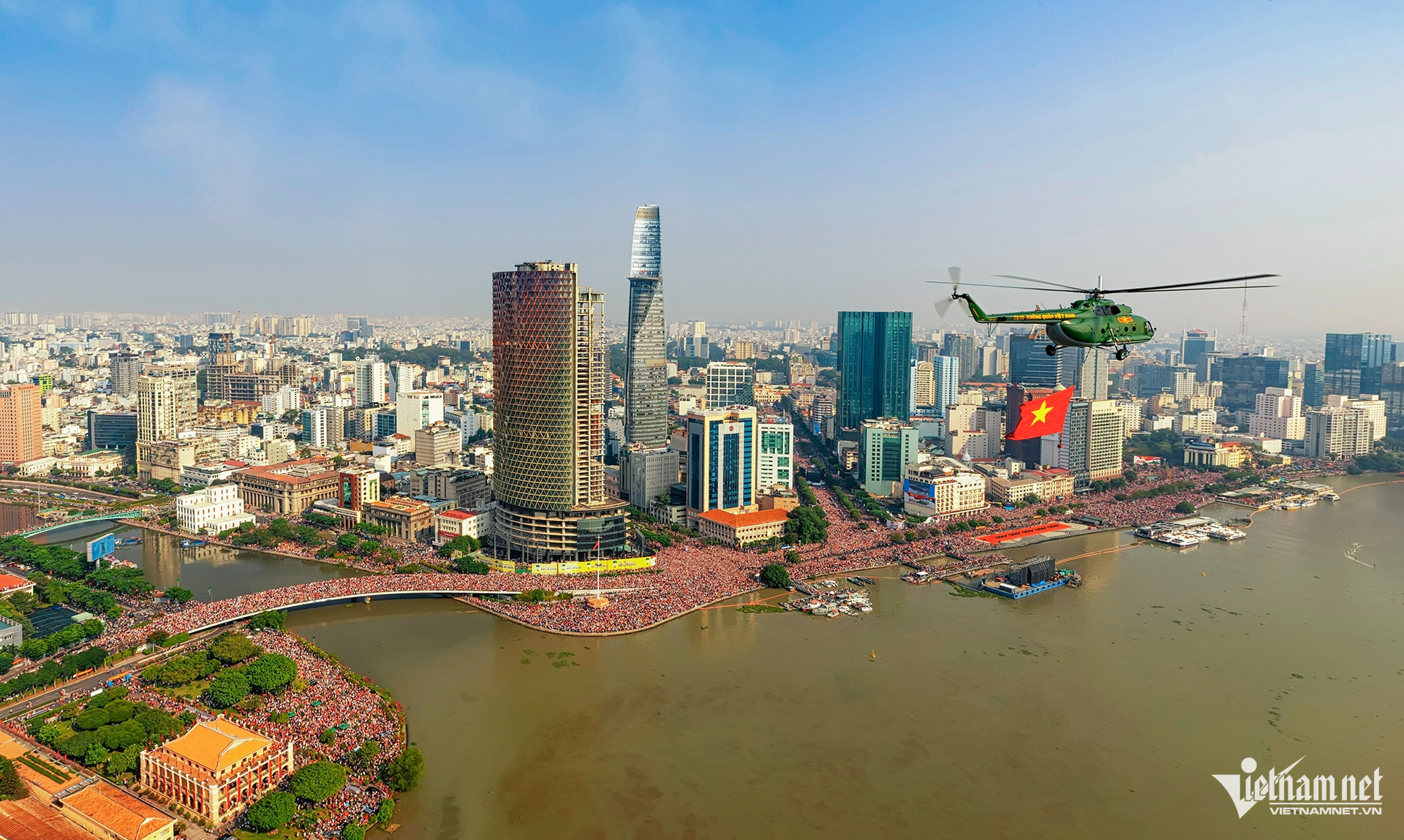
Amid such layered pressures, the results from 2021 to 2025 reveal Vietnam’s growing policy capacity and economic resilience.
Macroeconomic stability held. Inflation was kept in check. Major economic balances remained intact - forming a solid base for recovery and growth. Quarter-by-quarter, GDP growth trended upward.
In 2025, GDP grew by an estimated 8.02%, hitting the national target and ranking among the world’s highest. Across the 2021–2025 period, average growth reached 6.3%, higher than the previous cycle. For the four years from 2022 to 2025, the annual average exceeded 7%, surpassing the targets set by the National Assembly.
Notably, even in the pandemic-wracked year of 2021, the economy managed to grow 2.55%, reaching its lowest point before bouncing back strongly in subsequent years.
A larger, stronger economy
By 2025, Vietnam’s GDP is projected to hit $514 billion, climbing five places to rank 32nd globally. GDP per capita is expected to reach $5,026 - 1.4 times higher than in 2020 - marking Vietnam’s entry into the upper-middle-income group.
Gross national income per capita is forecasted at $4,760, surpassing the World Bank’s upper-middle income threshold - proof of genuine income-generation capacity.
These achievements haven’t gone unnoticed. The IMF placed Vietnam among the world’s top 10 fastest-growing economies. Standard Chartered projected Vietnam as one of Asia’s top five performers. The World Bank’s B-Ready 2025 report listed Vietnam among 21 standout economies.
These accolades reflect sustained international confidence in Vietnam’s medium- and long-term prospects.
Price control and trade power
Inflation control was a pillar of stability. Between 2021 and 2025, average CPI remained below 4%. In 2025, CPI rose just 3.31%, lower than the official target.
Trade remained a key growth engine. From $545 billion in 2020, total trade soared to over $930 billion in 2025, placing Vietnam among the world’s top 20 trading nations. In 2025, exports hit $475 billion, imports reached $455 billion, and the trade surplus topped $20 billion.
Cumulatively, the five-year trade surplus surpassed $88 billion - double the previous cycle. This consistent surplus reflected Vietnamese businesses’ adaptability, the success of market diversification strategies, and strong use of free trade agreements.
Vietnam now maintains trade ties with over 230 economies worldwide.
Investment-driven growth
Investment remained pivotal. In 2025, total social investment was estimated at over $166 billion, equivalent to 32.3% of GDP. Over the five-year period, investment exceeded $692 billion - up 44% from the previous cycle - averaging around 33% of GDP, a high mobilization rate given global uncertainty.
This reflects persistent private sector and investor confidence in Vietnam’s medium-term outlook.
Despite declining global FDI flows, Vietnam’s FDI performance stood out. From 2021 to 2025, registered FDI reached $184.2 billion; in 2025 alone, realized FDI hit $27.6 billion - the highest of the period.
Vietnam now ranks among the world’s 15 largest developing-country FDI recipients - evidence of strong investment appeal amid rising global competition.
Tourism recovery, private sector momentum
International tourism also rebounded sharply. From near-zero in 2021, foreign arrivals surged annually, reaching a record 21 million in 2025. This not only highlighted Vietnam’s growing allure, but also demonstrated the effectiveness of its reopening, recovery, and promotional strategies.
Private sector dynamism also accelerated. After Resolution 68 on private sector development, new business formation surged.
In 2025, nearly 300,000 businesses entered or re-entered the market, bringing the total number of active firms to around 1.02 million.
Though over 227,000 businesses exited the market that year - mainly via temporary suspension or restructuring - the overall picture reflected a marked improvement in business confidence, especially in the latter half of the term.
Fiscal strength and strategic spending
Fiscal results further anchored macro stability. In 2025, state budget revenue reached an estimated $108 billion, far surpassing projections, with a tax-to-GDP ratio of 20.7%.
Over five years, total revenue approached $403 billion, even as the government provided over $45 billion in tax relief to support businesses and households.
Spending prioritized strategic areas: science and technology, innovation, digital transformation, administrative reform, disaster response, disease control, and social welfare.
As a result, public debt fell from over 44% of GDP in 2020 to around 35–36% in 2025. Average budget deficits also dropped from previous levels.
Laying the groundwork for the future
In summary, 2021–2025 was not only a period of crisis management - it was a foundation-building phase for a new growth trajectory.
In a world defined by volatility, Vietnam held its ground, recovered quickly, and gradually improved the quality of its growth.
These achievements reflect the resolve and resilience of the Vietnamese economy during an exceptionally testing chapter - setting the stage for even more ambitious double-digit growth goals in the next five years.
Tu Giang - Lan Anh
.svg)
