 Vietnamnet.vn

 Podcast



The call to control credit and maintain discipline in real estate lending is a reminder that capital flows must be managed carefully across the economy.
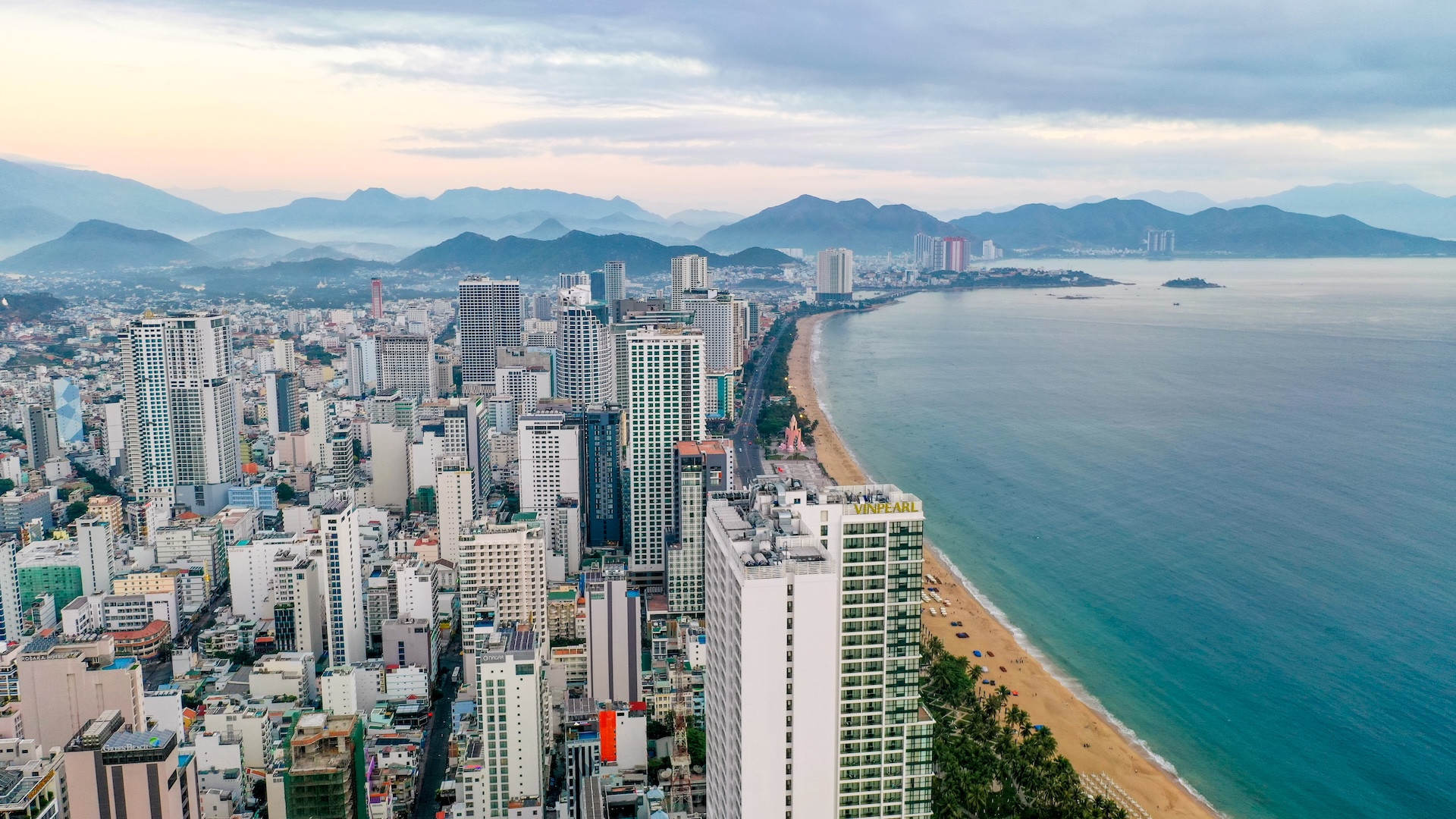
The year 2026 began with a move that cannot be taken lightly. Late last week, the Prime Minister ordered tighter control over speculative real estate credit. At the very start of the year, the State Bank of Vietnam instructed credit institutions not to allow property lending to grow faster than their overall credit expansion. If it does, their credit room could be cut.
The signal is clear: Even with a 10% growth target, capital cannot continue pouring into land as it did last year.
In 2025, the figures were enough to energize the property market. Total system-wide credit rose by more than 19%, yet credit for real estate business surged by 28%. Outstanding property loans accounted for 24% of total credit in the economy. In other words, nearly one in every four dong lent by banks flowed into real estate.
At the same time, land-related revenues soared. Nationwide collections from land and housing reached approximately VND575,500 billion, equivalent to about US$23.5 billion, nearly double the estimate and accounting for 22% of total state budget revenue.
Hanoi collected nearly VND108,000 billion (US$4.4 billion), from land in 2025, making up roughly 15% of its total budget revenue. The city is planning for VND150,000 billion (US$6.1 billion), in 2026, up nearly 40%. Quang Ninh recorded land-use revenues of about VND26,460 billion (US$1.1 billion), exceeding projections and rising more than 1,200% year-on-year, with a single major project contributing over VND16,000 billion. Ho Chi Minh City collected approximately VND78,482 billion (US$3.2 billion), surpassing 170% of the centrally assigned target.
Pressure to sustain land-based revenues will therefore be significant for many localities, especially as the National Assembly has set higher budget targets for 2026.
On the surface, monetary policy might appear to conflict with growth and fiscal needs. But this is not a policy contradiction. The issue is that growth driven by land has pushed financial leverage close to its tolerance limit.
The strain is most visible in banking liquidity.
Credit has expanded rapidly while deposit mobilization has lagged behind. Several analyses estimate that the loan-to-deposit ratio at the end of 2025 approached 110%. Overnight interbank interest rates at times exceeded 9%. After the Lunar New Year, property lending rates at some banks climbed to 14-15%. Banks have been forced to raise deposit rates to retain funds or rely on the interbank market to shore up liquidity.
Leverage is stretched tight. If a large borrower group, often concentrated in real estate, encounters cash flow difficulties, risks could spread quickly. Tightening capital safety standards and controlling credit growth is therefore not slamming the brakes on growth. It is reinforcing the shock absorbers before entering a new phase.
Another detail merits attention. According to the Vietnam Association of Realtors, more than 75% of recent housing transactions involved buyers purchasing a second home or beyond. About 10% were investors using short-term financial leverage to rotate capital. The market is no longer primarily about home ownership but increasingly about asset accumulation and investment.
When capital costs are low, such cycles can run smoothly. But when interest rates edge up and liquidity tightens, leveraged investors are the first to feel pressure. If that pressure spreads, the impact will not stop with a handful of investors but could rebound onto banks.
Fiscal pressure is also real.
Land revenues have reached record highs, but they are one-off sources. When auctions succeed and projects are unlocked, revenues spike. If the market slows, those revenues can fall just as quickly. A budget heavily reliant on land becomes tethered to the property cycle.
The most dangerous scenario is when two downturns coincide: a cooling market at the same time banks must address rising bad debts. In that case, pressure would weigh simultaneously on both fiscal and financial fronts.
Vietnam is targeting double-digit growth for 2026-2030, aiming to enhance productivity, accelerate manufacturing and digital transformation, and improve growth quality. But if capital continues to flow predominantly into assets rather than production, 10% growth may reflect inflated asset values rather than genuine productivity gains.
With 24% of outstanding loans tied to real estate, the unavoidable question is how much capital remains available for the rest of the economy to innovate and expand. Asset-driven growth follows cycles of exuberance and correction. Productivity-driven growth sustains the long journey.
Real estate remains a vital sector, and unlocking roughly 3,000 stalled projects is necessary to free up resources. But removing bottlenecks merely to continue a cycle of credit expansion, land auctions and budget windfalls is not enough.
What the economy needs is a different cycle: capital flowing into production to raise productivity and generate more sustainable revenues.
The call to control speculative credit and enforce discipline in real estate lending underscores that double-digit growth cannot rely indefinitely on land and financial leverage. When leverage has reached its limit, easing off the accelerator is not retreat. The real question is whether 10% growth will come from creating more value, or simply from pushing land prices higher.
Tu Giang
.svg)
