 Vietnamnet.vn

 Podcast



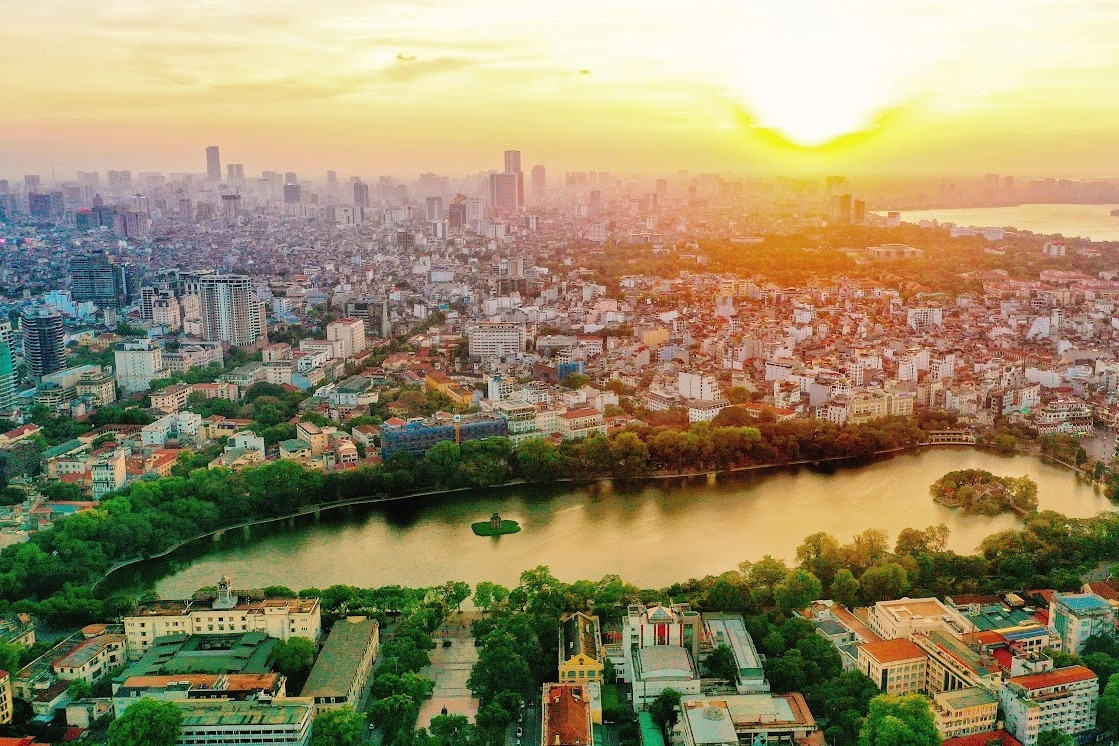
According to Hanoi’s comprehensive master plan with a 100-year vision (2026–2045), the city is preparing to relocate over 860,000 residents currently living within Ring Road 3. The move is part of a major urban restructuring strategy aimed at removing key development bottlenecks.
The restructuring process will be closely tied to the preservation and enhancement of areas and structures with historical, cultural, and architectural significance. These include Ba Dinh -the capital’s political and administrative center (approximately 134.5 hectares); Hoan Kiem Lake and its surroundings; the Old Quarter (36 streets); the French-style old streets; the West Lake area and nearby neighborhoods; both sides of the Red River; and other unique urban spaces.
Land and spatial restructuring will prioritize using central land banks for high-value commercial and service developments such as financial centers and premium office complexes.
Hanoi will also implement a “Dense and Green” development model -favoring vertical construction to reduce surface land use. The freed-up land from lower density will be used to expand parks, green spaces, water surfaces, and public amenities.
In the 2026–2035 phase, the city plans to relocate around 200,000 residents from the Red River area, 200,000 from the West Lake vicinity, and approximately 42,000 from selected streets within the Ring Road 3 boundary.
From 2036 to 2045, another 26,730 people from the Old Quarter, 23,000 from the French-style old streets, and around 370,000 residents from other inner-city zones will be relocated for continued restructuring.
In total, over 860,000 residents are expected to be moved between 2026 and 2045.
Where will residents be relocated?
Some affected residents will be resettled on-site, while others will move to newly developed urban zones in high-growth areas such as Dong Anh, Gia Lam, and Hoa Lac. These resettlement zones are planned with complete social infrastructure including schools, hospitals, parks, and modern amenities -offering an improved standard of living.
Specifically, in the Red River scenic axis, around 200,000 people will be relocated, with 30% resettled on-site and 70% moved to new urban areas in Dong Anh and Long Bien.
In the West Lake area and its surroundings, a similar pattern applies: 30% of the 200,000 relocated residents will stay nearby, while 70% will move to new districts.
For select pilot street blocks within Ring Road 3, about 42,000 residents will be relocated -half resettled on-site and half relocated to new urban areas in the south.
In the Old Quarter and French-style streets, the numbers are 26,730 and 23,000 respectively.
As for the remaining zones within Ring Road 3, about 370,000 residents are to be relocated, with 70% to be resettled in place and 30% moved to southern suburban areas.
Those resettled on-site will be housed in high-quality apartment units with full amenities. Meanwhile, the city aims to encourage voluntary relocation to suburban zones through attractive incentives, including compensation rates of 1 to 2 times current property values.
5 new urban zones to support relocation
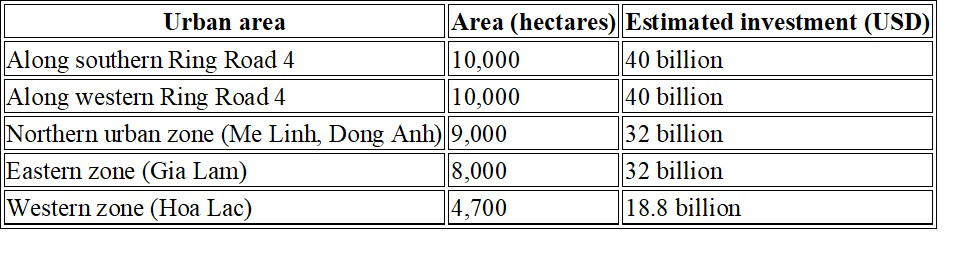
As part of its strategic development plan for 2026–2035, Hanoi aims to establish five new large-scale urban areas covering a combined 49,700 hectares. The total estimated investment for these projects is about USD 160 billion, expected to provide ample resettlement space and relieve pressure on the inner city.
Details of the five strategic urban projects:
Hong Khanh
.svg)
