 Vietnamnet.vn

 Podcast



Tensions around on-street parking in front of private homes highlight a fundamental clash between public space usage and residents’ right to access and security. These confrontations pose critical questions about how cities define ownership and regulate shared urban space.
As sidewalks - once integral to the vibrant culture of street-facing homes - clash with accelerating motorization, parking disputes have evolved far beyond petty neighborhood quarrels. They expose deep-seated flaws in how public versus private space is understood and managed, and they reveal a municipal system struggling to redefine “buffer zones” in a rapidly urbanizing landscape.
Endless curbside battles
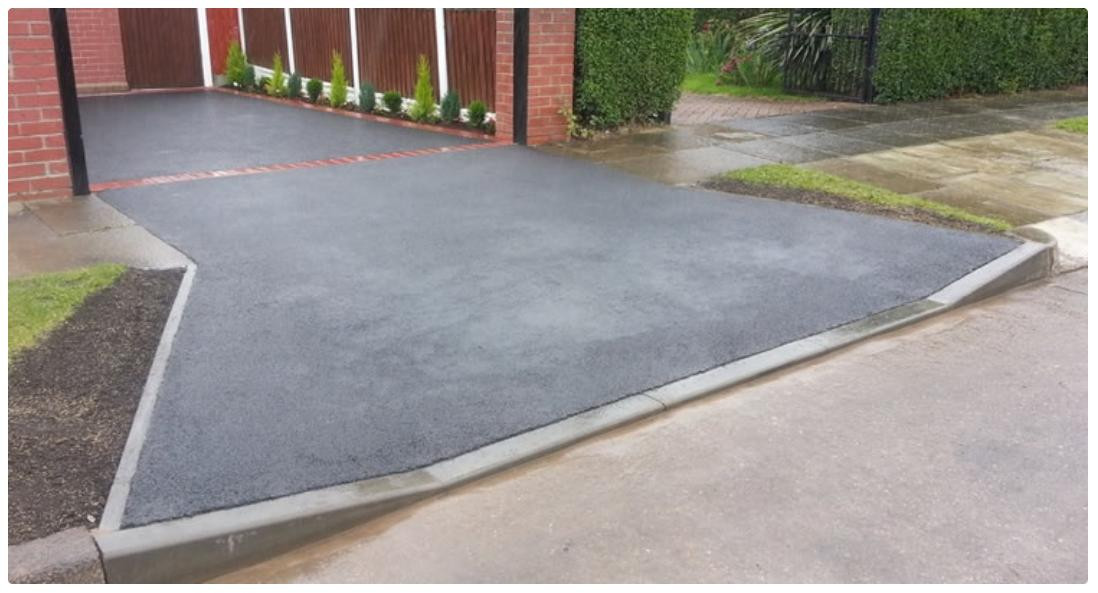
Lowered curb (dropped kerb) in the UK.
In early 2026, social media in Vietnam lit up with disturbing images of luxury vehicles vandalized - spray painted, mirrors broken, windshields smashed - simply for being parked in front of private residences. One high-profile case involved a Mercedes-Benz GLC 200 parked outside an English language center in Hanoi, which was severely damaged. The incident ignited a storm of public debate and left a key question unanswered: “If the street in front of your home isn’t legally yours, do you have the right to stop others from parking there?”
To homeowners, an unfamiliar car blocking their gate can feel like a violation of personal space, triggering frustration and anger. On the other side, drivers often assume that parking where there’s no signage prohibiting it is completely legal. The absence of a swift and clear arbitration mechanism leaves curbside disputes to escalate unchecked - sometimes violently.
From an urban governance perspective, these conflicts underscore critical gaps in the current regulatory framework. While the 2024 Law on Road Traffic Order and Safety and Decree 168/2024 introduced stricter penalties, several legal grey areas remain.
Under current laws, only parking within 5 meters of the entrance to official agencies or organizations is clearly prohibited. There’s no provision banning parking in front of private homes unless specific signage is posted. As a result, authorities are limited in their ability to penalize drivers solely for blocking a residence, unless additional violations - such as improper positioning or parking near intersections - apply.
This leads to an impasse: one party has the legal right to park on public roads, while the other has the right to access their legally owned home. When these rights collide in the same physical space, the lack of legal clarity often causes disputes to spiral out of control.
How other countries approach the issue
Many developed nations have transitioned from managing individual disputes to proactively regulating infrastructure and ownership responsibilities.
In countries like the UK, US, and Australia, even small modifications like driveway ramps require formal municipal approval to lower the curb - known as a “dropped kerb.” Once approved, the lowered section is recognized as part of protected pedestrian and access infrastructure. Parking across a dropped kerb is a legal offense, regardless of who the vehicle belongs to.
In the UK, the Traffic Management Act empowers local councils to issue Penalty Charge Notices (PCNs) for vehicles obstructing dropped kerbs. Fines can reach several hundred pounds. Outside of London, homeowners may be allowed to block their own driveways with their vehicles (with consent from other residents), but never the pedestrian portion of the sidewalk.
In Australia, blocking a driveway is considered a safety risk, particularly in emergencies involving fire trucks or ambulances. In New South Wales, fines exceed AUD 300, and violators can be towed immediately.
In dense urban areas like London and New York, the idea of “free parking in front of your home” is virtually nonexistent. Residents must purchase a Residential Parking Permit, which only allows parking within designated zones - not specific spaces.
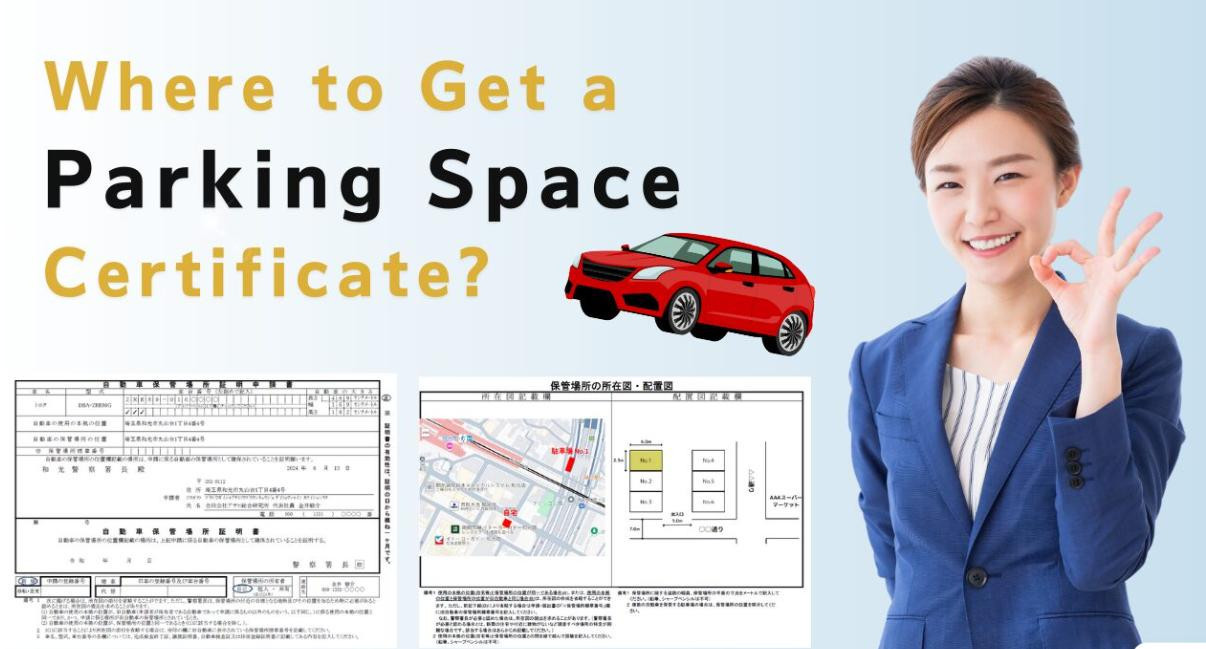
Japan has a unique legal requirement known as Shako Shomei (proof of parking space). Since 1962, the Garage Law mandates that anyone purchasing a vehicle must prove they have a legal, off-street parking spot. Sidewalks and public roads cannot be used to fulfill this requirement. Police officers directly inspect and measure parking spots before issuing the certificate. Additionally, most Japanese streets prohibit overnight parking, with violators towed on sight.
In China, neighborhood committees play a key role in mediating parking disputes based on community rules. Conversely, Brazil illustrates what happens when public space management fails: “parking mafias” (Flanelinhas) have monopolized urban curbs and demand illegal fees from drivers.
India’s Supreme Court has ruled that open parking areas and stilt garages in apartment complexes are “common areas” and cannot be sold separately - an important precedent against the privatization of shared spaces, particularly relevant to new developments in Hanoi and Ho Chi Minh City.
Technology is not a silver bullet
In the digital age, technology holds promise but only works within a transparent institutional framework. Bangkok has implemented AI-driven cameras to automatically detect violations and issue fines, eliminating on-the-spot negotiations. Singapore uses the Parking.sg app combined with a Demerit Points system, where parking violations directly impact a driver’s license standing.
Vietnam can learn from these models, but wholesale imitation won’t work. Instead, a tailored roadmap is needed to address on-street parking near homes.
Recommendations for Vietnam’s urban policy
Legally, there must be a clear definition of “legal access points.” Only those with approved infrastructure - lowered curbs, lane markings - should be granted protection from blocked access. “Obstruction” also needs to be quantified, such as banning parking when the remaining street width is under 3 meters.
Economically, the concept of “sidewalk economy” should be formalized. Temporary use of curbside space for private purposes should require registration and fees. Once paid, the right should be legally enforceable. Public offices could also open their parking lots for residential use at night under a “parking sharing” model.
Technologically, smart parking systems should be introduced, using AI-based license plate recognition to replace cash and manual inputs. Public education is also key: social norms like “Leave your number if you park outside someone’s home” should be promoted, while emphasizing that property damage is a criminal act, not a minor offense.
Vietnam doesn’t need to copy Japan or Singapore, but it can adopt their core governance philosophies: clarify ownership rights, automate enforcement through tech, and use economic tools to shape behavior. Only when the line between “public” and “private” is clearly drawn - with paint, with law, and with policy - can Vietnamese cities become truly civilized.
Nguyen Phuoc Thang
.svg)
