 Vietnamnet.vn

 Podcast



If recent leaks about the iPhone 18 Pro Max prove accurate, Apple may once again demonstrate that battery capacity alone does not determine real-world battery life.
The company's next flagship is expected to feature a battery of around 5,400mAh, well below the 6,000-7,000mAh batteries now found in many premium Android smartphones from Chinese manufacturers.
Instead of joining the race for larger batteries, Apple appears focused on improving energy efficiency through its processor, software optimization and thermal design.
Battery life matters more than battery size
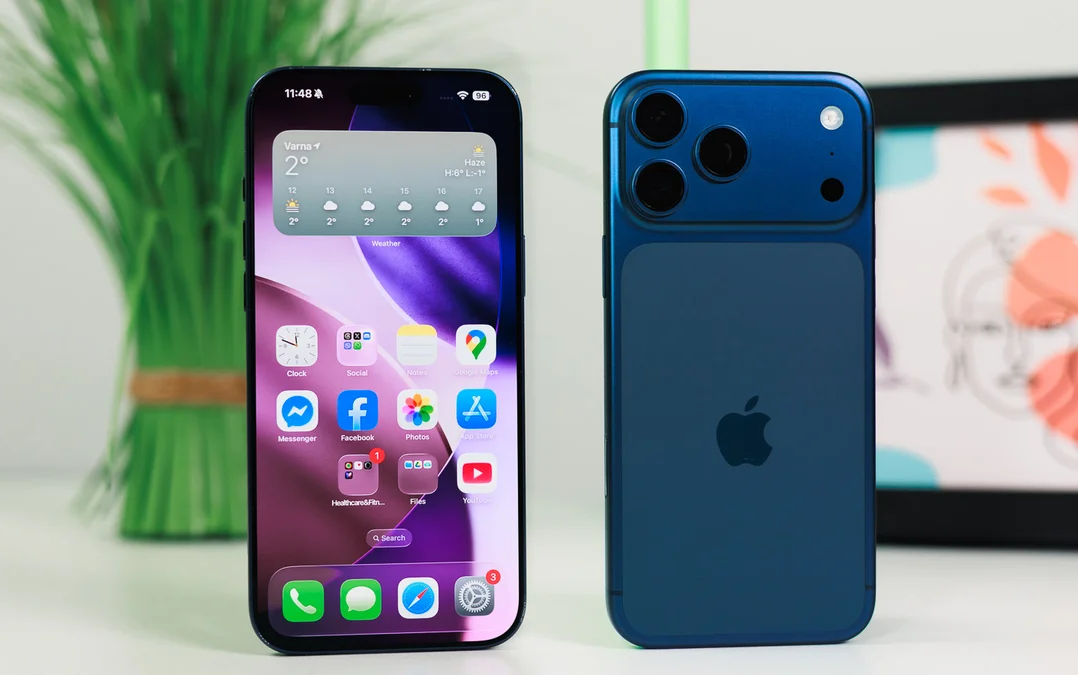
According to well-known leaker Ice Universe, the eSIM version of the iPhone 18 Pro Max could feature a 5,567mAh battery, while the version with a physical SIM tray may use a 5,391mAh battery.
By today's standards, those figures are not particularly impressive. Several Android smartphones, including mid-range models, already offer batteries of similar or even greater capacity.
However, Ice Universe believes Apple's next-generation A20 Pro processor, combined with a more deeply optimized iOS 27 and an improved cooling system, could allow the iPhone 18 Pro Max to deliver battery life comparable to - or even better than - Android phones equipped with batteries approaching 7,000mAh.
That prediction is supported by previous battery tests, which have repeatedly shown that larger batteries do not automatically translate into longer endurance.
In one comparison, the iPhone 17 Pro Max reportedly achieved around 7 hours and 46 minutes of continuous screen-on time, while the Vivo X300 Pro, despite carrying a much larger 6,510mAh battery, lasted roughly 6 hours and 30 minutes under similar testing conditions.
Other Android devices tell a similar story. The Xiaomi 17 Ultra, equipped with a 6,800mAh battery, exceeded nine hours in battery tests, whereas the OnePlus 15R, despite featuring a 7,400mAh battery, lasted about 8 hours and 47 minutes.
Although direct comparisons between flagship and mid-range devices are imperfect, the broader trend remains clear: processor efficiency, power management and operating system optimization often matter more than battery capacity alone.
If rumors that the A20 Pro will improve power efficiency by roughly 30% prove accurate, Apple's software and hardware integration could offset the apparent disadvantage of having a battery 1,500-2,000mAh smaller than many competing Android phones.
For now, however, these remain unconfirmed reports. Real-world testing after the phone's official launch will provide the definitive answer.
Why Apple hasn't embraced silicon-carbon batteries Many observers have questioned why Apple continues using conventional lithium-ion batteries while several Chinese smartphone makers have already adopted silicon-carbon battery technology.
The biggest advantage of silicon-carbon batteries is their higher energy density. They can store significantly more energy within the same physical space, allowing manufacturers to build thinner phones with much larger batteries.
As a result, some smartphones measuring less than 8mm thick now offer batteries approaching 10,000mAh.
By comparison, the iPhone 17 Pro, which is about 8.7mm thick, reportedly carries a battery rated at just 3,988mAh.
Despite these advantages, silicon-carbon technology also presents engineering challenges.
During charging and discharging, all rechargeable batteries expand and contract. Conventional lithium-ion batteries typically experience around 10% volume change, while silicon-based materials can expand by as much as 300% if not carefully managed.
Without proper engineering, this expansion can increase the risk of battery swelling and shorten long-term lifespan.
Manufacturers address this issue by increasing the amount of carbon used to stabilize the battery. However, adding more carbon also reduces energy density, limiting the battery's ultimate capacity.
This explains why not all silicon-carbon batteries perform identically. Devices featuring batteries close to 10,000mAh, such as the Honor Power 2 and Realme P4 Power, are believed to use different carbon ratios than the 7,300mAh battery found in the OnePlus 15.
That does not mean these products are unsafe. Silicon-carbon battery technology has advanced rapidly over the past several years and undergoes extensive safety testing before commercial release.
Nevertheless, companies such as Apple, Google and Samsung are widely believed to prefer waiting until the technology matures further before introducing it into their flagship devices.
Apple's strategy prioritizes efficiency
For years, Apple has focused on optimizing the entire hardware and software ecosystem rather than competing solely on specifications.
This approach is why many users judge battery performance based on actual screen-on time instead of advertised battery capacity.
If the iPhone 18 Pro Max can indeed match the endurance of Android phones equipped with 7,000mAh batteries while using a battery of roughly 5,400mAh, Apple's optimization strategy would once again demonstrate its effectiveness.
Looking further ahead, combining Apple's software efficiency with future silicon-carbon battery technology could make an even bigger impact.
An iPhone featuring a 7,000mAh silicon-carbon battery, paired with Apple's energy-efficient A-series processor and highly optimized iOS, could potentially compete with Android smartphones carrying batteries of 8,000mAh or more.
Apple has not announced when - or if - it plans to adopt silicon-carbon batteries. But if the transition happens within the next few years, competition over smartphone battery life could enter a new phase, where efficiency becomes just as important as battery capacity.
Hai Phong
.svg)
