 Vietnamnet.vn

 Podcast



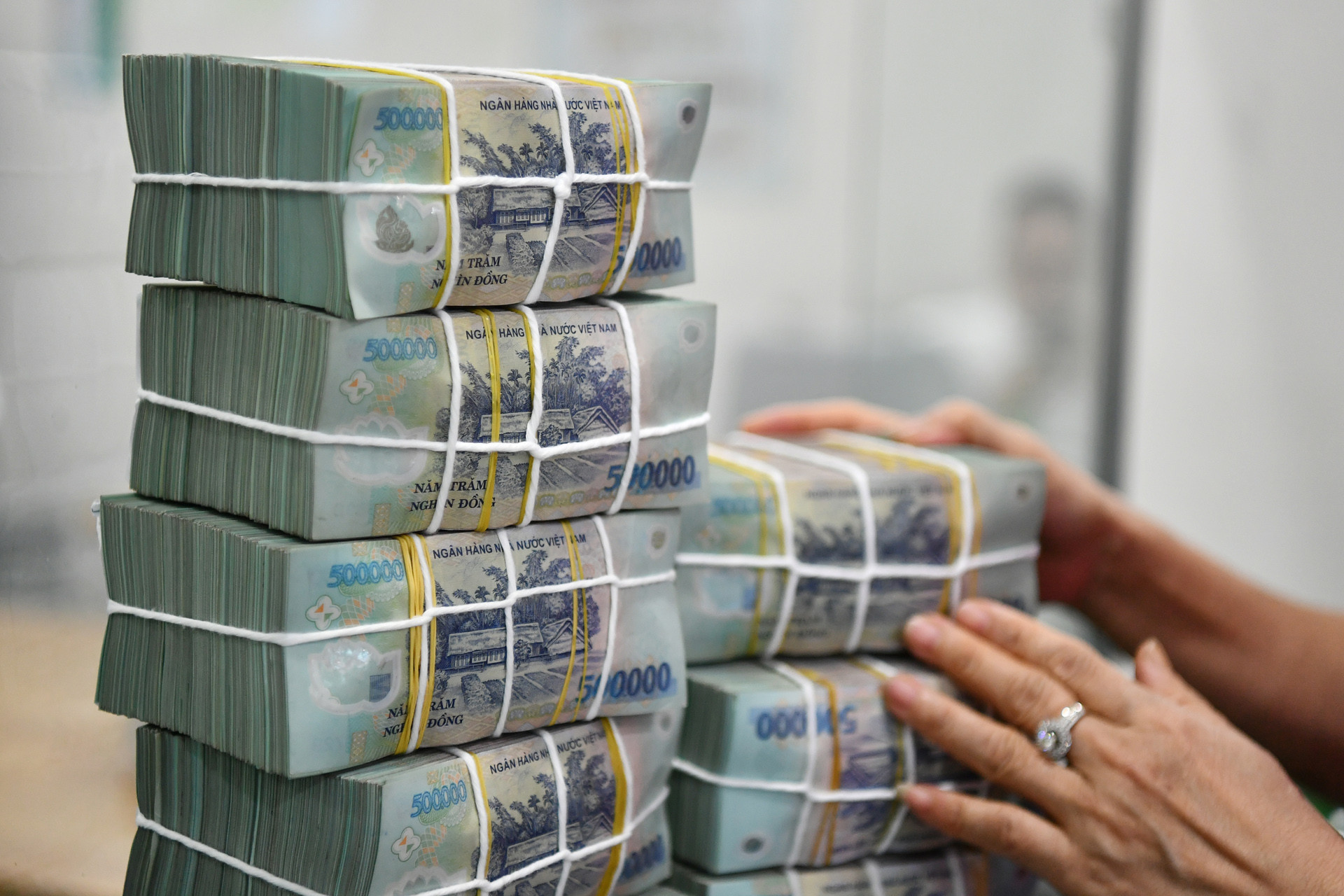
Bad debts left behind by Tram Be’s group remain a burden, along with capital cost pressures and deposit mobilization competition as the primary causes.
In his first message as general director, Loic Faussier said: “I am well aware that Sacombank is entering a challenging phase, as the bank must resolve past legacy issues as well as build a foundation for future development."
Sacombank is in a restructuring phase, focusing primarily on resolving bad debts left behind by Tram Be’s group.
According to the bank, the pre-tax profit for the second quarter of 2026, after deducting provision expenses, is expected to fluctuate around VND1,900 to VND2,000 billion, down 50 percent compared to the same period last year. The exact figure is still being calculated by the bank and will be officially announced in the financial statements.
Sacombank explained that the profit decline is mainly due to rising capital costs, fierce competition in deposit mobilization, and the remaining pressures from the restructuring process. This has been an industry-wide pressure since the beginning of 2026 amid rising deposit interest rates.
Faussier emphasized that Sacombank will prioritize consolidating its operational foundation rather than pursuing growth at all costs. The bank's focus is on risk control, improving asset quality, accelerating digital transformation, enhancing customer experience, and improving the governance system according to international standards.
Faussier's message indicates that Sacombank needs more time to complete its Restructuring Plan, especially in treating bad debts.
At the 2026 Annual General Meeting of Shareholders held in April, the Board of Directors submitted a proposal to extend the post-merger Restructuring Plan until 2030.
According to Sacombank's Board, the bank has focused on handling and recovering bad debts and processing collateral; reviewing and overcoming shortcomings and errors in accordance with the inspection conclusions of competent authorities; and restructuring business operations, controlling risks, and restoring the bank's financial health.
Through these actions, the bank has achieved results in risk control and handling of operational shortcomings.
However, during the implementation process, several targets have not been completed on schedule, mainly because the handling and recovery of bad debts and the processing of collateral for legacy debts have faced difficulties due to dependence on legal proceedings.
Some collateral assets have complex legal statuses, requiring more time to complete procedures.
Causes of profit decline
With the pre-tax profit for the second quarter of 2026 dropping by nearly 50 percent compared to the same period last year, this is Sacombank's lowest pre-tax profit since the fourth quarter of 2022 (excluding the fourth quarter of 2025, which recorded a negative pre-tax profit of VND3,392 billion).
The financial statements for the first quarter of 2026 show that interest expenses on deposits and borrowings increased by VND2,330.3 billion compared to the same period last year.
Specifically, customer deposits and valuable papers issued increased by VND80,183 billion, leading to an increase of VND2,132.9 billion in interest expenses on deposits and valuable papers issued.
In addition, Sacombank’s borrowings from the State Bank of Vietnam and other credit institutions rose by VND15,636 billion, resulting in an increase of VND198.7 billion in interest expenses compared to the same period last year. These expenses eroded the bank's profits, causing the net profit for the first quarter of 2026 to reach VND1,529 billion, a sharp decrease of VND1,299 billion compared to the previous year.
Additionally, in the first quarter of this year, the bank recorded a decrease of VND820.5 billion in net interest income compared to the first quarter of 2025. Along with the increase in interest income and other remaining incomes, the bank recorded an increase of VND1,038.8 billion in other expenses.
Notably, credit risk provision expenses increased by VND1,788.3 billion; operating expenses decreased by VND493 billion; and corporate income tax expenses decreased by VND256.5 billion.
Sacombank has not yet released its financial statements for the second quarter of 2026. However, with the bank signaling a decline in profit as well as market movements since the beginning of the year, it is highly likely that mobilization costs and credit risk provision expenses will continue to be the main causes of the profit decline.
Manh Ha
.svg)
