 Vietnamnet.vn

 Podcast



As countries rush into the race to build AI models, experts increasingly believe the decisive factor is no longer technology alone, but the ability to bring AI into real life. That shift could open the door for Vietnam to emerge as a new regional hub for AI deployment.
Experts agreed that AI is not simply a competition over algorithms or large models. In the next phase, the countries with the strongest advantage will be those capable of training a workforce with strong judgment, practical AI implementation skills, and the ability to build public trust in the technology.
AI is not “something you buy and it just works”
Speaking at the “AI: Shaping Human-Centered Innovation” event on May 27, several international experts argued that AI should not be viewed as a purely technological race, but rather by how effectively it solves real-world problems.
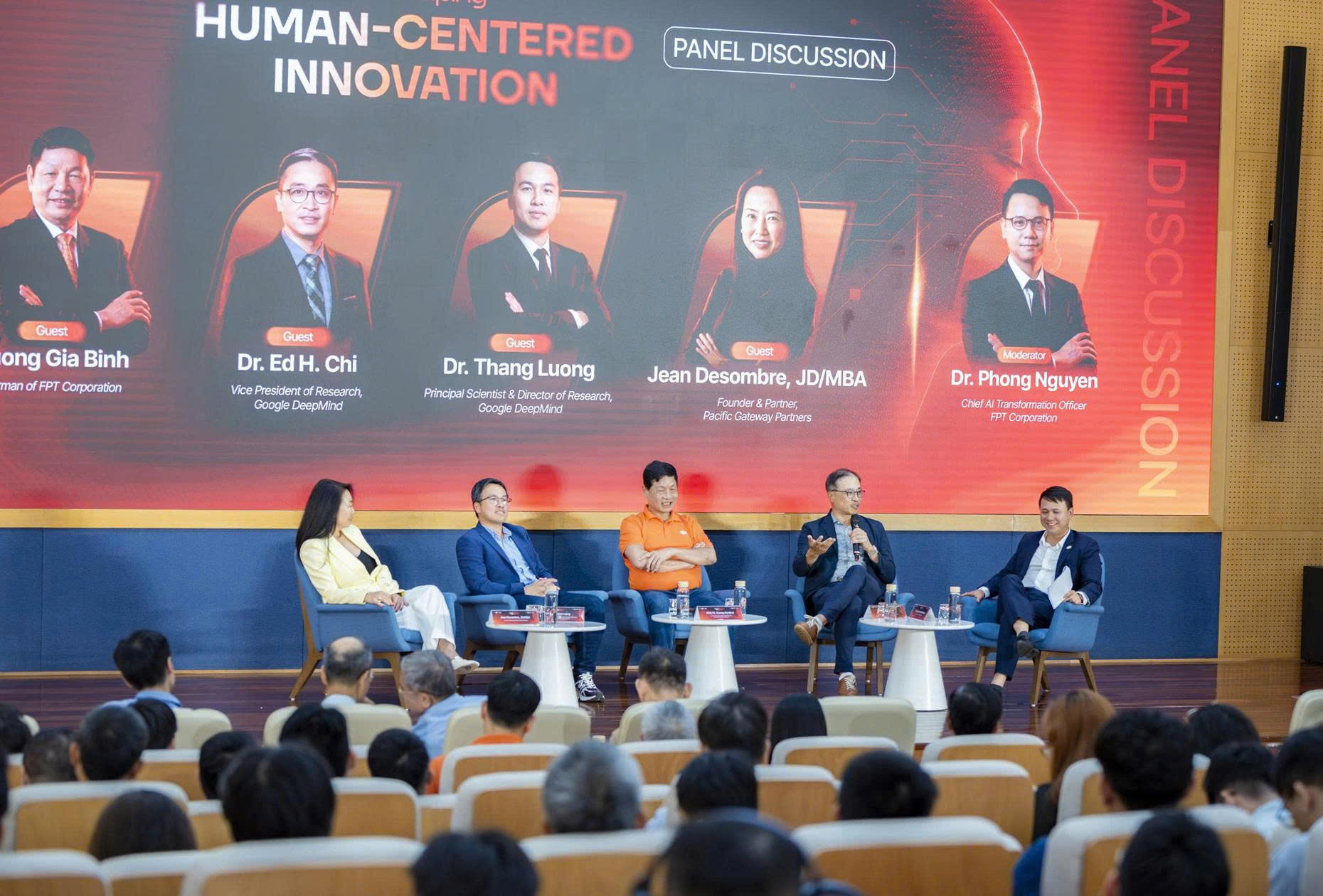
Dr. Ed H. Chi, Vice President of Research at Google DeepMind, said the world is entering an “intelligence revolution,” comparable to the role engines played during the Industrial Revolution.
According to him, while the Internet era was driven by search and recommendation technologies, today’s large language models are first creating major impact in the enterprise sector.
He warned that many businesses misunderstand AI by assuming they can simply purchase the technology and automatically generate results.
“You can’t just buy AI from Google, OpenAI, or any other company, plug it into a business, and expect it to run effectively on its own,” he said.
Dr. Ed H. Chi, Vice President of Research at Google DeepMind, said the world is entering an “intelligence revolution” comparable to the Industrial Revolution.
From this perspective, Ed H. Chi believes Vietnam has a major opportunity to develop a new generation of “modern engineers” - people who understand both AI and the operational realities of industries such as finance, manufacturing, retail, healthcare, and services in order to deploy AI effectively.
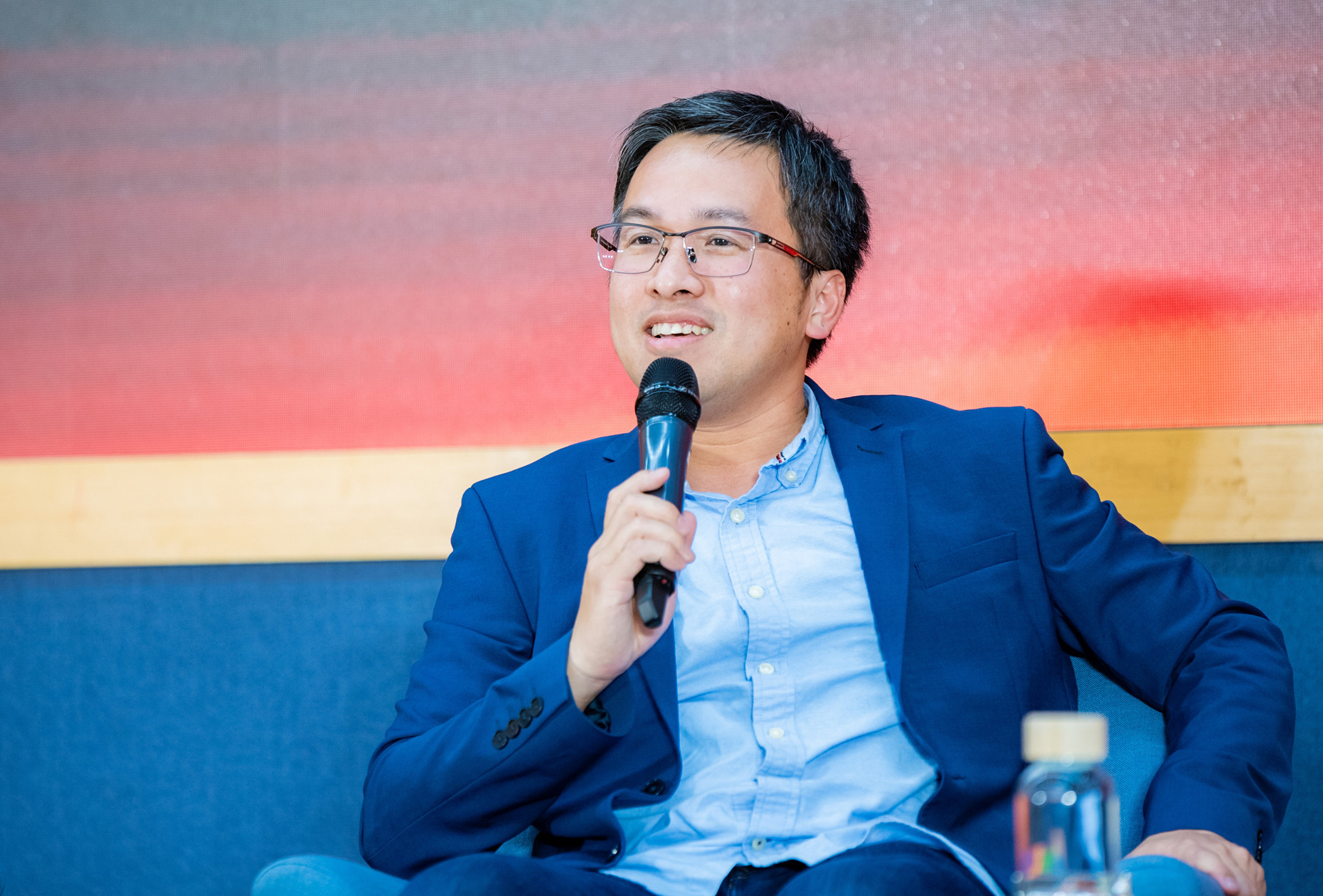
Dr. Luong Minh Thang, principal scientist and director of research at Google DeepMind, as well as co-founder of the New Turing Institute, argued that the most important capability in the AI era is no longer memorization, but judgment.
According to him, as AI systems continuously generate suggestions and outputs, people can easily become passive consumers if they lack the ability to question and critically evaluate information.
He also warned of a new AI-era bottleneck: verification.
In fields such as mathematics, biology, programming, and drug discovery, AI can generate massive amounts of results, but humans still need the expertise to determine whether those outputs are accurate, safe, and trustworthy.
Thang predicted that entirely new professions could emerge around verifying and interpreting AI-generated knowledge.
He said Vietnam could realistically build a frontline AI engineering workforce - professionals who not only conduct research but also directly deploy AI into businesses and real-world operations. His goal is to help train hundreds of thousands of Vietnamese AI engineers by 2030.
Thang said judgment, not memorization, will become the defining skill of the AI era.
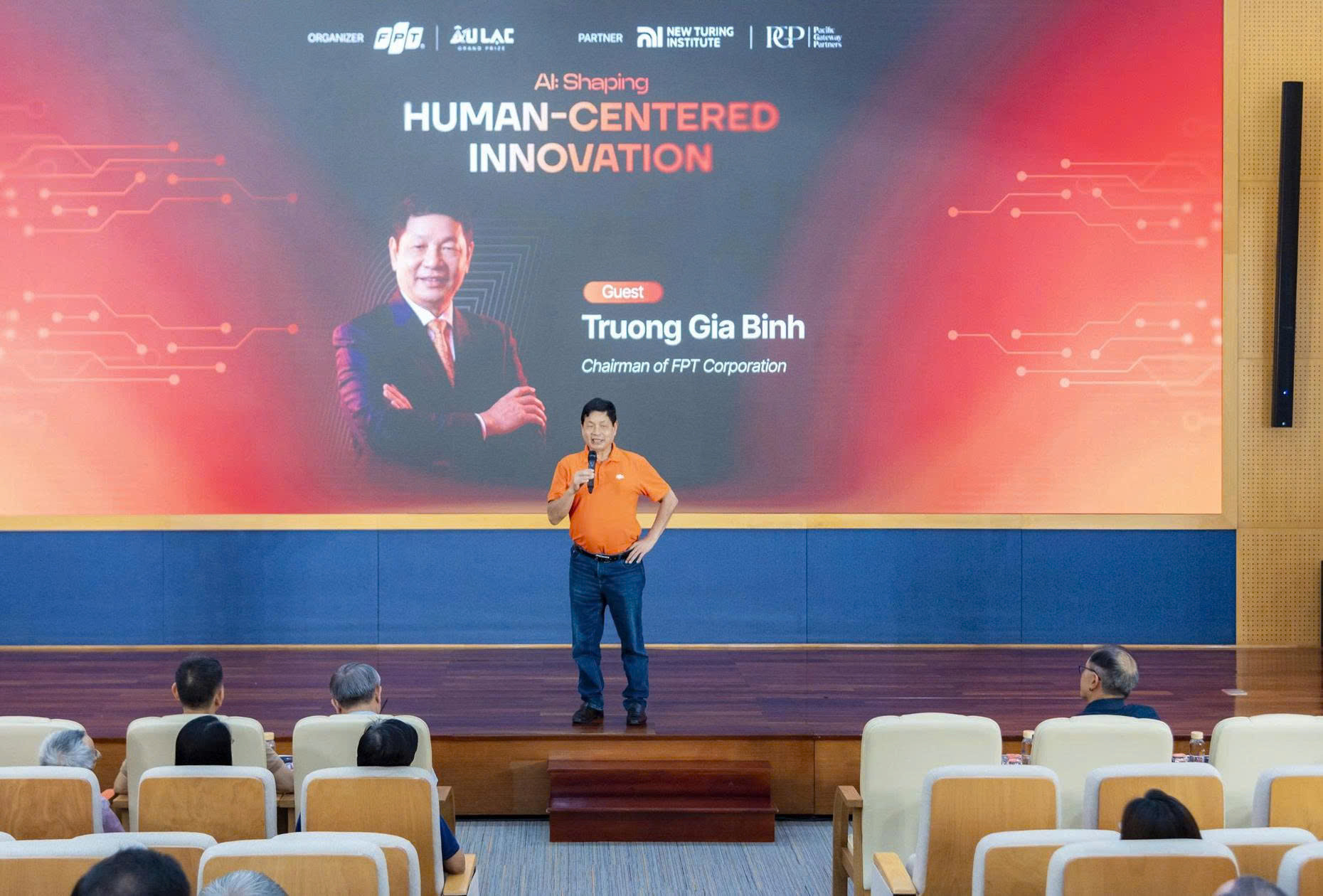
Truong Gia Binh: “No one can remain competitive without AI”
Truong Gia Binh, chairman of FPT Corporation and the Au Lac AI Alliance, said AI is creating an unprecedented turning point for both businesses and nations. “No one can maintain competitiveness without AI,” he stressed.
According to Binh, during nearly 40 years of development, FPT has gone through multiple technology waves including personal computers, the Internet, mobile networks, and digital transformation. But AI represents a fundamentally different shift because it directly changes how people create value, process knowledge, and operate organizations.
He believes humanity is moving from the era of “industrial factories” into the era of “AI factories,” where data and knowledge-processing capabilities become the most important resources.
In the future, the strength of companies will no longer be determined solely by workforce size, but by how effectively they organize and leverage AI systems working alongside humans.
According to the FPT chairman, if AI is democratized properly, Vietnam could dramatically increase both labor productivity and national competitiveness.
He also argued that Vietnam has the opportunity to become a global provider of AI transformation services if it can leverage strengths in education, technology, rapid learning ability, and the entrepreneurial spirit of Vietnamese people.
Binh said the creation of the Au Lac AI Alliance and the launch of the Au Lac Grand Prize stem from the urgent need to make AI a widespread capability among Vietnamese people, especially younger generations.
With a prize pool of $1 million, the competition aims to create an environment where young Vietnamese talent can tackle major challenges and develop new competitive strengths in the AI era.
Education and healthcare must keep humans at the center
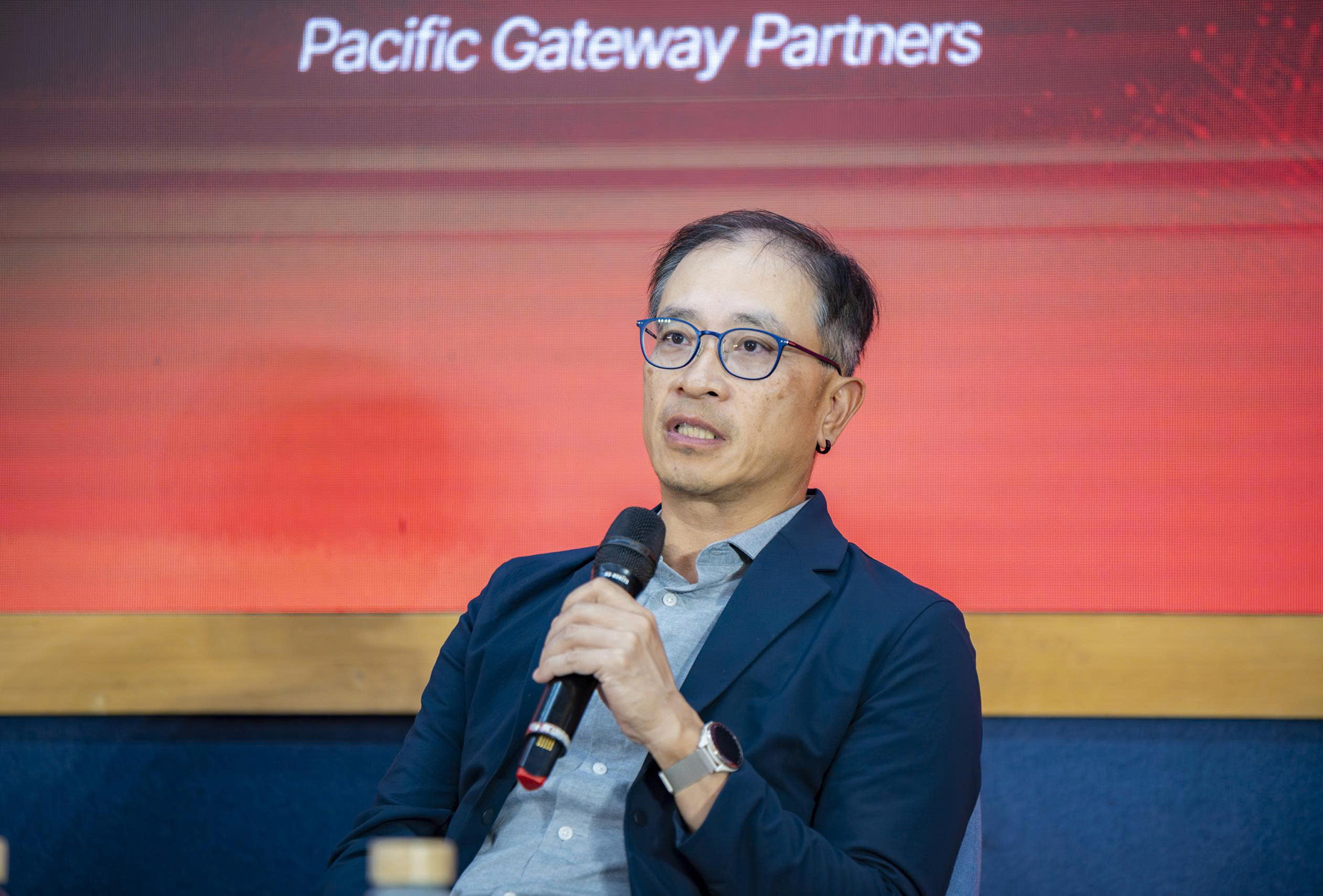
In healthcare, Jean Desombre, founder and partner at Pacific Gateway Partners, stressed that AI deployment must be carried out cautiously and with people at the center.
According to her, healthcare fundamentally remains a human-to-human interaction. Patients do not only need analytical results from machines - they also need empathy, explanations, and companionship from doctors.
She believes AI could create breakthroughs in drug discovery, new therapies, and large-scale biomedical data processing. However, before implementing any technology, the most important question remains whether it truly improves treatment quality and patients’ quality of life.
From an education perspective, Professor Po-Shen Loh argued that as AI advances, education must return to its most fundamental question: what do humans learn for?
According to him, education in the AI age should not merely transfer knowledge, but help people develop clear thinking, communication skills, and the ability to create value for society.
As AI makes knowledge more accessible, education must shift from “teaching people to know” toward “teaching people to understand, think, and act,” he said.
Professor Loh added that young people who can think clearly, ask good questions, and bring joy to others will have greater opportunities to solve future social challenges.
Meanwhile, Professor Preslav Nakov warned that generative AI is dramatically increasing the risk of large-scale misinformation.
According to him, after the printing press and the Internet, generative AI represents another major milestone in the spread of knowledge - but it also creates an urgent need to build trust in technology.
He argued that future AI systems must not only become more powerful, but also more trustworthy through cleaner data, better model verification, and tools that help users assess the reliability of information.
Experts broadly agreed that AI is no longer simply a race over algorithms or large models. In the next phase, the countries best positioned to succeed will be those capable of training people with strong judgment, practical AI deployment skills, and the ability to build trust in technology throughout society.
Thai Khang
.svg)
