 Vietnamnet.vn

 Podcast



Forty years ago, the Doi Moi reforms fundamentally changed Vietnam's development trajectory. A multi-sector economy and market-oriented reforms became the foundation that enabled the country to emerge from economic crisis, integrate with the global economy and sustain growth for nearly four decades.
Today, as Vietnam has entered the ranks of upper-middle-income economies, a new question has emerged: Why is the country now talking about transforming its development model?
The answer lies in the fact that the model which lifted Vietnam from one of the world's poorest nations to an upper-middle-income economy is gradually reaching its limits. To move to the next stage of development, Vietnam cannot simply accelerate along the same path.
Recognizing this challenge, the Party has introduced Resolution 19 on renewing the national development model. Presenting the proposal on July 29, Politburo member, Party Central Committee Secretary and Head of the Party Central Committee's Commission for Policies and Strategies Nguyen Thanh Nghi emphasized the need to transform the way the country is organized, governed and managed in order to create new drivers of development.
A successful model approaching its limits
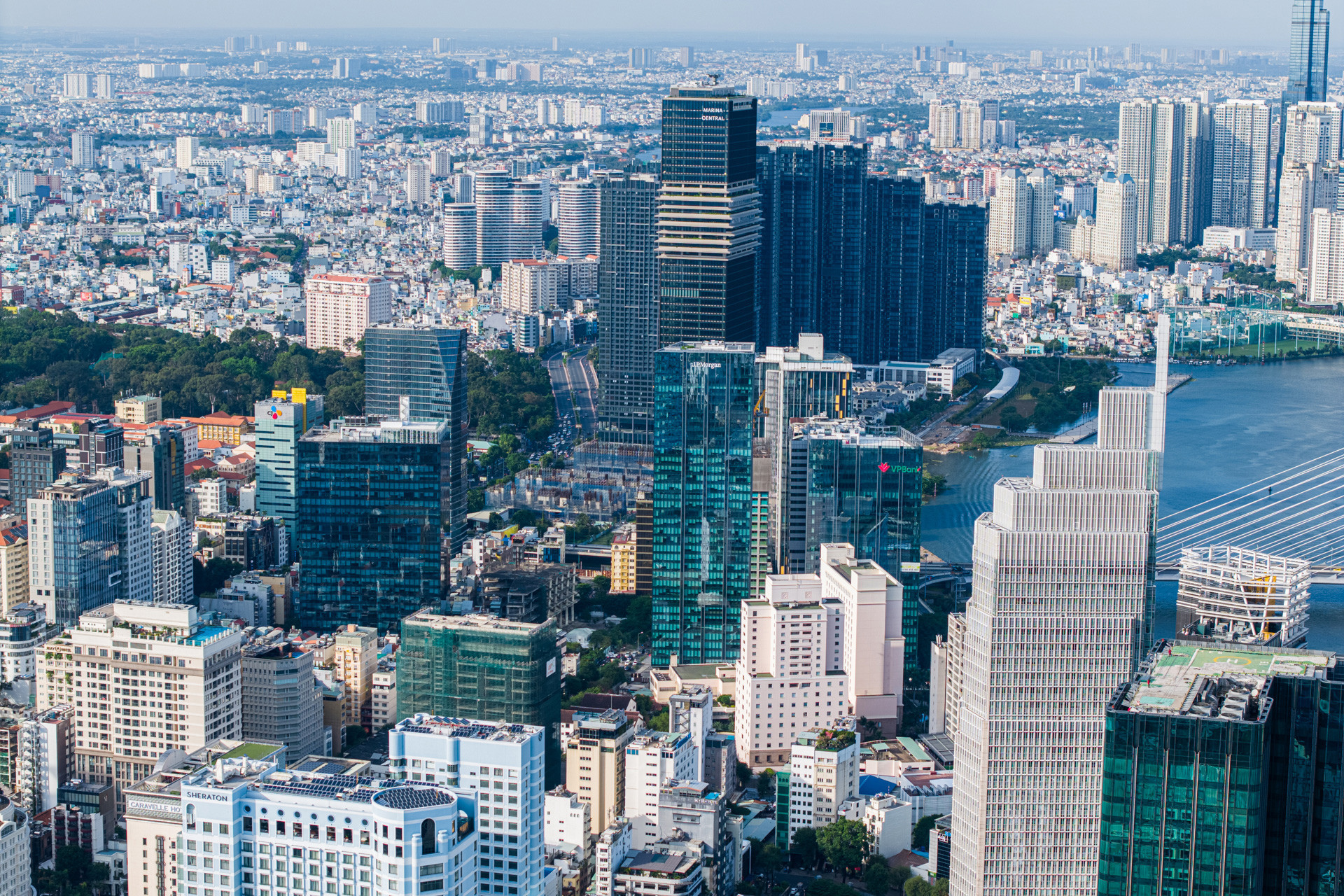
Over the past four decades, Vietnam has risen from one of the world's poorest economies to the upper-middle-income group. Its gross domestic product now ranks among the world's 30 largest economies, while merchandise trade places the country among the world's top 15 trading nations.
These achievements demonstrate that the Doi Moi model has fulfilled its historic mission.
According to the World Bank, Vietnam's GDP per capita reached approximately US$5,000 in 2025, surpassing the Philippines at around US$4,100 and nearly matching Indonesia at about US$5,200.
Yet a considerable gap remains. Thailand's GDP per capita stands at roughly US$7,500, while Malaysia has reached approximately US$13,000 - more than two and a half times Vietnam's level.
Compared with the global average of around US$14,000 per person, Vietnam's income is still just over one-third of the world average, leaving a gap of roughly US$9,000.
These figures show how far Vietnam has progressed while also highlighting the distance that still separates it from the region's more advanced economies.
They also underscore that the journey toward becoming a prosperous nation remains a long one.
As countries move closer to developed-economy status, each successive step becomes more difficult. While rapid growth defined Vietnam's previous development stage, the quality of its development model will determine success in the years ahead.
That is why Resolution 19 moves beyond reforming the growth model alone and instead focuses on transforming the country's entire development model.
Shifting from factor-driven growth to innovation-led development
The change reflects an important assessment: the growth model built on low-cost labor, capital investment, natural resource exploitation and foreign direct investment has largely fulfilled its historical role.
Instead of continuing to expand through greater inputs of capital, labor and resources, Resolution 19 places science, technology, innovation, digital transformation, data, talent and the private sector at the center of future development.
These are the resources expected to generate higher productivity, stronger competitiveness and greater value creation in a knowledge-based economy.
More importantly, Resolution 19 does not simply redefine the drivers of growth - it seeks to transform how those resources are organized and managed.
Nguyen Thanh Nghi repeatedly emphasized the need to modernize the country's systems of organization, governance and public administration. This, he argued, forms the core of Vietnam's next development model.
As economic growth becomes increasingly dependent on knowledge, technology and innovation, the quality of governance will determine whether these resources can be translated into sustainable economic progress.
Development beyond GDP
For that reason, Resolution 19 extends far beyond economic policy.
It places equal emphasis on institutional reform, improving governance, developing human capital, advancing science and technology, strengthening education, preserving culture, protecting the environment and enhancing citizens' quality of life.
Economic growth remains essential, but Vietnam's broader objective is to build a modern, innovative, self-reliant, green, inclusive and sustainable nation, with people serving as both the purpose and the driving force of development.
If the Doi Moi reforms launched in 1986 marked Vietnam's transition from a centrally planned economy to a multi-sector market economy, Resolution 19 lays the foundation for the country's next transformation - from a development model driven primarily by capital, labor and natural resources to one powered by knowledge, technology, innovation and modern governance.
The road ahead will undoubtedly be more demanding.
Building world-class scientific capacity, a dynamic innovation ecosystem, a highly skilled workforce and modern public institutions requires sustained effort over many decades.
The significance of Resolution 19 therefore extends beyond setting new growth targets.
Its greatest importance lies in signaling that Vietnam is entering a new phase of development - one in which national competitiveness will increasingly depend on institutional quality, scientific and technological capability, innovation capacity and effective governance.
Tu Giang
.svg)
