 Vietnamnet.vn

 Podcast



Thao Trinh
When ban flowers bloom across the mountains of northwest Vietnam, travelers from many regions come not only to admire the picturesque scenery but also to taste a range of delicious specialties made from this iconic blossom.
Ban flowers are a signature symbol of the region’s forests and mountains, typically blooming from late February to early March on the lunar calendar.
During this time, members of the Thai ethnic community in provinces such as Son La and Dien Bien often head into the forest to gather baskets full of ban flowers. They bring them to local markets to sell as a fresh vegetable or cook them at home to enrich everyday family meals.
Ban flowers are not only admired for their beauty but are also widely used as ingredients in various dishes. Among the different varieties, the red or purple ban flower is most commonly used in cooking.
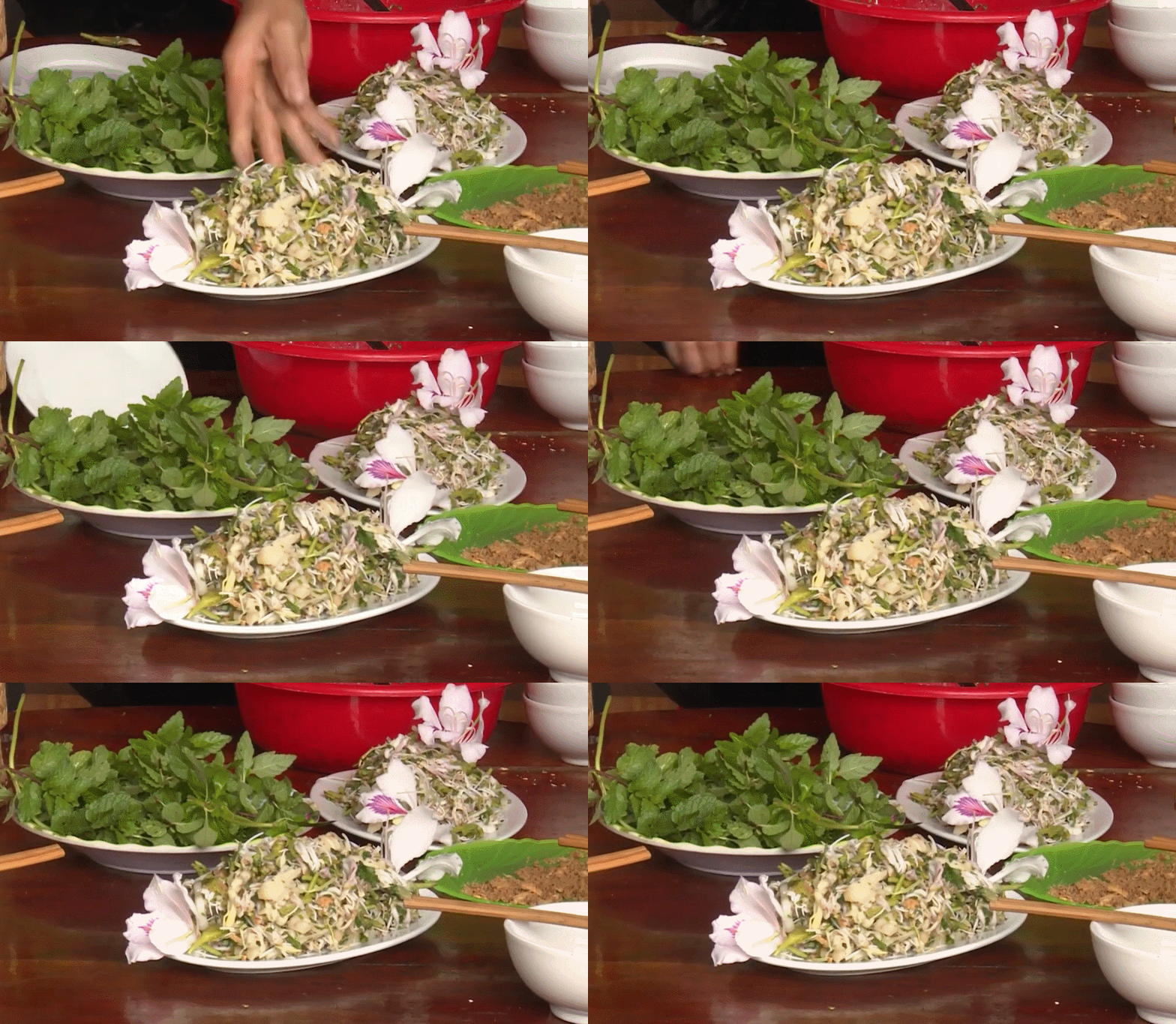
The blossoms can be stir-fried, cooked in soup or steamed with sticky rice. However, the most distinctive and popular dish is ban flower salad.
A refreshing mountain dish
Lo Mai, who lives in Dien Bien Phu ward in Dien Bien province, said the salad is known for its light, refreshing taste and is especially suitable for easing the heaviness of festive meals during the early months of the year.
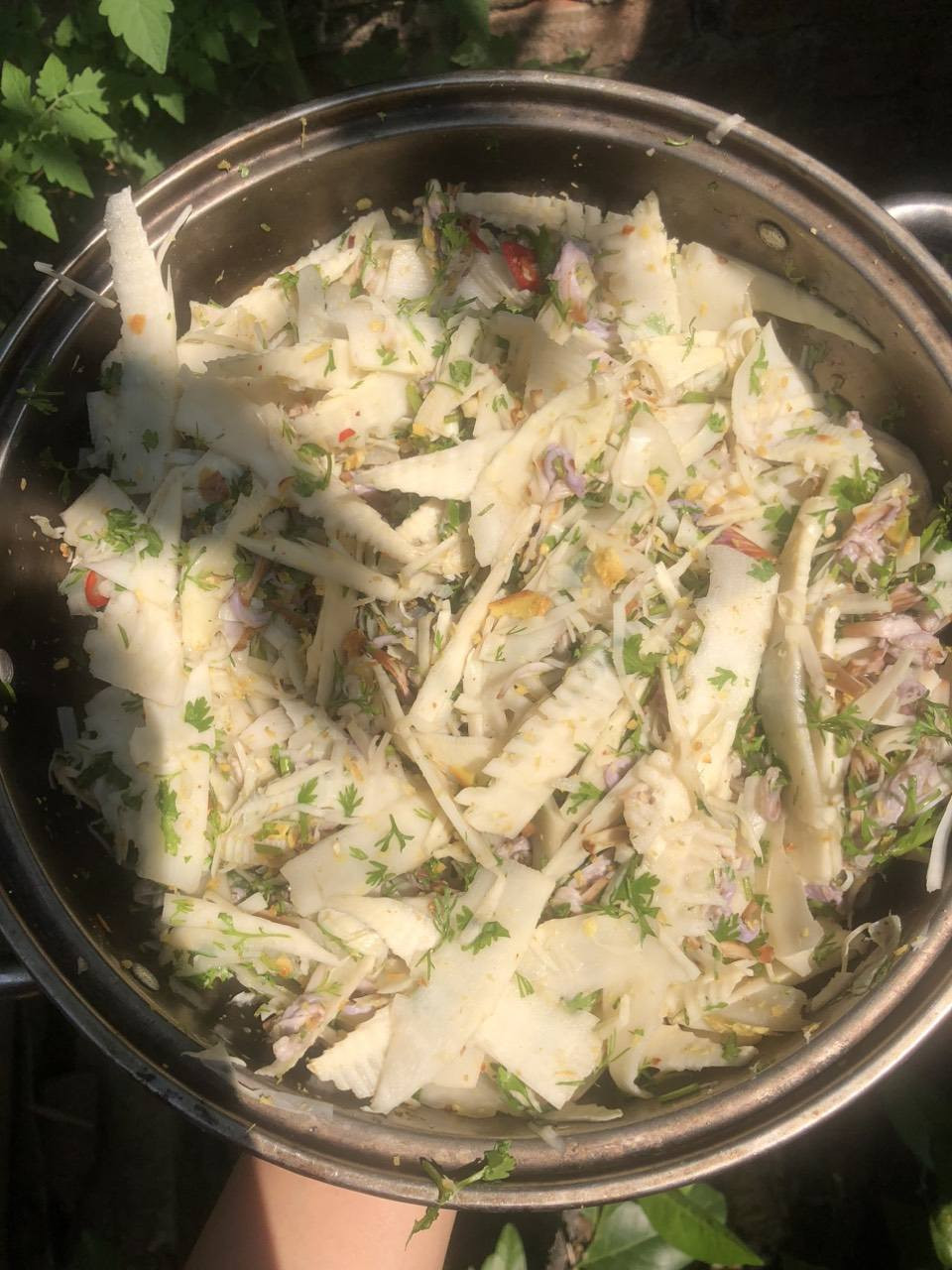
To prepare the dish, Thai ethnic families often combine ban flowers with bitter bamboo shoots, aromatic herbs and a mix of spices such as garlic, chili, galangal and mac khen - a local mountain pepper.
These ingredients are deeply connected to the daily lives of local communities and help highlight the distinctive culinary culture of the highlands.
Although the dish uses simple ingredients, the preparation requires patience and care.
After being picked, the ban flowers are cleaned, with the stems removed so only the petals and stamens remain. The blossoms are then briefly blanched in boiling water and drained.
The bitter bamboo shoots are cleaned, thinly sliced and boiled to reduce their sharp flavor. In some places, sweet fresh bamboo shoots are used instead, but bitter bamboo shoots are often preferred for their stronger and more characteristic taste.
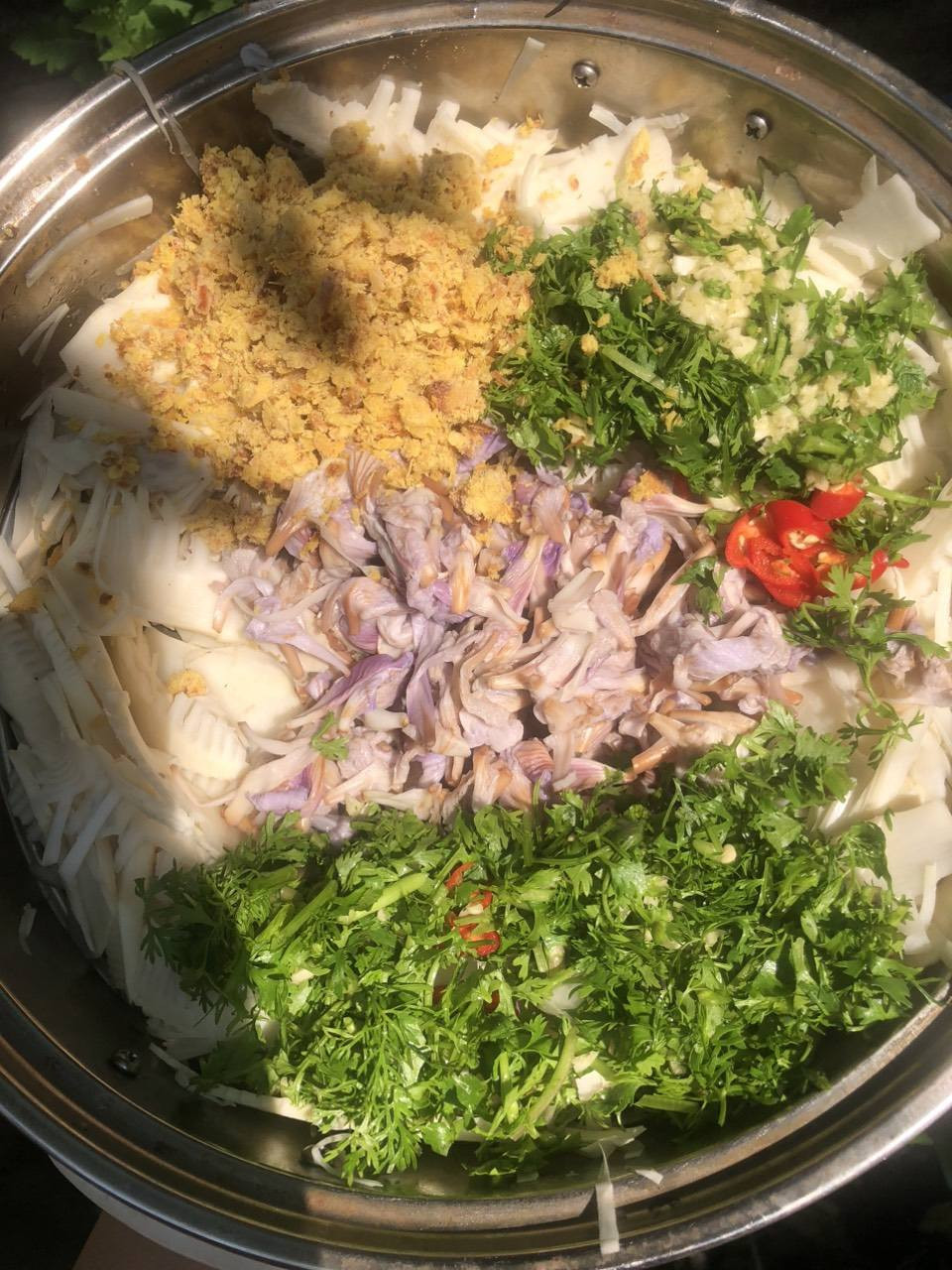
Next comes the mixing stage. The prepared ingredients are combined with crushed galangal, aromatic herbs such as mint, sawtooth coriander and cilantro, along with salt, garlic, chili and mac khen pepper. The mixture is then left for about 15 minutes to allow the flavors to blend.
Unlike many sweet-and-sour salads common in Vietnam’s lowland regions, Thai cooks in the northwest usually add only a small amount of salt. This helps preserve the natural flavors of each ingredient in the dish.
Depending on personal preference and household conditions, some families also add wild vegetables or grilled stream fish to make the salad more flavorful.
Ban flower salad is often regarded as a signature dish of the northwest during early spring because of its fresh taste and unusual combination of flavors.
A taste worth traveling for
Thanh Nga, a resident of Hanoi who has tried ban flower salad in the northwest, admitted that she initially found the dish unusual and unfamiliar. After tasting it several times, however, she became completely captivated by the flavors.
“The dish blends many tastes at once - sour, spicy, salty, bitter, sweet and nutty. It stimulates the palate immediately,” she said.
“The aroma of mac khen and galangal stands out, while the ban flowers add a gentle richness. The bamboo shoots are crisp and the grilled stream fish brings a sweet, fatty flavor. It is very different from the salads I have tried before.”
Because of her fondness for the dish, Nga now travels to the northwest almost every year after the Lunar New Year, inviting family members and friends to join her on the trip.
Although the journey can be several hundred kilometers long, she believes the experience is worth it.
“The distance is quite far, but it feels worthwhile because this is a dish you can only enjoy once a year. And to taste it properly, you really have to come here,” she said.
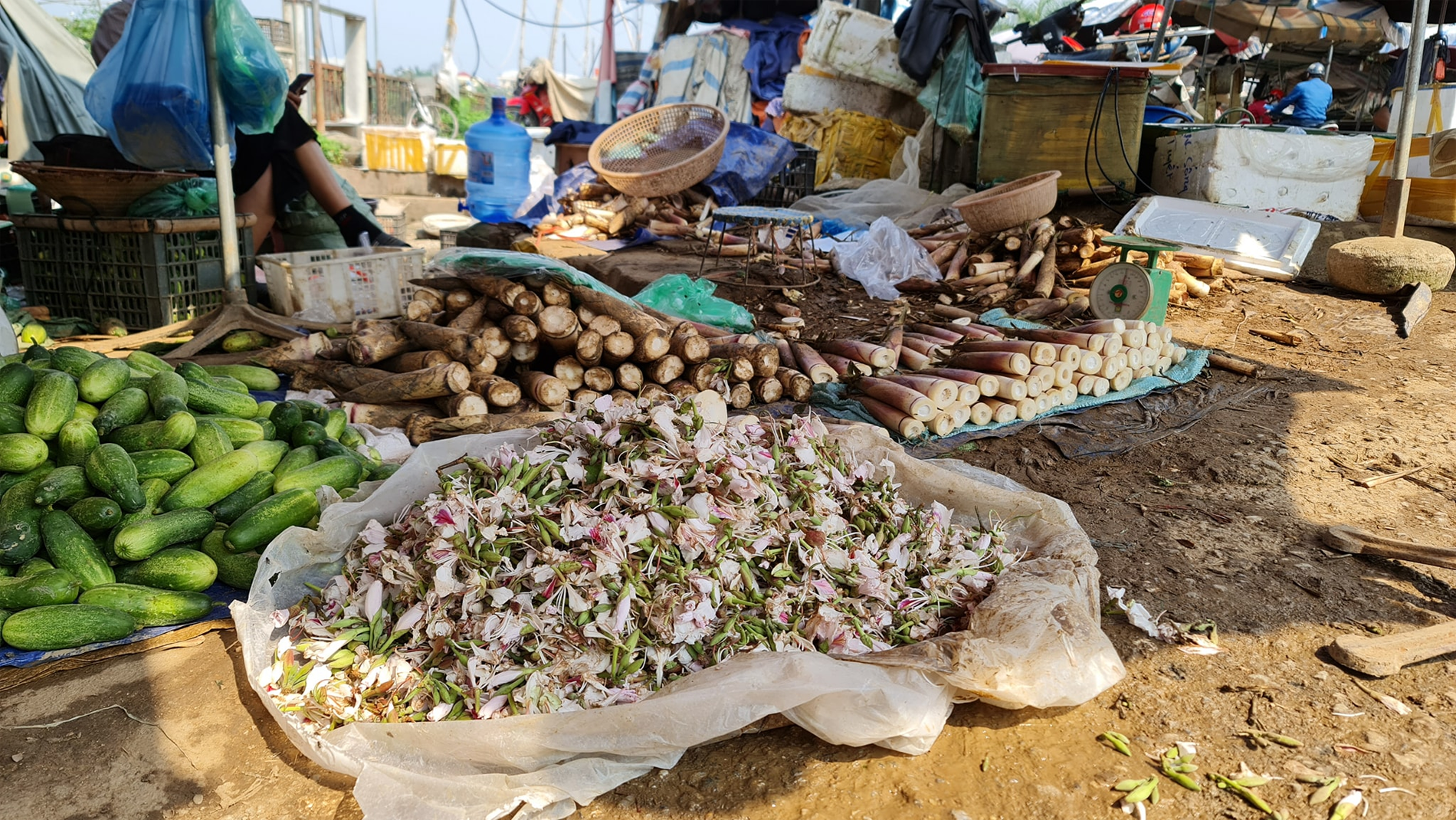
Ban flowers and wild bamboo shoots are commonly sold in markets across northwest Vietnam during February and March on the lunar calendar. They are key ingredients in the region’s famous salad dish. Photo: Trinh Cuong
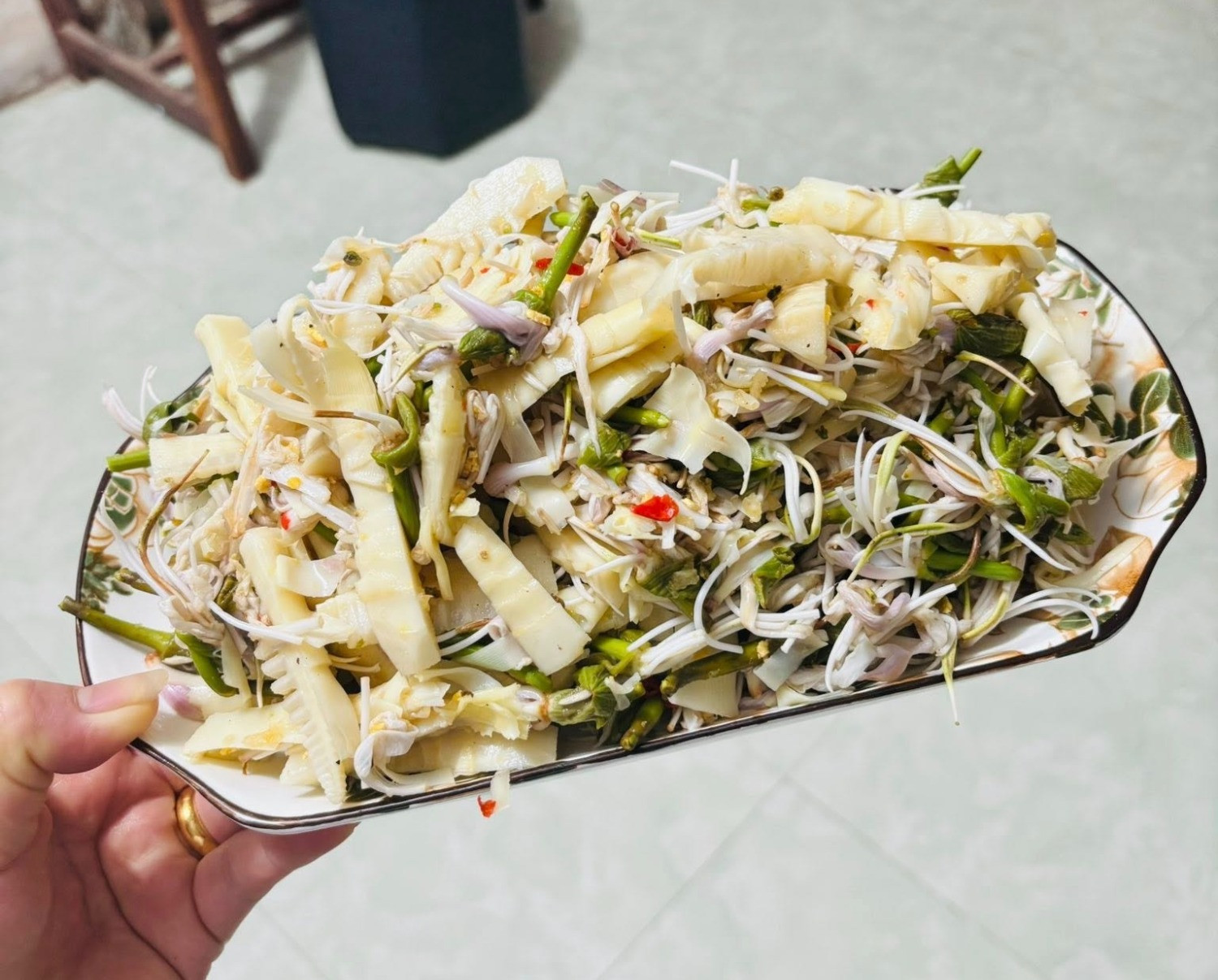
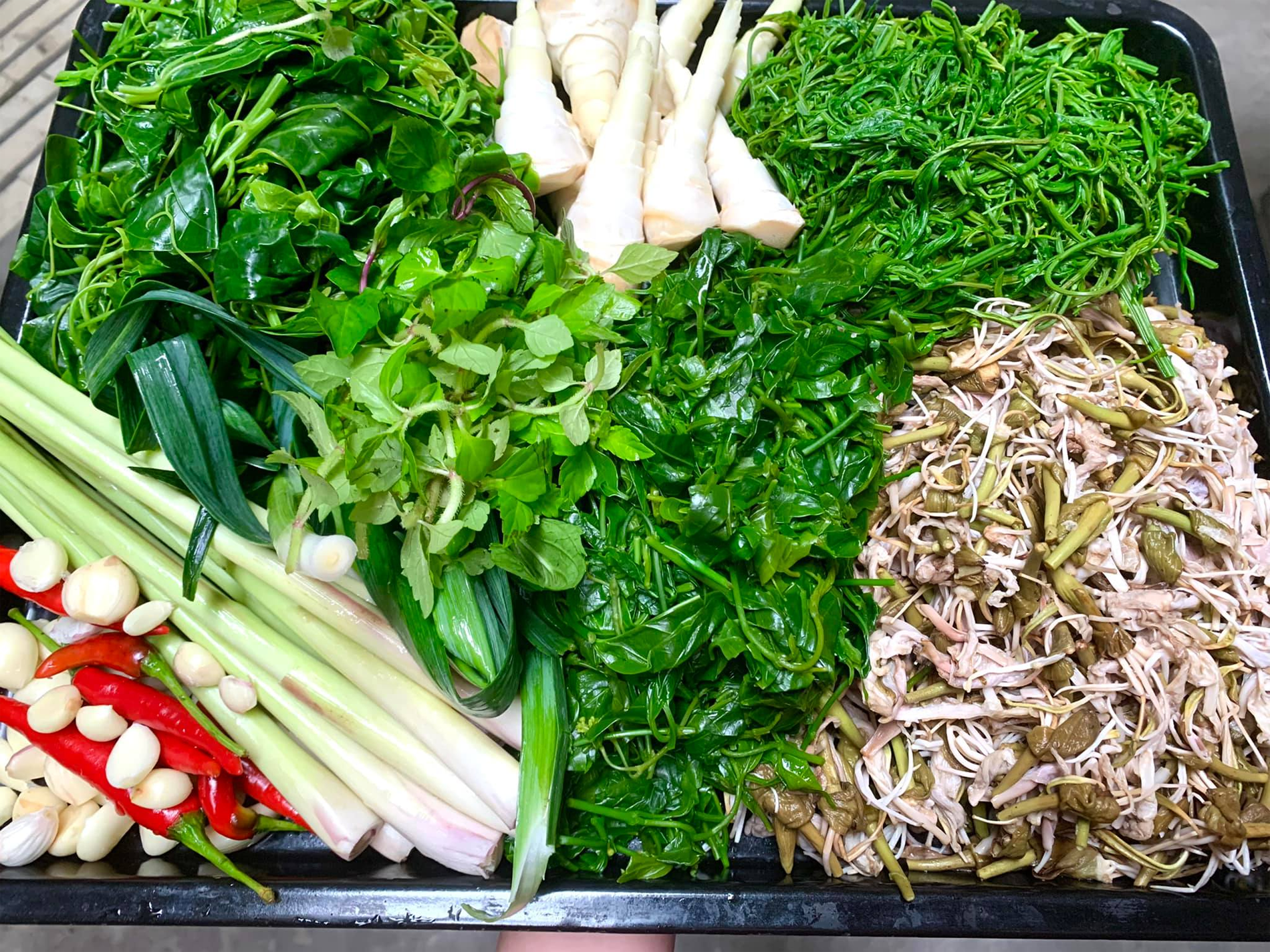
Depending on household preferences and available ingredients, additional wild vegetables or grilled stream fish can be added to enhance the flavor of ban flower salad. Photo: Xanh Xanh
.svg)
