 Vietnamnet.vn

 Podcast



Rau móp, or thorny elephant ear, grows naturally along streams, riverbanks, ponds, and moist lowlands in Vietnam’s southeastern region. Once seen as a generous gift from nature that helped poor communities stave off hunger, this hardy vegetable is now enjoying a resurgence in demand.
As consumers increasingly seek clean, organic produce, rau móp - once foraged for survival - is now being cultivated and sold as a specialty. More households in Ho Chi Minh City have started growing it for both personal use and commercial sale.

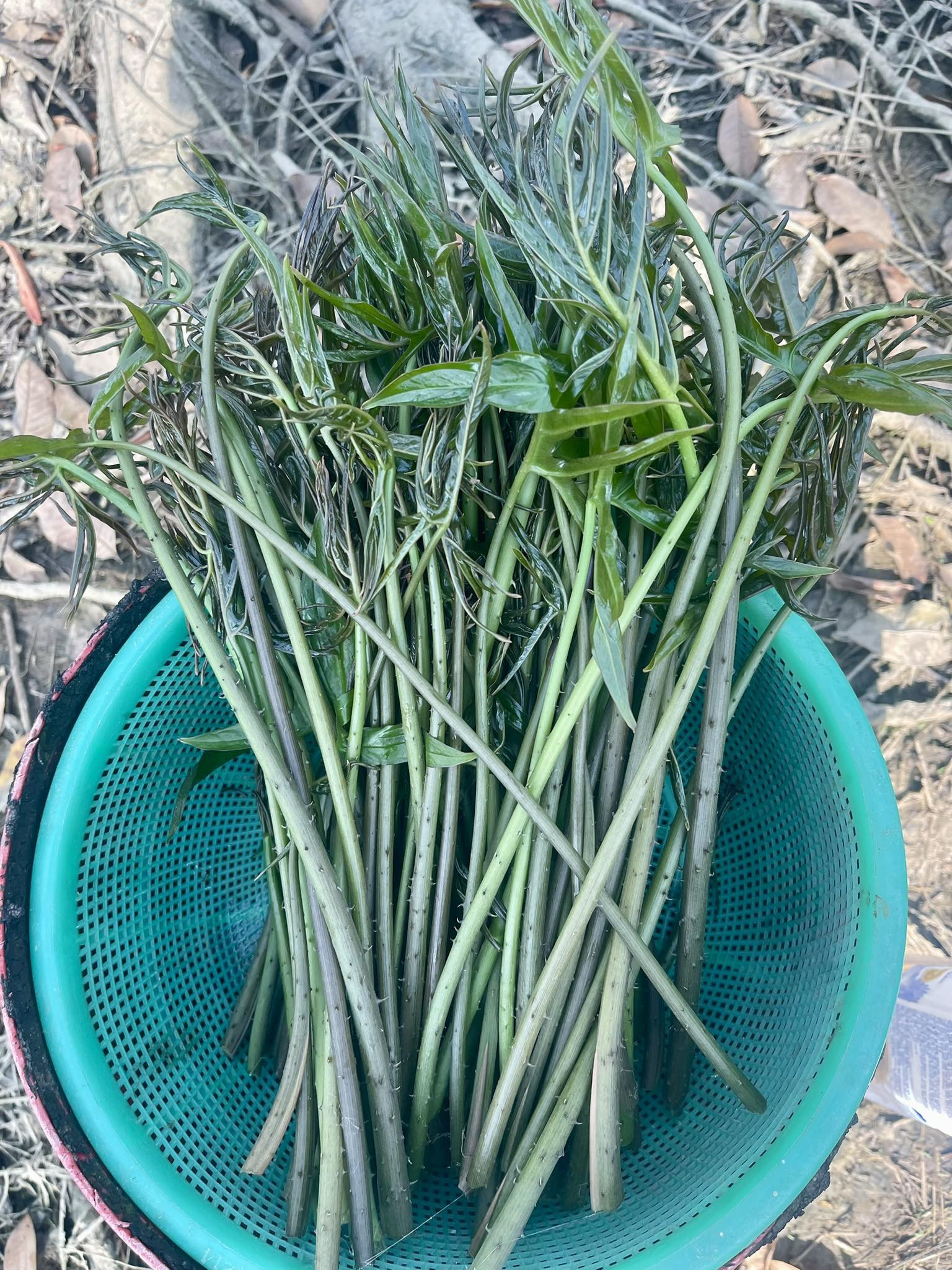
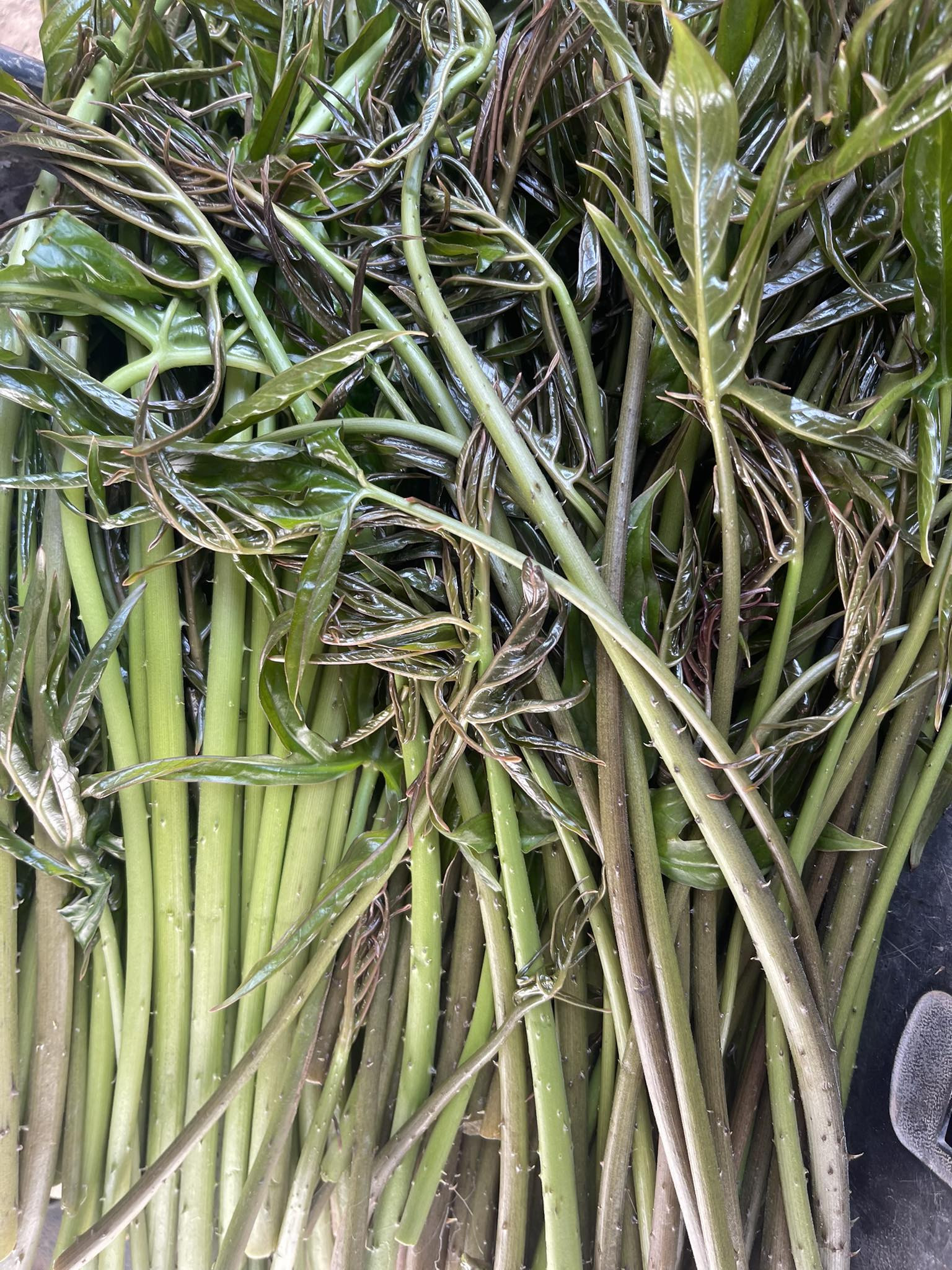
Despite its newfound fame, rau móp cultivation remains largely natural. Farmers dig wide trenches and channel water from nearby canals to create a humid, marsh-like environment. Young shoots are planted much like rice seedlings, then left to grow without much intervention. After more than a year, the plant begins yielding harvestable sprouts.
Only the tender tops - about 30 to 40 cm in length - are collected. Harvesters carefully follow each row, as missing even a day can cause the shoots to toughen. The plant’s mature stems are lined with sharp spines, requiring workers to wear long-sleeved clothing and gloves for protection.
Currently, rau móp is selling fast. Traders visit farms to buy it at around USD 0.80–1.00 per kilogram. The young shoots are used in dishes like salads, stir-fries, sour soups, and hot pots.
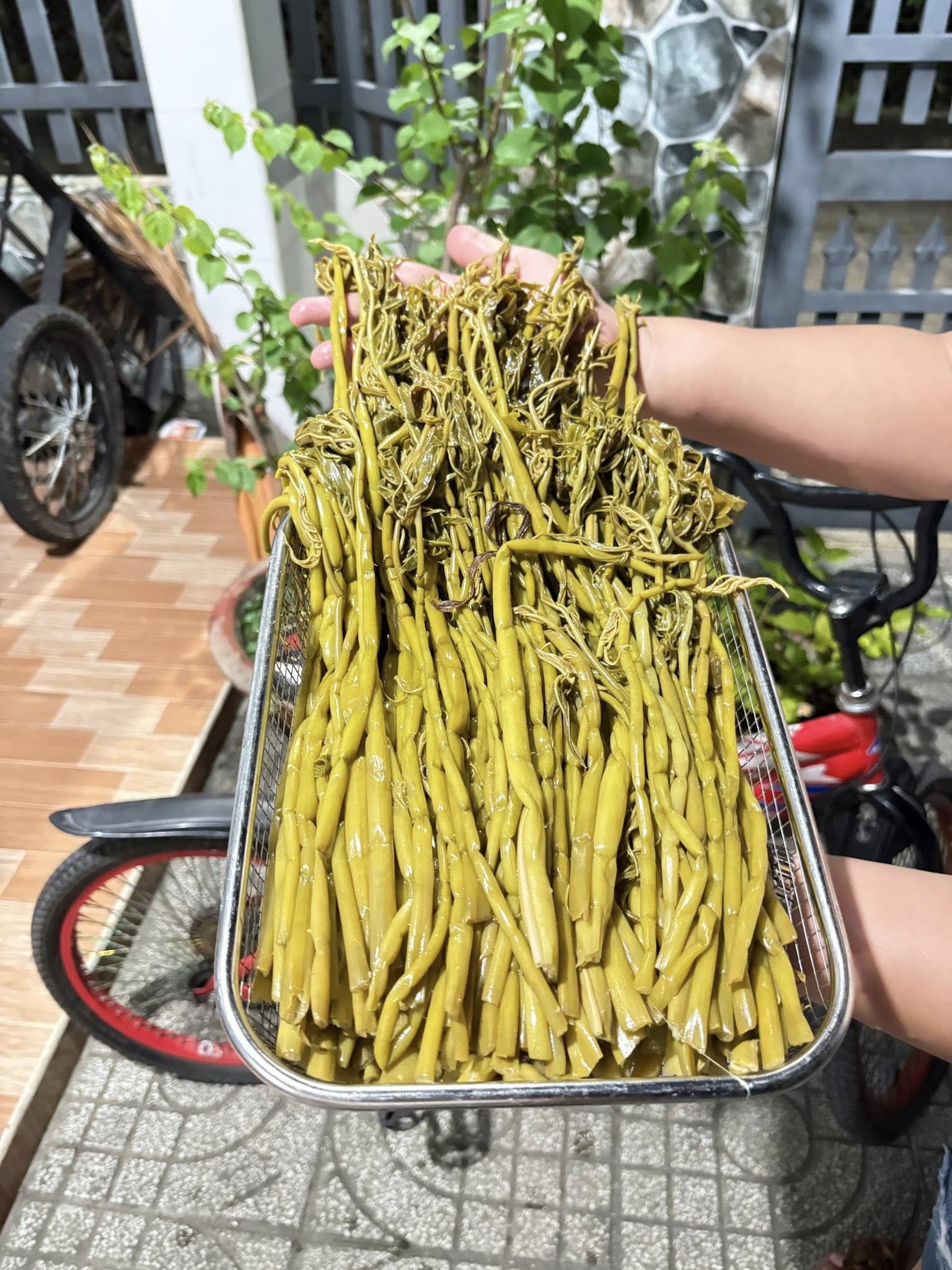
Because the vegetable is hard to preserve and unsuitable for long-distance transport, vendors often pickle it. The pickled version is vacuum-sealed or jarred, allowing it to be sold across provinces.
After harvest, the best curled tips are selected, trimmed of tiny thorns, and soaked in a saltwater solution. During fermentation, the rau móp turns a golden brown and develops its signature sour, crunchy texture.
Today, pickled rau móp is a sought-after rustic specialty in Ho Chi Minh City, retailing at around USD 2 per 1kg jar. It’s a popular souvenir among visitors to rural Cu Chi.
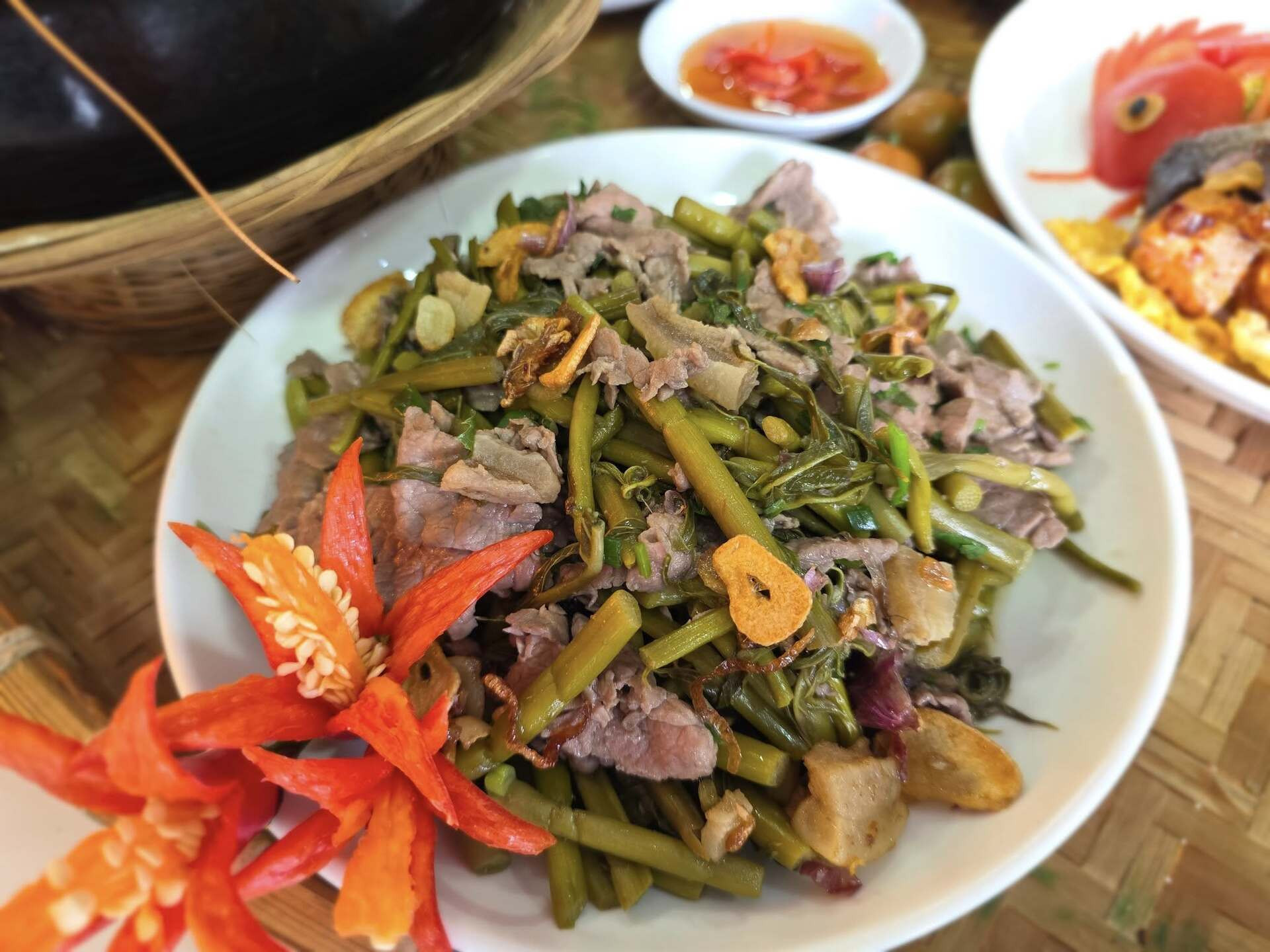
Many restaurants have added this once-humble ingredient to their menus. A standout dish is pickled rau móp stir-fried with garlic - a simple yet memorable combination of fermented shoots, fragrant garlic, crispy pork fat, Vietnamese coriander, and crushed roasted peanuts.
Other creative preparations include stir-fried rau móp with pork intestines, sour soup, sautéed shrimp, or as a side dish to braised fish or fermented hotpot.
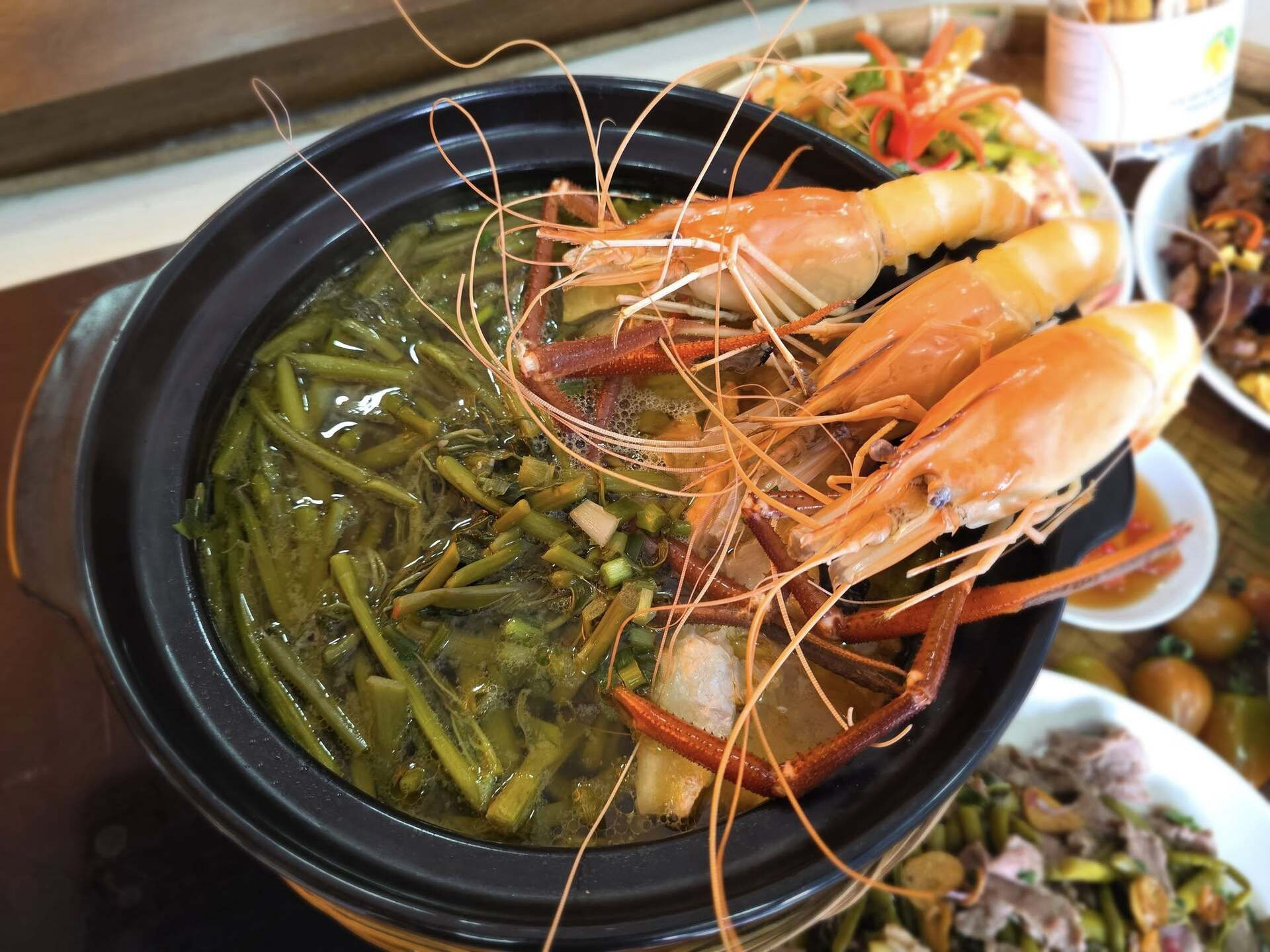
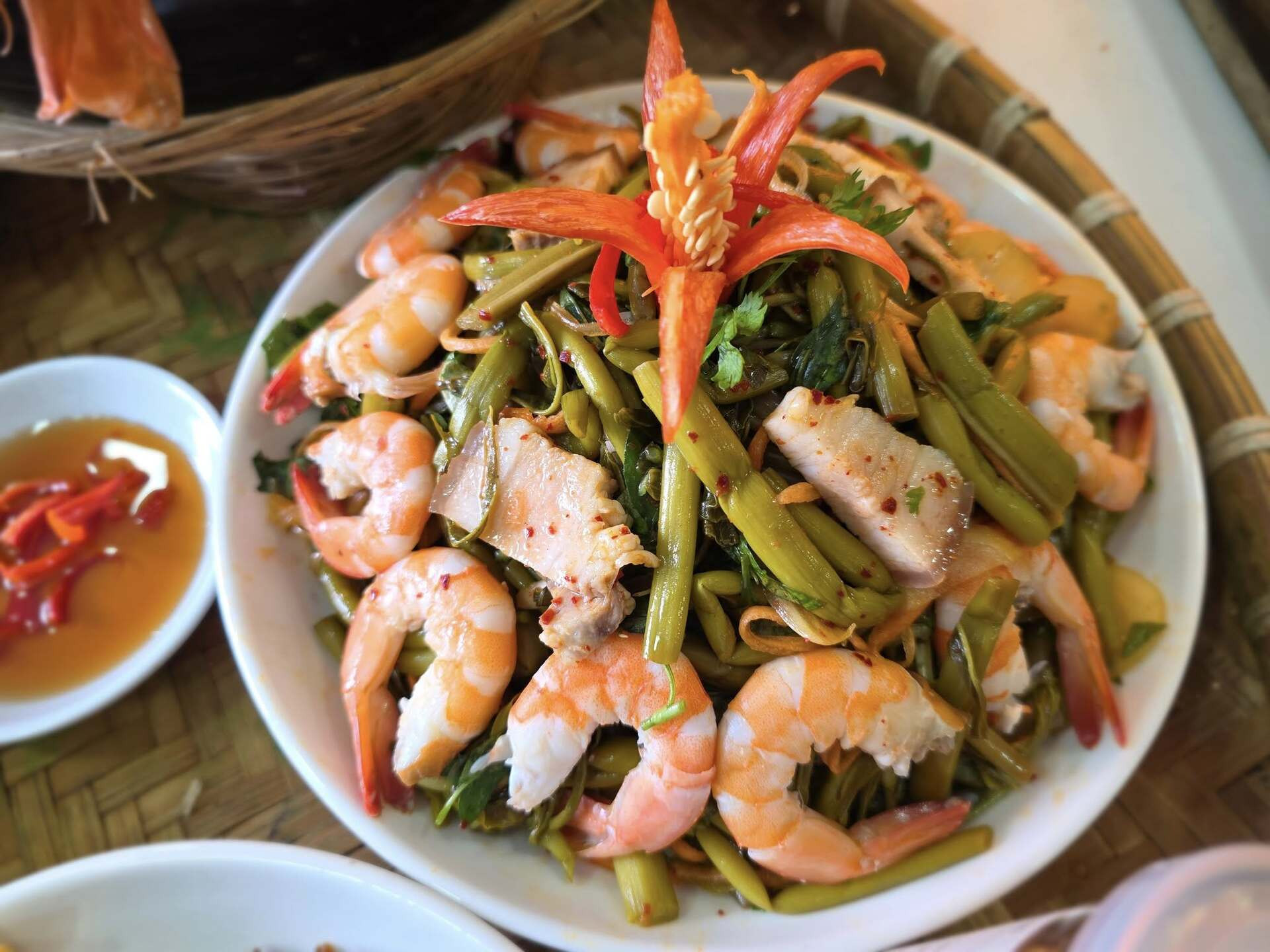
Nguyen Ngoc Tra, 33, a food enthusiast in Ho Chi Minh City, praised the ingredient’s firm texture and distinct flavor. “Pickled rau móp is crunchy, fragrant, and never gets boring,” he said. “Stir-fried with garlic, beef, or tossed into a shrimp or chicken salad, it’s easy to prepare and full of flavor.”
“For my family, the most nostalgic dish is sour soup with pickled rau móp. It’s incredibly comforting - just a few prawns or a piece of local fish, some herbs, and you’ve got a steaming, tangy, crunchy bowl that hits all the right notes,” he added.
Beyond taste, traditional medicine values rau móp for its cooling properties, helping detoxify the body and aid digestion.
From overlooked wild plant to culinary treasure, rau móp has become a symbol of how Vietnam’s rural heritage continues to enrich its modern food culture.
Linh Trang
.svg)
