 Vietnamnet.vn

 Podcast



Despite holding three university degrees, Nguyen Tien Dat chose not to remain in the city. Instead, the 27-year-old returned to his hometown in the Mekong Delta to start a smart mushroom farm - now earning tens of millions of dong each month.
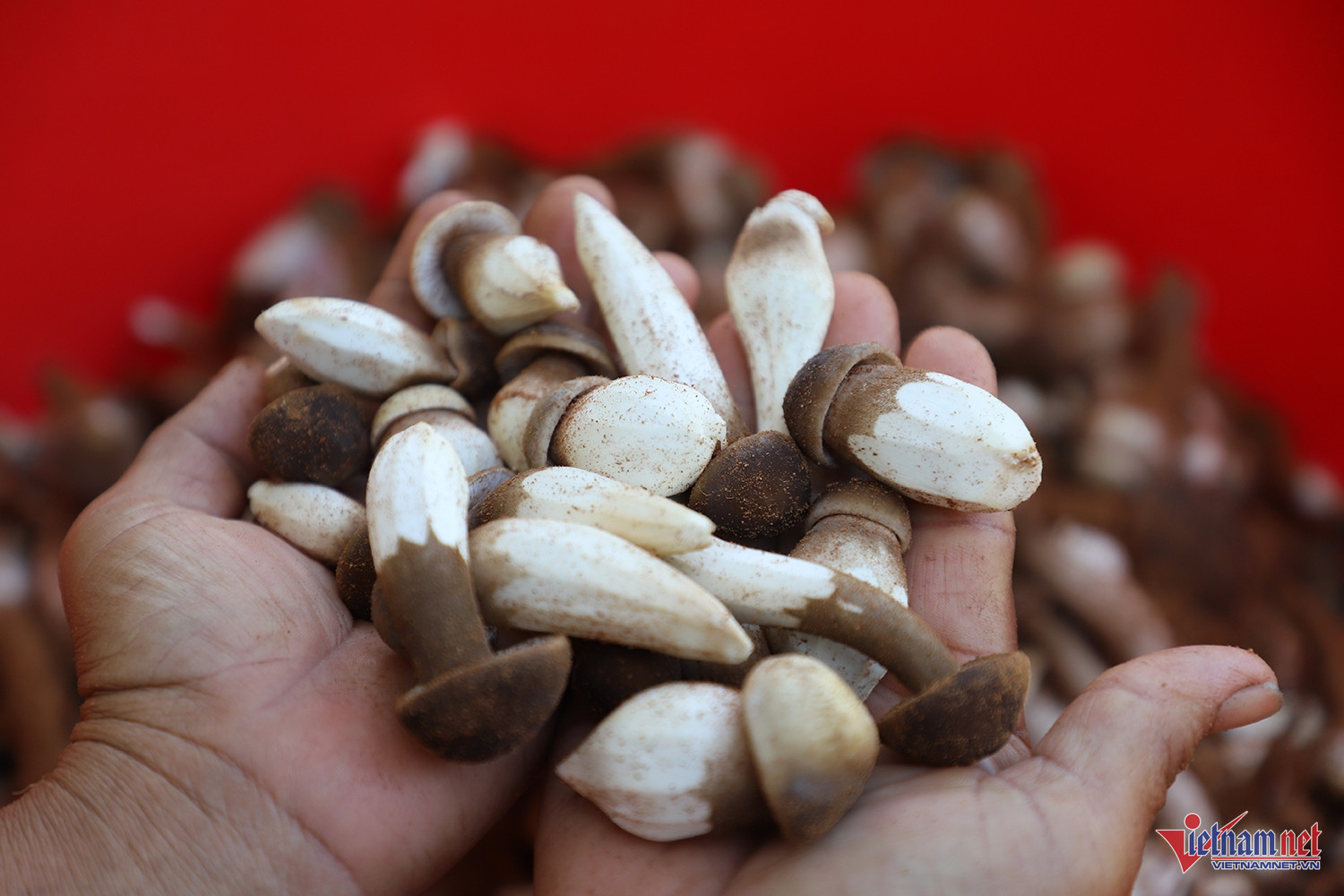
In the early hours of the morning, at a house beside a shrimp pond in Lich Hoi Thuong Commune (Can Tho City), Dat begins his day harvesting black termites mushrooms for delivery.
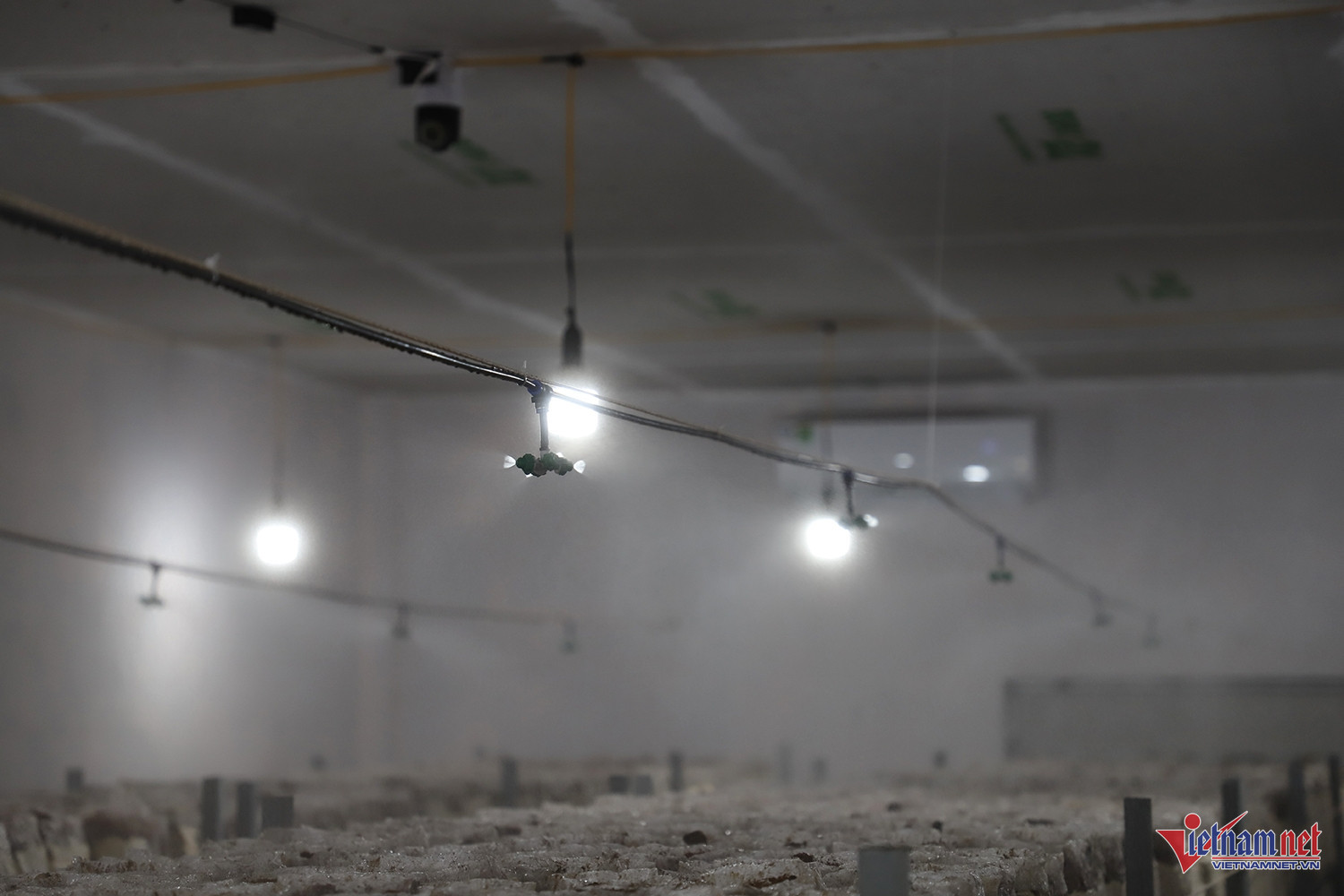
After harvesting, he checks environmental data on his phone and adjusts the cooling and misting systems to keep the temperature between 25–28°C and humidity above 85%.
Dat has been running his high-tech mushroom farm since early 2024, following a lengthy period of trial and error.
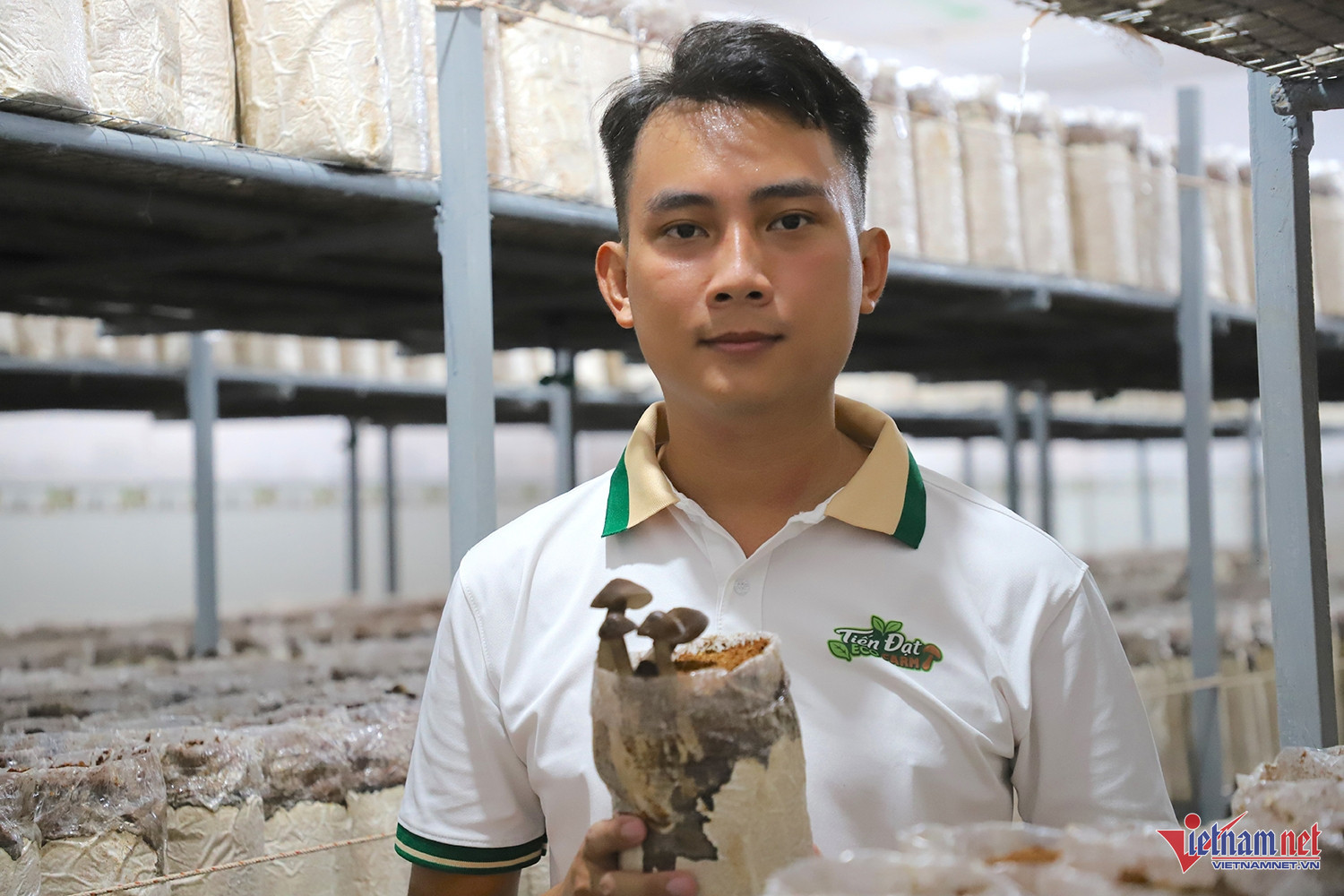
Dat graduated in automation and control engineering from Can Tho University of Technology during the COVID-19 pandemic in 2020. He went on to study business administration at the University of Economics Ho Chi Minh City and high-tech agriculture at Van Lang University. After graduation, he briefly worked for a pesticide company in his hometown.
But the harsh realities of climate change, salinization, and acidic soil in the Mekong Delta left him restless.
“Traditional farming has become increasingly uncertain. I wanted to apply what I’ve learned to build a more sustainable, weather-independent model right here in my hometown,” Dat shared.
In early 2024, he began testing black termites mushroom farming on just 10 square meters with around 500 growth blocks (known as "phoi"). Due to inexperience, each block yielded less than 100 grams, far below the optimal 150–200 grams.
But he didn’t give up. Dat refined his process, reducing the harvest cycle from six to four months to lower costs, and learned to eliminate green-mold-infected blocks early to prevent contamination.
With startup capital from his family, he converted an old warehouse into a mushroom facility. The initial growing area was 30 square meters, later expanded to 100 square meters divided into two controlled zones. Most of his investment went into a smart irrigation system and IoT-based environmental sensors.
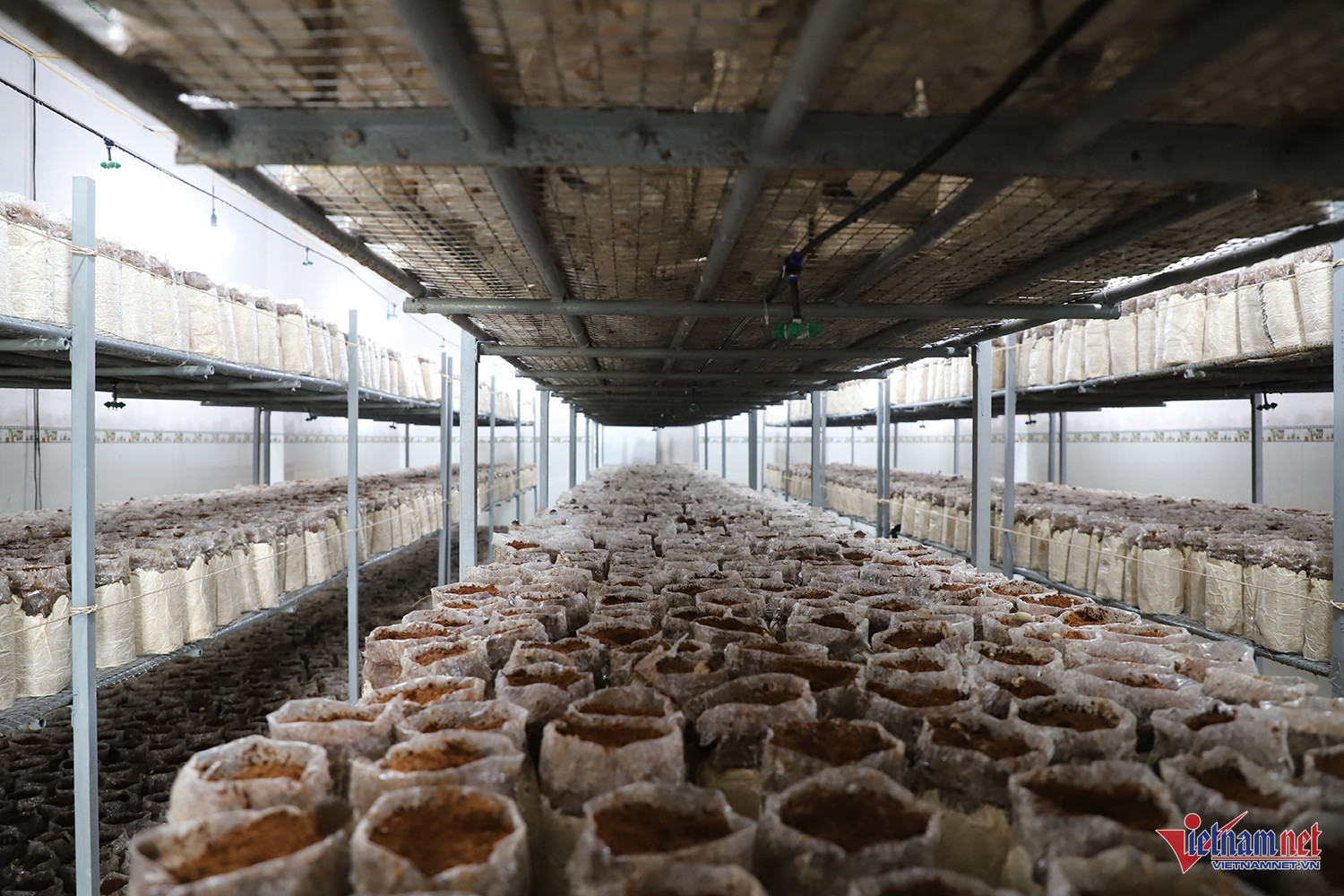
Using a smartphone, Dat can monitor and adjust temperature, humidity, light, and CO₂ levels in real time.
“The system updates every five minutes, allowing me to fine-tune the growing environment very precisely,” he explained.
Compared to traditional mushroom farming, Dat says the biggest advantage of his system is stability and control. Disease risk is minimized, growth is more uniform, and productivity is 30–40% higher.
Dat currently maintains around 10,000 mushroom blocks, yielding 8–10 kg daily. With retail prices ranging from USD 12–14 per kg, the business generates several thousand dollars in monthly revenue.
Beyond selling fresh mushrooms, Dat invested in a freeze-dryer to produce high-quality dried mushrooms. The drying process takes about 30 hours and preserves both shape and nutrition. On average, 10 kg of fresh mushrooms yields 1 kg of dried product, which sells for USD 144 per kg.
His two main product lines - fresh and dried black termites mushrooms - have earned a 3-star OCOP certification and are sold through restaurants, markets, and online platforms.
Dat believes modern agriculture is no longer “just farming” - it requires knowledge, technology, and entrepreneurial thinking.
“If young people are truly passionate, start small, apply science, and keep learning, success is absolutely possible. Don’t be afraid to go home. The countryside is full of opportunities for sustainable agricultural startups,” he said.


According to Tu Hai Long, an official with the Lich Hoi Thuong Commune Economic Office, Dat’s mushroom farm is a well-researched and carefully executed model showing clear economic impact.
“Our local government is working with distributors to support market access, while helping other young farmers learn these techniques. Dat himself is very willing to share his knowledge and mentor others in high-tech farming,” said Long.
Tran Tuyen
.svg)
