 Vietnamnet.vn

 Podcast



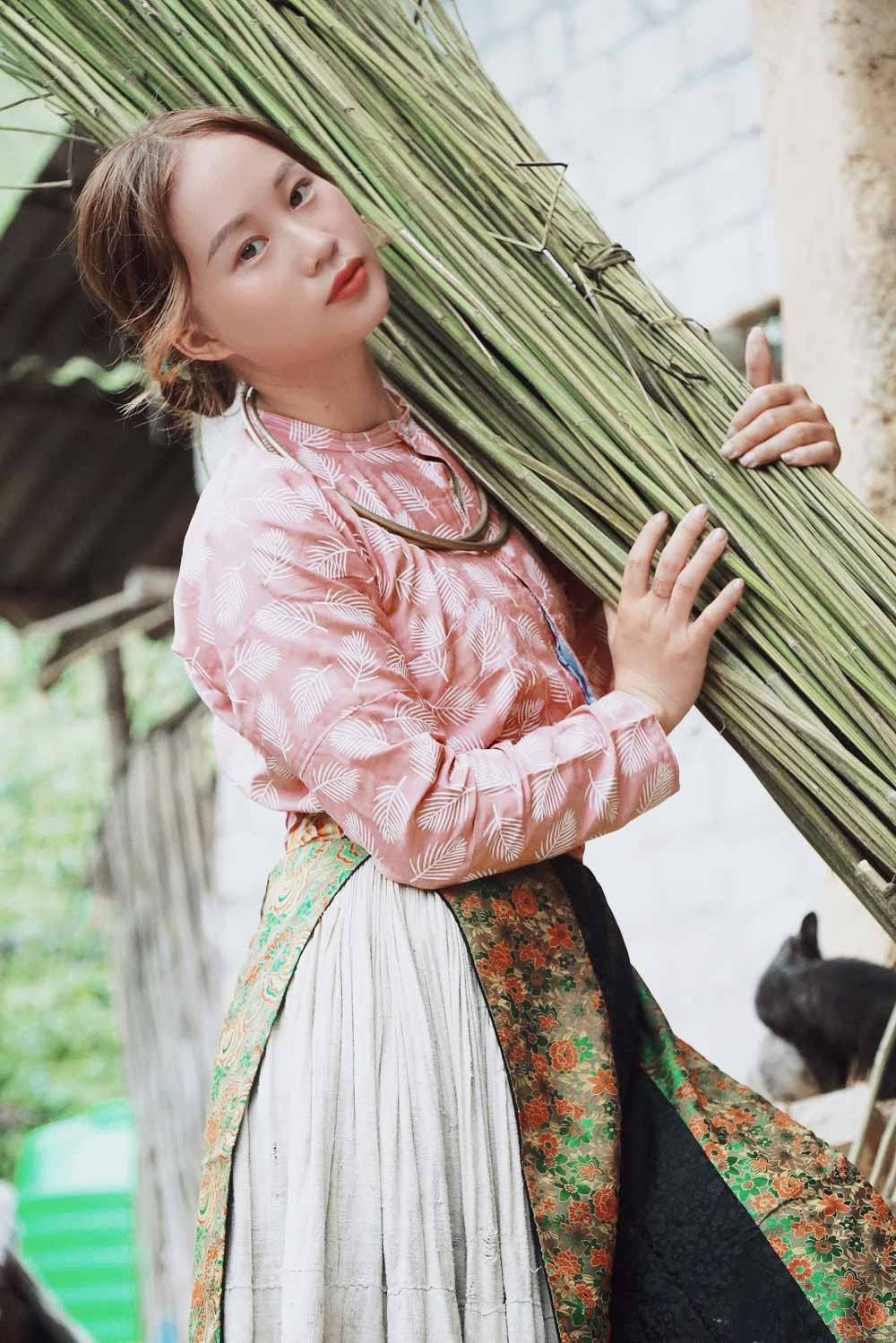
Now in her fifth year on her journey, De, a 23-year-old Hmong woman from Nheo Lung village in Dong Van commune in Tuyen Quang province, continues to pursue her dream of weaving from the hemp plant, which is used to make linen cloth.
“I was the first person in my village studying at university. When I received my admission letter to Hanoi University of Culture, everyone contributed money to help me travel to the capital city. So I always reminded myself that studying was not just for me, but for the whole Nheo Lung village.”
In her third year at university, the Covid-19 pandemic broke out, cutting off her income from part-time work. She returned home and, one afternoon while cleaning the attic, discovered linen fabrics her mother had carefully stored for years as wedding dowry gifts. In that difficult moment, she dared to ask her mother for permission to try selling them.
De recalled: “I thought it was just a way to get through hardship, but that moment opened a new turning point. Those old linen fabrics awakened in me the desire to preserve a traditional craft that was gradually fading away. From then on, I nurtured the idea that after graduating, I would return home to reconnect the linen thread that was at risk of breaking within my own generation.”
The signboard “Det vai lanh truyen thong - Hemp Hmong Vietnam” was installed at the curve at the foot of Thai Phin Tung slope, marking the opening of the first linen workshop founded by De. From this small space, she began supplying raw linen fabric to designers, fashion shops, and those who love the material known for being “warm in winter and cool in summer.”
At the same time, she experimented with designing bags, shirts, scarves and more, blending Hmong materials with modern forms so that linen could creatively enter contemporary life.
From these first steps, the workshop gradually formed a stable workforce of four middle-aged Hmong women working full-time, with an average income of about VND4 million per month. In addition, 10 households weave at home and are paid per product, each earning an additional VND2–3 million per month.
De does not want linen to lie quietly in museums or cupboards. She wants it to be present in modern life as a sustainable, environmentally friendly fabric, with each product telling a cultural story.
To that end, the workshop invites visitors to participate in all 12 stages of traditional weaving. Visitors can see, touch, and try everything from dyeing, joining fibers, and spinning threads to weaving on looms. This approach connects cultural preservation with community livelihoods.
Bringing Hmong culture to the world
After initial success, De began contacting shops in Thailand and Japan, wrote emails in English to introduce her products, and even personally carried linen fabrics abroad to seek partners and tell the story of Hmong linen in foreign lands.
These persistent efforts helped her linen journey extend far beyond the steep paths around her village. She has become a young representative of a new Hmong generation, appearing at many domestic and international forums.
Starting with her first steps at the 6th Kunming Forum on South and Southeast Asia Education Cooperation and Exchange, De gradually opened up international connections.
In 2023, she became the sole representative of Vietnam participating in the project series “Weaving dreams, embroidering rivers and mountains” and the Lancang–Mekong Intangible Cultural Heritage Workshop in Yunnan, China, alongside participants from Laos, Thailand, Cambodia, and Myanmar. There, she spoke on behalf of young people from six Mekong River countries about textile dyeing crafts and the transmission of cultural identity.
In 2024 she attended the Asia International Hemp Expo & Forum in Bangkok and participated in many fairs and programs related to hemp in Thailand, the Philippines, Cambodia, and Laos.
In August 2025, she was invited to present her products and Hmong culture at the Government Office and had a direct conversation with PM Pham Minh Chinh within the framework of the National Target Program for Socio-Economic Development in Ethnic Minority and Mountainous Areas in 2021–2030.
She is now preparing for longer-term steps.
“I will build a cultural space right at the workshop, turning it into a ‘living museum’ of Hmong linen, while regularly organizing workshops and experiential tours. The goal over the next two years is to make Hemp Hmong Vietnam the largest linen fiber supplier in the country, and more importantly, to help young people in the village see linen weaving as a source of pride and a sustainable livelihood,” De said.
Vu Mung
.svg)
