 Vietnamnet.vn

 Podcast



As Tet (Lunar New Year) approaches, laughter echoes warmly across Si Pa Phin commune in Dien Bien. Teachers and students gather to wrap banh chung, smoke from wood-fired stoves curling into the mountain mist.
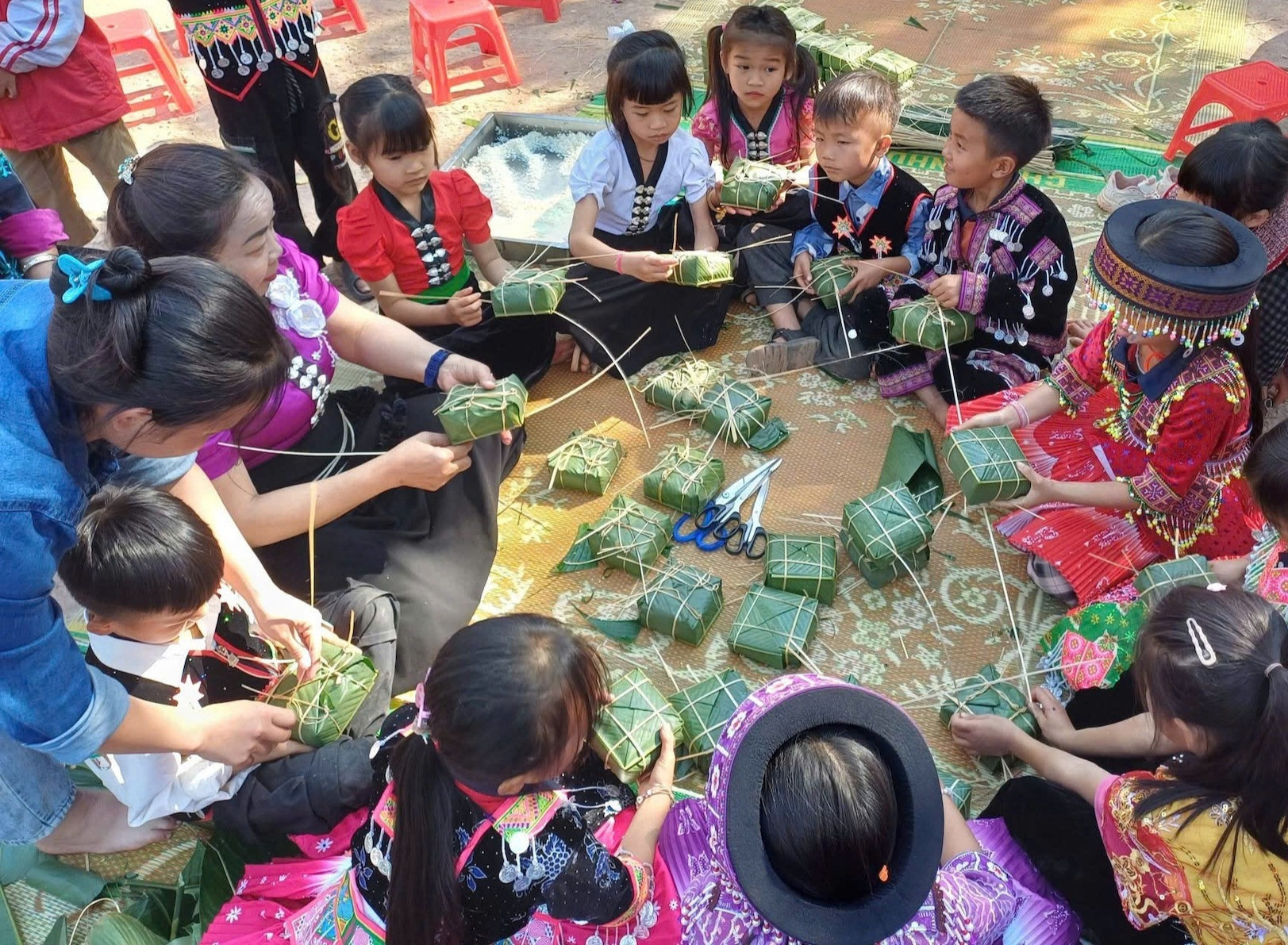
Teachers and students gather to wrap banh chung ahead of Tet. Photo: Thanh Hue
Primary school teacher Nguyen Thi Thu Hoai beams as she carefully ties the strings around a banh chung clumsily wrapped by one of her pupils.
From Dien Bien’s provincial center, the only road to the border commune of Si Pa Phin stretches nearly 100km, winding through steep hairpin bends.
Born in 1989, Hoai has taught at the Si Pa Phin Inter-level Primary and Secondary Boarding School since 2011. Her home lies more than 100km away. Her child stays in her hometown with his father and grandmother. She rents a small room near the school, returning home quietly on weekends before boarding the bus back at the start of each week.
“Of course I miss home. When my child is sick and I cannot be there, it hurts,” she says softly. “But the children here also need me.”
In 2011 and 2012, absenteeism was common. To maintain class numbers, teachers had to trek into villages to persuade families. Sometimes, students would run at the sight of their teacher from afar. Hoai and her colleagues followed narrow footpaths, calling out students’ names across hillsides. Some children had no shoes. In winter, others lacked warm clothes.
“In my class now, there is a student whose father is paralyzed and whose mother left. He lives with his father and grandfather. It breaks my heart,” she says, her voice lowering, eyes reddening.
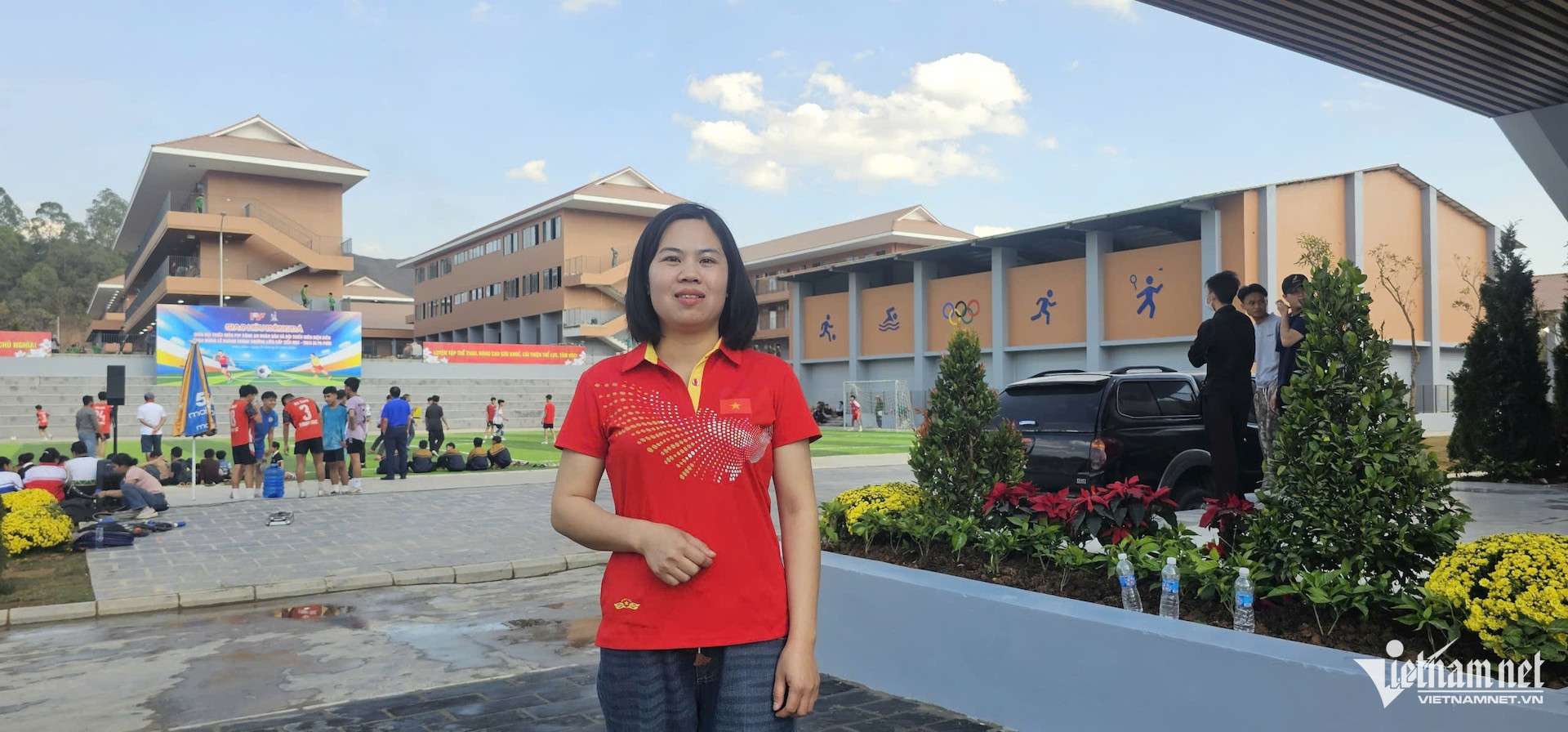
Teacher Nguyen Thi Thu Hoai at the Si Pa Phin Inter-level Primary and Secondary Boarding School. Photo: Thanh Hue
At a boarding school, teachers do more than teach literacy. They look after meals, sleep and health. Many parents farm in distant fields and return only once a week. Hoai says that when she sees her students finish their bowls of rice and sleep peacefully in bunk beds, her heart feels lighter.
In the early years, there were no staff quarters. Classrooms were prioritized for semi-boarding students. Teachers had to rent rooms in the village. The road was long and slippery in the rain, yet few complained. They had grown accustomed to hardship.
Today, the new campus includes staff housing, music, English and art rooms, even a swimming pool and football field for students.
“I never imagined that in such a remote border area, I would one day teach in a school as beautiful as this,” Hoai says, smiling - a radiant, gentle smile like Dien Bien’s winter sun.
The boy who became a police officer

Literature teacher Nguyen Duy Diep. Photo: Thanh Hue
Nguyen Duy Diep graduated in 2006 and has worked in the highlands ever since - 18 years and counting. Originally from Thai Binh, now part of Hung Yen, his life has become inseparable from the mountains.
In his early years, he taught at Nam He Secondary School. Some villages were so remote that it took three days on foot to reach them. After wading through streams, he would climb mountains. Homes were separated by entire hills. Weekends were not days of rest; teachers went door to door to persuade students to return to school.
“If I had lost heart, I would have quit long ago,” he says. “But once you choose this path, you must see it through.”
He remembers a sixth-grade boy, bright and eager, yet burdened by hardship. His parents worked far away in upland fields, leaving three brothers behind. The eldest both attended school and cared for his younger siblings. When the boy stopped coming to class, Diep walked nearly a day to reach his home.
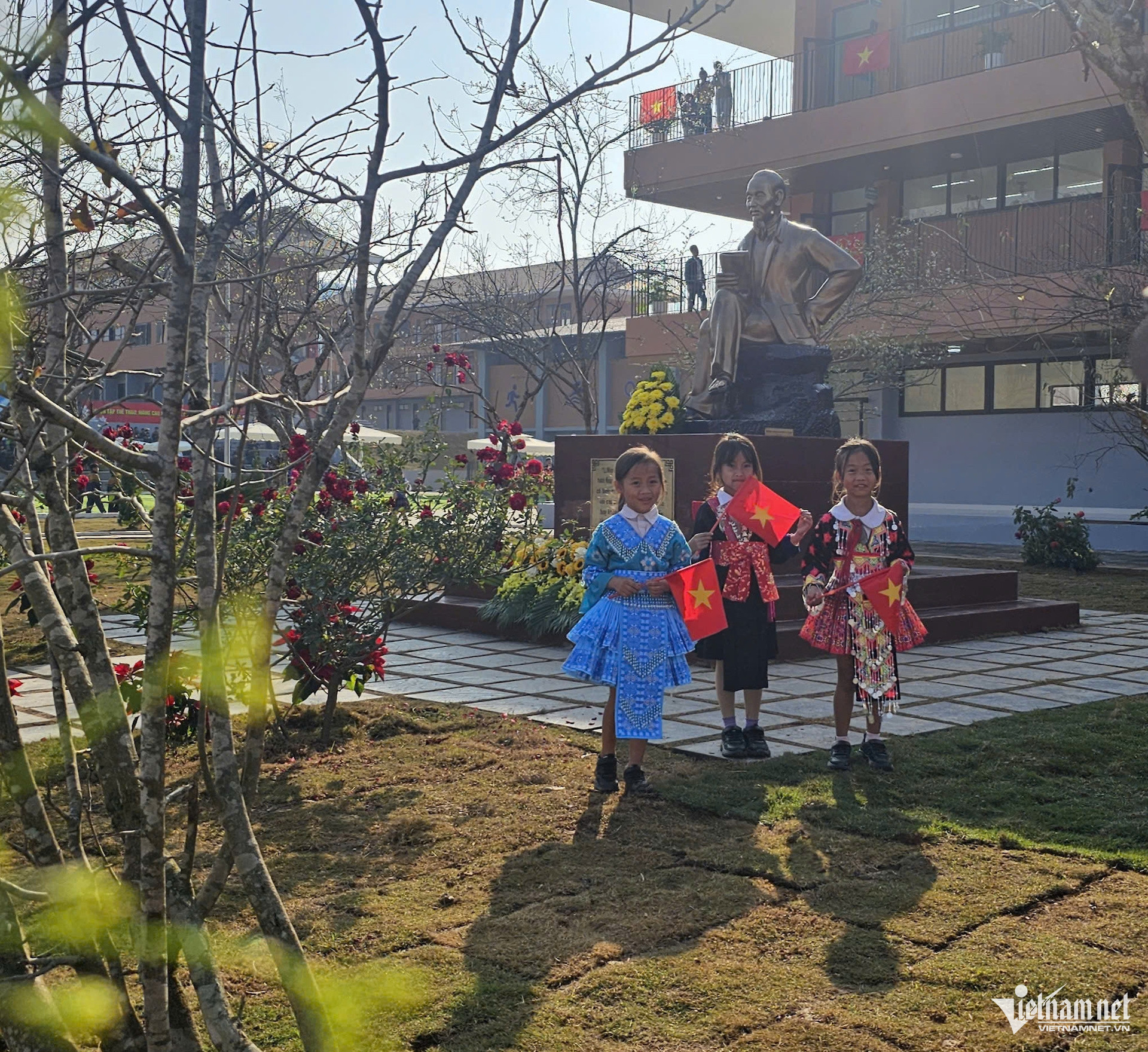
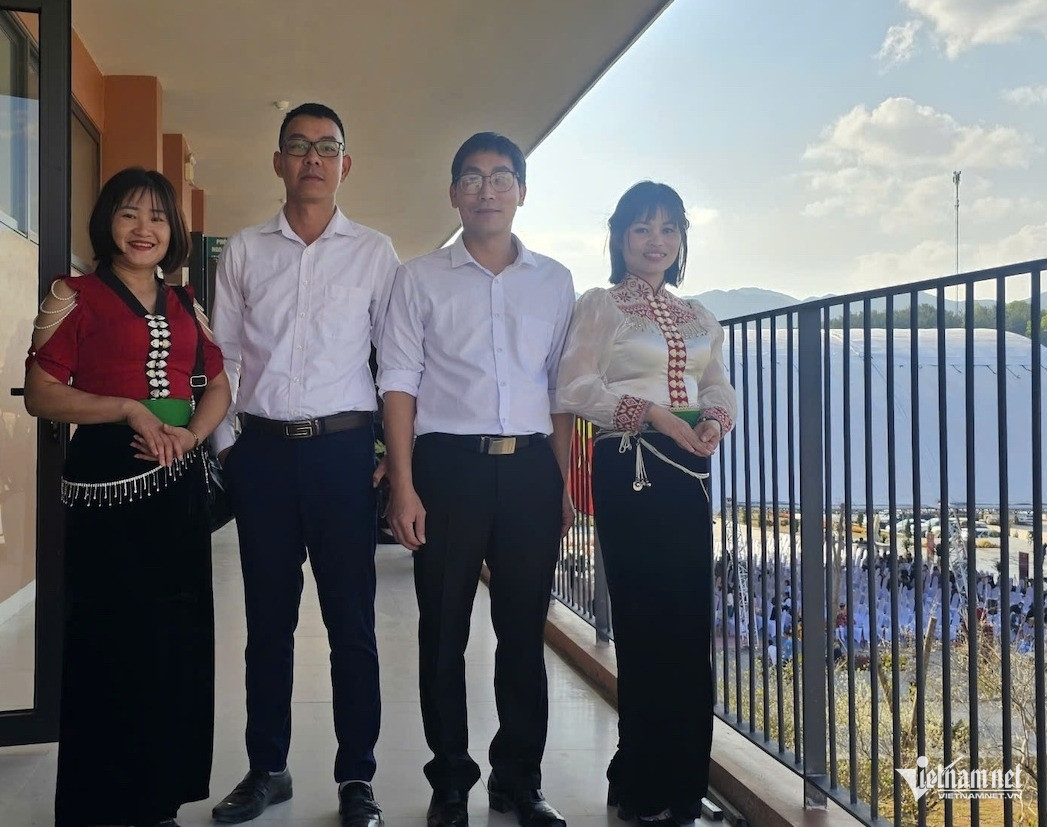
Teachers and students at Si Pa Phin Inter-level Primary and Secondary Boarding School. Photo: Thanh Hue
“The simple leaf hut nestled against the mountainside - it made you want to cry,” Diep recalls, gazing into the distance as if the scene were before him again. If the boy dropped out, his future might have ended there.
Diep and his colleagues devised a plan to bring all three brothers to the boarding school. The younger two would attend primary classes under teachers’ care. The eldest would study at lower secondary level in the dormitory. After many attempts at persuasion, the family agreed.
Years later, the boy called to say he had been admitted to the People’s Security Academy. Today, he has graduated and serves as a police officer in the very area where his teacher once taught him.
When recounting the story, Diep does not dwell on his own effort. “I’m happy for him. That’s enough for me,” he says.
Now in Si Pa Phin, he stands at the lectern in bright new classrooms filled with natural light. His family has moved here. His child studies at this very borderland school.
A milestone at the frontier
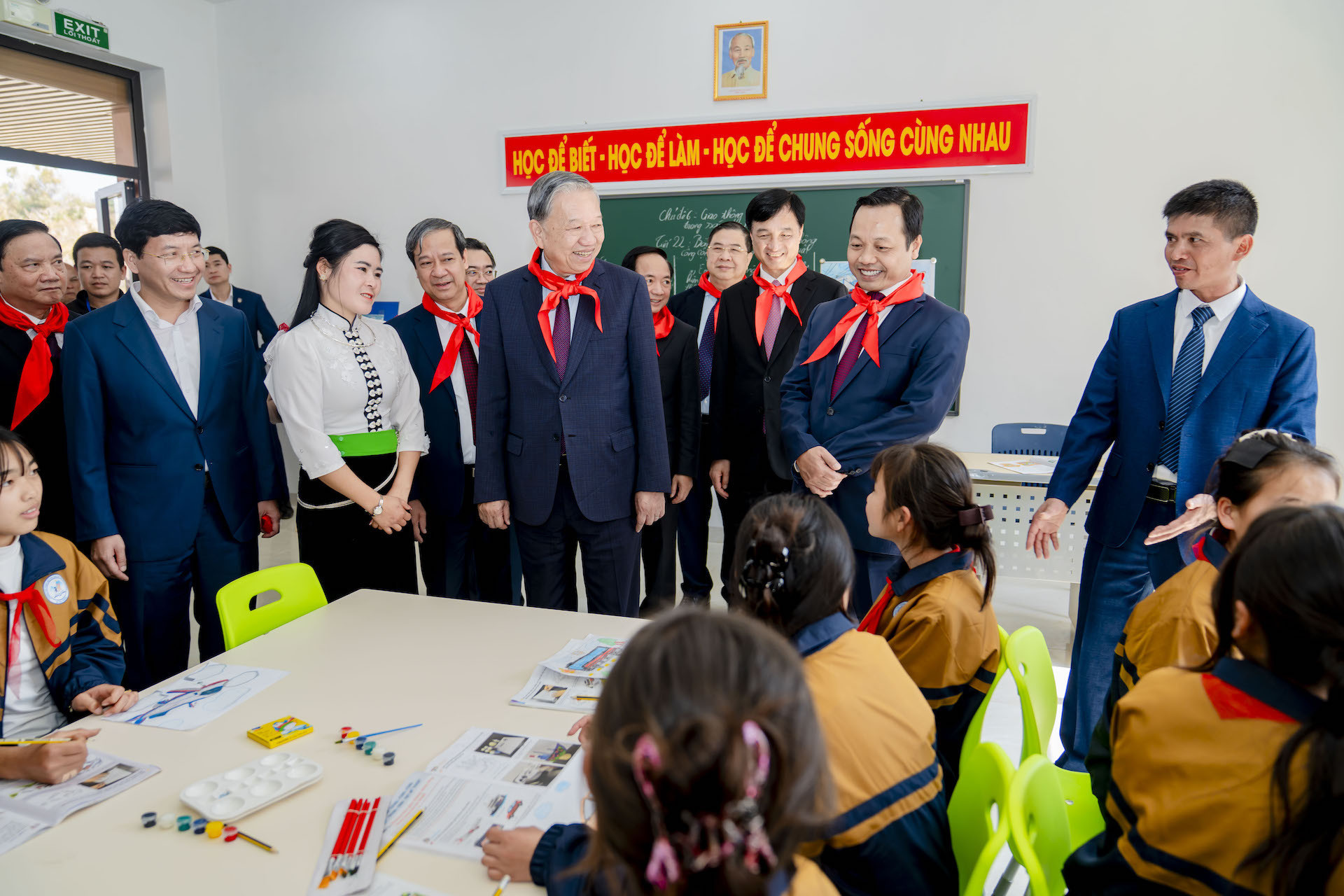
After the Politburo decided to launch a program to build 248 schools in border communes, Dien Bien was selected as the first locality to begin construction of a model campus. From groundbreaking to inauguration, fewer than six months passed before the Si Pa Phin Inter-level Primary and Secondary Boarding School was completed.
This “five-star” boarding school provides a safe, well-equipped space where children who once had no shoes can now dream of university entrance exams.
In previous years, teachers trekked for days to convince students to stay in school. Today, pupils live and study in a modern campus. Teachers have official housing.
“Teachers and students now have a dream school. I hope the children will grow strong in both body and mind, contributing to the development of our border region,” shared Vice Principal Bui Thi Luong, visibly moved.
The border is not safeguarded by markers alone. It is protected by classrooms lit each night, by staff quarters that allow teachers to remain, by policies translated into concrete works.
Children like that boy from the leaf hut on the mountainside step into university lecture halls, then into police uniforms.
As night falls, the fire beneath the banh chung still glows red. And in that distant borderland, classroom lights shine on.
Thanh Hue - Hien Anh
.svg)
