 Vietnamnet.vn

 Podcast



Tran Tuyen
Built in 1763, the communal house stands on a site of more than 2,500 square meters in Thien Nhan commune, Nghe An province. It occupies a prime location, facing the alluvial plain of the Lam River at the front and backed by mountains.
The structure is dedicated to Uy Minh Vuong Ly Nhat Quang, the eighth son of King Ly Thai To and the first governor of Nghe An, who made significant contributions to the region’s economic, political, and cultural development.
According to researchers, Hoanh Son is one of the most representative communal houses in central Vietnam, distinguished by what is considered the finest wood carving art in the country. In 1984, it was recognized as a national historical relic, and in 2017, it was designated a special national architectural and artistic monument by the Prime Minister.
Over time, many parts of the structure deteriorated, particularly its wooden components. In March 2024, the Nghe An Department of Culture, Sports and Tourism launched a restoration project with a budget of about VND24 billion (approximately US$980,000).
The communal house consists of two main buildings: the great hall and the rear sanctuary. The great hall alone features seven compartments, eight structural frames, and 32 large wooden pillars.
During restoration, severely damaged pillars were replaced, while many original elements such as beams and lower structures were preserved to maintain authenticity. Sections of wood affected by termites were carefully removed and replaced with new pieces of the same type.
The carving art of the communal house is considered highly sophisticated, with dense patterns and diverse themes. In addition to familiar motifs such as the four sacred animals - dragon, qilin, turtle, phoenix - and the four seasons represented by pine, chrysanthemum, bamboo, and apricot, there are also vivid scenes depicting traditional life, including return ceremonies of successful scholars, exam result viewings, martial contests, and boat racing.
After restoration, many carvings have been cleaned and restored to clarity. Particularly striking are the paired dragon carvings mounted on the pillars, now more refined and prominent than before.
Local elders have also reconstructed the content of royal decrees on wooden panels, repainting and gilding them for long-term preservation. Some previously lost items, such as a wooden cabinet, have been recreated based on archival materials for display.
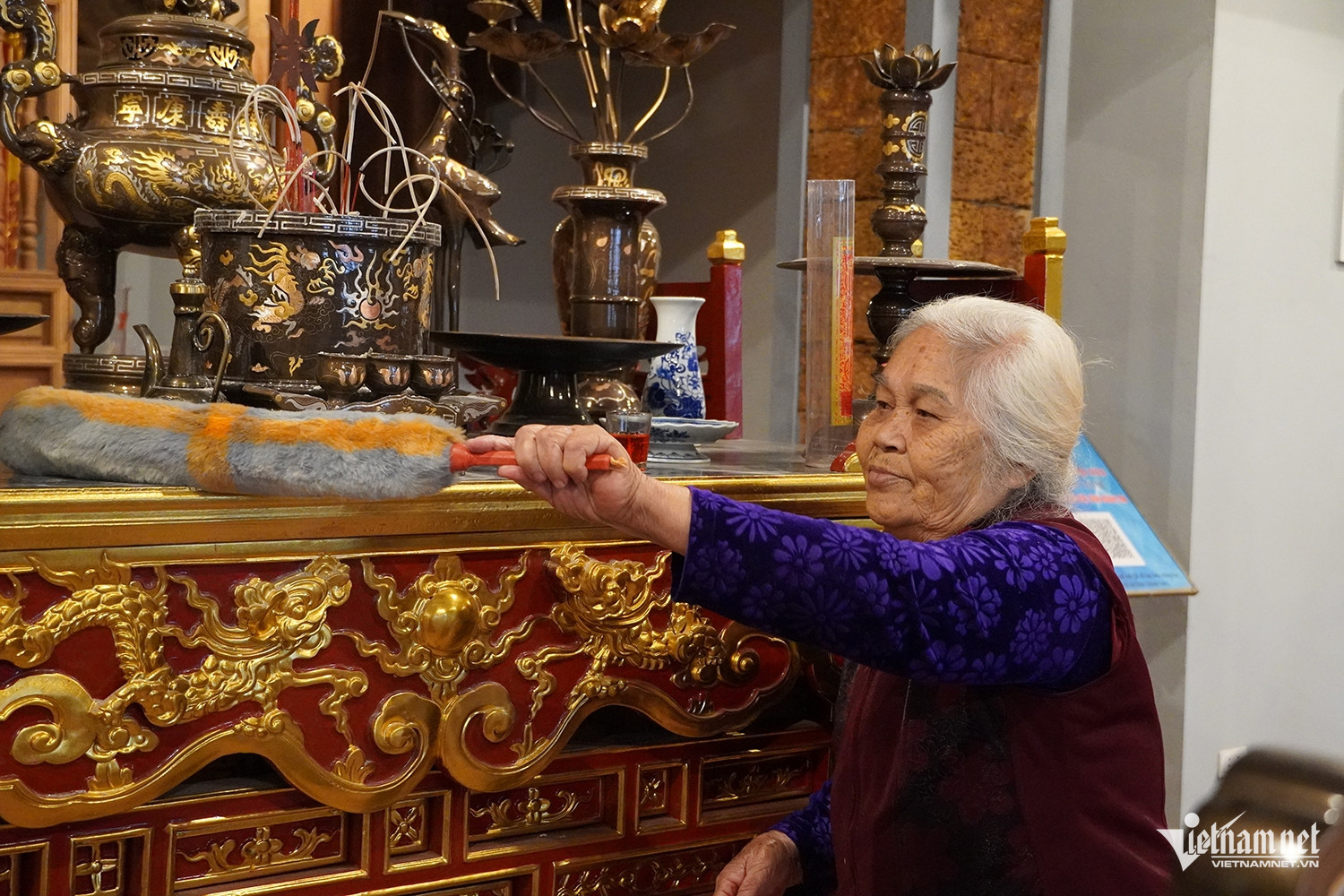
Having looked after the communal house for nearly 40 years, 81-year-old To Thi Tuyet said local residents are delighted to see the site restored. It not only preserves historical value but also provides a renewed space for cultural and spiritual activities in the community.
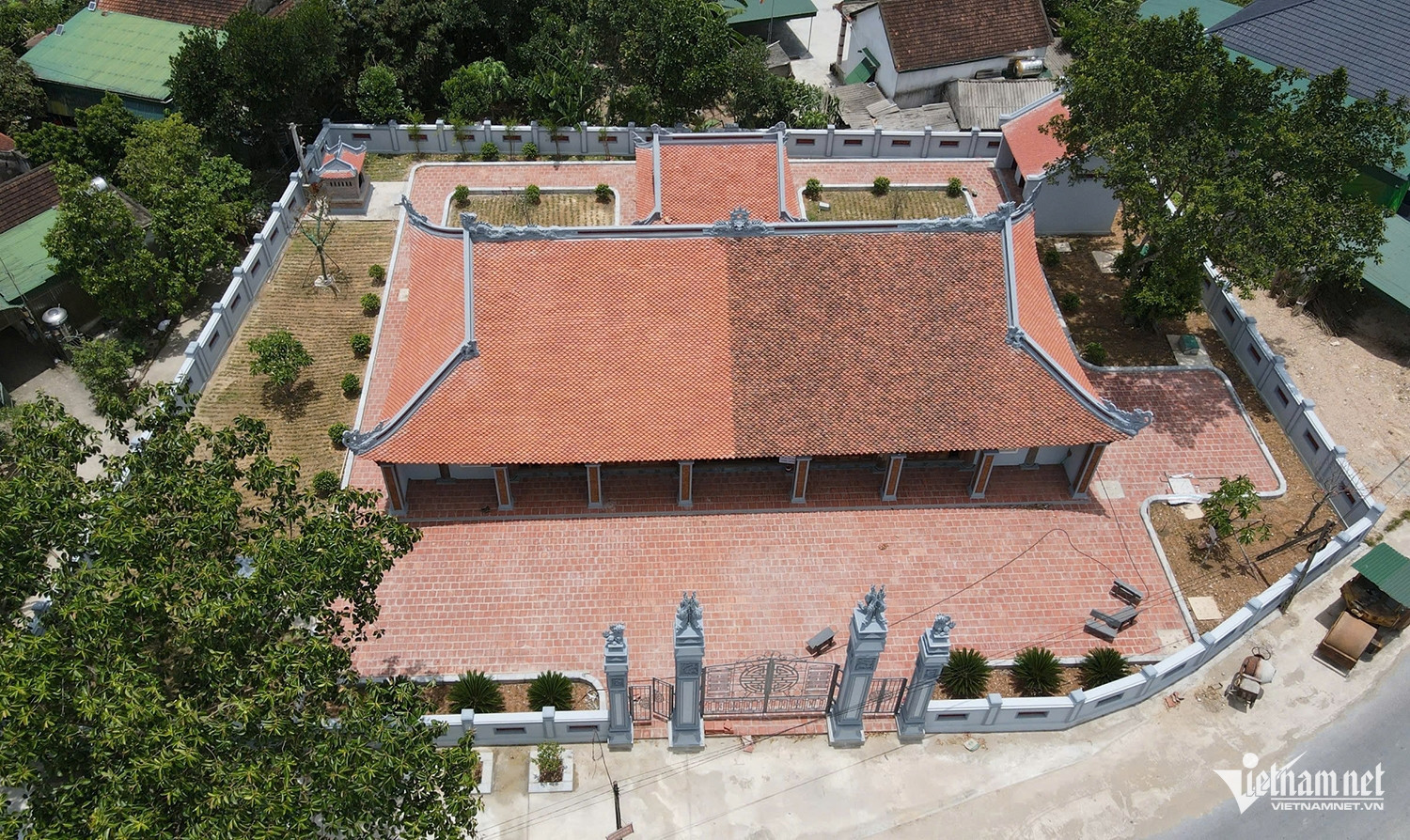
Hoanh Son communal house was built in 1763.
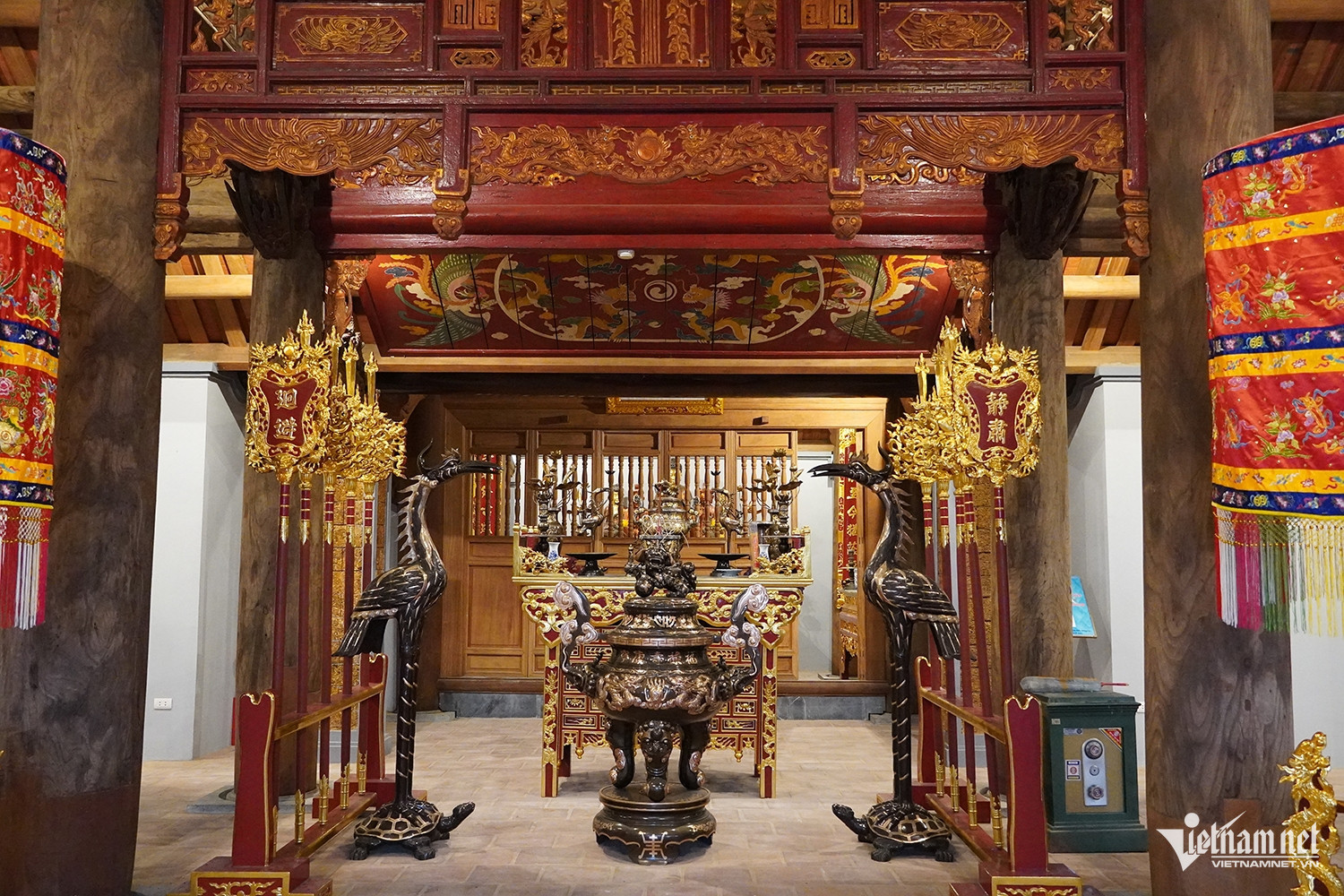
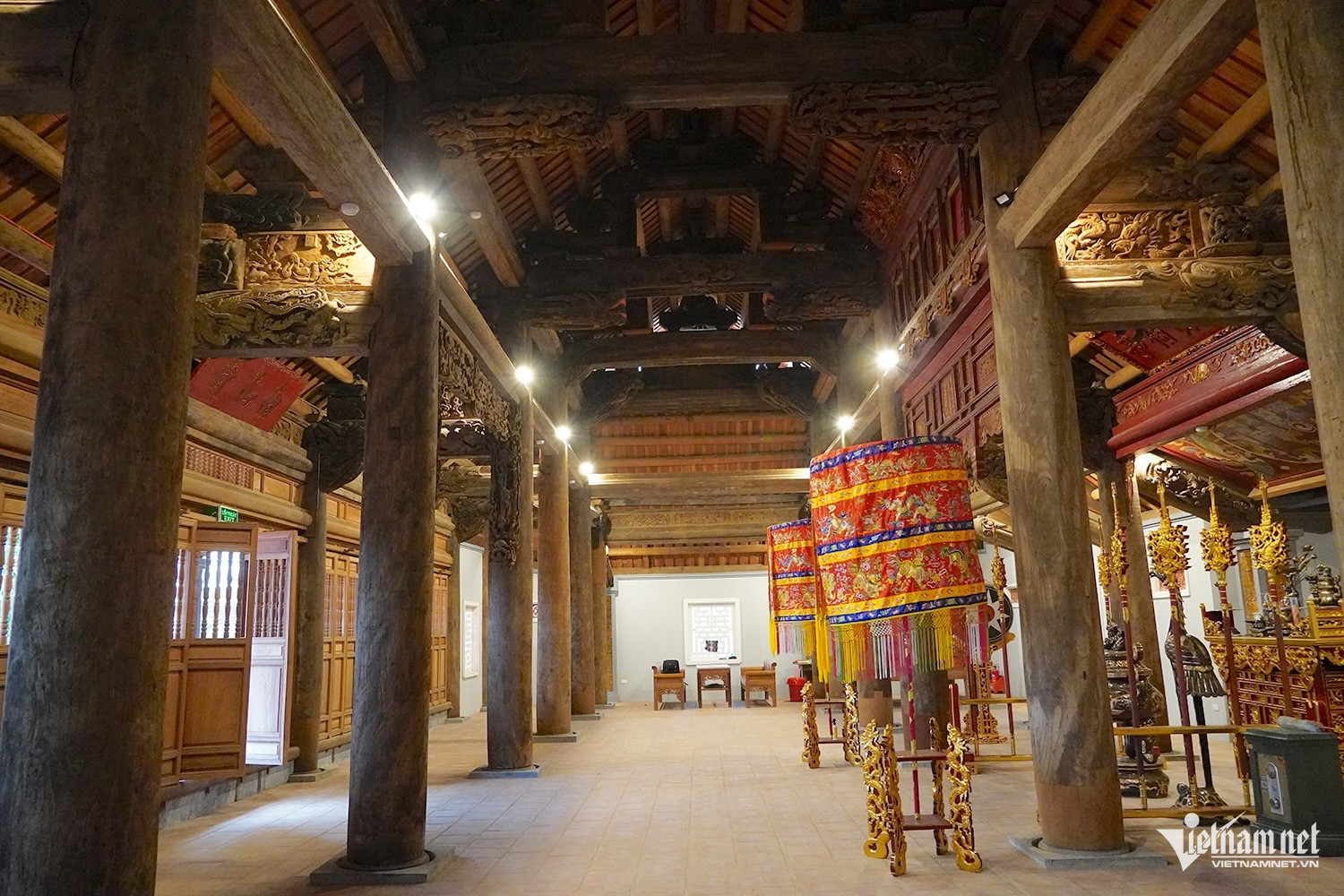
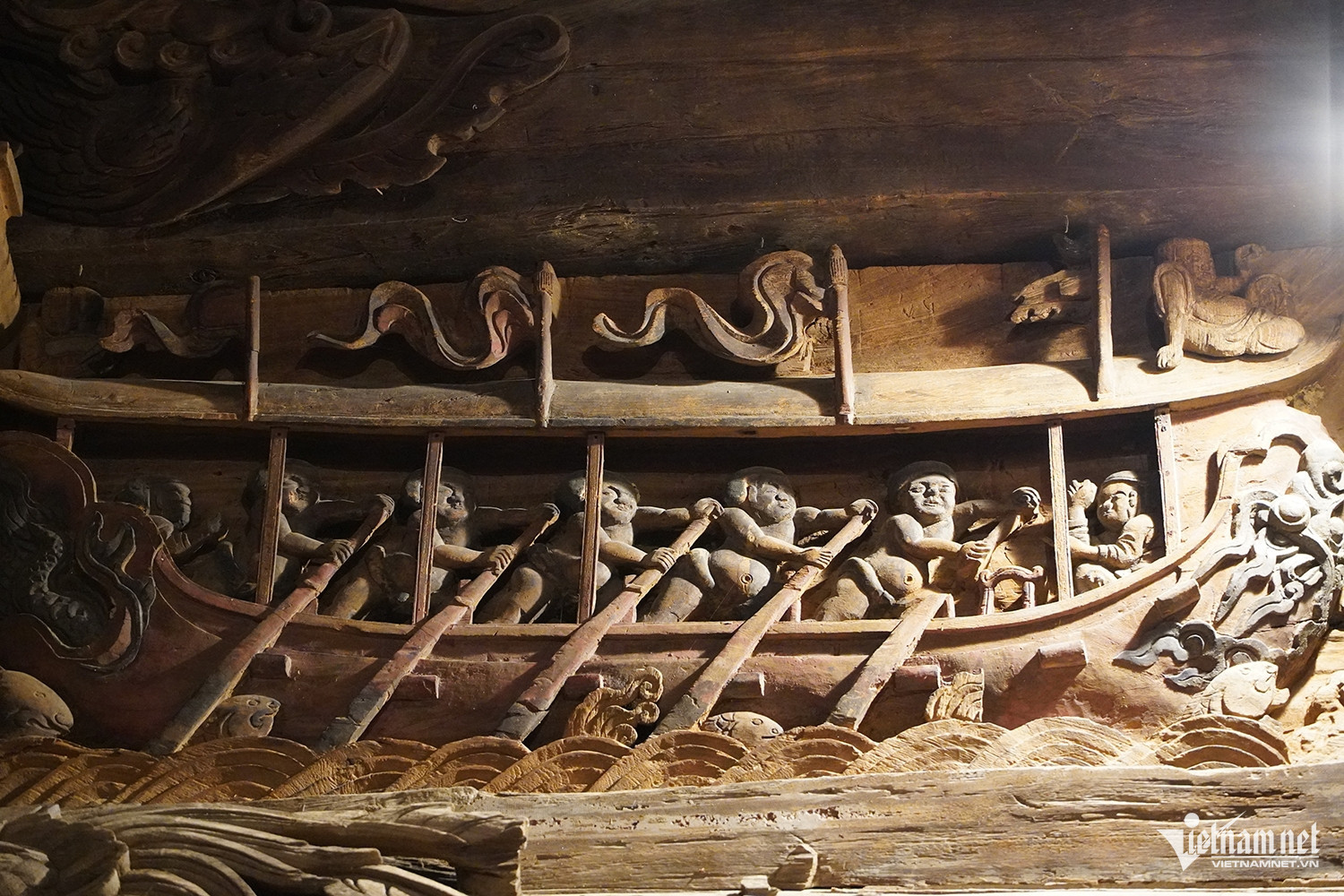
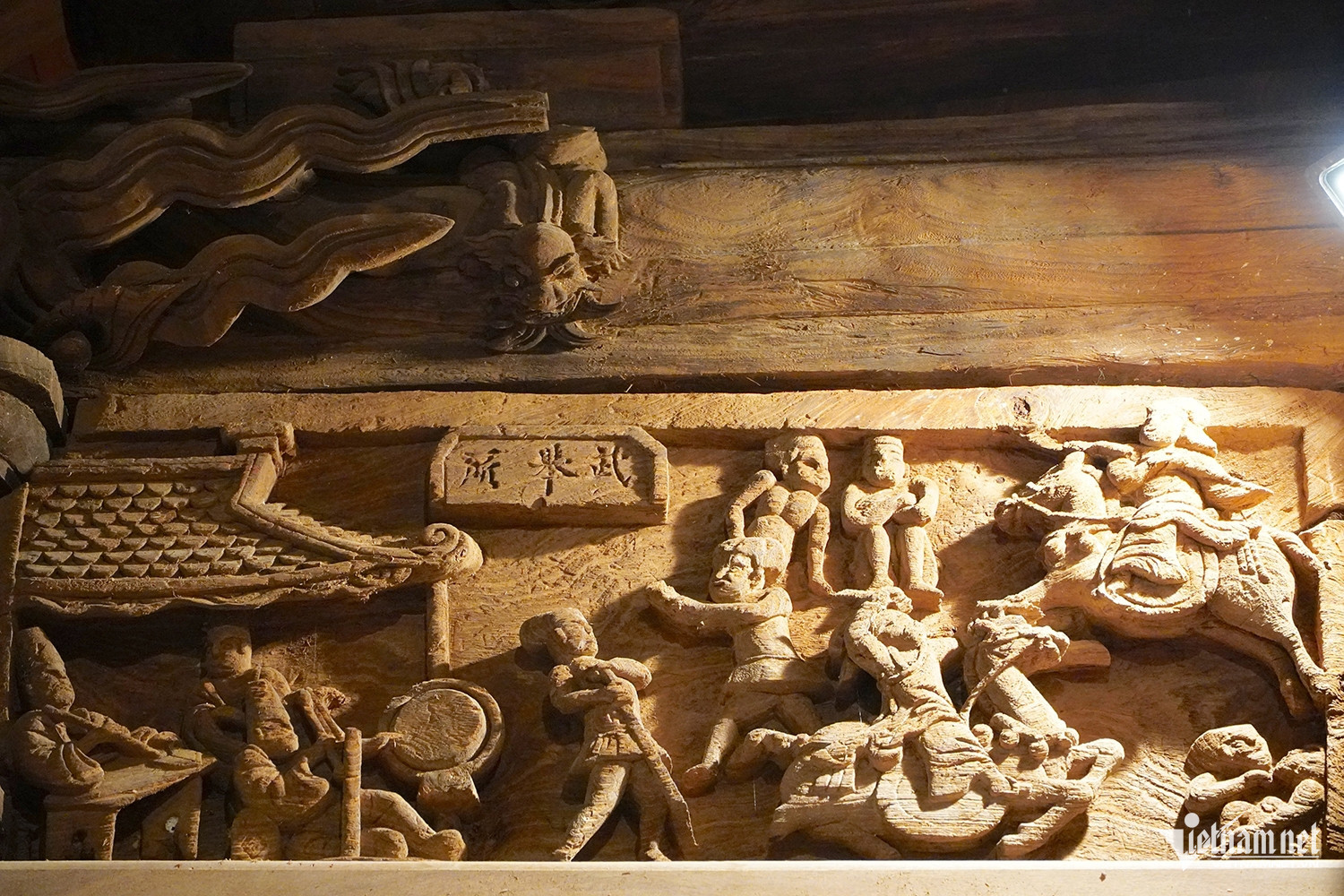
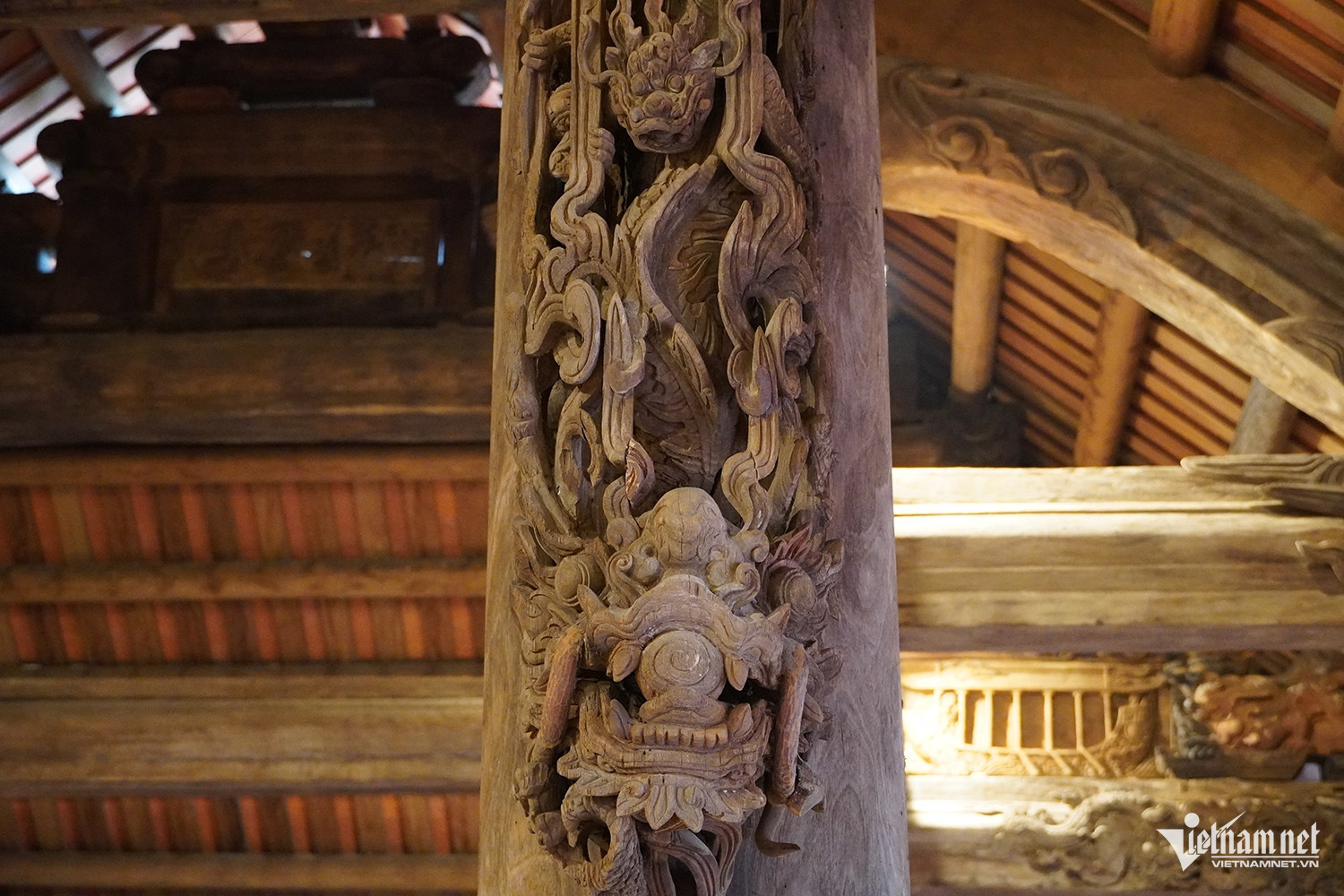
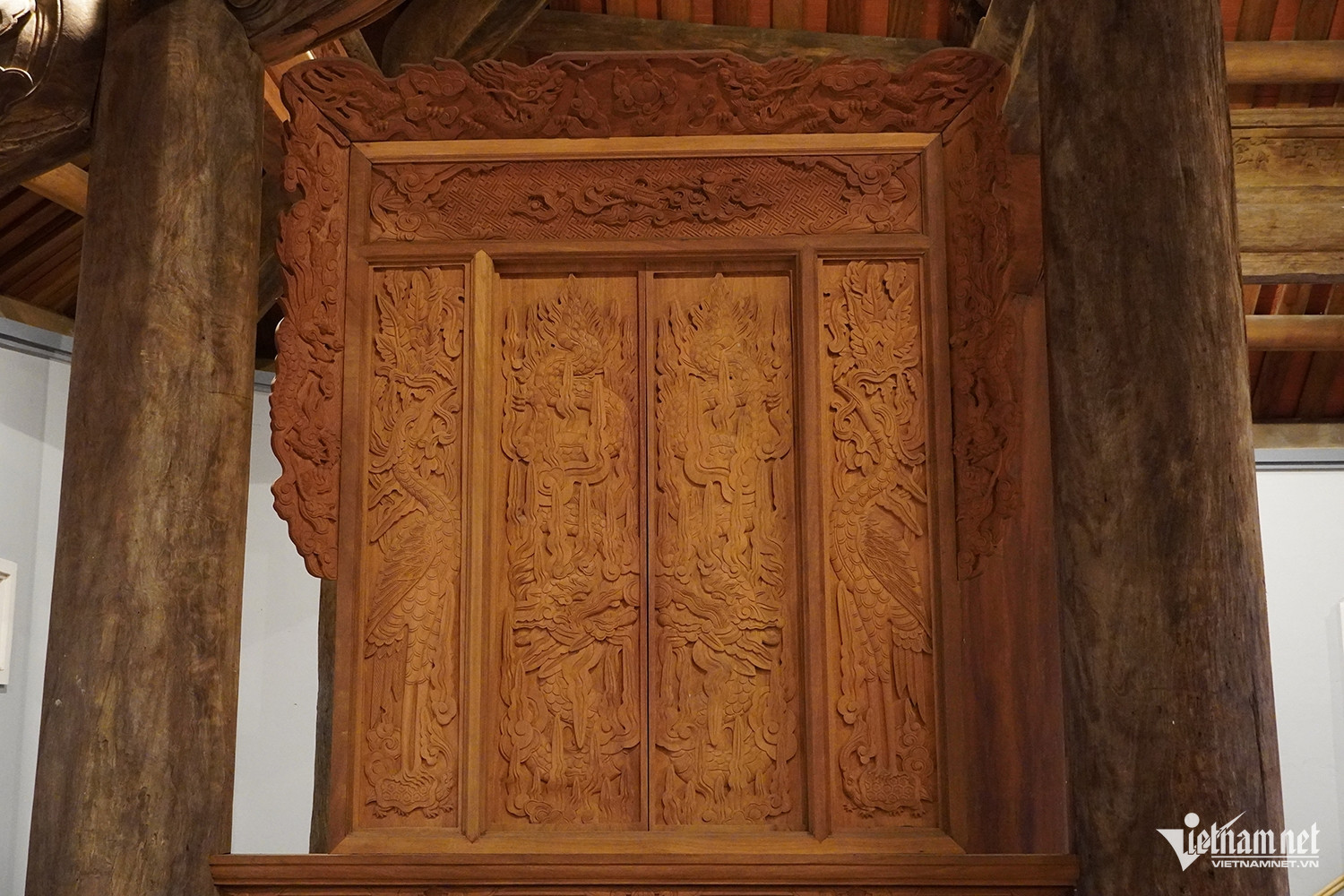
Intricate carvings inside the communal house.
.svg)
