 Vietnamnet.vn

 Podcast



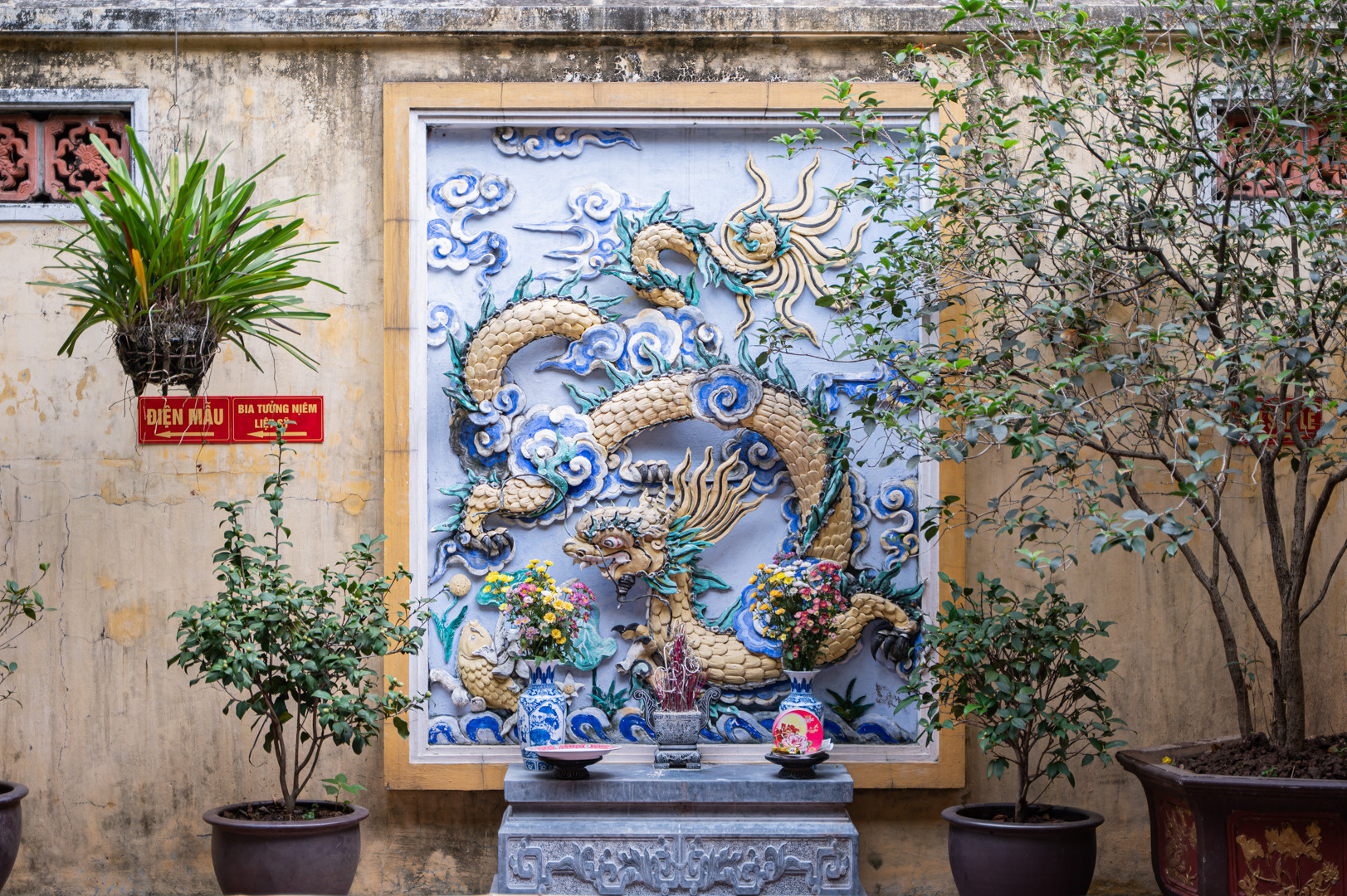
Located at 76 Hang Buom Street, amid the bustling Old Quarter, the temple opens into a quiet, tranquil space once visitors step through its gate, completely separated from the noise and crowds outside.
In the early days of the Lunar New Year 2026, many residents and visitors chose to stop here to pray for peace and good fortune.
Among the four sacred temples known as Thang Long Tu Tran, Bach Ma Temple guards the East and was built earlier than the others. The temple is dedicated to the deity Long Do, associated with Nui Nung, the sacred mountain believed to receive the spiritual essence of the capital’s rivers and mountains.
According to records from the temple’s management board, during the period of Chinese domination under the Tang dynasty, the governor Cao Bien attempted to build the Dai La citadel, but the ground repeatedly subsided.
Legend says that after witnessing the miraculous appearance of the deity Long Do, Cao Bien became fearful and tried to suppress the dragon vein with charms and buried bronze and iron. That very night, thunder and lightning destroyed everything. Realizing he could not overpower the sacred spirit of the land, he built a temple to worship the deity and seek protection.
Bach Ma Temple is also linked to the legend of King Ly Thai To and the construction of the Thang Long citadel. In 1010, the king moved the capital from Hoa Lu to Dai La. During the building of the citadel, the walls were completed several times only to collapse again.
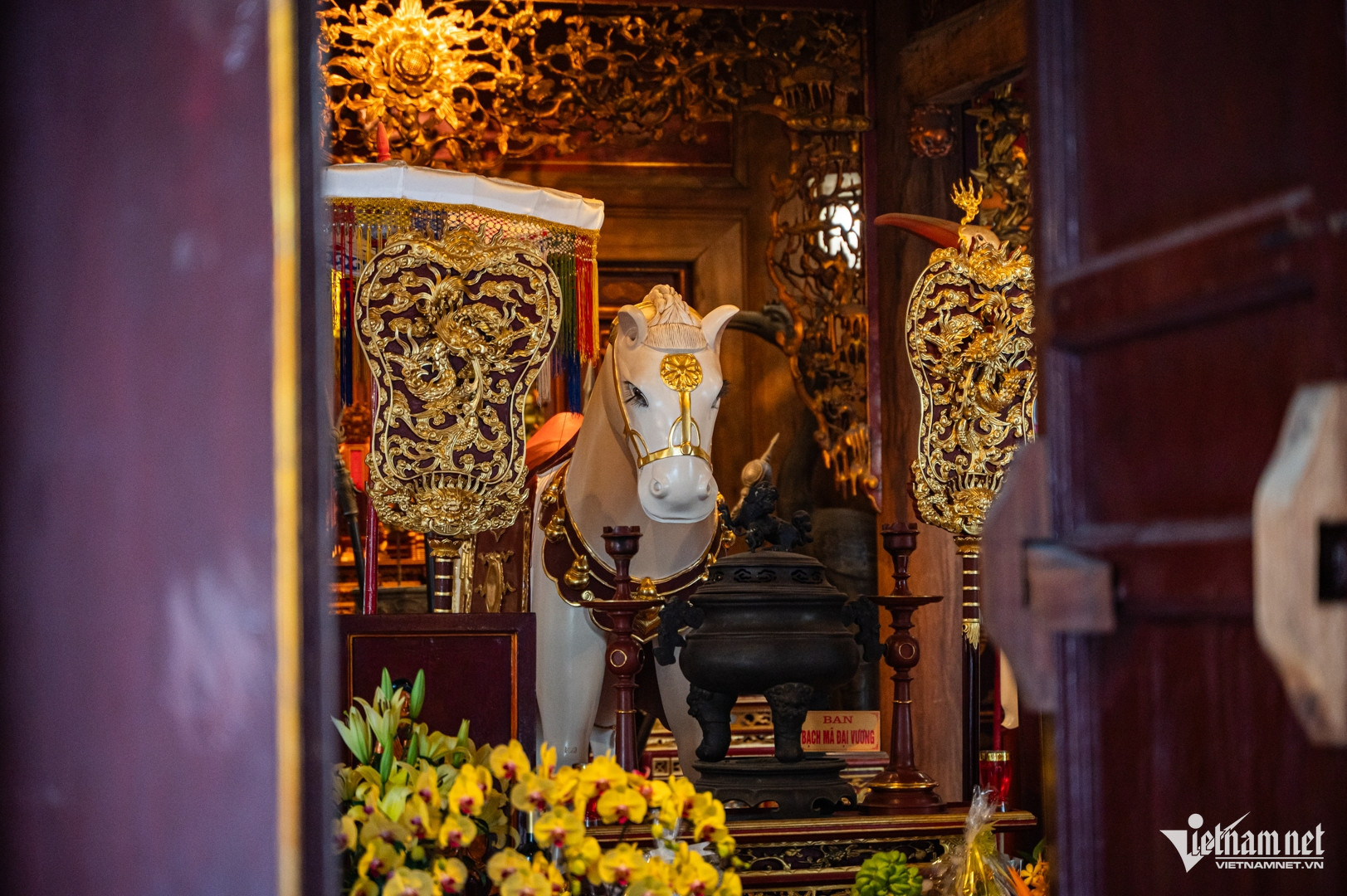
The king ordered prayers at the temple. Suddenly, a white horse galloped out, ran around the construction site, leaving hoofprints, then returned to the temple and disappeared. The king followed those hoofprints to mark the citadel’s boundaries. From then on, the walls stood firm. In gratitude, he conferred the deity as the tutelary god of Thang Long.
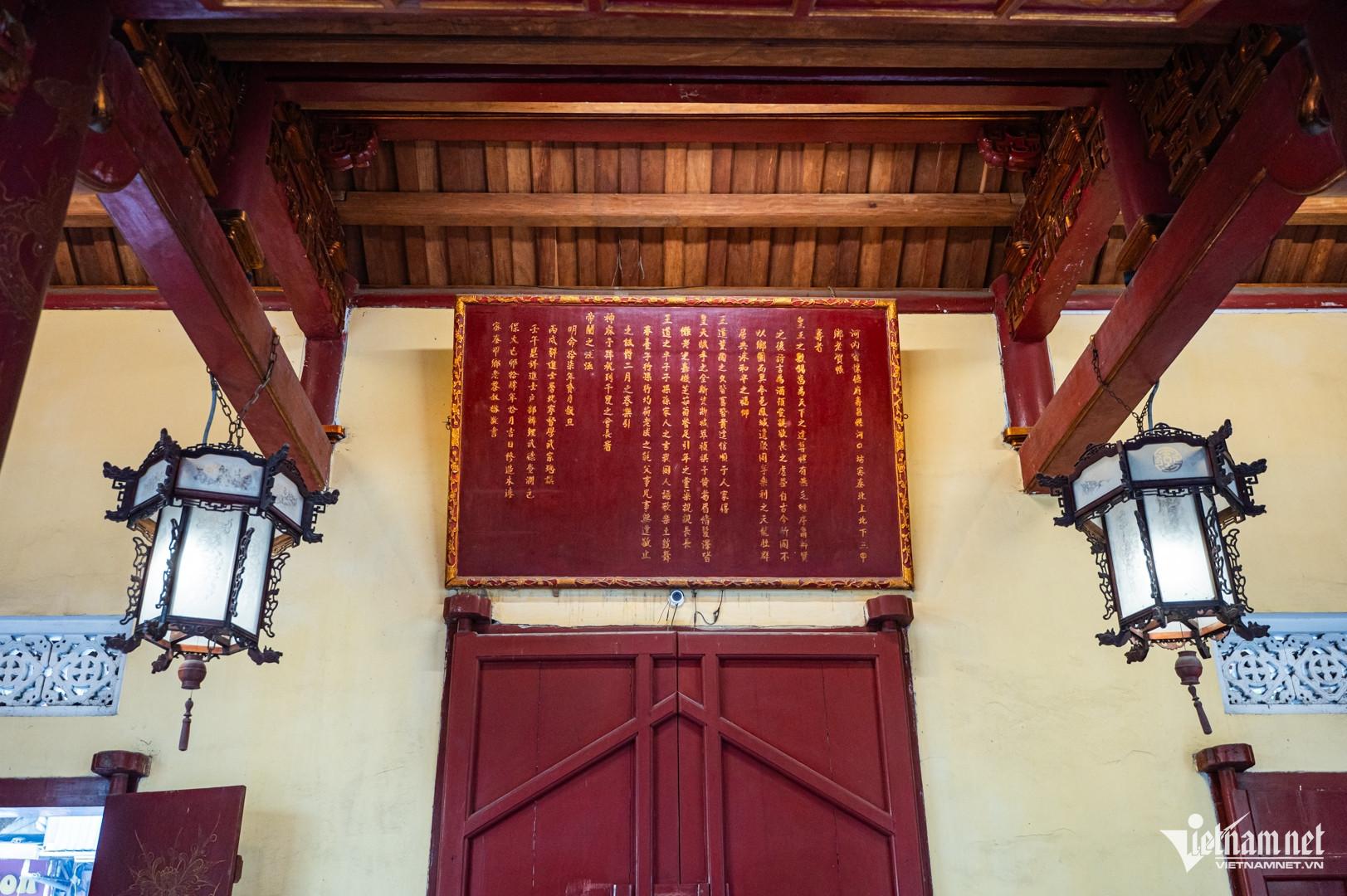
After multiple restorations, particularly a major renovation in 1839, the temple today bears strong architectural features of the Nguyen dynasty, with a harmonious layout along a central axis. One distinctive feature is the “crab shell” vaulted roofing system linking the buildings, creating a continuous, spacious and airy complex.
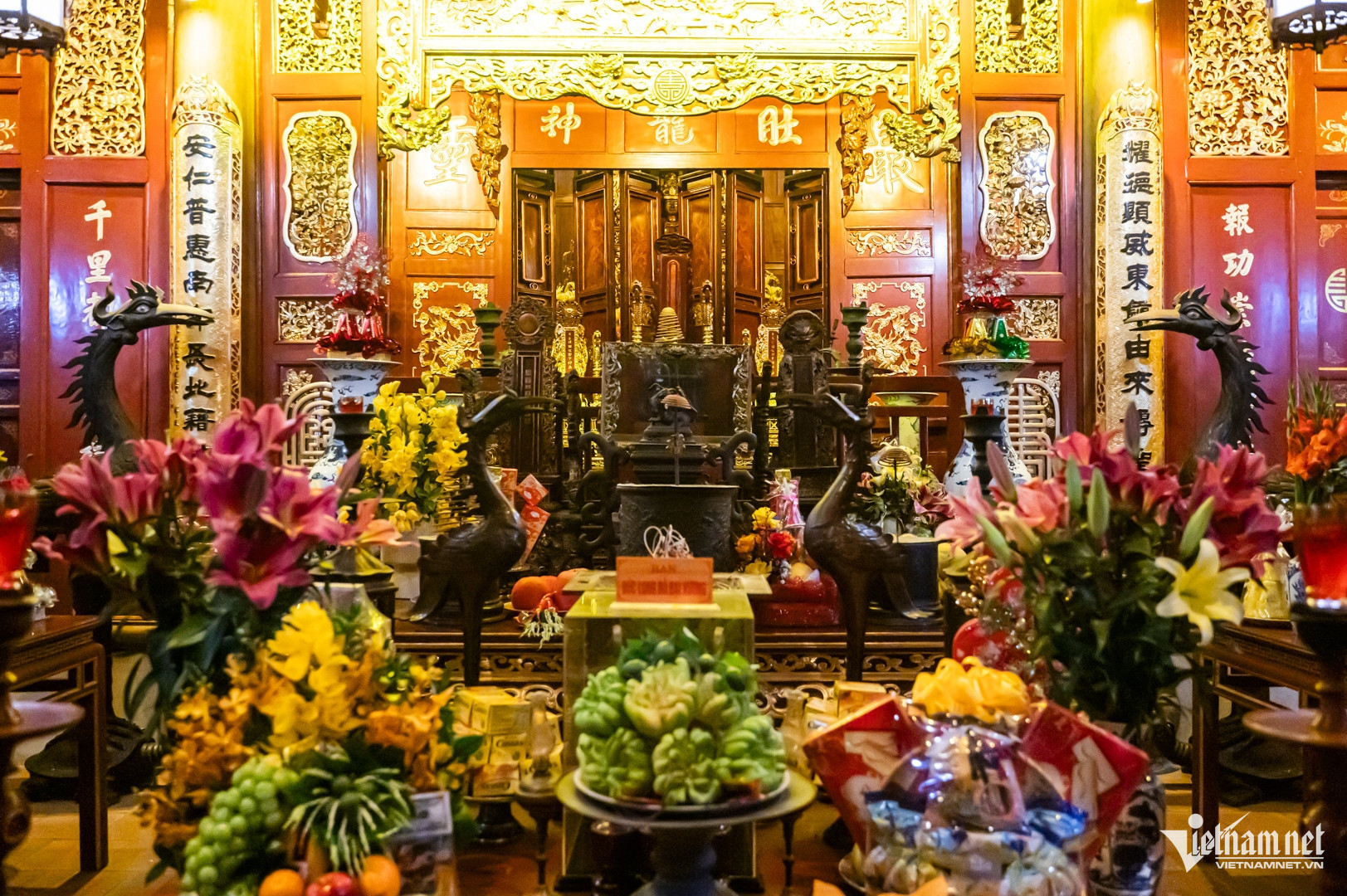
The square pavilion stands out with intricate carvings and decorative motifs. The main worship hall features a wooden frame built in the traditional “stacked beams and gong-style bracket” structure, adorned with cloud, flame and floral patterns.
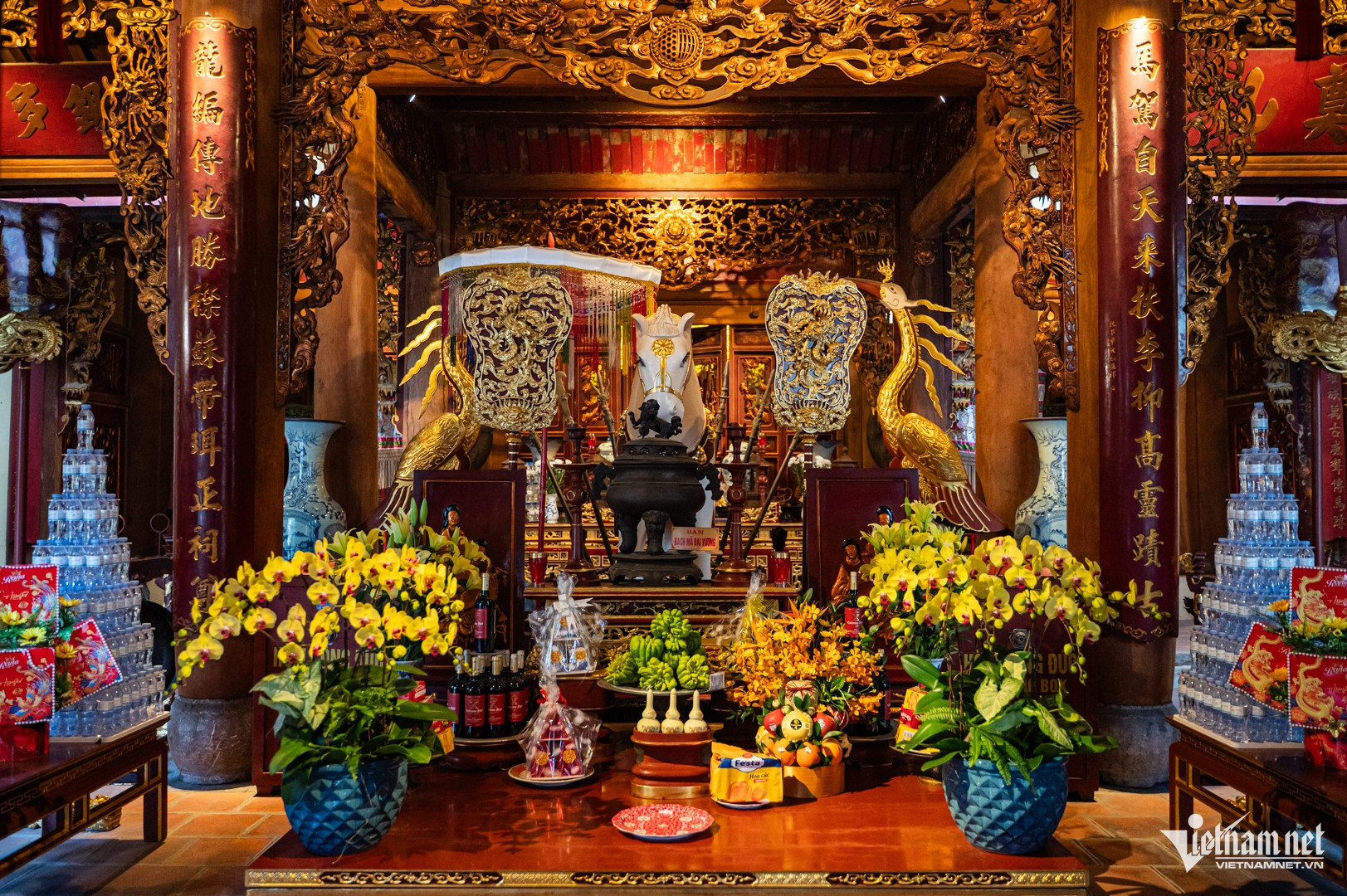
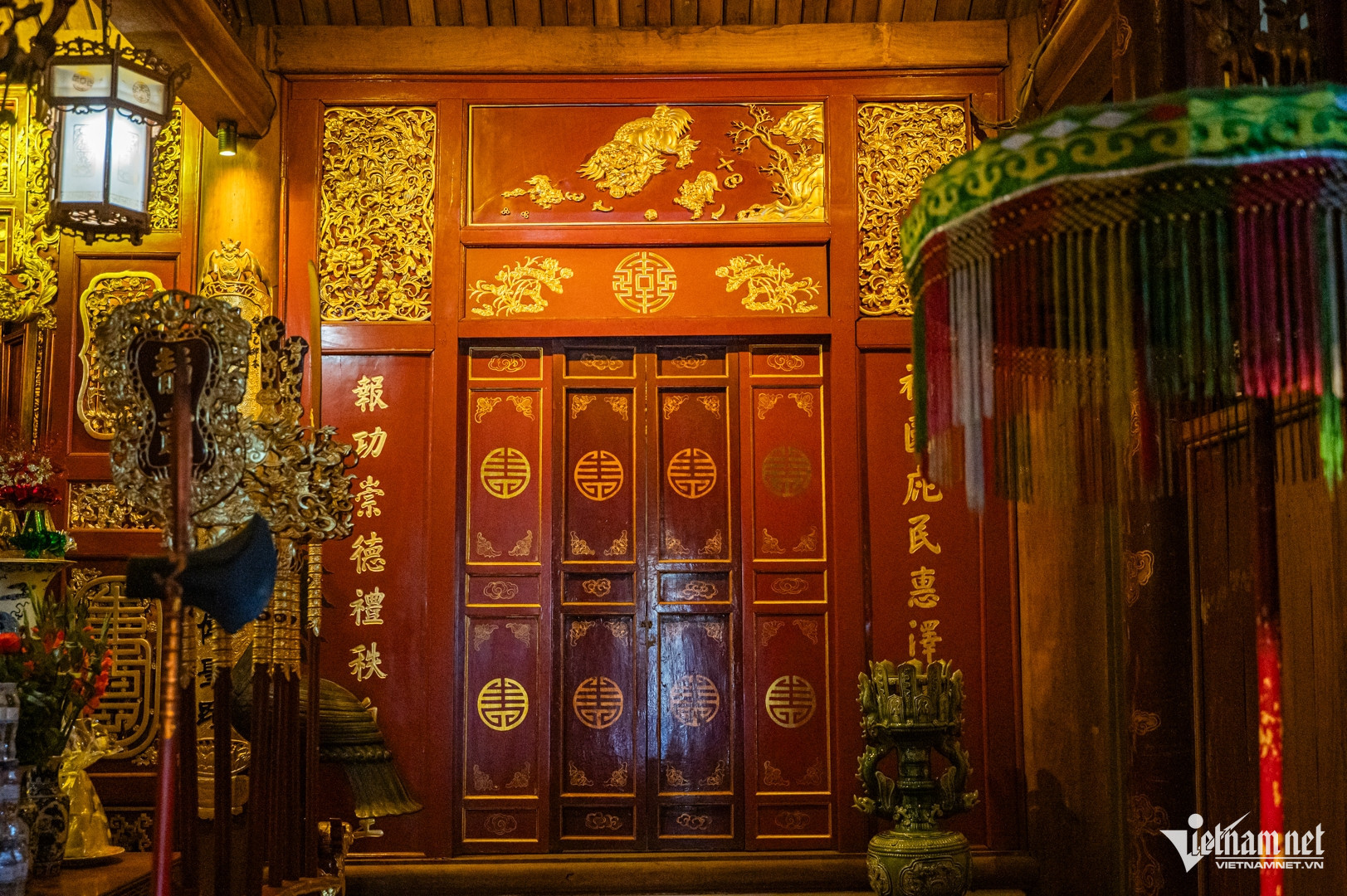
In the innermost sanctuary sits the statue of Long Do in a dignified posture on a throne, back straight, wearing a royal headdress, the body draped in red cloth with only the face visible. A white horse statue stands in the central chamber. Its saddle, reins and trappings are lacquered and gilded, symbolizing the sacred power of the deity.
Associated with the legend of the citadel’s construction, Bach Ma Temple has long been regarded as the sacred eastern guardian of Thang Long. Together with Voi Phuc Temple in the West, Quan Thanh Temple in the North and Kim Lien Temple in the South, it forms the quartet known as Thang Long Tu Tran, believed to protect the ancient capital.
Situated in a prime location within the Old Quarter, the temple attracts many international visitors to Hanoi.
Carotta, 33, from Italy, shared: “I learned about this temple through social media and a tour guide. The architecture here is completely different from churches in my country. It’s a fascinating cultural experience during my trip.”
Today, Bach Ma Temple preserves 15 ancient steles. Their inscriptions recount the temple’s origins, the deity’s legend, worship rituals and various restoration efforts. The temple also houses ceremonial weapons such as halberds, sabers, spears and hook-bladed polearms, lacquered and gilded with intricate carvings.
In addition to bronze incense burners, vases and human statues, the temple also features Buddha statues - a detail reflecting the traditional Vietnamese concept of “three teachings in harmony.”
Each year, in the second lunar month, the temple hosts its annual festival with a spring procession and the ritual of “striking the clay buffalo,” symbolizing the ancient agricultural practice of welcoming spring and praying for favorable weather and abundant harvests. The custom dates back to the reign of King Ly Thai Tong in 1048 and continued into the Le dynasty.
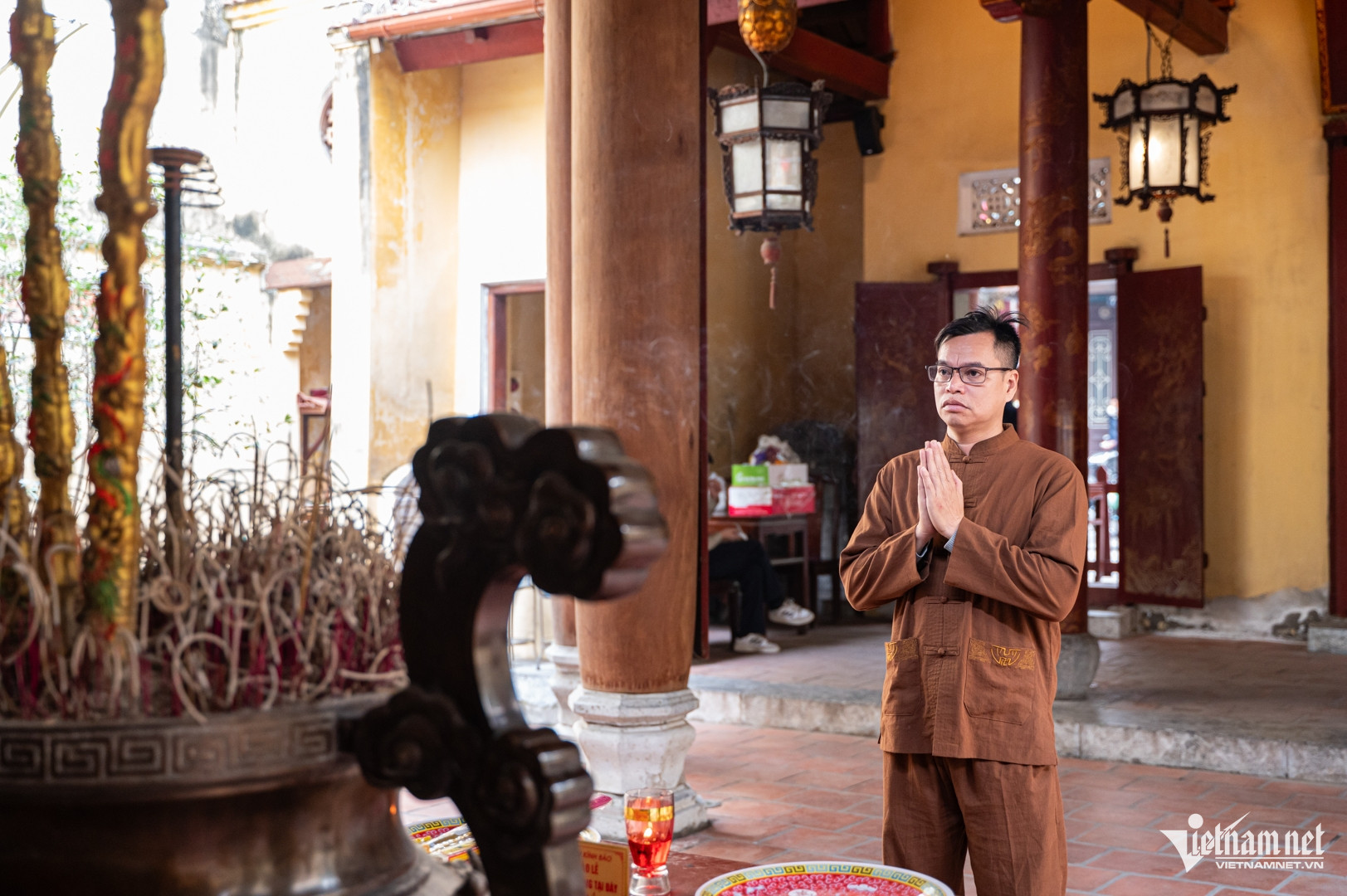
Dang Quoc Cuong, 48, from Thai Binh, has visited Bach Ma Temple many times. For him, it is a familiar place where he entrusts his faith and hopes for peace.
“I come here to pray for health, career success, prosperity and peace for my family. Visiting temples and pagodas has become part of Vietnamese spiritual life. Bach Ma Temple is especially meaningful because it is one of the four sacred temples of Thang Long,” he said.
Because of its sacred reputation, Bach Ma Temple welcomes large numbers of domestic and international visitors at the start of each New Year, all seeking blessings and good fortune.





Linh Trang - Nguyen Huy - Ngoc Ha
.svg)
