 Vietnamnet.vn

 Podcast



Bac Hoa village lies in Tan Son commune in Bac Ninh province, formerly part of Bac Giang, nestled quietly at the foot of a mountain near the border with Lang Son province. The village sits about 135km from central Hanoi, roughly a 2.5-hour drive by car.
For generations, the village has been home to the Nung ethnic community, whose traditional rammed-earth houses now carry the warm hues of time. In recent years, Bac Hoa has begun to attract travelers, particularly in spring when bright yellow mustard flowers bloom across the fields, creating picturesque scenes for visitors.
Images of Bac Hoa shared on social media have prompted many viewers to compare it with villages such as Lo Lo Chai or Then Pa in Tuyen Quang.
The village consists of dozens of rammed-earth houses with distinctive architecture, yin-yang tiled roofs and spacious courtyards in front.
A small stream flows across the road leading into the village, flanked by cultivated fields and trees casting cool shade. In spring, the scenery becomes even more romantic as mustard flower gardens burst into vibrant bloom.
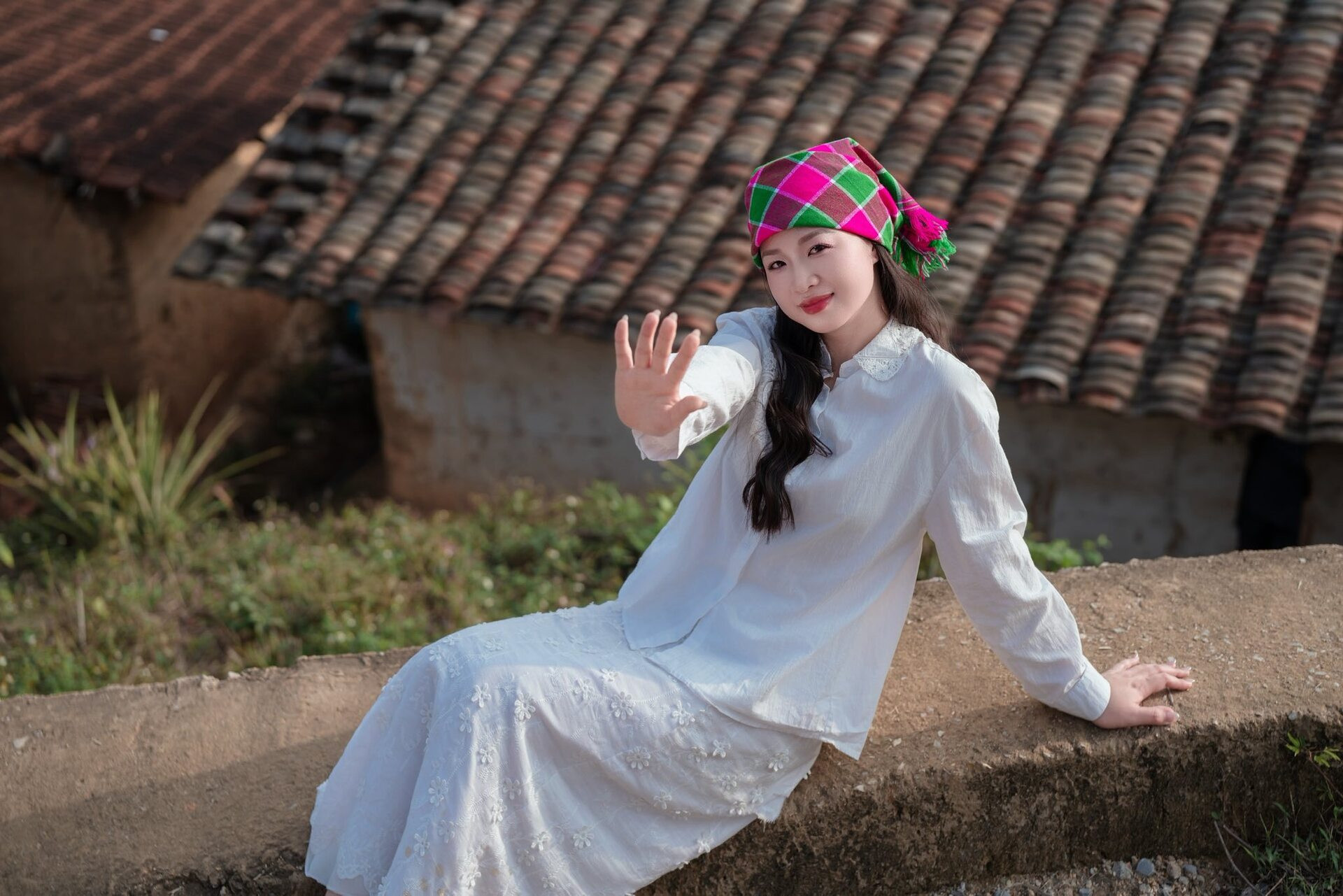
The earthen houses in the village are several decades old. Their roofs are covered with traditional yin-yang tiles, each handcrafted from clay and fired with wood for days.
The tiles come in two types: yin tiles placed face up and yang tiles laid over them. Arranged alternately, they create channels that help water drain and air circulate efficiently. The design also carries symbolic meaning, representing harmony between heaven and earth, yin and yang in the worldview of the local community.
Most houses have three to five compartments. The central room holds particular significance, serving as the space for the ancestral altar while also functioning as the main area for welcoming guests and gathering for family meals.
The walls are about 40-50cm thick and stand between 2 and 3 meters high. Thanks to this structure, the houses stay warm in winter and cool in summer.
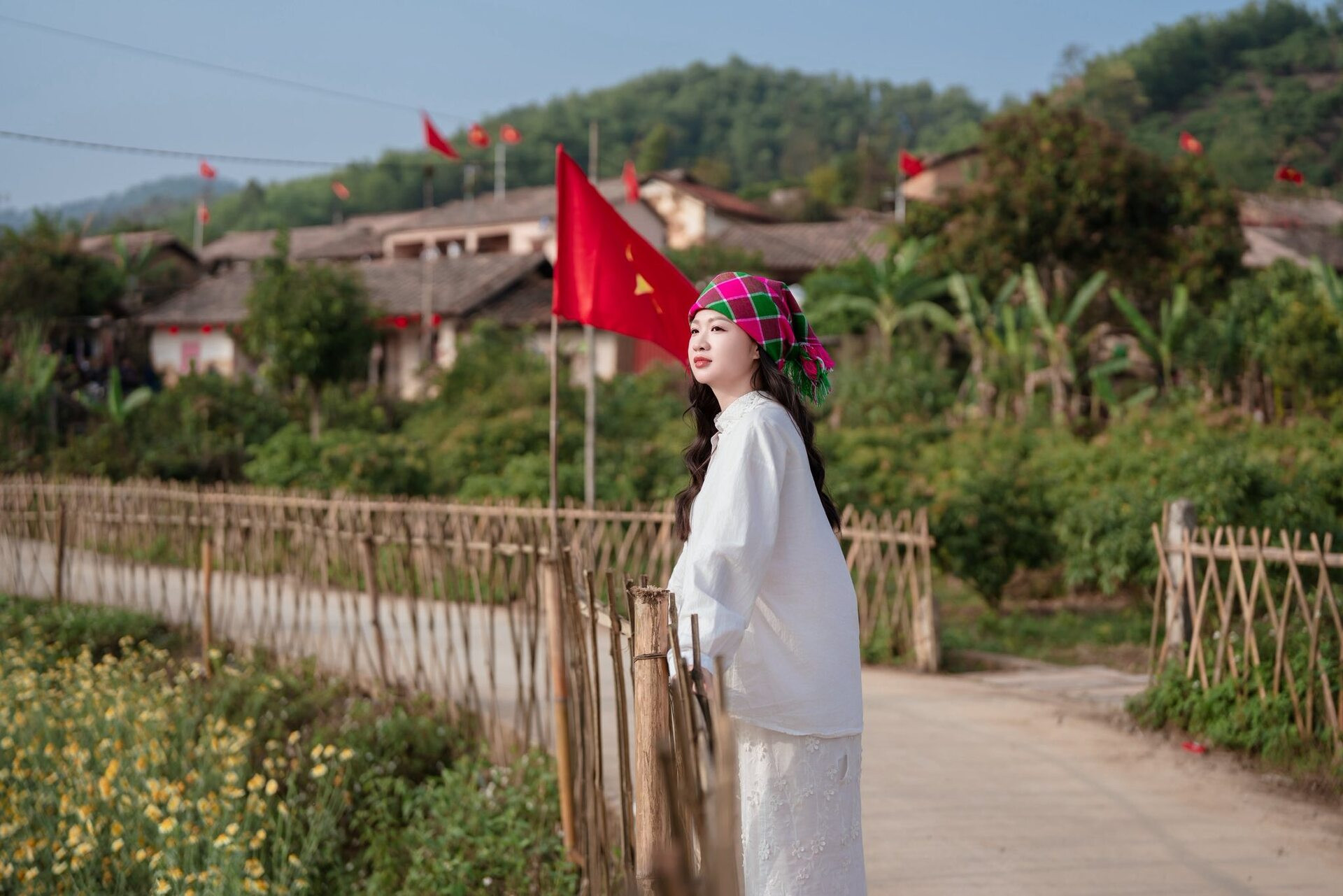
One interesting feature of the village is the absence of solid fences between homes. Instead, boundaries are marked by wildflowers, stone edges or simple bamboo hedges. Families live closely connected, maintaining strong community ties across generations.
Nguyen Thi Thu Trang, 34, from Bac Ninh, recently visited Bac Hoa during an early spring trip, coinciding with the sloong hao singing festival organized in Tan Son commune.
“After about two hours of travel from the old Bac Ninh city center, I immediately felt the fresh air and peaceful atmosphere. The village is filled with greenery and flowers. Tourism has not developed too much yet, so it is still quiet and not crowded. The locals are friendly and welcoming,” Trang said.
She spent half a day wandering through the village, enjoying the scenery.
The mustard flowers in Bac Hoa are expected to reach full bloom in about ten days before locals harvest them for seeds.
After spring, Bac Hoa transforms again. In summer, vast primary forests surround the area while cool streams flow gently through the landscape. During the rice harvest season, the village glows with golden terraced fields.
Visitors can also meet local residents to learn about the traditional culture of the Nung people and experience crafts such as weaving scarves and dyeing fabric with indigo.
For travelers departing from Hanoi, the fastest route is to drive along the Bac Giang - Lang Son expressway, exit at the National Highway 279 interchange near the toll station, then continue for about 20km to reach Bac Hoa hamlet.
Travelers should note that the village currently has no accommodation or dining services. Visitors need to travel about 5km to the area near the Tan Son commune People’s Committee for such facilities. Many villagers also do not use bank transfers, so it is advisable to prepare cash.
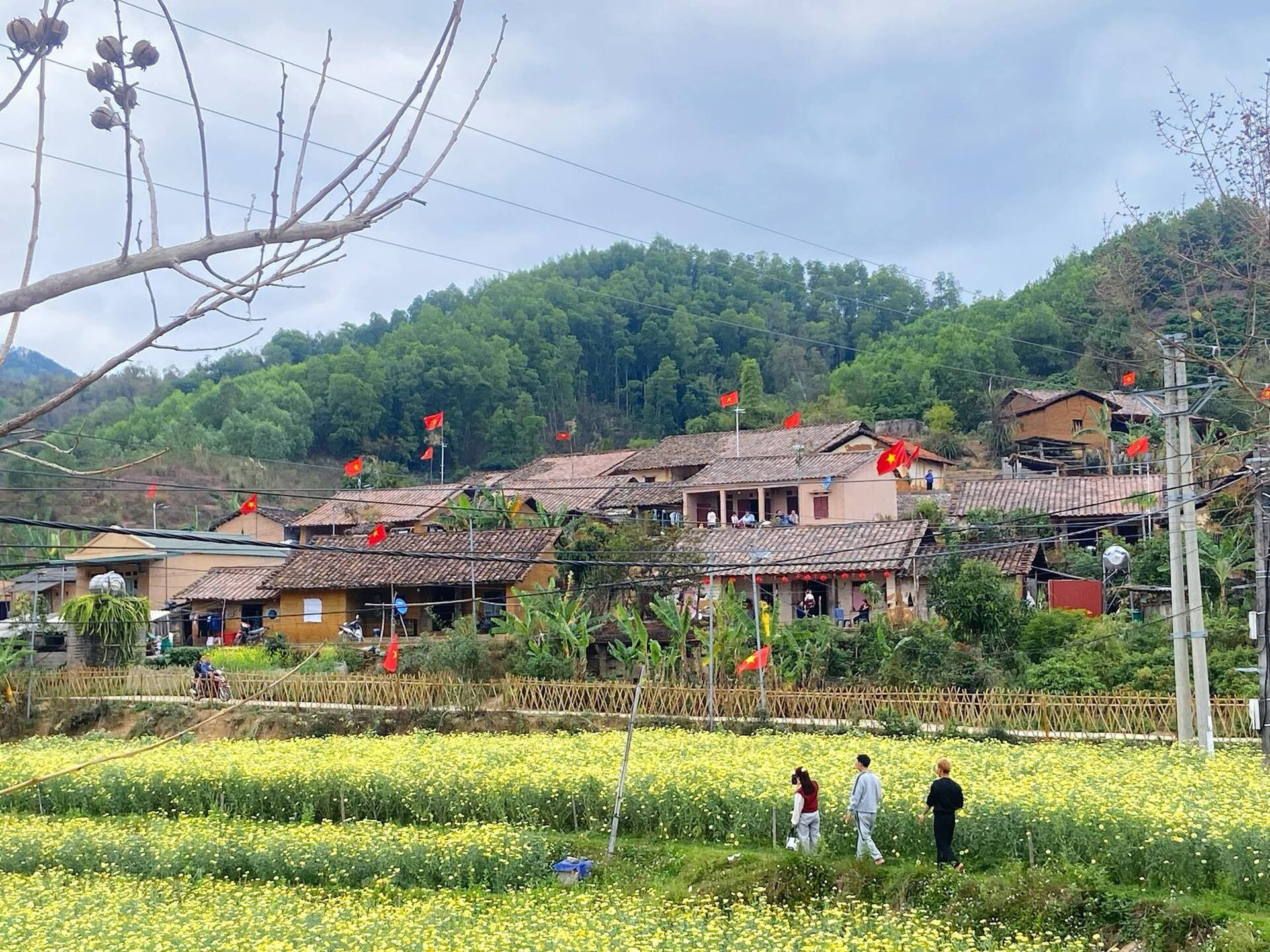
The village appears both ancient and poetic during spring. Photo: Ngoc Thoa.
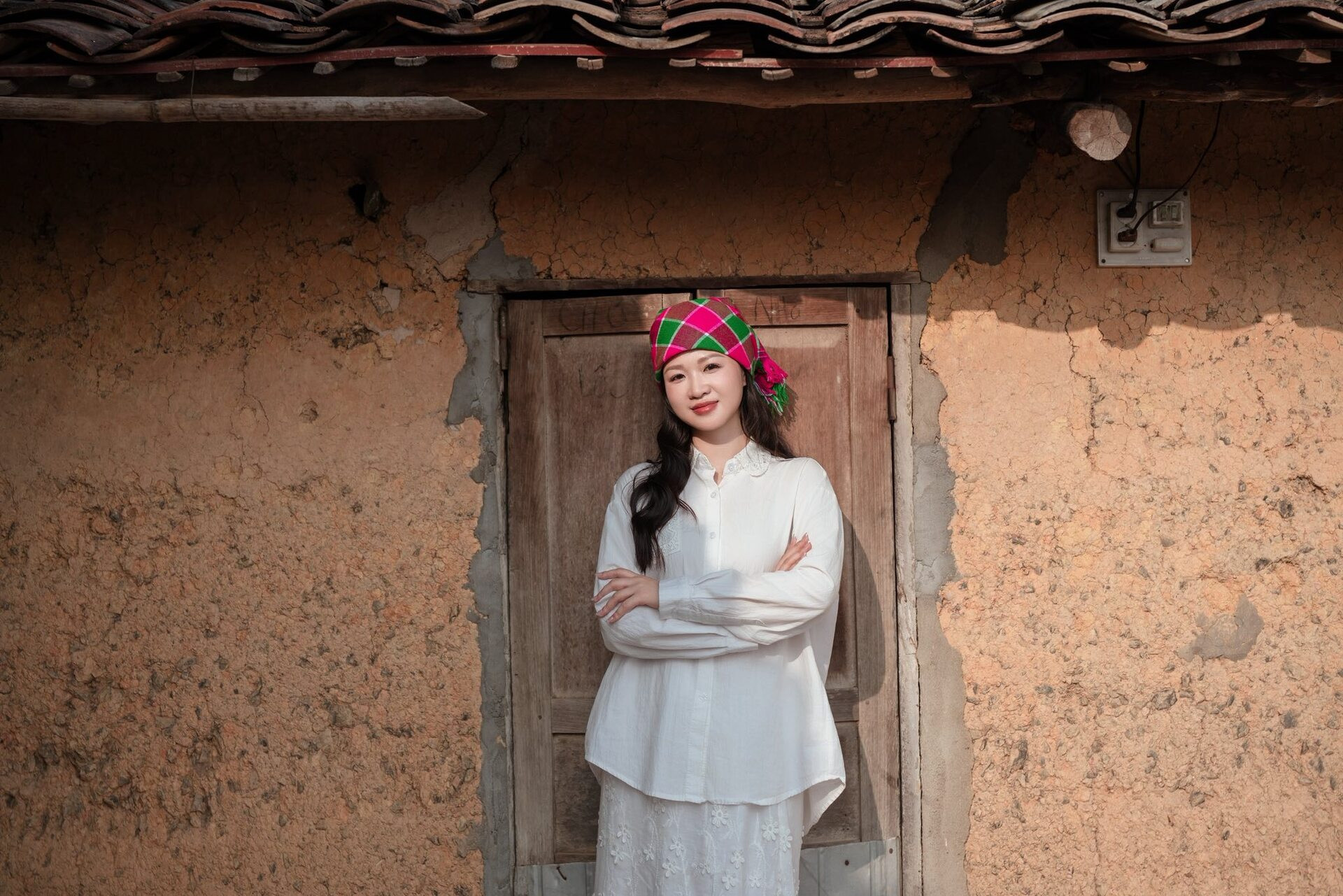
The earthen walls of houses in Bac Hoa village have become a favorite check-in spot for visitors. Photo: Thu Trang.
Linh Trang
.svg)
