 Vietnamnet.vn

 Podcast



As the rest of the country counts down to Tet, the Dao Lo Gang people in Quang Ninh’s mountainous villages are already in full celebration. For them, the New Year arrives earlier, lasts longer, and is steeped in ancestral customs passed down through generations.
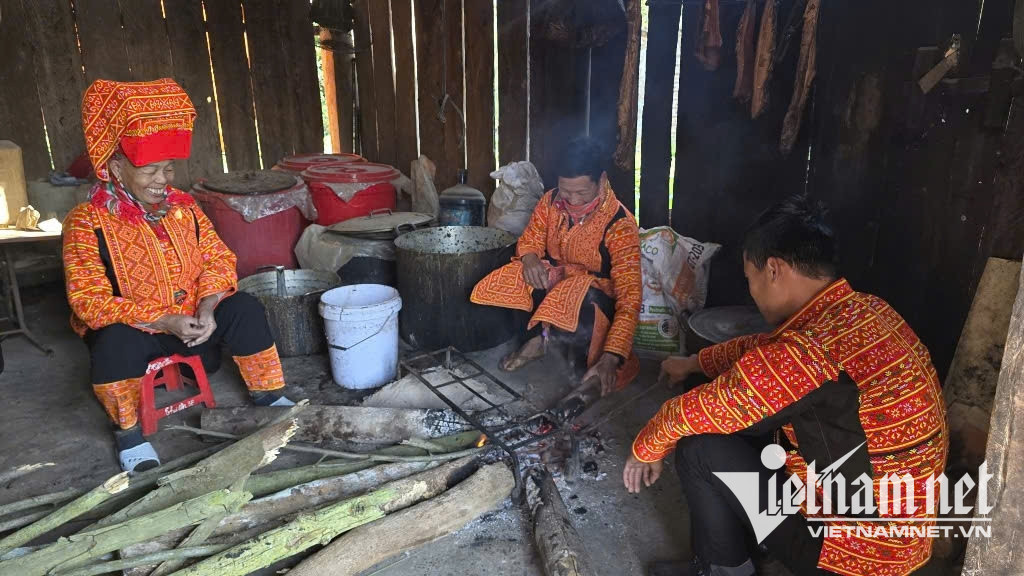
The Dao Lo Gang families gather around the fire during Tet. Photo by My Dung
The Dao Lo Gang migrated from Thai Binh and Kien Moc communes (formerly Dinh Lap district, Lang Son) to what is now Ba Che district in 1982. Today, their community is primarily concentrated in Luong Minh and Ky Thuong communes of Quang Ninh. Though small in number, they have preserved their cultural identity remarkably well - most vividly through Tet rituals and customs.
Unlike the Dao Thanh Y, who have no ancestral house and begin Tet celebrations around the 20th day of the lunar twelfth month, the Dao Lo Gang begin much earlier. Around the 15th, they conduct the major ancestral house ceremony, known as the "big house" celebration. Only afterward do individual families - referred to as "small houses" - begin their own New Year festivities.
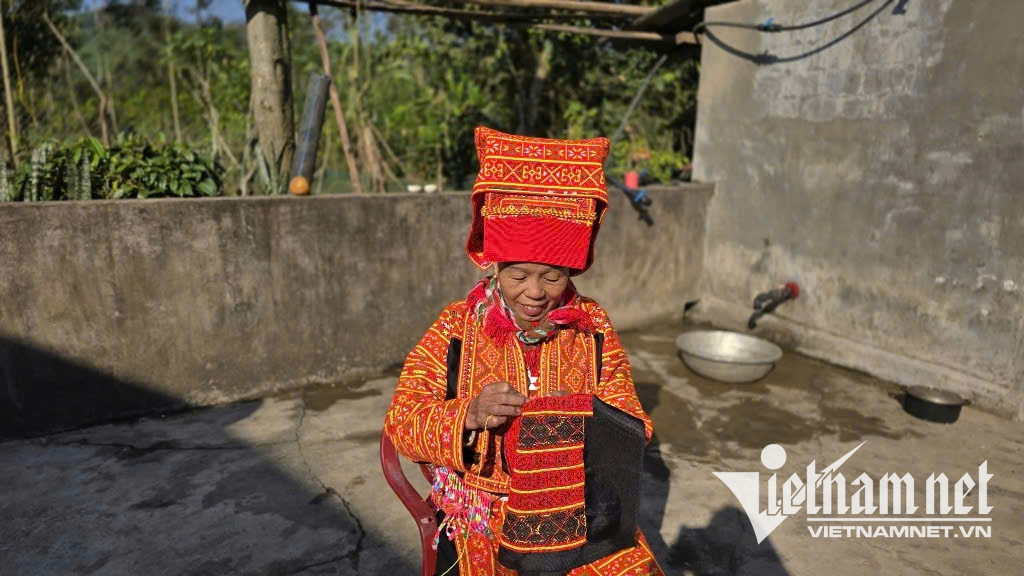
Mrs. Mui proudly displays her intricately hand-embroidered ethnic dress. Photo: My Dung
As a result, the Tet spirit fills their stilt houses and village paths early. At the start of the new year, the entire village gathers for a ritual to pray for a bountiful harvest - seeking favorable weather and prosperity in the coming farming season.
Preparations begin well in advance. Families clean and repair their homes, especially the ancestral altar - the most sacred space. Food and offerings are prepared with great care. Many households slaughter pigs, make cakes, brew corn wine, and stockpile food for the extended holiday, reflecting a self-sufficient lifestyle rooted in agricultural labor.
Mr. Duong Nho Kim shared: “The ancestral worship ceremony is the heart of Tet for the Dao Lo Gang. At year-end and especially on New Year’s Eve, the head of the household performs a ritual to report the past year to the ancestors and pray for their protection in the year ahead.”
Maintaining harmony is deeply important during the first days of the new year. Arguments and negative words are strictly avoided, as they are believed to influence the fortunes of the entire year. On the morning of the first day, children and grandchildren visit their elders to offer New Year wishes - an expression of the community’s enduring reverence for ancestry.
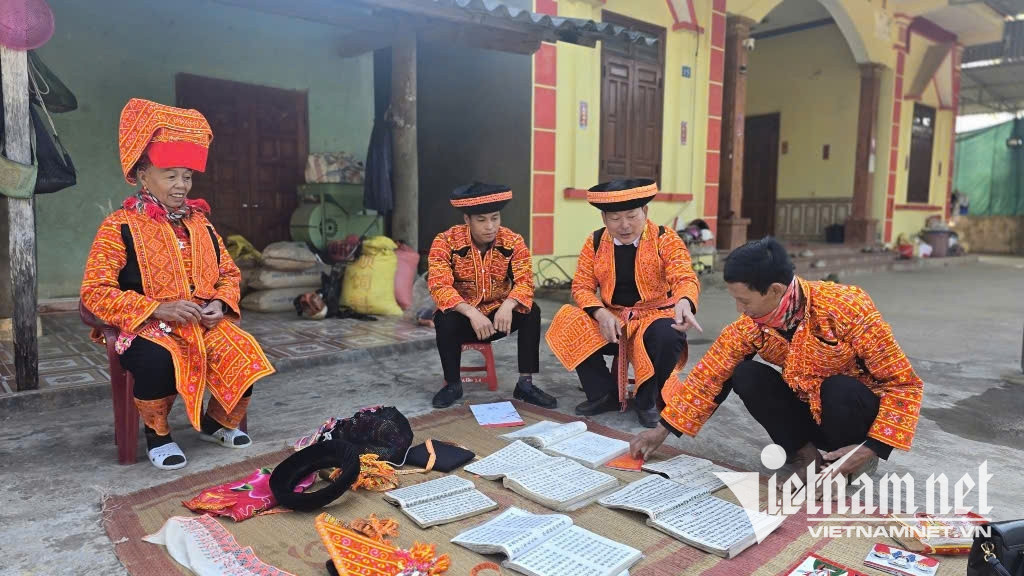
One of the most striking features of Dao Lo Gang Tet is their traditional clothing. Compared to other Dao groups, their garments are hand-embroidered with meticulous detail and densely packed patterns. Vibrant shades of red and orange stand out against black fabric, with motifs inspired by mountains, flora, hearts, and dogs - the latter symbolizing the Dao’s mythical ancestors.
Mrs. Trieu Thi Mui explained: “During Tet, women proudly wear elaborately embroidered dresses, while men don more modest yet formal traditional attire. It’s an expression of pride in our ethnic identity.”
In addition to family rituals, Tet is a time for communal bonding. Villagers visit each other, exchange greetings, sing, dance, and take part in cultural activities - making the highland New Year all the more joyful and heartwarming.
Despite the pull of modern life, the Dao Lo Gang continue to uphold and pass down their Tet customs to younger generations. In their remote mountain villages, early Tet is not just a festive occasion - it is a living symbol of connection to their ancestors, their community, and their cultural heritage.
According to Mr. Tran Van Dung, Chairman of the Luong Minh Commune People’s Committee, the commune has 1,305 households, with about 37 families of Dao Lo Gang ethnicity living in Khe Na hamlet.
“Though they represent a small portion of the population, their commitment to preserving traditional customs - especially Tet - is very strong,” Mr. Dung said.
“In the coming years, the commune will implement initiatives to preserve and promote ethnic cultural values, including those of the Dao Lo Gang, as part of efforts to enrich local heritage and develop community-based tourism.”
My Dung
.svg)
