 Vietnamnet.vn

 Podcast



Eighty years have passed since President Ho Chi Minh sent his letter to the Congress of Southern Ethnic Minorities, yet the spirit of great national unity he articulated continues to be affirmed as the foundation and driving force for Vietnam’s rapid and sustainable development in a new era.
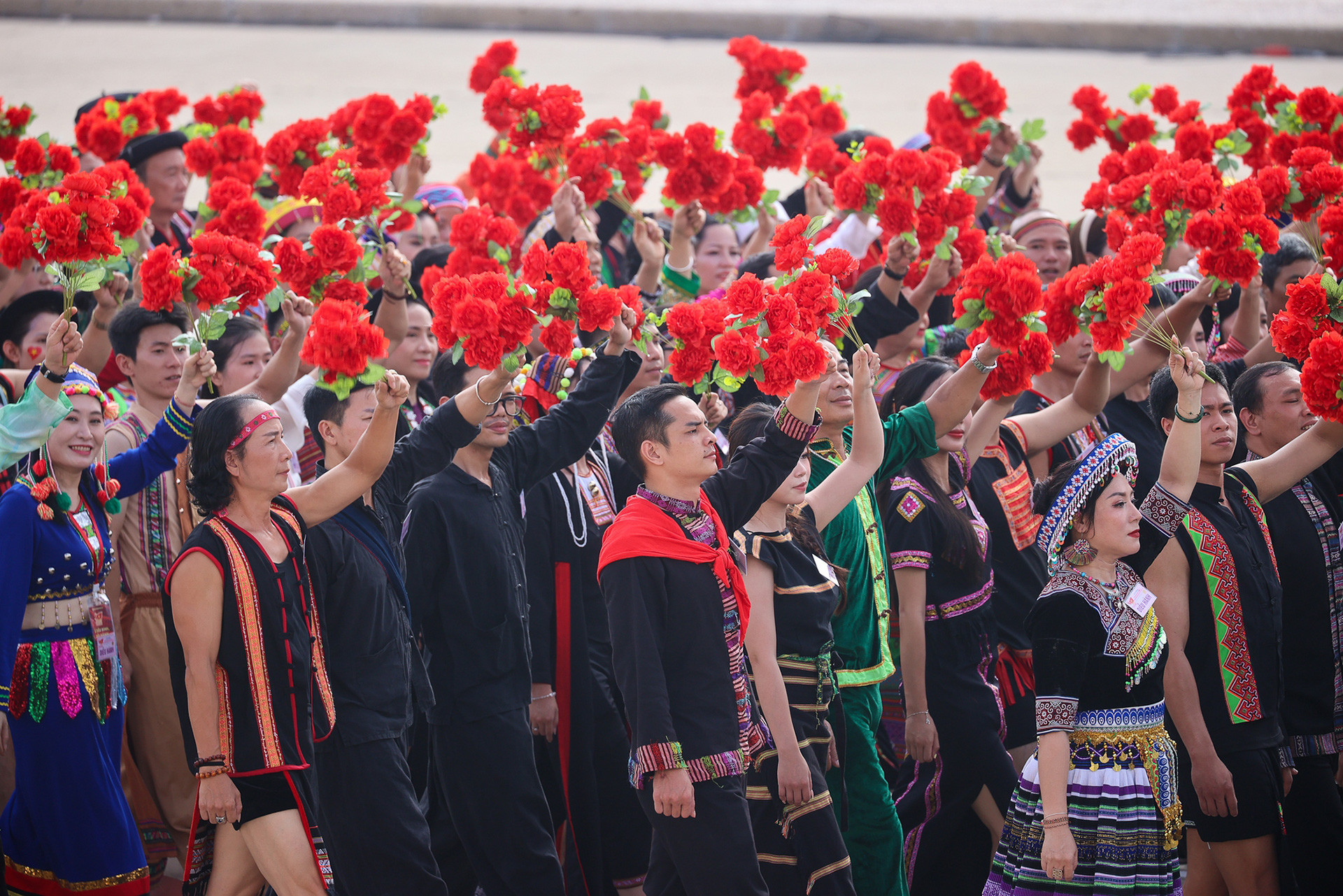
April 19, 2026 marks a significant milestone - the 80th anniversary of President Ho Chi Minh’s letter to the Congress of Southern Ethnic Minorities held in Pleiku. In the flow of the nation’s history, that letter was not only a message of encouragement to ethnic minority communities in the early days of independence, but also a vivid crystallization of his ideology on great national unity.
As the country enters a new phase of development, that spirit continues to be inherited, enriched, and advanced in the Resolution of the 14th National Party Congress, as a strategic requirement to mobilize the strength of the entire nation and create momentum for fast and sustainable growth.
A brief letter, a profound vision
On April 19, 1946, in his letter to the Congress of Southern Ethnic Minorities in Pleiku, President Ho Chi Minh wrote: “Whether Kinh or Tho, Muong or Man, Gia Rai or E De, Xe Dang or Ba Na, and other ethnic minorities, all are descendants of Vietnam, all are brothers and sisters. We live and die together, share joys and hardships, and support one another in times of hunger and need.”
With just a few simple, heartfelt lines, he affirmed a truth of deep political, historical, and human significance: all ethnic groups within the Vietnamese community are equal, bound together as one, sharing the same origin, destiny, and responsibility to the nation. There is no distinction between majority and minority in terms of hierarchy, nor any place for division or opposition. All are members of the great Vietnamese national family.
Notably, the letter was written at a time when the Vietnamese revolution faced immense challenges. The Democratic Republic of Vietnam had only just been established, the revolutionary government was still fragile, and threats from both internal and external forces loomed large, including attempts to divide national unity in various forms. In that context, Ho Chi Minh’s message revealed a far-reaching political vision: to safeguard independence and consolidate the new government, it was essential first to build a strong and lasting bond among all ethnic groups.
The letter of April 19, 1946 thus stands not only as a historical document but also as a declaration of Ho Chi Minh’s ideology of great national unity.
Great unity: broad, enduring, and sustainable
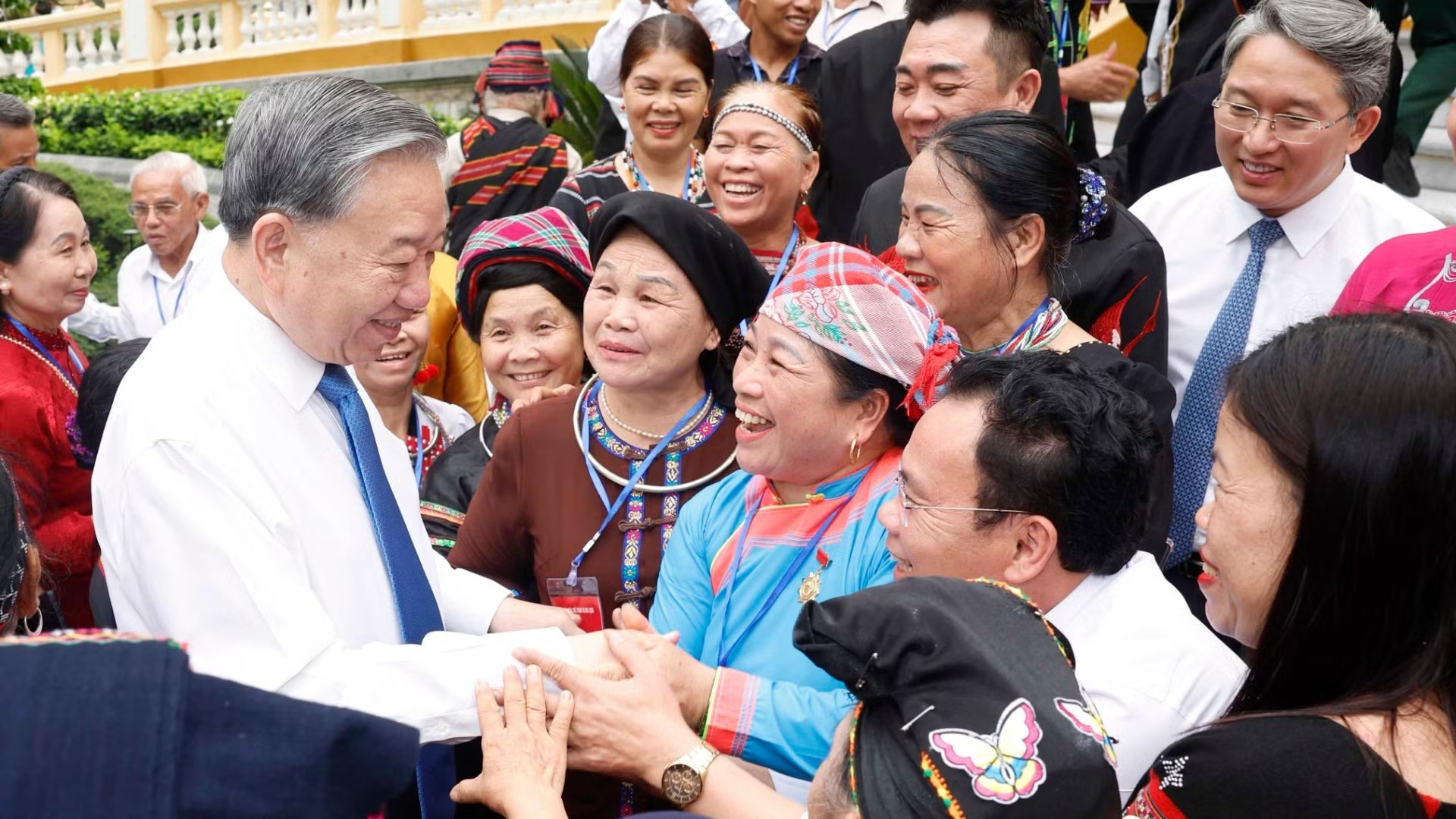
Throughout Ho Chi Minh’s ideological legacy, national unity remains a consistent and central theme. He identified it as a strategic issue, decisive to the success of the revolution.
This idea is encapsulated in his well-known statement:
“Unity, unity, great unity
Success, success, great success.”
The repetition of the word “unity” was deliberate. In every stage - from the struggle for independence, to resistance against foreign aggression, to national construction and defense - the decisive strength has always been the strength of the people, of the great national unity bloc.
For President Ho Chi Minh, great national unity meant the broadest, longest-lasting, and most sustainable form of unity. It encompassed all classes, social strata, ethnic groups, religions, Party and non-Party members, as well as Vietnamese people at home and abroad. As long as they shared the common goal of national independence, unity, and building a prosperous and happy life, they belonged within this collective strength.
This inclusive, humane, and practical vision enabled the Vietnamese revolution to harness the power of the entire nation during its most challenging moments.
Within this framework, unity among ethnic groups held a particularly important place. President Ho Chi Minh repeatedly affirmed: “Vietnam is one, the Vietnamese nation is one.” This was a firm assertion of the indivisible unity of the nation-state, and a rejection of any attempts to exploit ethnic differences to sow division or destabilize the country.
His vision of unity went beyond emotional solidarity. It also demanded genuine equality among ethnic groups - not merely in form, but in rights, opportunities for development, political standing, and access to education, healthcare, culture, and both material and spiritual well-being. He consistently emphasized the need to support ethnic minority communities in economic development, education, cadre training, cultural preservation, and improving living standards, ensuring that all could progress together and share in the fruits of independence and freedom.
Today, as Vietnam enters a new phase of development, national unity takes on even greater strategic importance. Challenges such as widening wealth gaps, regional disparities, the impact of social media, harmful information, and attempts to exploit issues related to ethnicity, religion, democracy, and human rights all underscore the need to further strengthen social trust and national consensus.
Unity in a new era: a foundational value and prerequisite
The spirit of great national unity is clearly reaffirmed in the Resolution of the 14th National Party Congress. The Congress set forth the guiding principle: “Unity - Democracy - Discipline - Breakthrough - Development.” Placing “Unity” first underscores its role not only as a guiding principle but also as a foundational value and prerequisite for achieving national development goals.
The Congress documents emphasize the need to “strongly promote the strength of great national unity,” closely combining national strength with the strength of the times. They also stress the importance of harmonizing the interests of different classes, social groups, ethnicities, and religions; strengthening the great national unity bloc; and promoting the people’s right to mastery, along with the role of the Fatherland Front and socio-political organizations.
To consolidate public trust and nurture national unity, the Congress highlights the continued need to ensure equality, solidarity, and mutual support among ethnic groups; to foster proactiveness, self-reliance, and resilience among ethnic communities in socio-economic development; and to help them escape poverty and achieve sustainable, multidimensional poverty reduction.
A notable feature of the 14th Congress is that national unity is no longer viewed solely as an ideological or mobilization issue, but is directly linked to the goal of inclusive and sustainable development, ensuring that no one is left behind. This reflects a clear continuation of Ho Chi Minh’s thought: sustainable unity must be rooted in the real interests of the people, and social trust can only be strengthened by effectively addressing issues of livelihoods, democracy, fairness, and development opportunities.
From Ho Chi Minh’s vision to the Party’s current strategic direction, there is a clear and continuous thread. Promoting the ideology of great national unity today means, first and foremost, strengthening public trust in the Party, the State, and the political system; improving the material and spiritual well-being of the people, especially those in remote, border, island, and ethnic minority areas. It also means respecting cultural diversity within unity, and strongly inspiring patriotism, self-reliance, civic responsibility, and the aspiration to contribute among all Vietnamese people.
Thai An
.svg)
