 Vietnamnet.vn

 Podcast



Thanh Nga village’s communal house is more than just a site for worship - it’s home to a precious cache of royal edicts spanning hundreds of years. Despite historical upheavals, both the temple and its revered documents have remained remarkably intact, now regarded as one of Thanh Hoa’s most valuable cultural legacies.
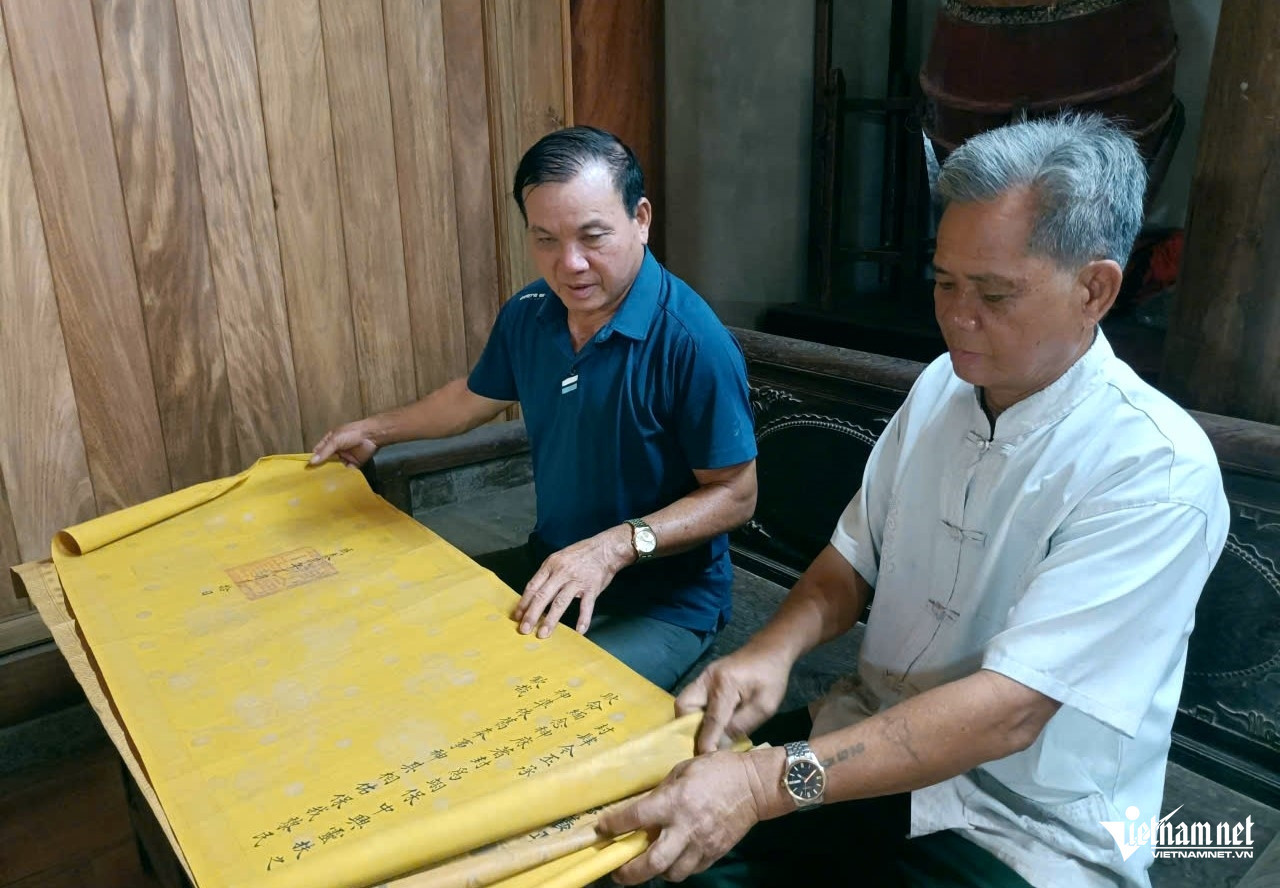
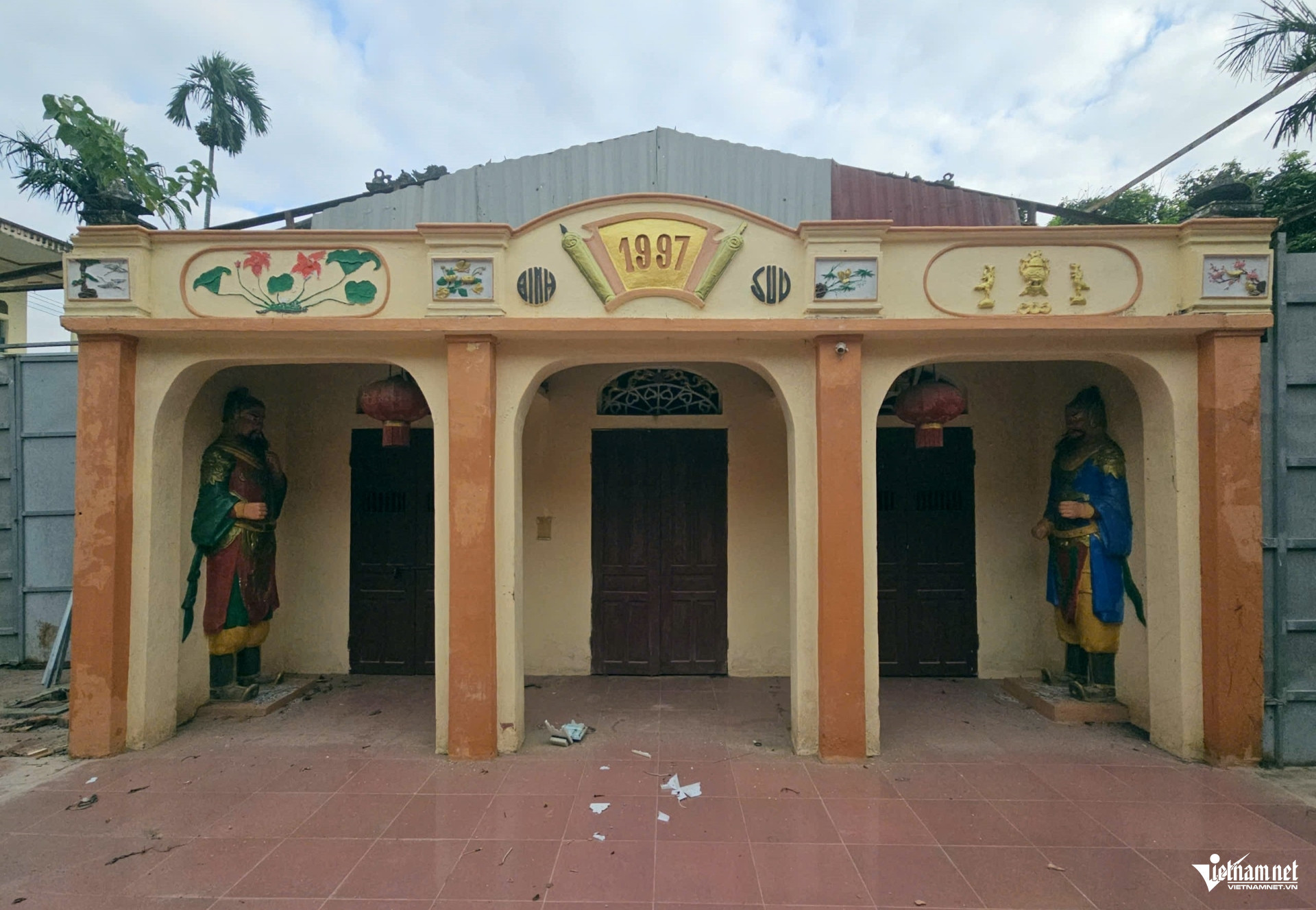
Nguyen The Nhip, caretaker of the Thanh Nga communal house, explained that the temple sits at the heart of the village in Hamlet 5, Hoang Son commune, Thanh Hoa province. For generations, it has been a spiritual anchor and a venue for traditional cultural activities.
According to ancient records, the temple was originally built in the 17th century and is dedicated to the village's tutelary god. It was designated a provincial-level historical and cultural relic in 1999. Over the centuries, various parts of the structure suffered damage due to time and war. Thanks to joint efforts by the local community and government, it has been restored multiple times based on the original architecture.
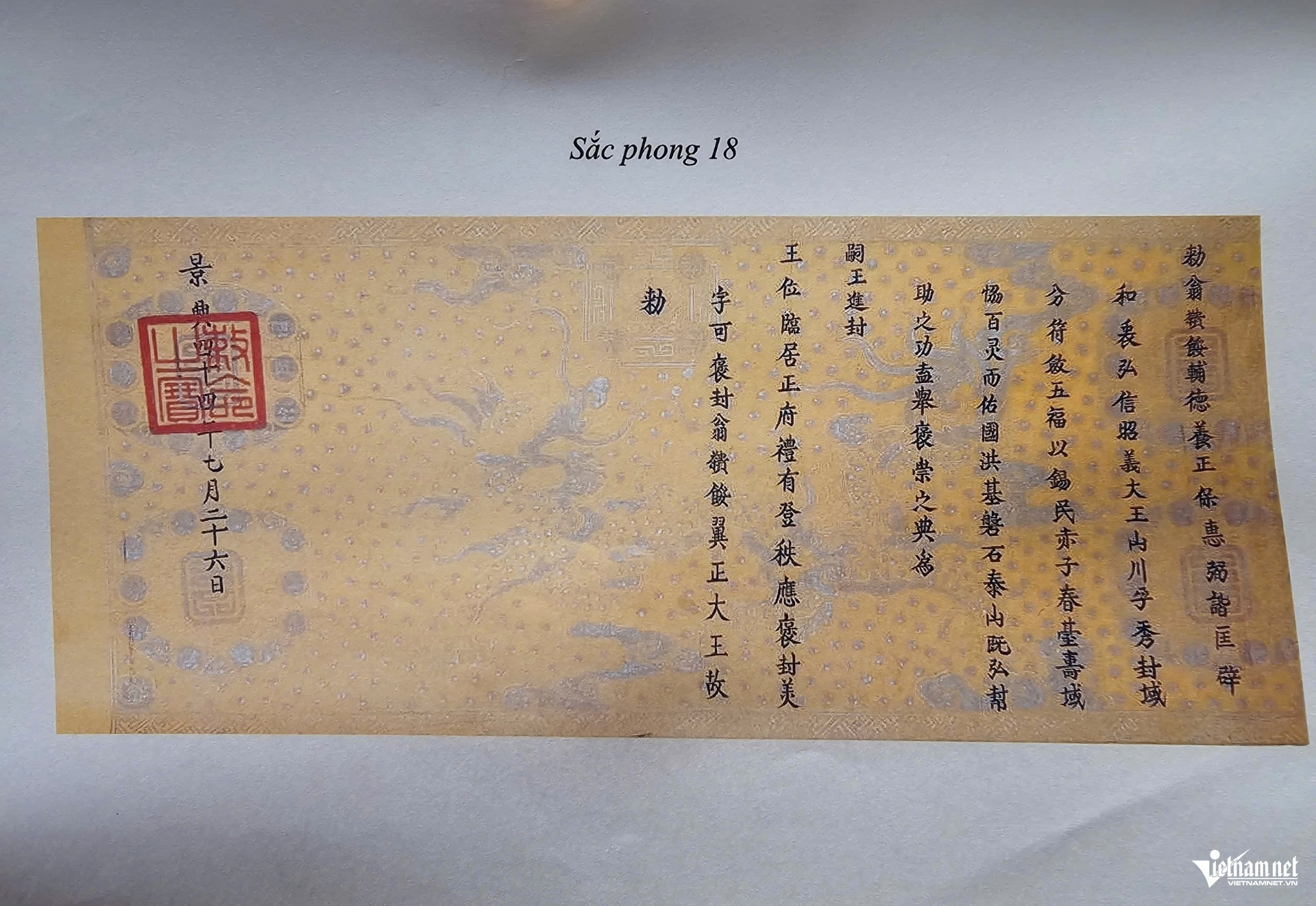
What makes the temple truly exceptional, according to Mr. Nhip, is its collection of nearly intact royal edicts. Village chronicles state that there were originally 54 edicts, of which 47 remain in good condition today, one is torn, and six from the Tây Sơn era have been lost. The surviving documents span from the 4th year of Phúc Thái (1646) to the 9th year of Khải Định (1924).
“These edicts once went missing,” he recounted. “But during restoration work in 1999, villagers discovered them inside bamboo tubes hidden in the temple’s rafters. It was a joyful moment for everyone - they were immediately treated as sacred heirlooms.”
“We now carefully store the edicts rolled up in a lacquered wooden box with gold leaf, placed inside a safe. The temple’s management board only brings them out during the most important village ceremonies.”
The edicts were made using special dó paper and ink mixed with buffalo-hide glue and gold or silver powder. This craftsmanship has allowed them to retain their vivid gold motifs even after centuries.
“These documents have attracted the interest of professors and researchers,” Mr. Nhip shared. “Experts have assessed the 47-edict collection at Thanh Nga as ‘priceless’ - a rare and continuous record of the Lê and Nguyễn dynasties, rich in historical, cultural, linguistic, and artistic value. Very few communal houses have preserved such a large number of royal edicts.”
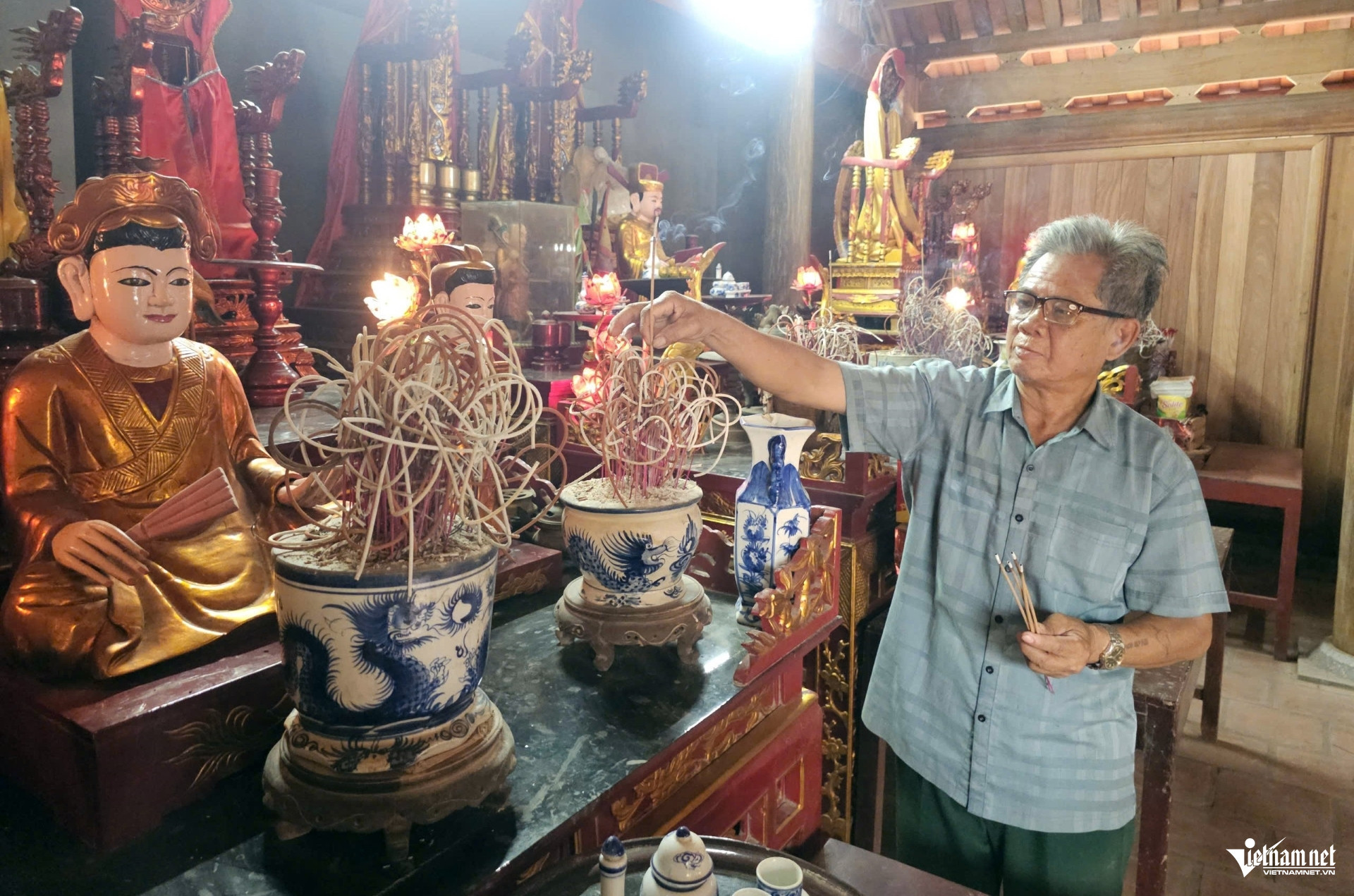
Le Dinh Ngo, Head of Culture and Society in Hoang Son commune, said the 47 royal edicts and the accompanying genealogical record are viewed by villagers as sacred treasures. They represent not only invaluable cultural heritage but also a deep reverence for the village’s founding deity - honored for protecting and establishing the community.
The edict collection includes 21 issued during the Le Trung Hưng dynasty and 26 from the Nguyễn dynasty. Together, they offer a unique, uninterrupted view of Vietnam’s folk beliefs, royal administration, and cultural continuity over several centuries - something few localities possess.
To the villagers, Thanh Nga communal house is more than a place of worship. It is a living symbol of cultural identity and spiritual pride for the Thanh Hoa region - a heritage worthy of protection and preservation for generations to come.
Every year on the 15th day of the second lunar month, villagers hold the Ky Phuc Festival to honor the tutelary god’s contributions.
The celebration features traditional rituals, a ceremonial procession around the village, and various folk games such as tug of war, Chinese chess, and boat races. These festivities not only attract large crowds but also strengthen community bonds and inspire younger generations to cherish their ancestral legacy.
Le Duong
.svg)
