 Vietnamnet.vn

 Podcast



As one of the localities that still preserves many traditional cultural features tied to the living space and customs of the Gia Rai people, residents of Kep Village in Ia Ly Commune, Gia Lai Province are drawing international visitors through experiences that are simple yet deeply meaningful.
Touching identity
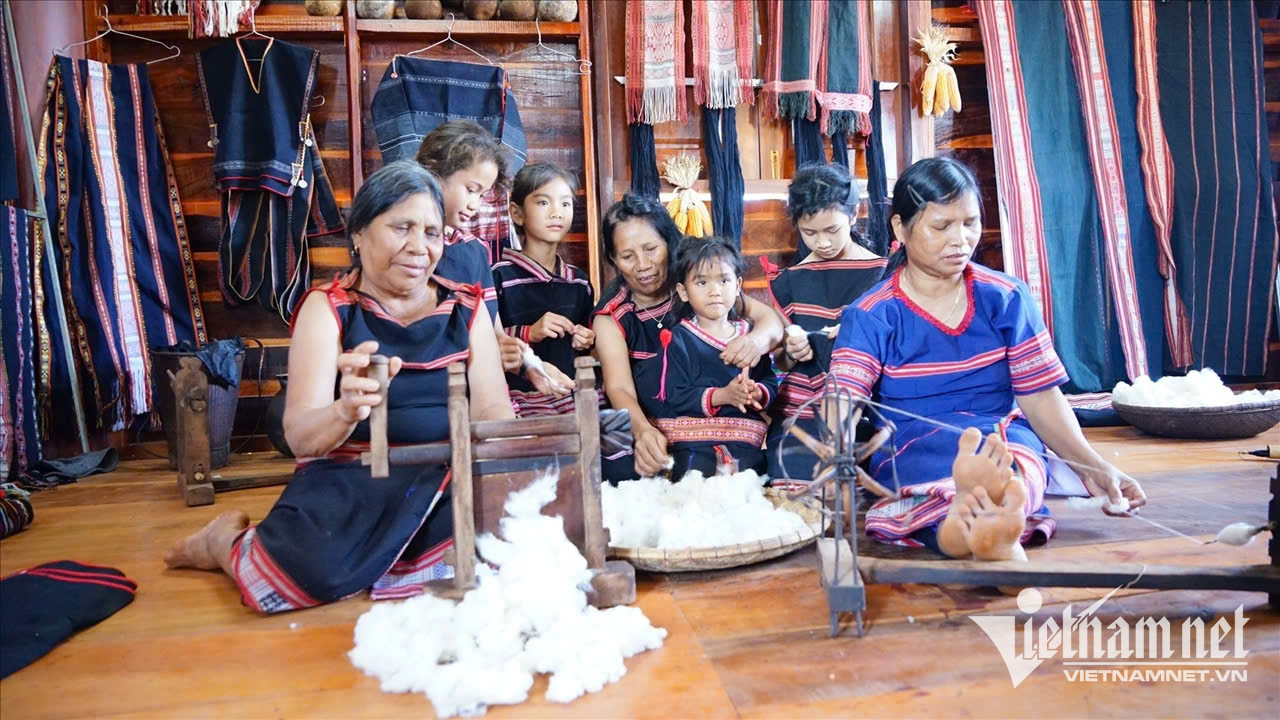
Gia Rai women spin cotton and weave fabric inside a stilt house in Kep Village 1, Ia Ly Commune. Photo: Ngoc Thu
Under the honey-like glow of April’s late afternoon sunlight pouring over the towering rong house, wooden statues stand quietly in the graveyard area. In one corner of the village, a Gia Rai woman gently spins cotton and weaves fabric, while nearby, a man carefully shapes bamboo strips to weave baskets.
At night, beside the flickering fire and jars of fragrant rice wine, young men play gongs while women perform graceful xoang dances. This simplicity, set in the vast highlands, holds a unique appeal for many international travelers exploring community-based tourism in Gia Lai. They do not just observe - they feel as though they can truly “touch” the culture.
H’Uyen Nie, Deputy Head of the Ia Mo Nong Community Tourism Management Board in Ia Ly Commune, said that since the Lunar New Year, the village has welcomed dozens of international groups from Denmark, France, Australia and Switzerland.
What excites visitors most are cultural values embedded in everyday life: dried gourds used to carry water, wooden grave statues linked to funeral rituals, and traditional weaving and basketry still maintained to serve daily needs.
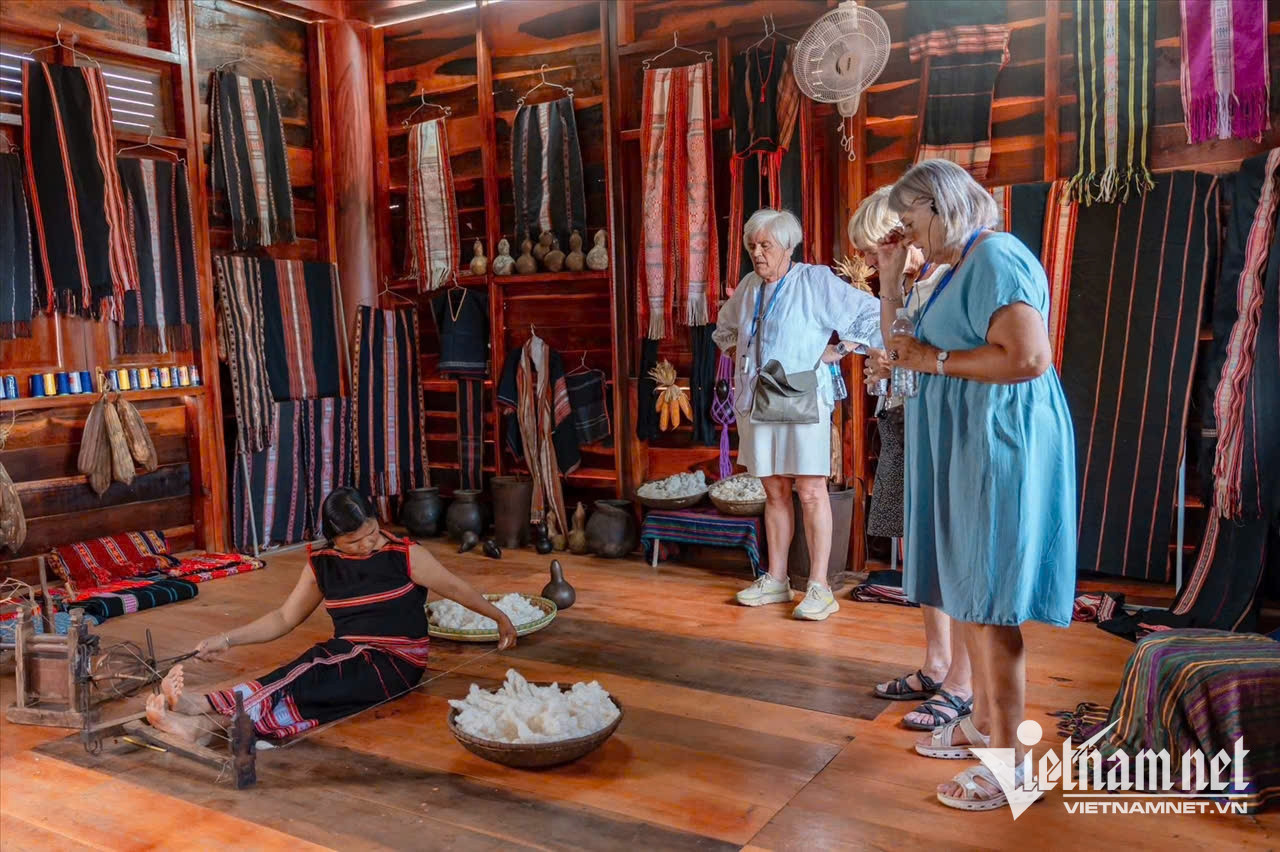
International visitors learn about brocade weaving from naturally grown cotton.
Wooden grave statues attract foreign visitors with their raw and distinctive beauty.
During the hosting process, young villagers in Kep play a key role in connecting the community with international guests. Ro Cham Phyur, a local resident, directly guides visitors, introducing them to Gia Rai customs and lifestyles with her fluent foreign language skills.
“When visitors come, especially foreigners, we introduce them to our daily activities and distinctive cultural practices. This helps encourage them to stay longer, while also spreading our traditional values,” Phyur shared.
What leaves the strongest impression is that visitors are guided by local people and can directly participate in familiar daily activities such as spinning thread, weaving brocade, crafting ceremonial poles, learning about culture and cuisine, and visiting the rong house. These experiences unfold naturally within the rhythm of community life, without being separated from it.
The wooden grave statues also draw international attention for their raw, distinctive beauty.
Gregov Liebscher, a visitor from Berlin, Germany, was particularly impressed by the friendliness and openness of local residents. He said that in Kep Village, he did not feel like a tourist, but rather someone living within the community. Everything felt genuine and warm.
“What I like most is that traditional values are still preserved in daily life. It’s a very interesting experience for me,” he said.
Holding visitors through cultural identity
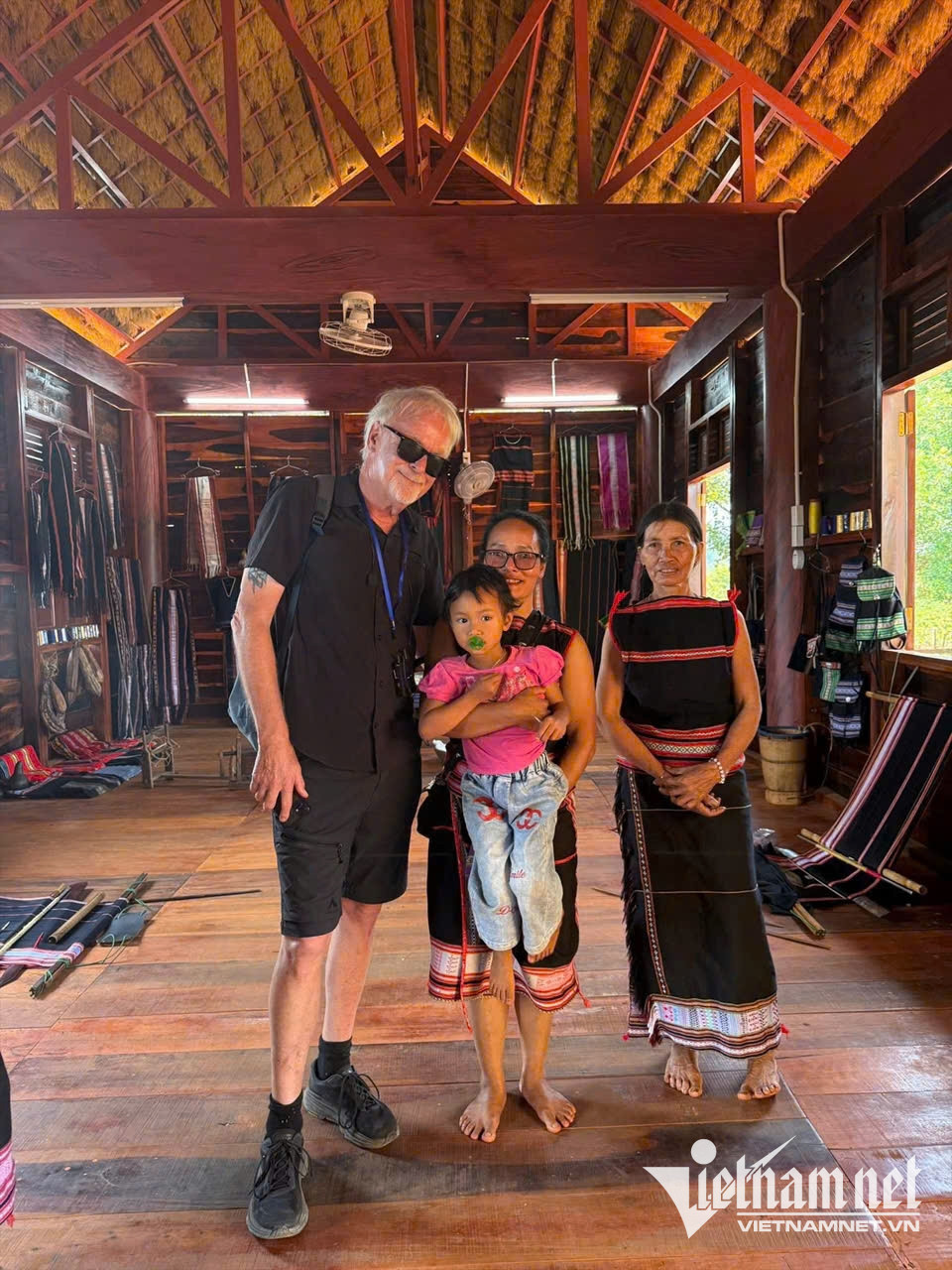
Visitors take photos with residents of the community tourism village in Ia Ly Commune.
What sets Kep Village apart for international travelers is the authenticity of its cultural space and the way local people directly participate in tourism. Many foreign visitors show particular interest in community life, customs and how the Gia Rai preserve their identity through everyday practices. This helps them better understand the people and the land, enriching their journeys.
Cecilia, a visitor from France, shared: “I love the way people weave fabric and dye it using natural materials. These are unique values that cannot be found elsewhere. The cultural space of Kep Village still retains its traditional character. I will definitely return here many times.”
In practice, community-based tourism can create sustainable appeal for international visitors when built on cultural foundations and community consensus. When local people play a central role, culture is not commercialized but becomes a living value that is preserved and shared.
It is these authentic and profound cultural experiences that keep international visitors coming back. This approach also represents a suitable path for Gia Lai’s tourism development - integrating globally while maintaining its identity.
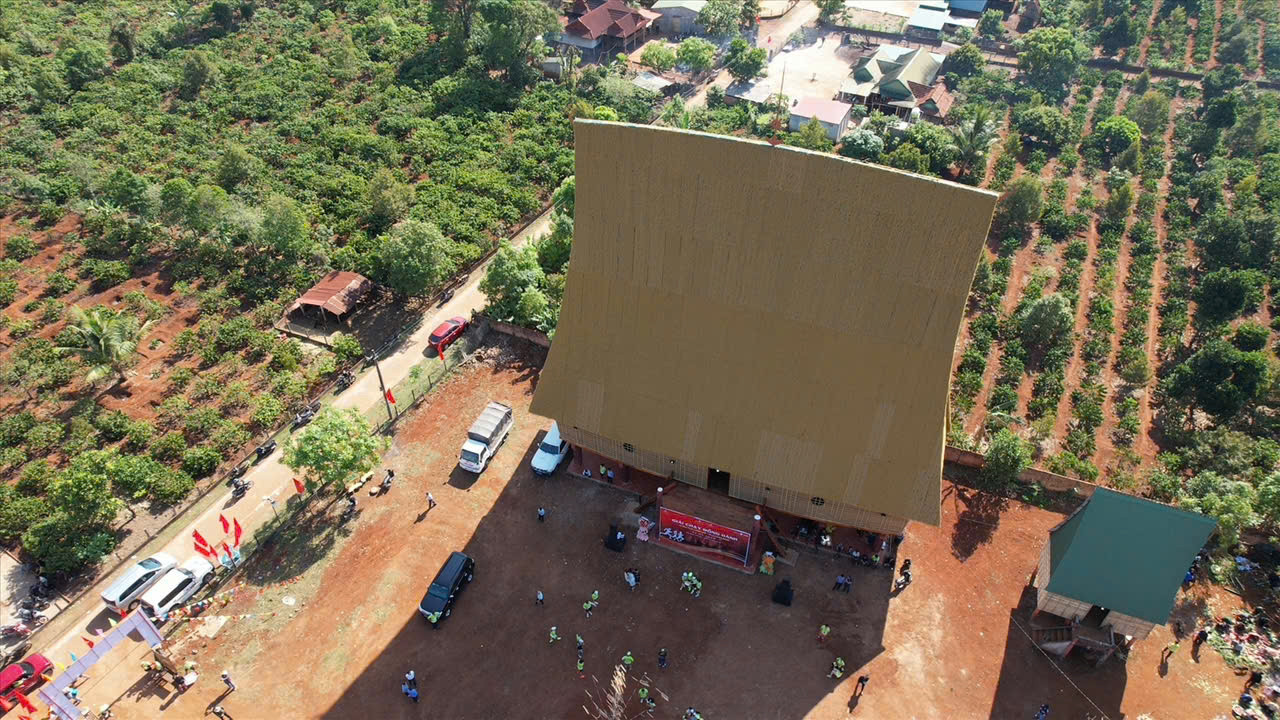
The towering rong house, standing proudly at the heart of the Gia Rai village, is one of the most striking highlights for visitors.
To promote community-based tourism, Gia Lai Province has recently invested more than VND12 billion (approximately US$490,000) in infrastructure development for Ia Mo Nong Commune, now Ia Ly Commune. A key highlight is the newly built 26-meter-high rong house rising majestically at the center of the village.
According to Vice Chairman of the Gia Lai Provincial People’s Committee Nguyen Huu Que, the new rong house not only contributes to boosting community tourism but also creates favorable conditions for preserving and promoting traditional cultural identity, in line with Resolution No. 80 of the Politburo on the development of Vietnamese culture.
The rong house is expected to become a cultural landmark of the village, a shared asset for residents to preserve and promote its value. Alongside this, the locality will continue to strengthen promotion efforts, spreading the cultural beauty of the Gia Rai people both domestically and internationally, with tourism positioned as a key economic sector linked to the preservation of ethnic identity.
Ngoc Thu
.svg)
