 Vietnamnet.vn

 Podcast



Hidden among the layered mountains of Thanh Hoa, the pagoda sits atop Mount Cac, offering a sense of stillness far removed from urban life. Reaching the site requires navigating winding paths along steep slopes, weaving through dense forest canopies.
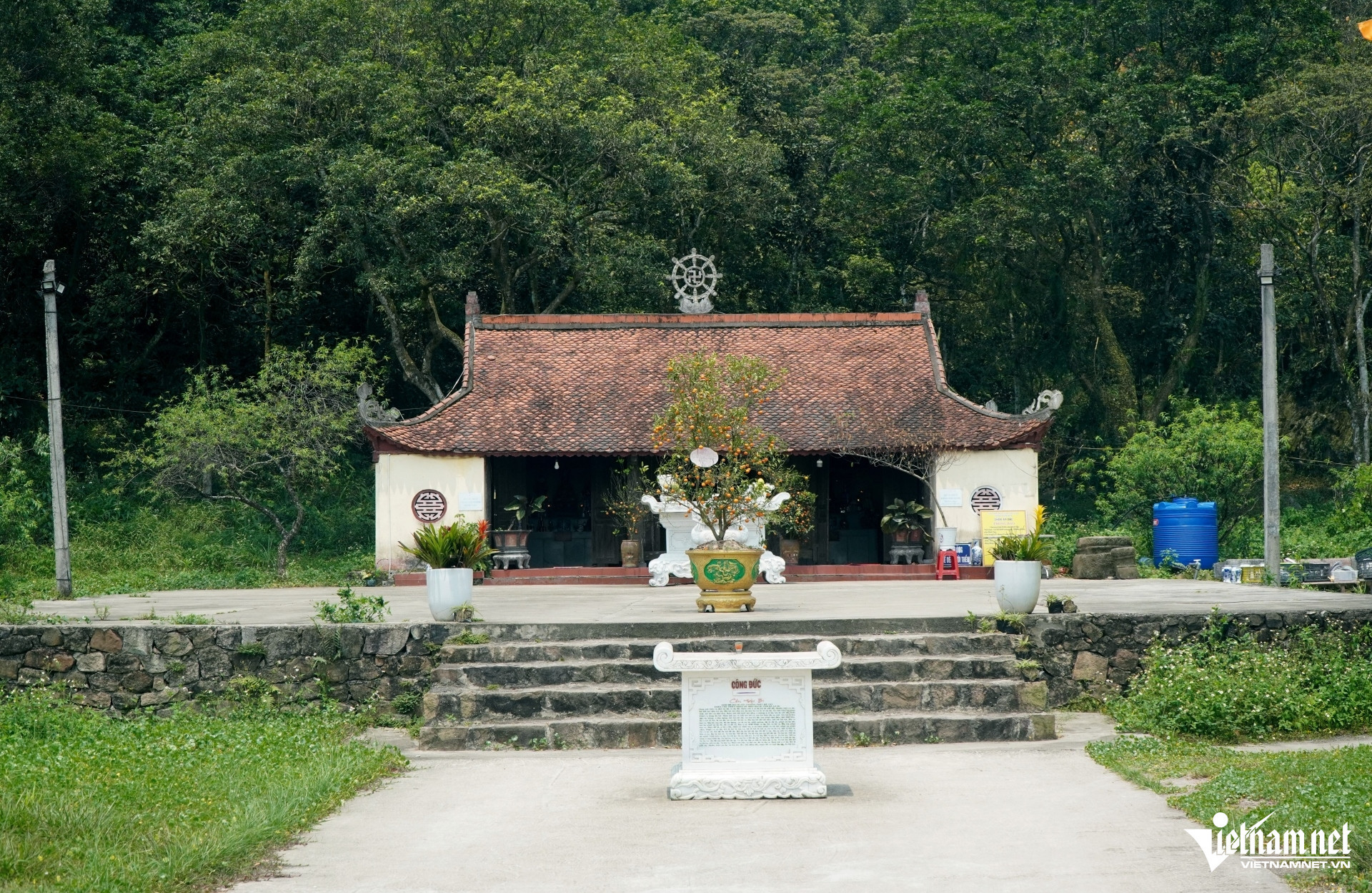
Beyond its dramatic location, the pagoda is best known for a striking relic: a Buddha relief etched onto a large stone slab near the temple grounds. For many first-time visitors, the discovery comes as both a surprise and a quiet moment of awe.
According to monk Thich Nguyen Dai, the pagoda’s abbot, the entire area was once wild and overgrown, with only faint traces of earlier structures. The climb from the foot of the mountain could take three to four hours, following narrow trails or natural streams.
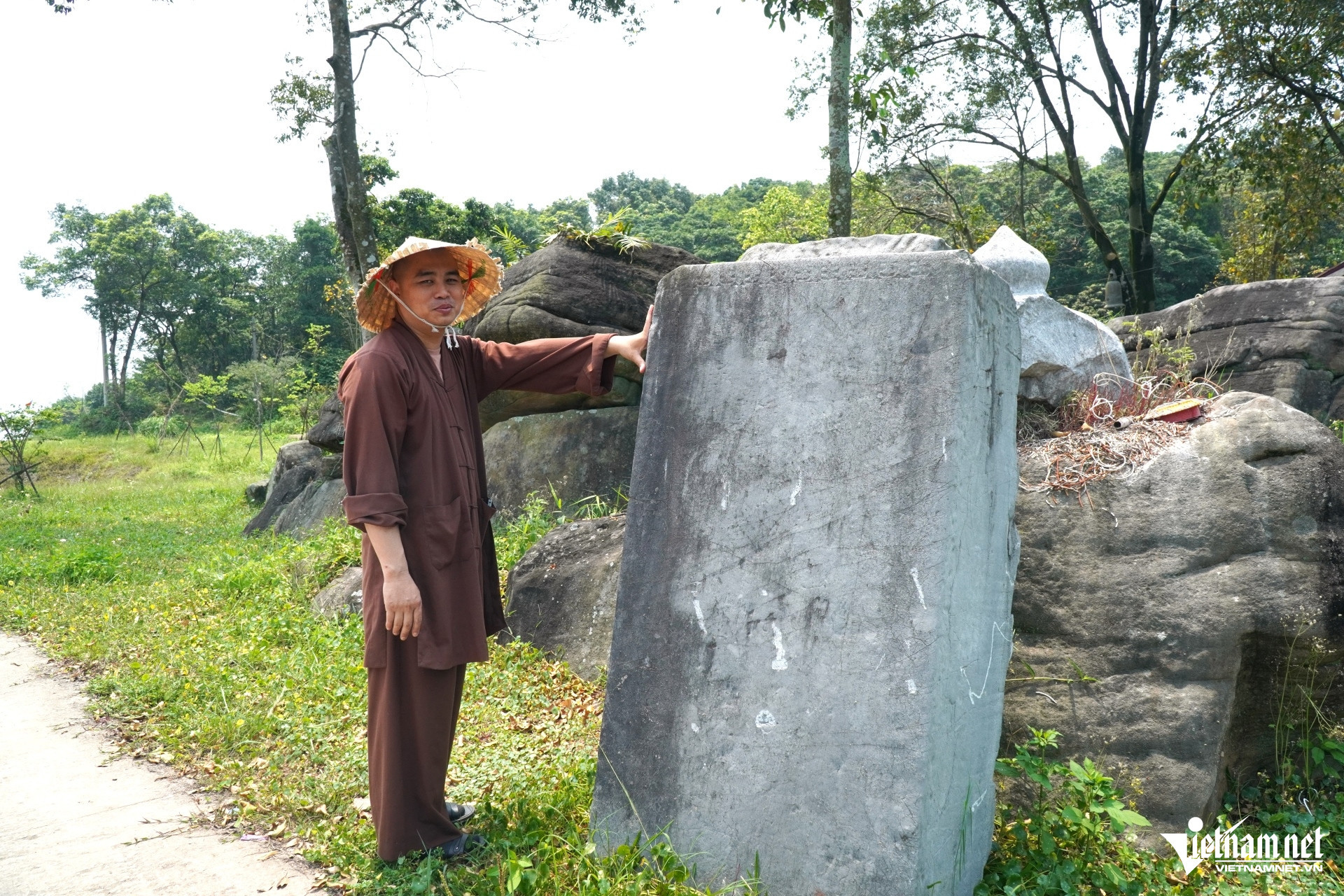
Since 2014, efforts have been made to restore and revive the site into a broader complex of cultural and spiritual landmarks. During this process, several important remains were rediscovered, including lower, middle and upper pagodas, shrines, ancient kilns and, most notably, the hidden stone relief.
Archaeological surveys conducted between 2018 and 2023 have yet to determine the exact origin of the pagoda. However, artifacts suggest it dates back to early periods of Dai Viet, with many relics spanning from the Tran dynasty through the Later Le restoration era.
Among these discoveries, the Buddha relief stands out as a rare example of religious sculpture with significant historical, artistic and spiritual value.
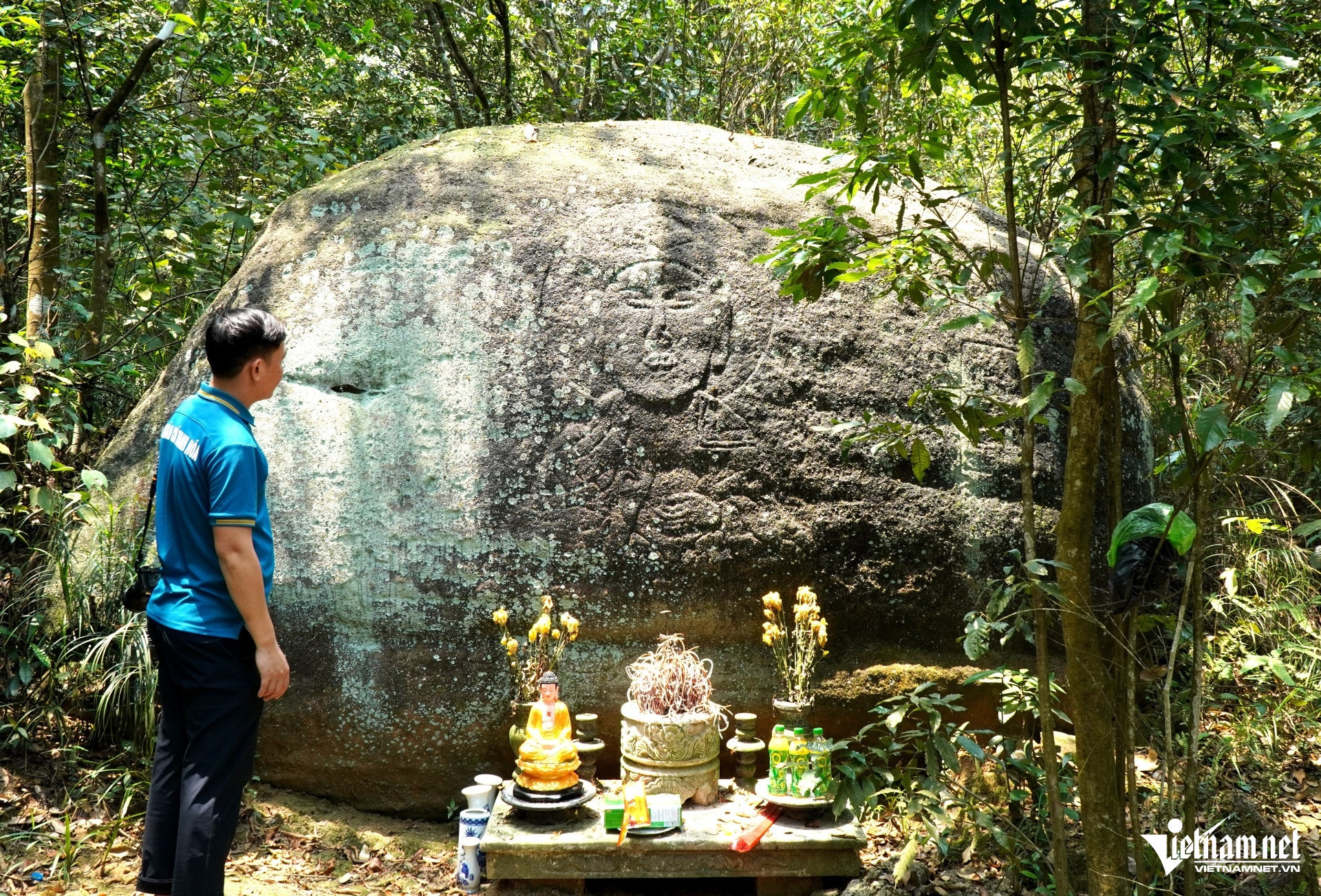
Located beneath the shade of ancient trees near the main sanctuary, the stone surface is broad and relatively flat. It depicts a seated Buddha in meditation. Though time has worn down some details, the serene expression and composed posture remain clearly visible.
The figure is shown seated on a lotus pedestal, with a halo behind. Ancient artisans skillfully used the natural contours of the rock to create fluid, lifelike lines. The intricate carvings on the robe and lotus base reflect both technical mastery and a deep understanding of Buddhist teachings. Subtle variations in the stone’s surface give the impression of fabric gently moving in the wind.
A distinctive feature of the relief is the teaching mudra - a symbolic hand gesture representing the transmission of knowledge and the continuity of truth. The circular form created by the fingers embodies wisdom and the ongoing cycle of enlightenment, encouraging reflection and right understanding.
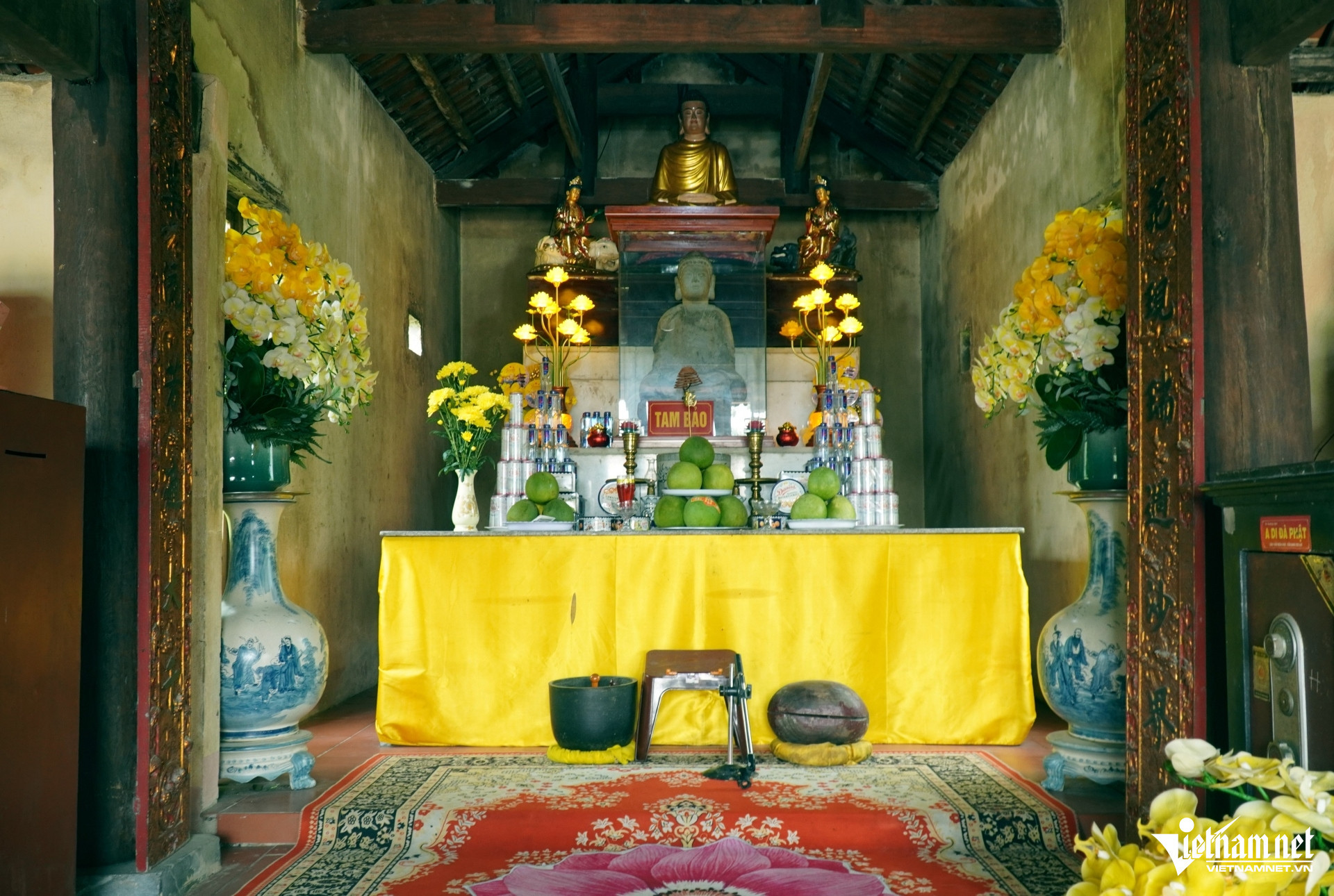
According to local cultural authorities, the site was recognized as a provincial-level heritage site in 2013. Further archaeological work approved in 2018 has revealed structural remains and artifacts from multiple historical periods, particularly concentrated in the 18th century.
Today, the Am Cac complex includes various religious structures such as Trinh Pagoda, Lower, Middle and Upper pagodas, Ngoc Son shrine, as well as related sites like stone gongs, carved rocks and ancient brick-making areas believed to date from the same era.
With its unique microclimate of streams, lakes and mountainous terrain at an elevation of 600 meters, the site holds not only spiritual significance but also strong potential for ecological tourism and retreat development in the future.
Le Duong
.svg)
