 Vietnamnet.vn

 Podcast



Tran Tuyen
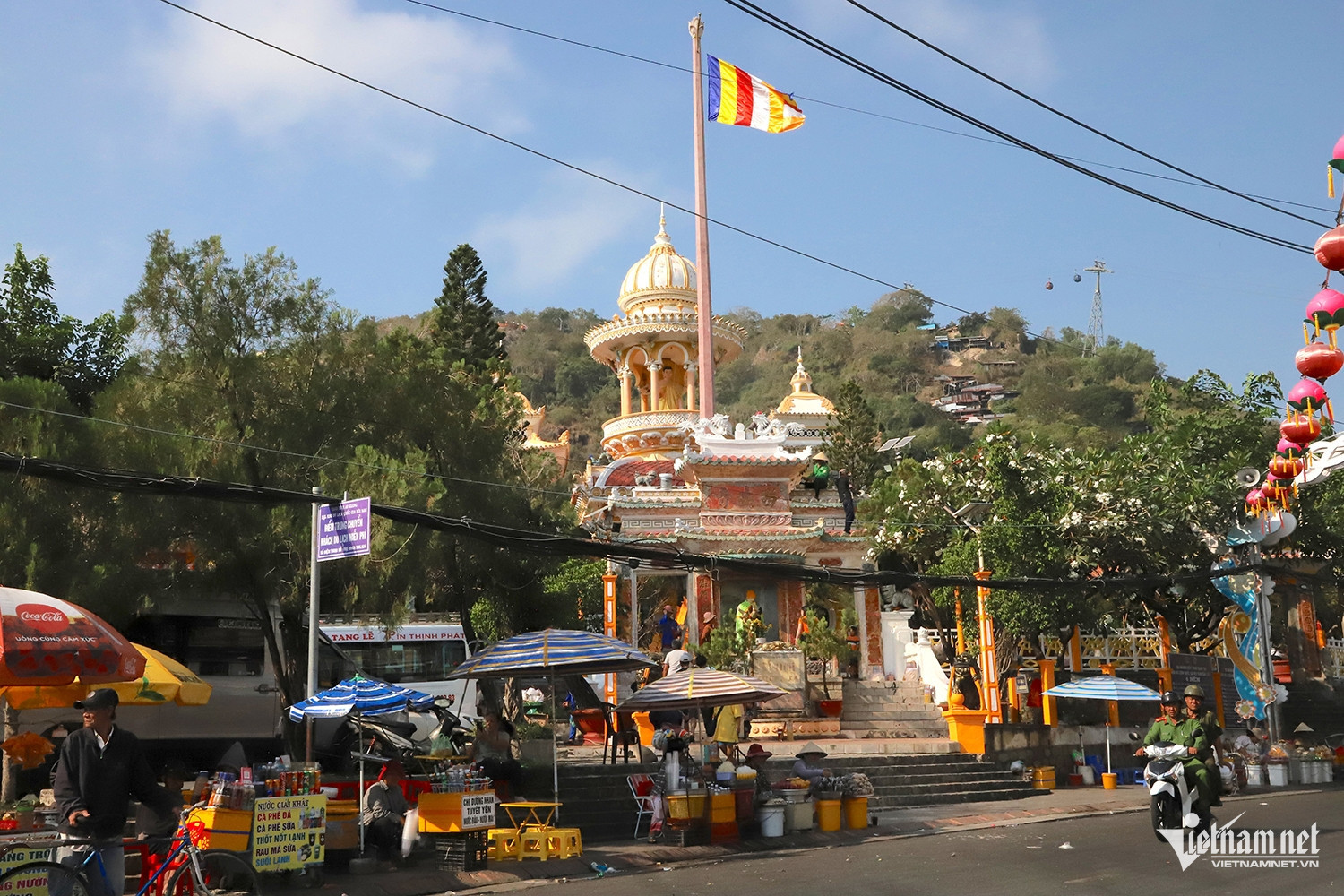
Situated at the foot of Sam Mountain in Chau Doc Ward, An Giang, Tay An Pagoda is one of the region’s most representative ancient temples.
The pagoda was commissioned in 1847 by Governor Doan Uan and has undergone multiple expansions and restorations over the years.
Today, it stands as an important spiritual anchor for local residents as well as pilgrims and visitors from across the country.
The pagoda is built on elevated, open ground, with a total campus area of approximately 15,000 square meters.
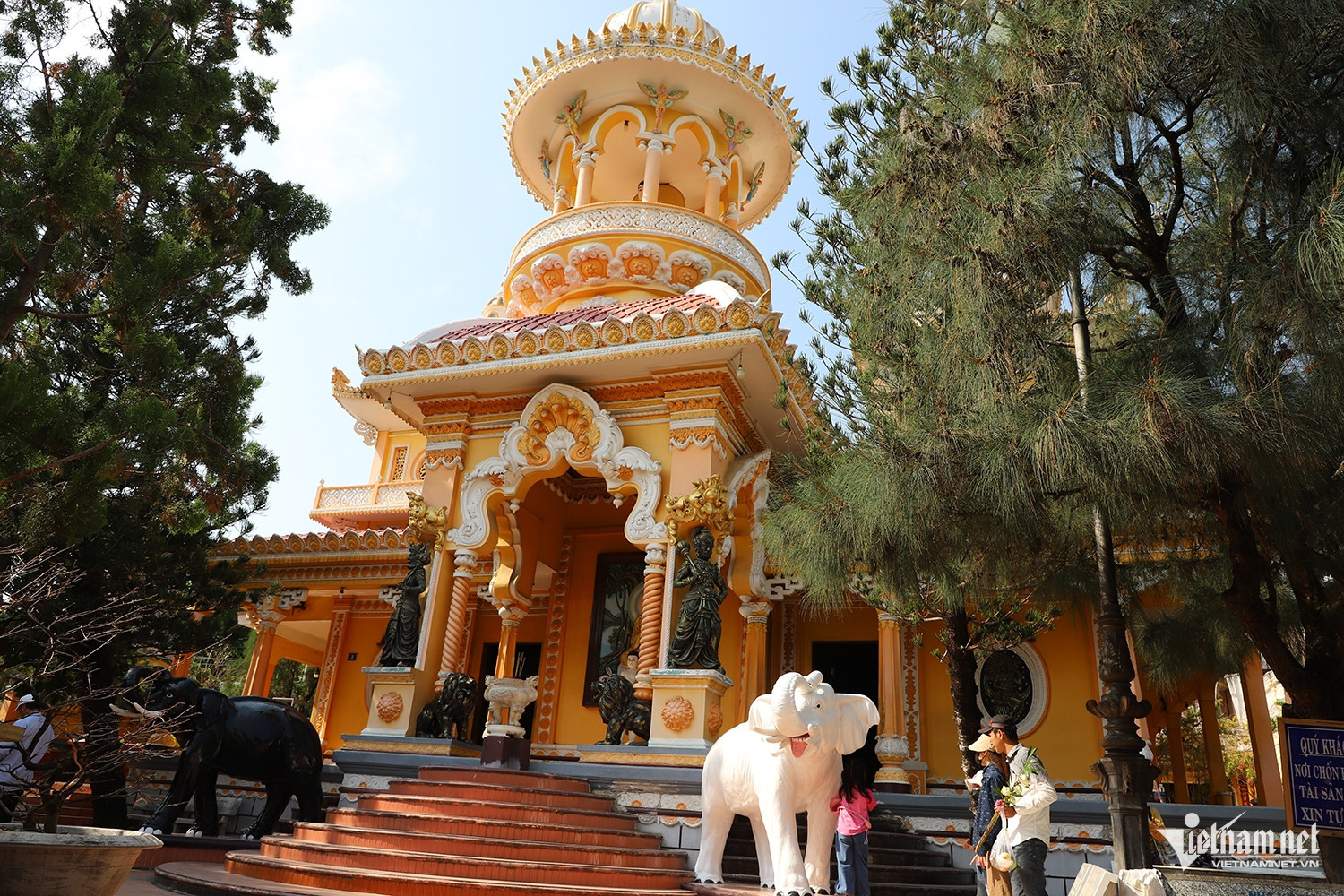
From a distance, Tay An Pagoda immediately captures attention with its striking architecture, featuring three ancient towers topped with onion-shaped domes painted in vivid colors.
These elements create a silhouette that is both solemn and visually unusual against the mountainous backdrop.
The entire complex follows the “Tam” layout, a traditional architectural arrangement.
Tay An Pagoda has been officially recognized by the Vietnam Records Book Center as the first pagoda in the country to combine Indian artistic style with traditional Vietnamese architecture.
Constructed from durable materials such as brick, roof tiles, and cement, the pagoda has withstood the test of time.
At the entrance stands the statue of Quan Am Thi Kinh.
Inside, a small courtyard opens up, marked by a 16-meter flagpole and flanked by two elephant statues: one white elephant with six tusks and one black elephant with two tusks, creating a distinctive focal point within the grounds.
The main hall occupies the central position of the complex.
It is a large structure with a two-tiered roof whose curved eaves rise gracefully.
A notable feature is the roof’s use of large tubular tiles, which differs from the fish-scale tiles commonly seen in northern Vietnamese pagodas.
On either side of the main hall stand the bell tower and the drum tower, both square in layout and arranged symmetrically.
Atop the main hall, finely carved representations of the four sacred creatures - dragon, unicorn, tortoise, and phoenix - demonstrate the refined craftsmanship of artisans from earlier generations.
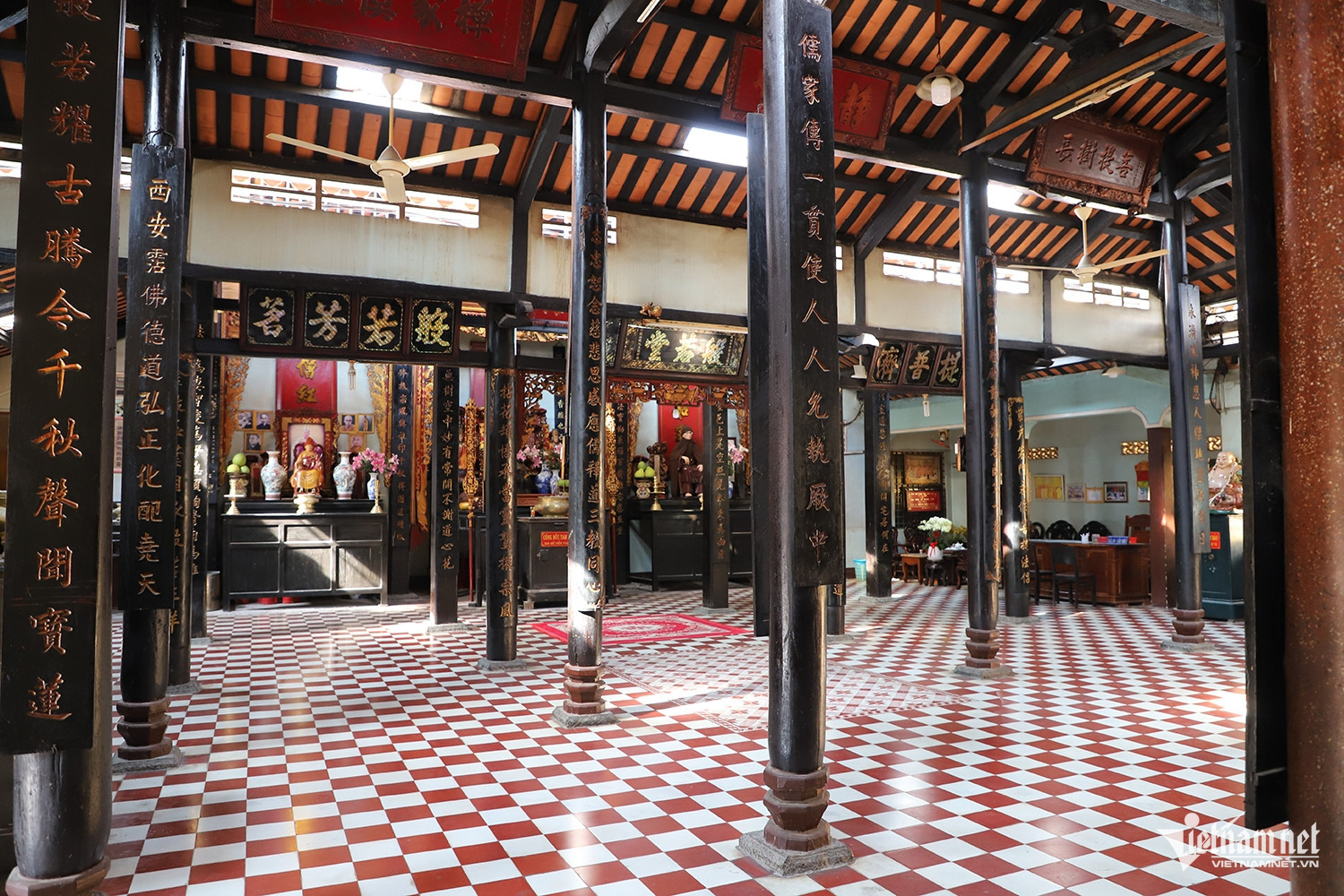
The temple floor is paved with patterned cement tiles.
Behind the main hall lies a spacious and well-ventilated ancestral worship hall.
The wooden column system has been restored and reinforced with concrete pillars to ensure structural stability.
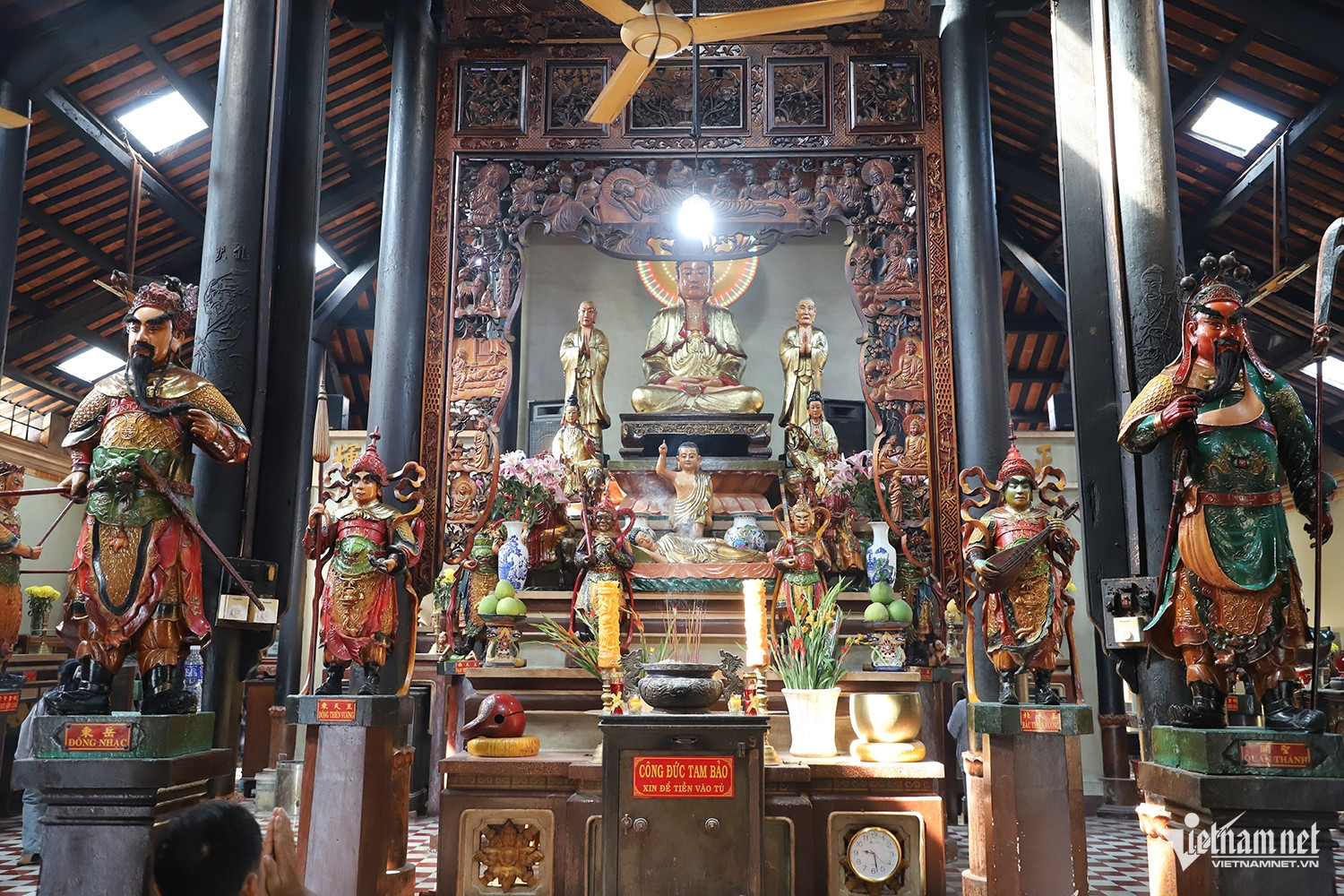
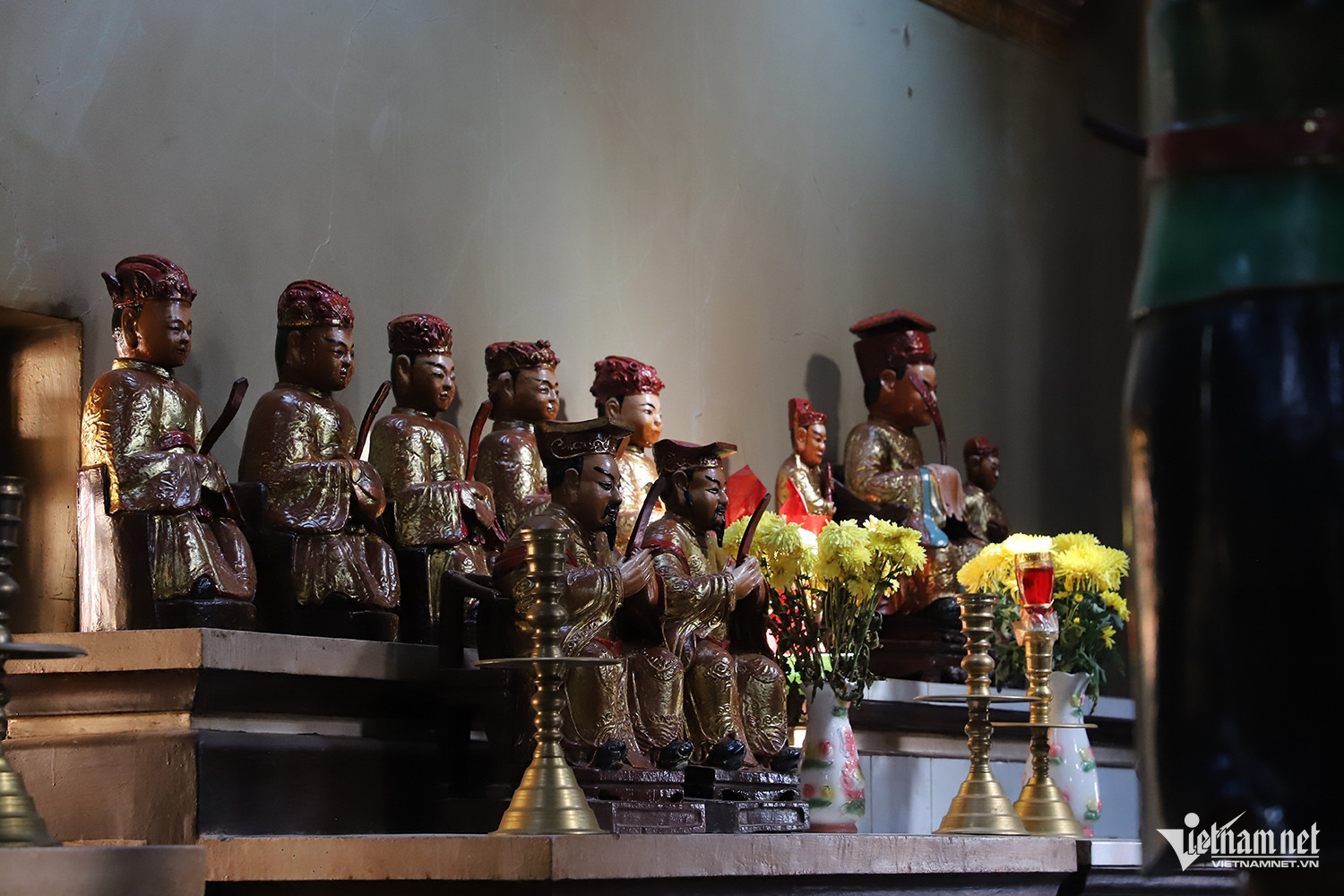
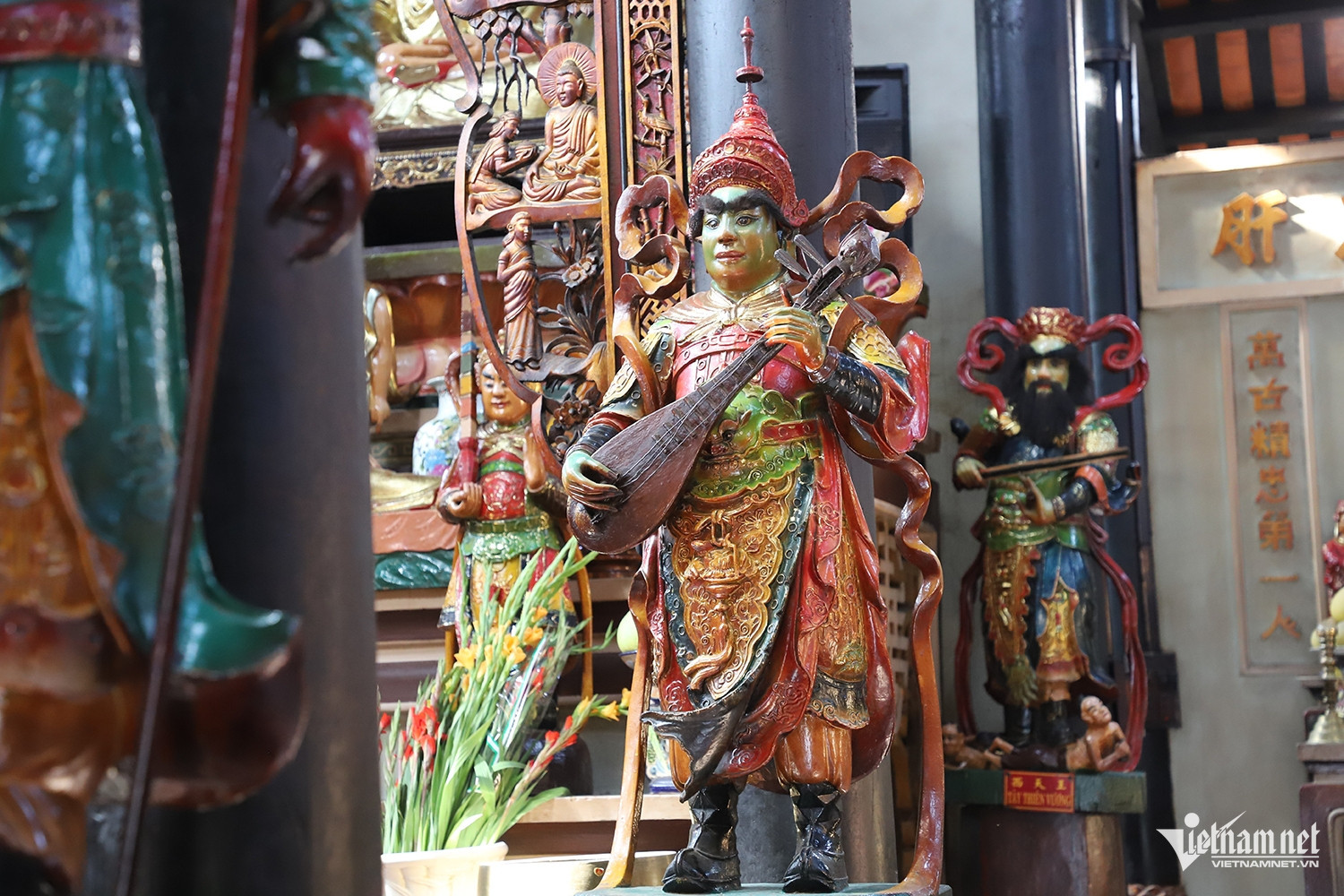
Inside the main hall, around 150 statues of varying sizes are currently preserved.
These include figures of Buddhas, Bodhisattvas, Arhats, the Eight Vajra Guardians, the Jade Emperor, Huynh De, and Than Nong.
Most of the statues are carved from ancient hardwood and feature intricate detailing.
On the ceiling near the entrance to the main hall, statues of deities bearing strong Indian cultural influence can still be seen.
These elements further highlight the distinctive fusion of architecture and belief that defines Tay An Pagoda.
.svg)
