 Vietnamnet.vn

 Podcast



More than a place of worship, an ancient temple in Nghe An Province preserves a remarkable collection of historical treasures, including three royal ceremonial robes that have been carefully protected by generations of descendants for more than 400 years.
The temple is dedicated to Dinh Bat Tuy (1516–1587), a native of Bui Ngoa Village - now part of Yen Trung Commune, Nghe An Province - who was one of the most distinguished officials of the Later Le Dynasty.
He served three successive emperors - Le Trung Tong, Le Anh Tong and Le The Tong - and historical records describe him as the dynasty's "Foremost Meritorious Official."
Following his death, the royal court ordered a temple to be built in his hometown to honor his service.
Although the temple has undergone several restorations over the centuries, it continues to preserve much of its original architectural character along with numerous valuable artifacts.
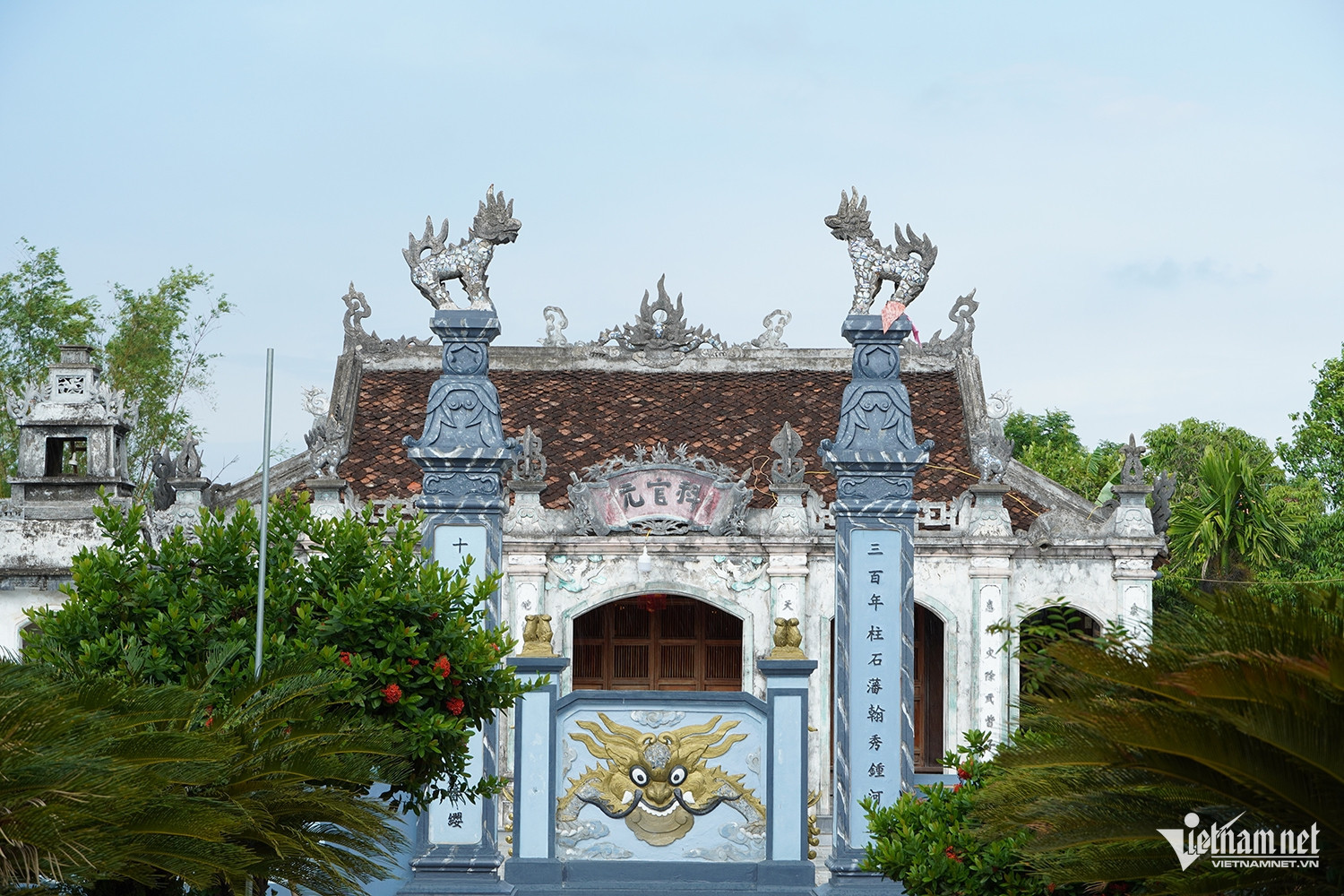
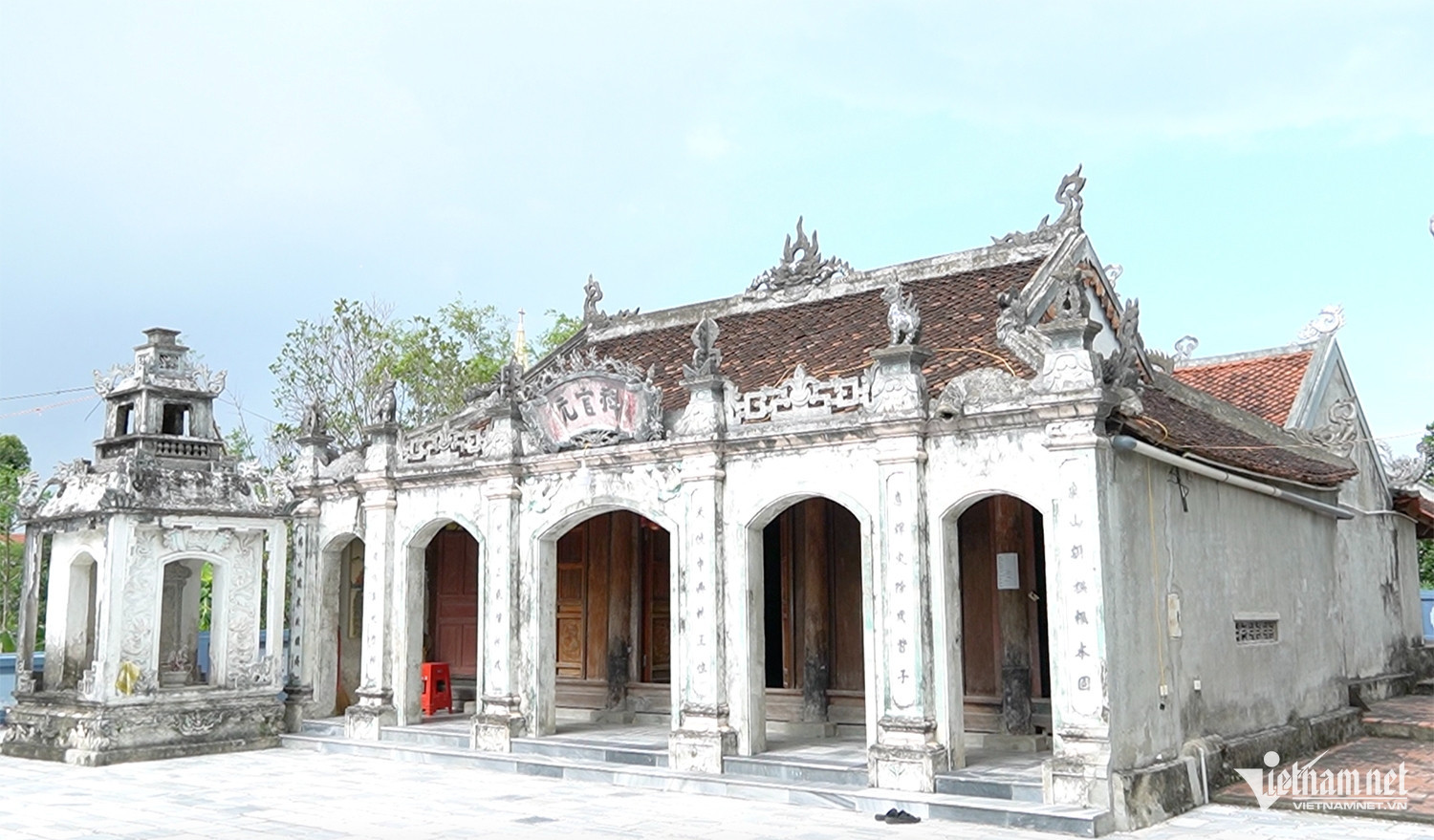
Hạ điện được xây theo lối tường mở cửa vòm, nổi bật với các họa tiết cuốn thư, lưỡng long triều nguyệt, tượng nghê cách điệu và hình rồng cuộn đắp nổi trên các cột trụ.
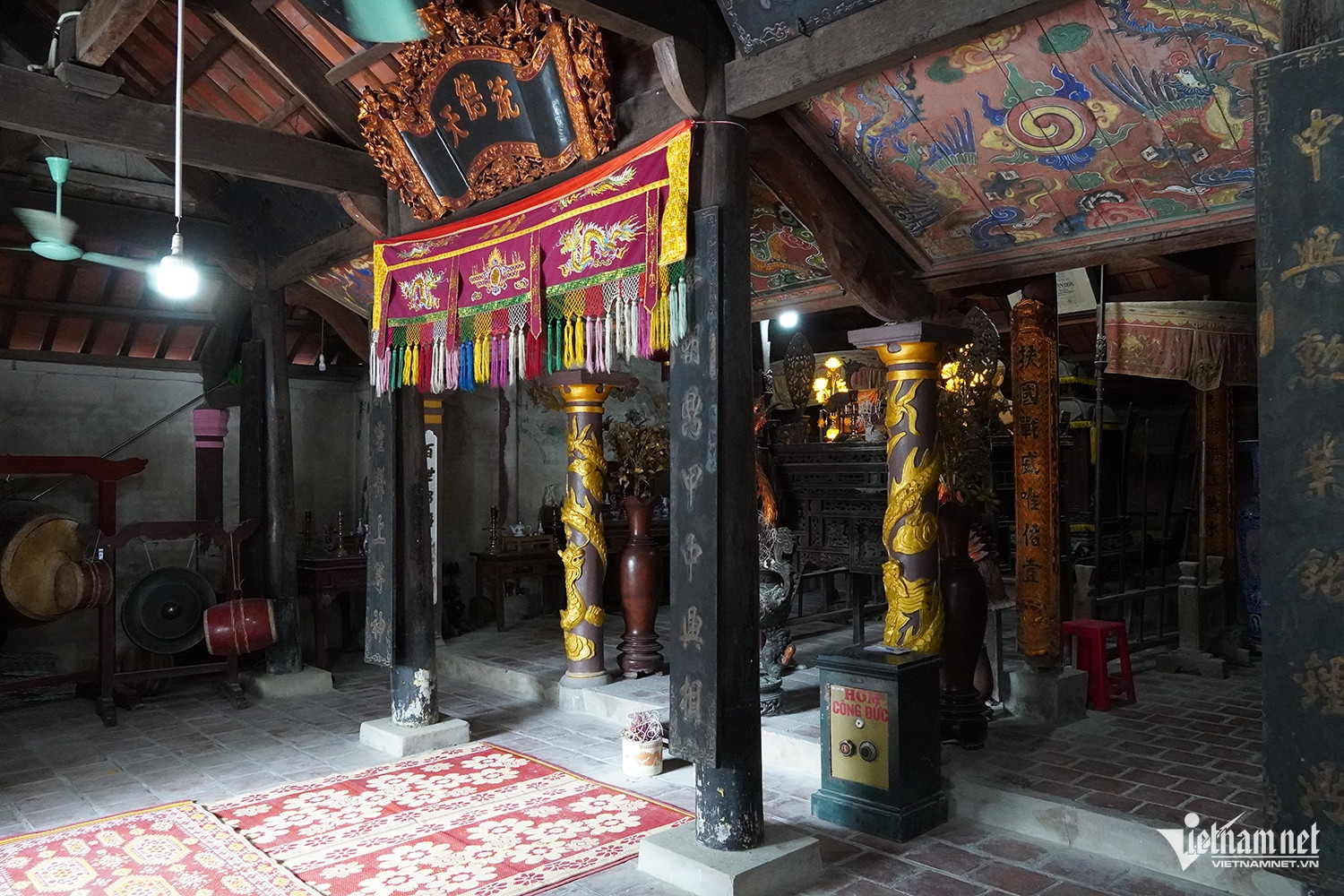
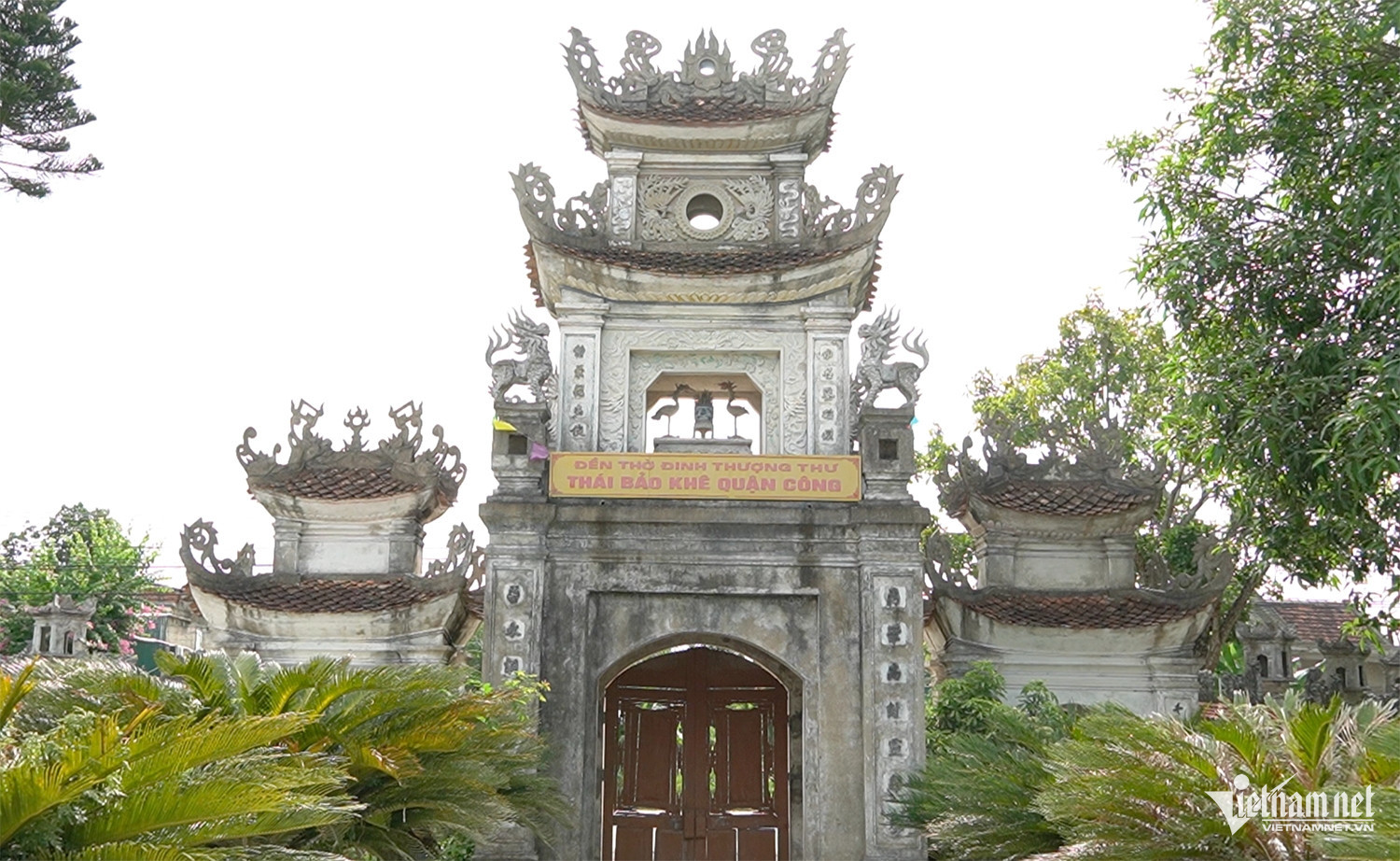
Today, the historic complex covers approximately 10,000 square meters and includes a three-entrance ceremonial gate, an inner gate, three lower worship halls, a middle hall, the main sanctuary and a stele house.
The ceremonial gate is particularly striking, featuring three tiers of curved tiled roofs.
Its central entrance is richly decorated with raised reliefs of dragons, nghe (mythical guardian creatures) and floral motifs.
Each level displays a distinct architectural style, incorporating arched, hexagonal and circular forms to create a harmonious overall design.
Beyond the gate stands the inner ceremonial entrance, flanked by two ornamental pillars topped with sculptures of guardian nghe, leading visitors into the temple's sacred precinct.
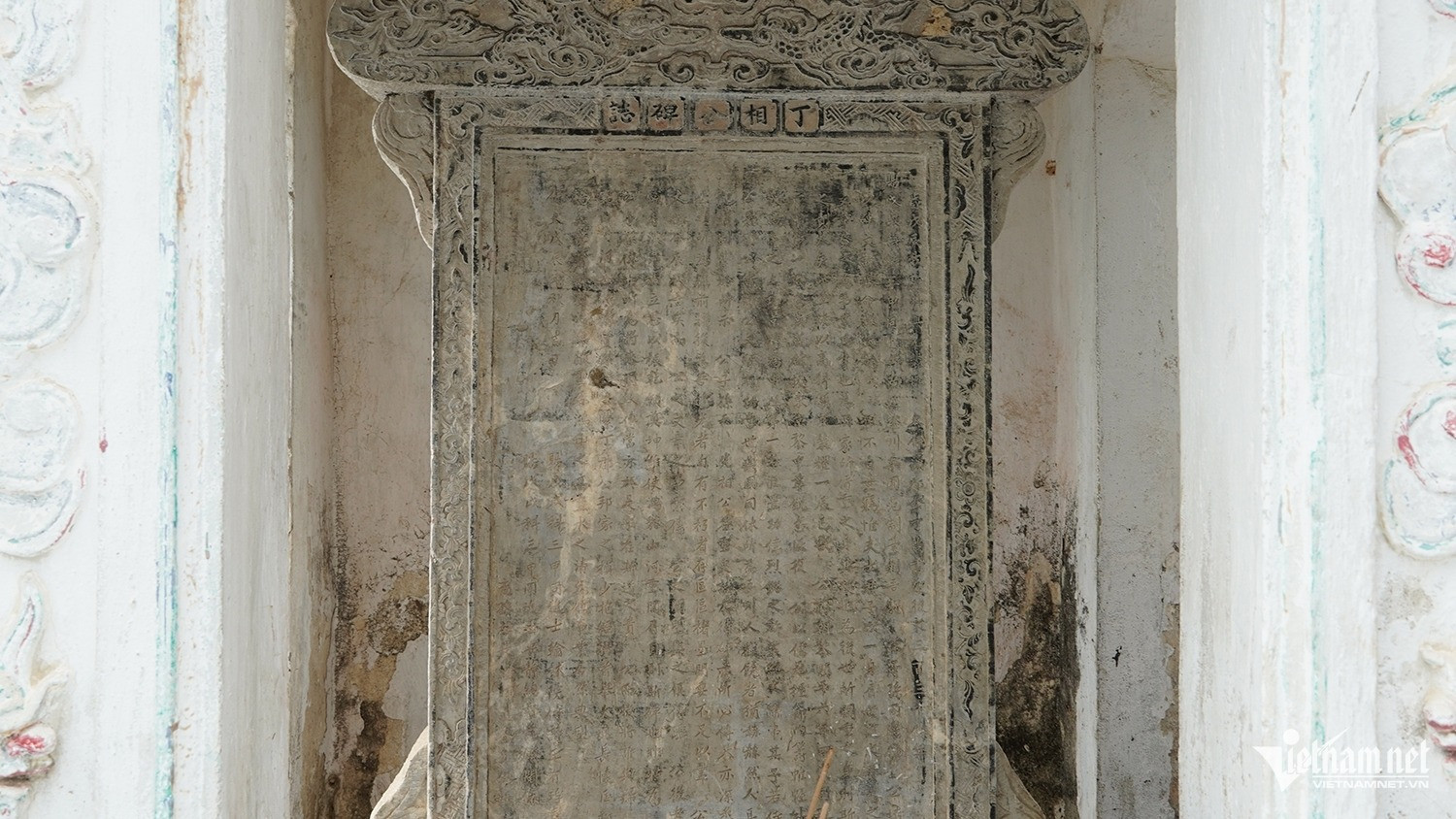
The stele house preserves an ancient stone inscription carved with intricate craftsmanship.
The lower worship hall features arched walls decorated with traditional motifs including scroll designs, paired dragons facing the moon, stylized nghe figures and dragons sculpted in relief around the supporting columns.
According to Dinh Bat Trang, 80, a member of the site's management board, the stone stele is inscribed in Classical Chinese, recording the life, career and achievements of General Dinh Bat Tuy.
The temple's most distinctive structure is its main sanctuary, a two-story, eight-roofed building constructed in the traditional chong diem architectural style.
Its wooden framework still retains finely carved decorative details, while many precious artifacts have been carefully safeguarded by descendants of the Dinh family over the centuries.
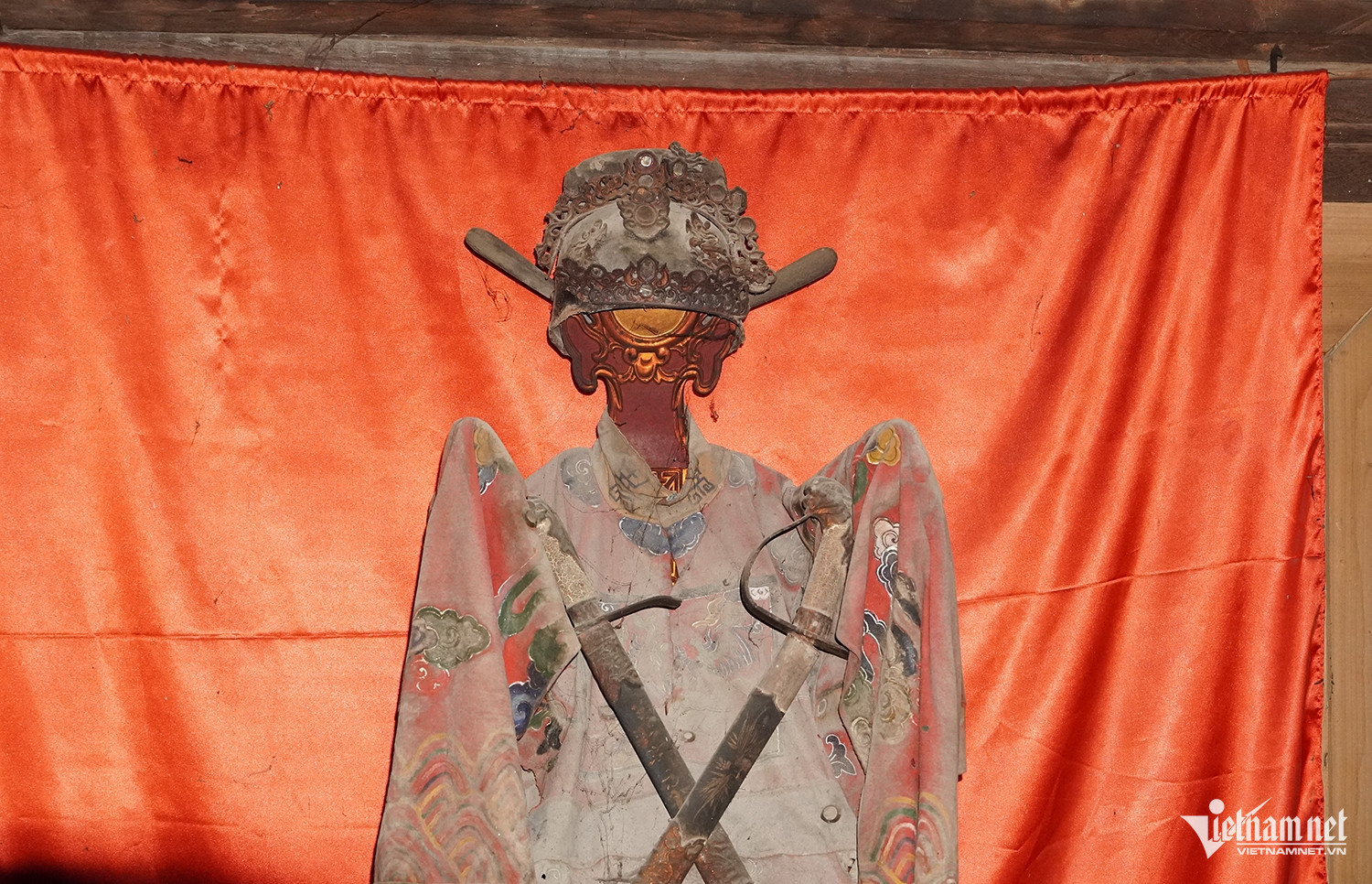
The most remarkable treasures are three ancient ceremonial robes displayed on royal-style thrones, all of which remain largely intact despite being more than 400 years old.
Using a soft feather duster to gently remove dust from the fragile fabric, Trang explained that preserving the robes requires extraordinary care.
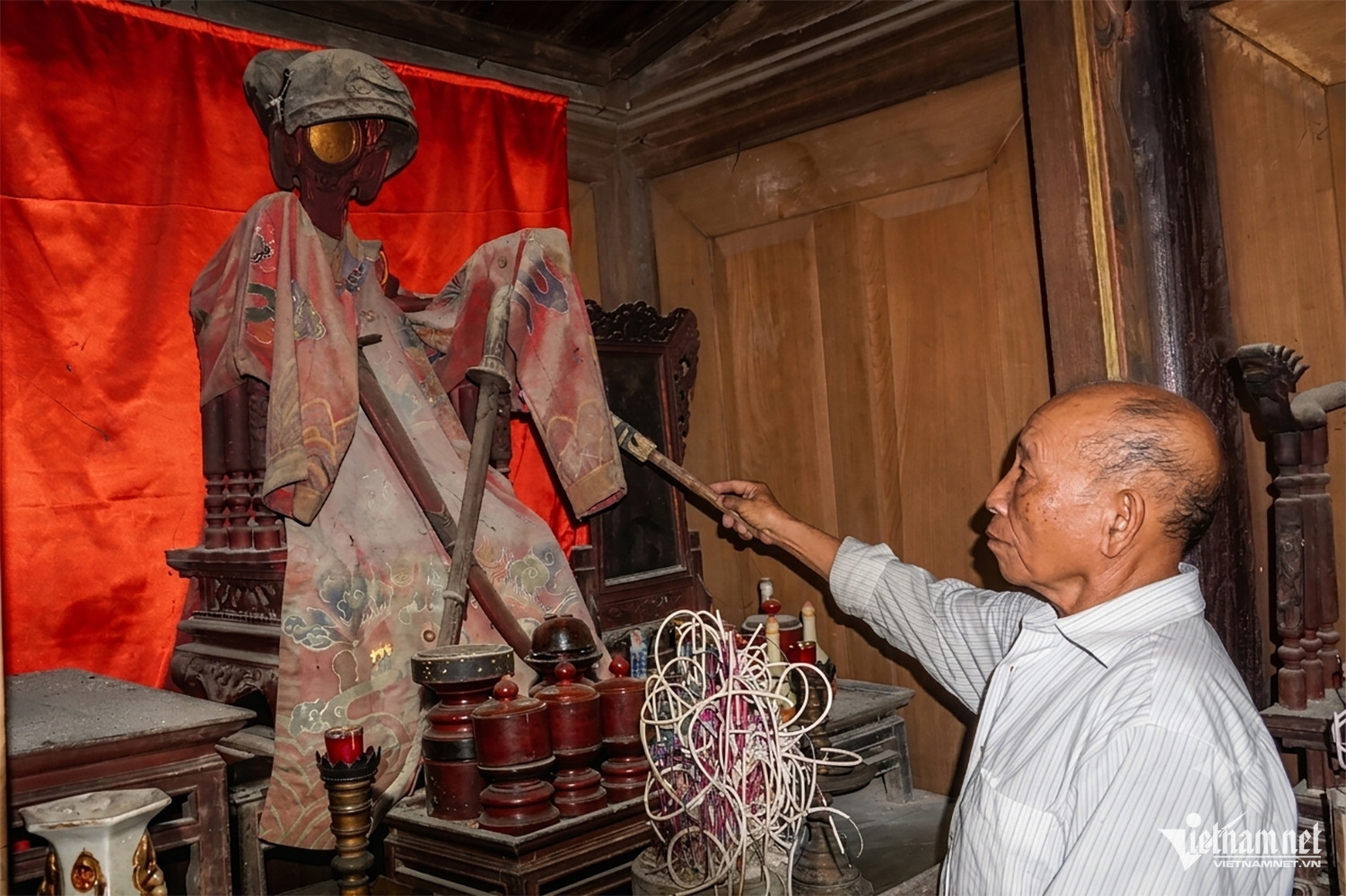
"They can never be washed or wiped with a cloth," he said. "The fabric has become extremely delicate over time. Even a small amount of moisture could cause it to deteriorate. For generations, our family has used only the softest feather duster to remove dust."
In addition to the three ceremonial robes, the temple also preserves 37 imperial decrees issued by successive Vietnamese dynasties.
Together, these artifacts underscore both the historical and cultural significance of the site and the contributions of General Dinh Bat Tuy to the Later Le Dynasty.
The Dinh Bat Tuy Temple was officially recognized as a National Historical Site in 1991.
Tran Tuyen
.svg)
