 Vietnamnet.vn

 Podcast



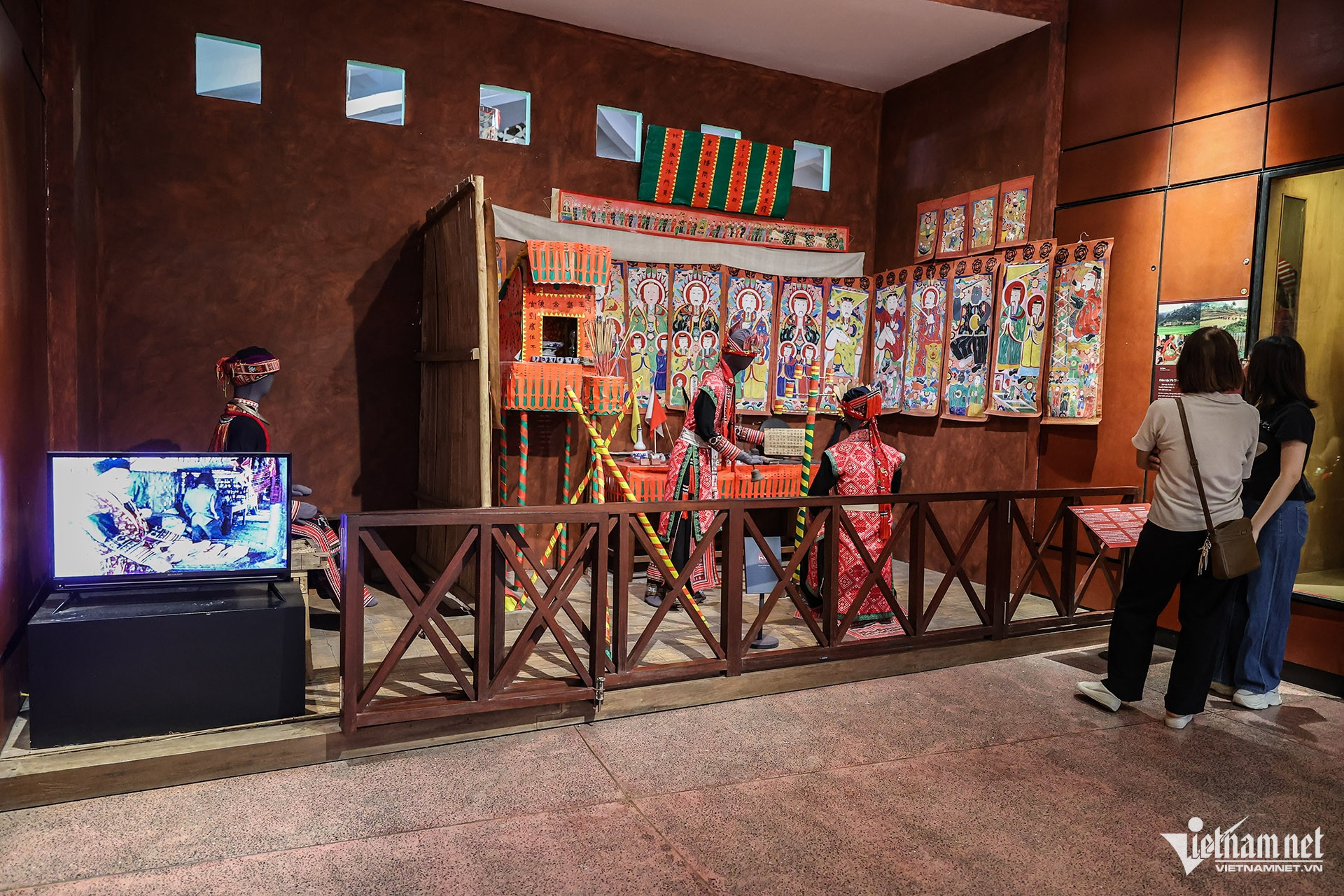
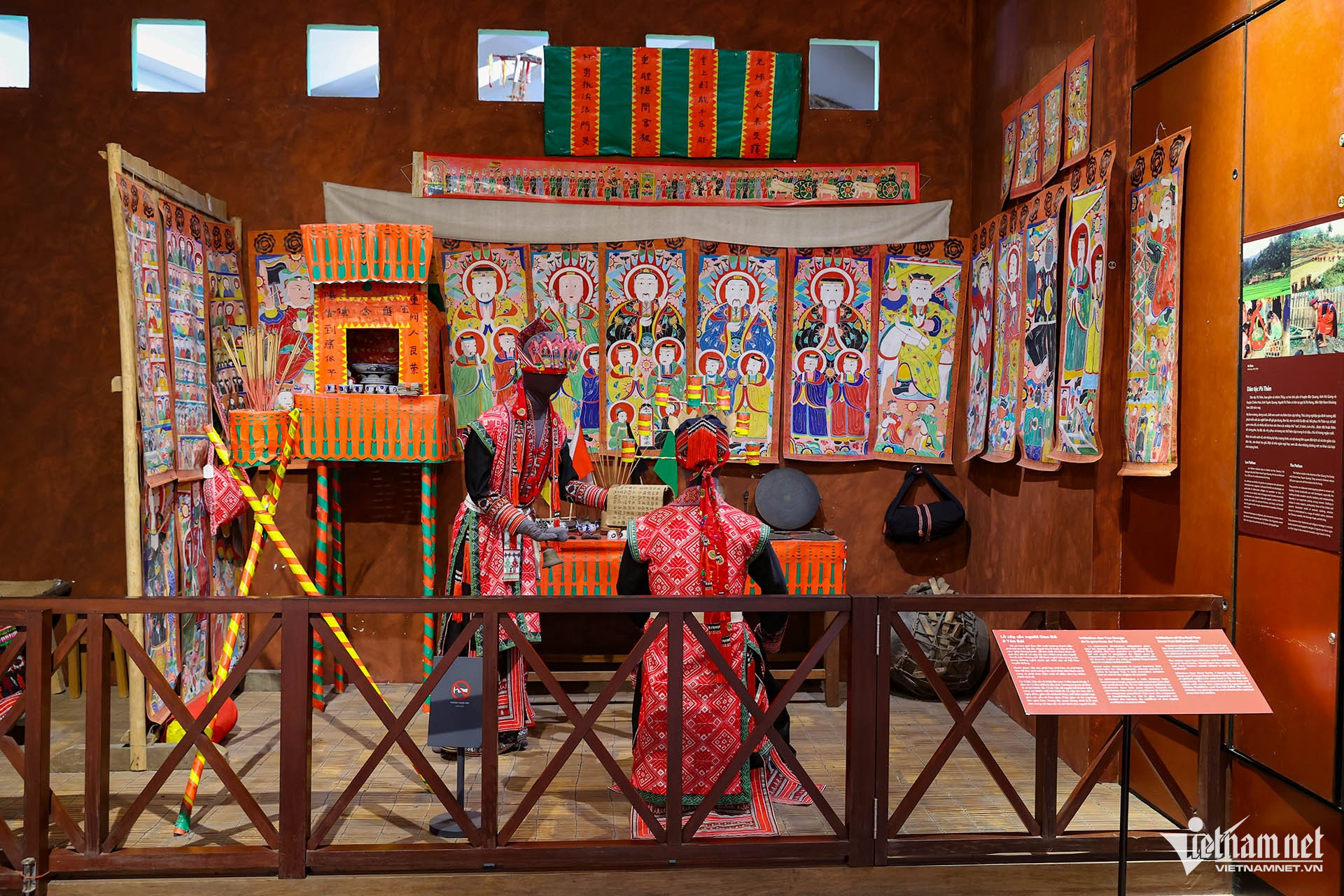
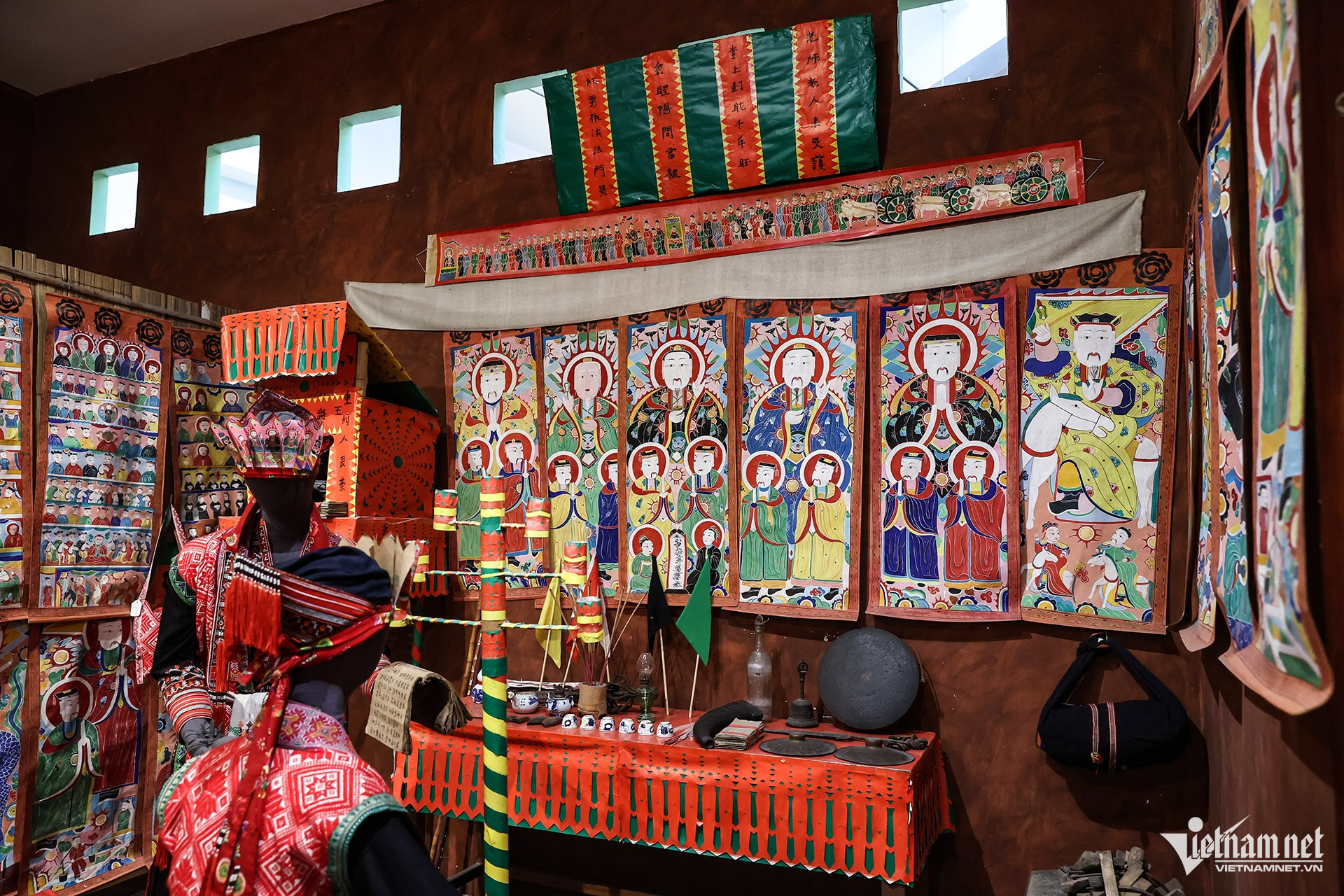
To offer the public a broader perspective on Vietnam's cultural heritage, the Vietnam Museum of Ethnology has created a special exhibition recreating the cap sac (coming-of-age initiation) ceremony of the Red Dao people in Lao Cai Province. The exhibition is located on the second floor of the museum's Bronze Drum Building.
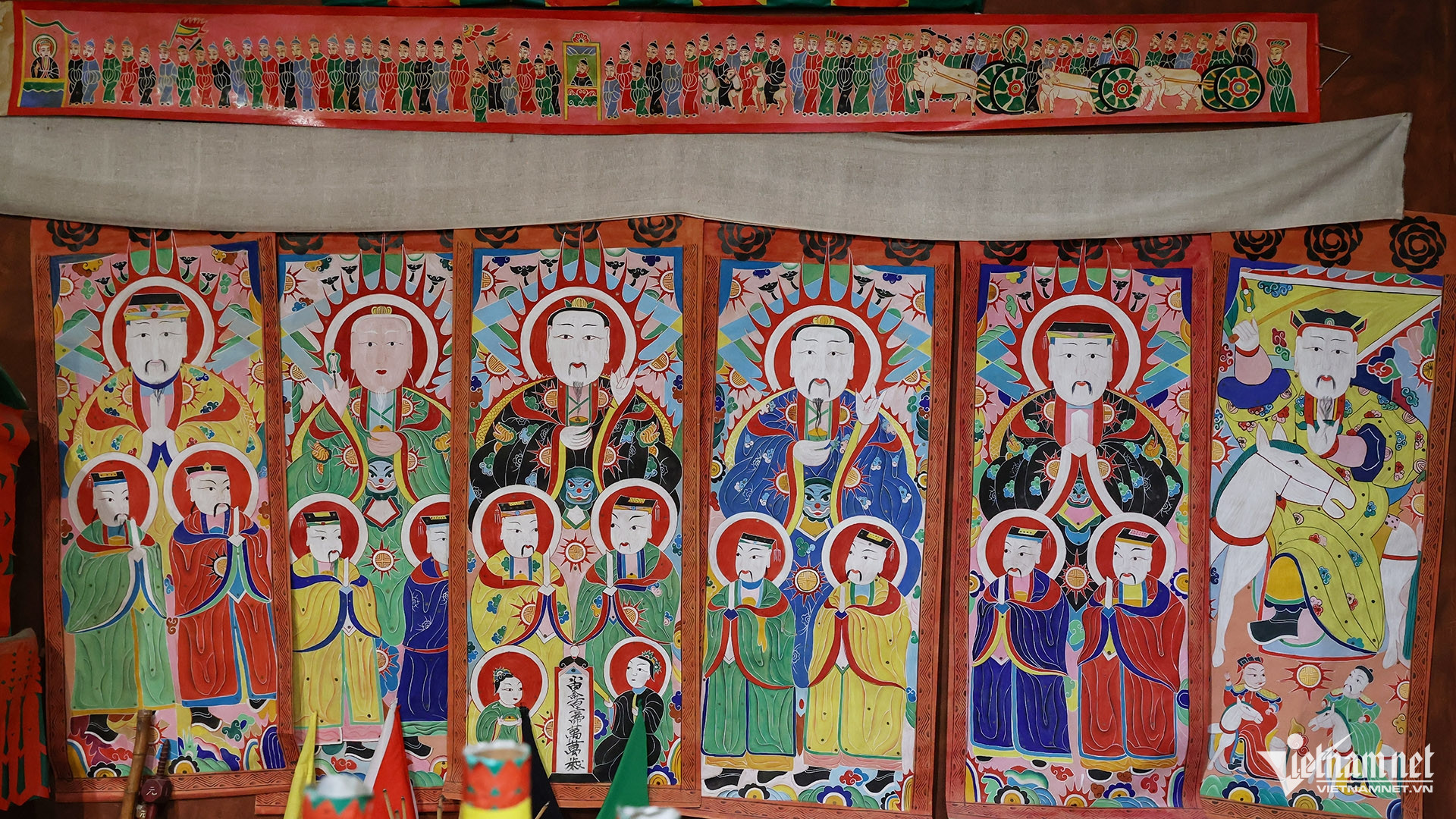
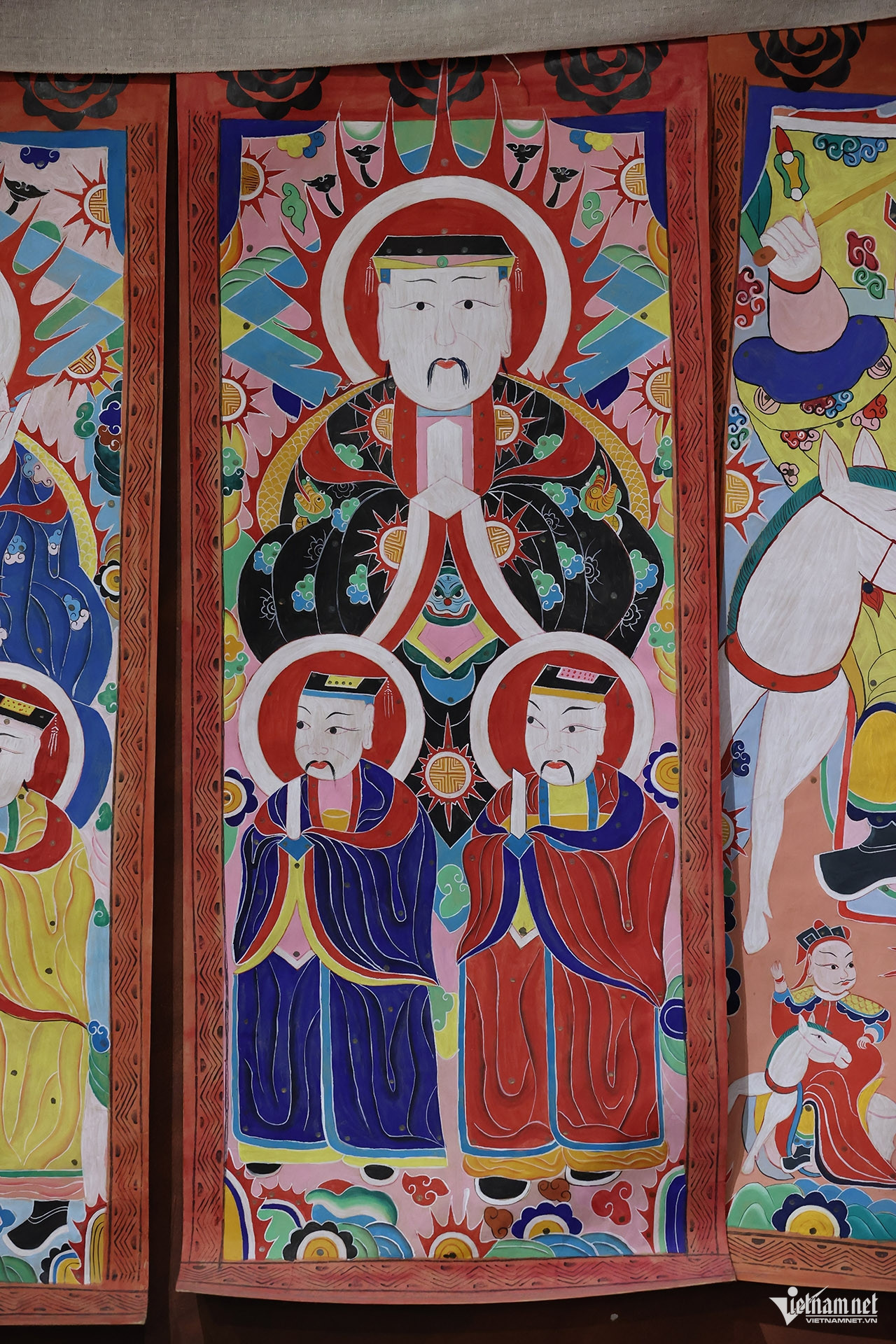
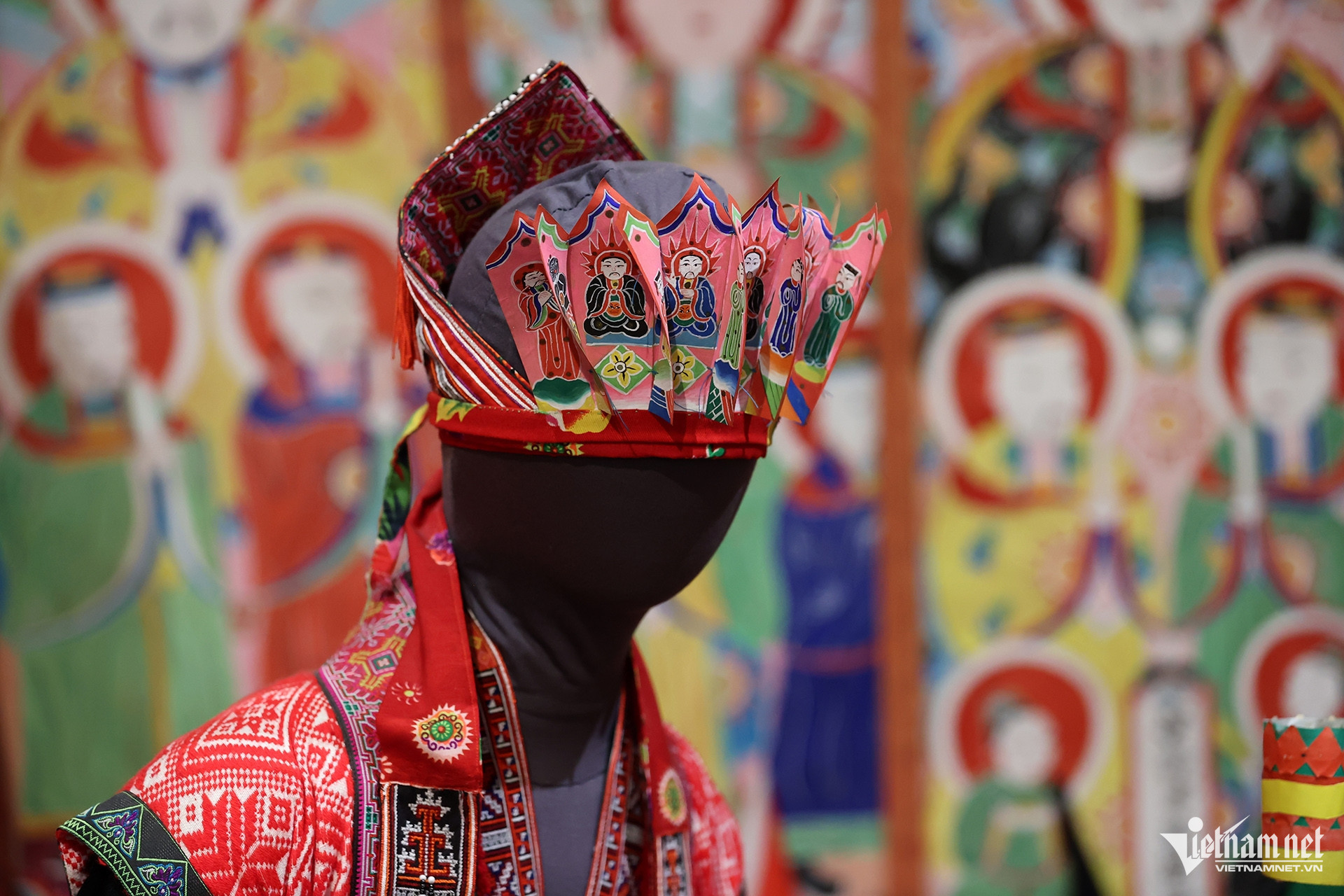
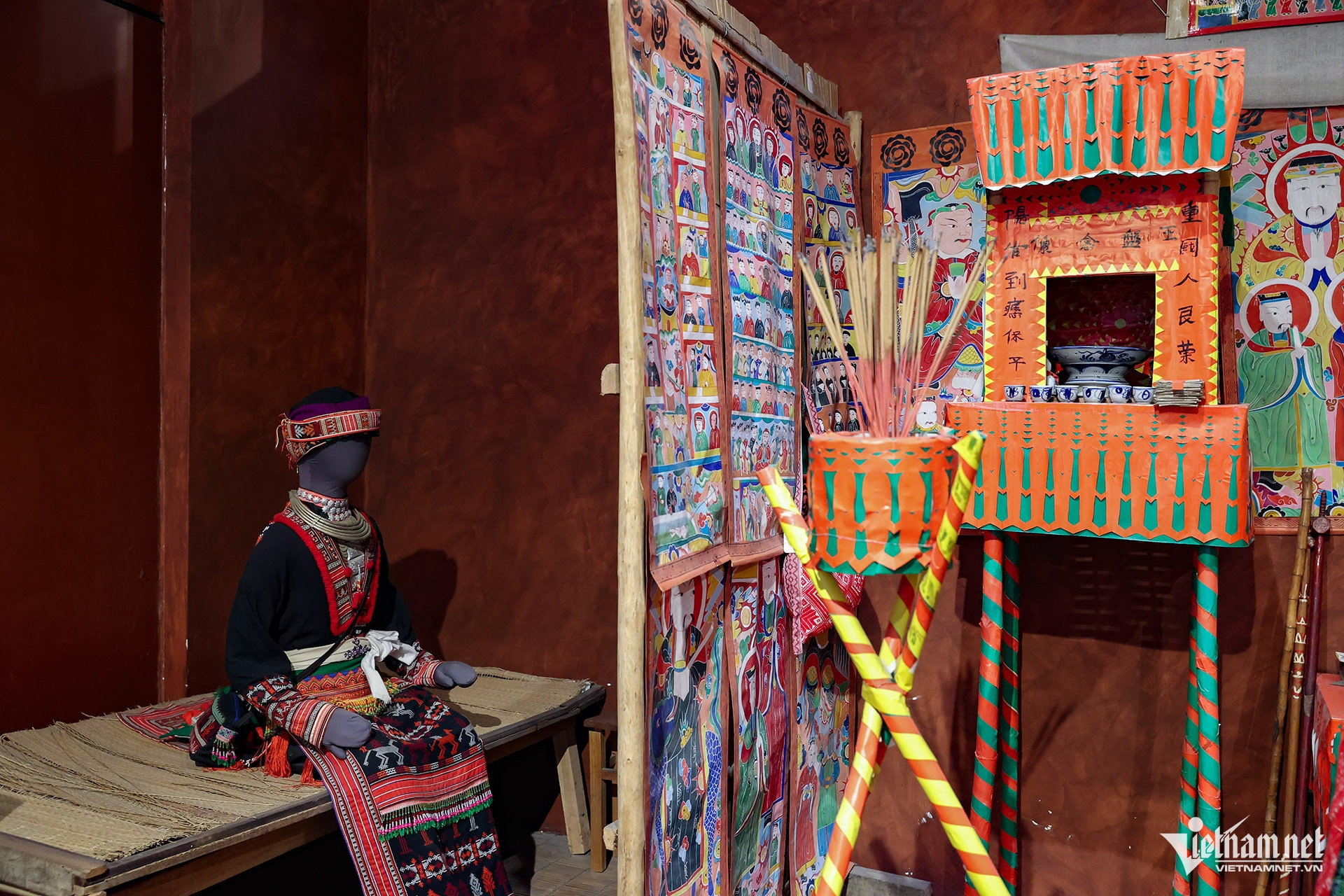
The Red Dao's ritual paintings, commonly known as Tau Khang, depict deities, ancestors and spiritual figures within the community's sacred belief system, reflecting strong influences from Taoism as well as indigenous religious traditions.
According to Red Dao customs and long-standing taboos, these paintings are displayed only during major ceremonies, including the cap sac initiation ceremony, the tau sai ritual (an advanced initiation and ancestral thanksgiving ceremony), and funerals, where they are believed to guide the souls of the deceased.
The recreated exhibition space highlights that the value of cultural heritage lies not only in the age or rarity of artifacts but also in their ability to preserve collective memory, connect generations and foster a sense of belonging.
All Red Dao men are expected to undergo the cap sac ceremony upon reaching adulthood.
During the ritual, each initiate receives a sacred certificate, regarded as a spiritual "passport" that will accompany him back to his ancestors after death.
The ceremony also serves as formal recognition authorizing an individual to practice as a ritual master - one of the most respected roles in traditional Red Dao society.
The origins of these ritual paintings reveal multiple layers of cultural exchange.
Some researchers believe they were influenced by Chinese Taoist religious art, while others identify similarities with northern Vietnam's folk painting traditions, particularly Hang Trong paintings from Hanoi.
It is also possible that the Dao themselves developed and passed down the painting techniques within their own communities.
Regardless of their origins, the paintings reflect the Red Dao's long history of adapting and integrating cultural influences.
Natural pigments made from plants - including vermilion red, turmeric yellow, green and lime white - combine with simple compositions and expressive lines to create a highly symbolic artistic language.
The paintings become sacred objects only after a ritual known as "calling the spirits into the paintings", performed by ritual masters.
This practice illustrates the close relationship between folk art and the Red Dao's spiritual beliefs, with each painting representing a particular deity within their religious tradition.
According to materials provided by the Vietnam Museum of Ethnology, the paintings are created on traditional do paper, with each measuring approximately 40 by 80 centimeters.
Painting these ritual works requires specialized artistic skills that few people possess.
Some paintings contain as many as 30 individual faces, each with distinct expressions.
Artists must also follow strict ritual rules and conventions, meaning a complete set can take several months to a full year to finish.
As a result, a traditionally painted collection may cost tens of millions of Vietnamese dong (hundreds to more than US$1,000, depending on the set), making it difficult for many families to acquire one.
This is one reason why relatively few complete sets survive today.
In Red Dao belief, ritual paintings occupy a central role in expressing the relationship between humans and the spiritual world.
Like other religious ceremonies, the cap sac ritual follows procedures passed down through generations.
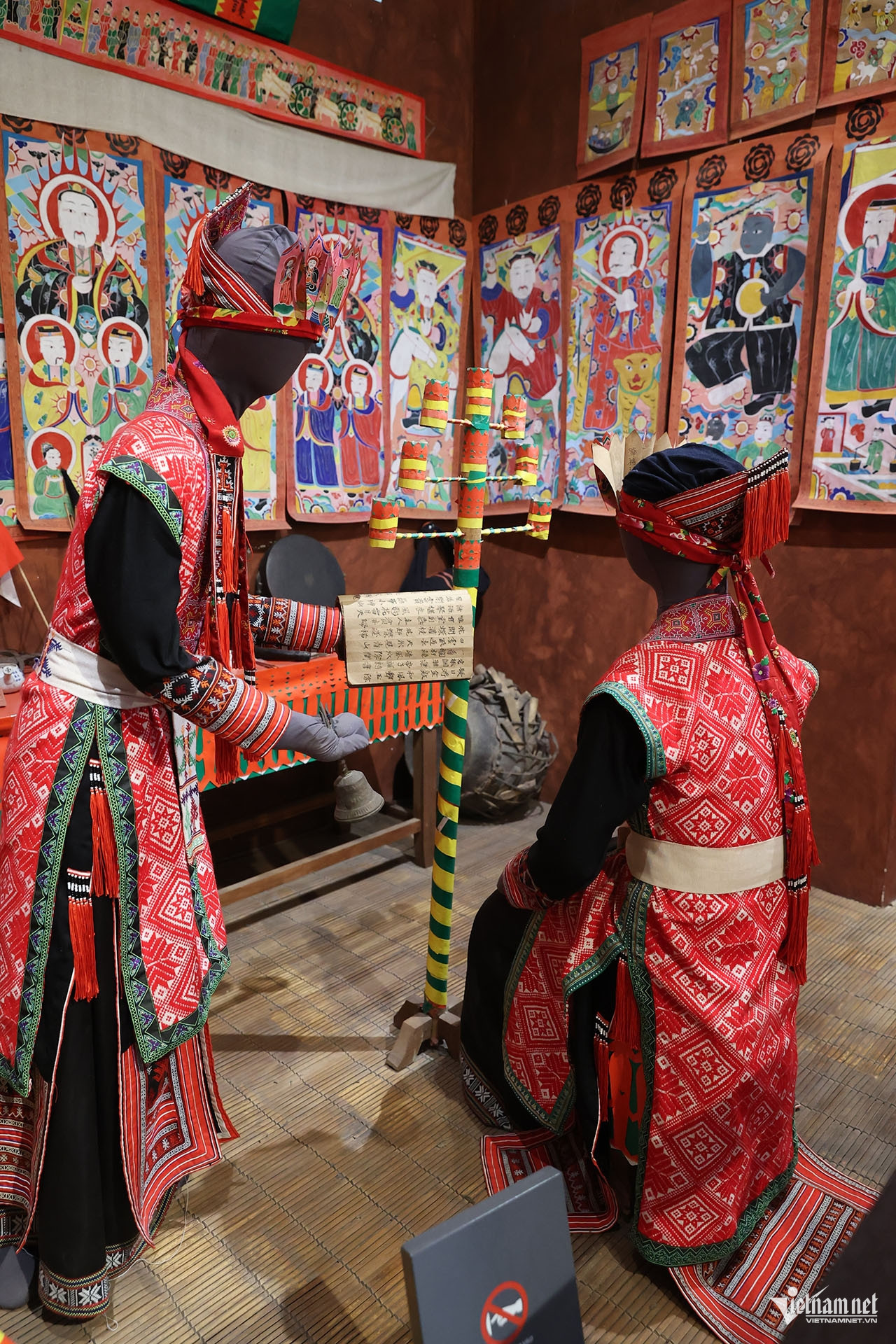
Only after Taoist ritual masters light incense and sound ceremonial horns to invite the deities are the painting boxes opened and the paintings respectfully hung on three walls of the ceremonial house.
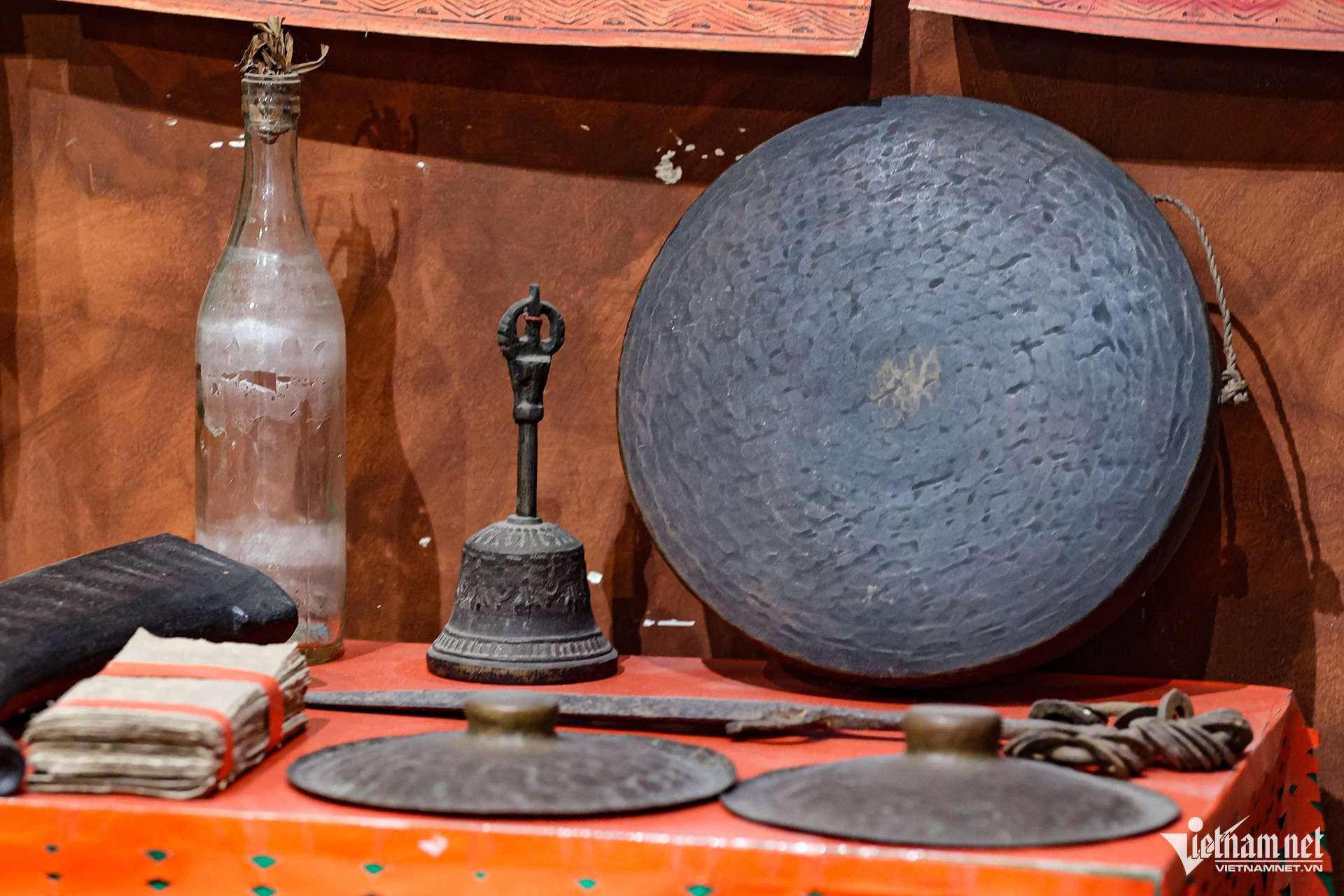
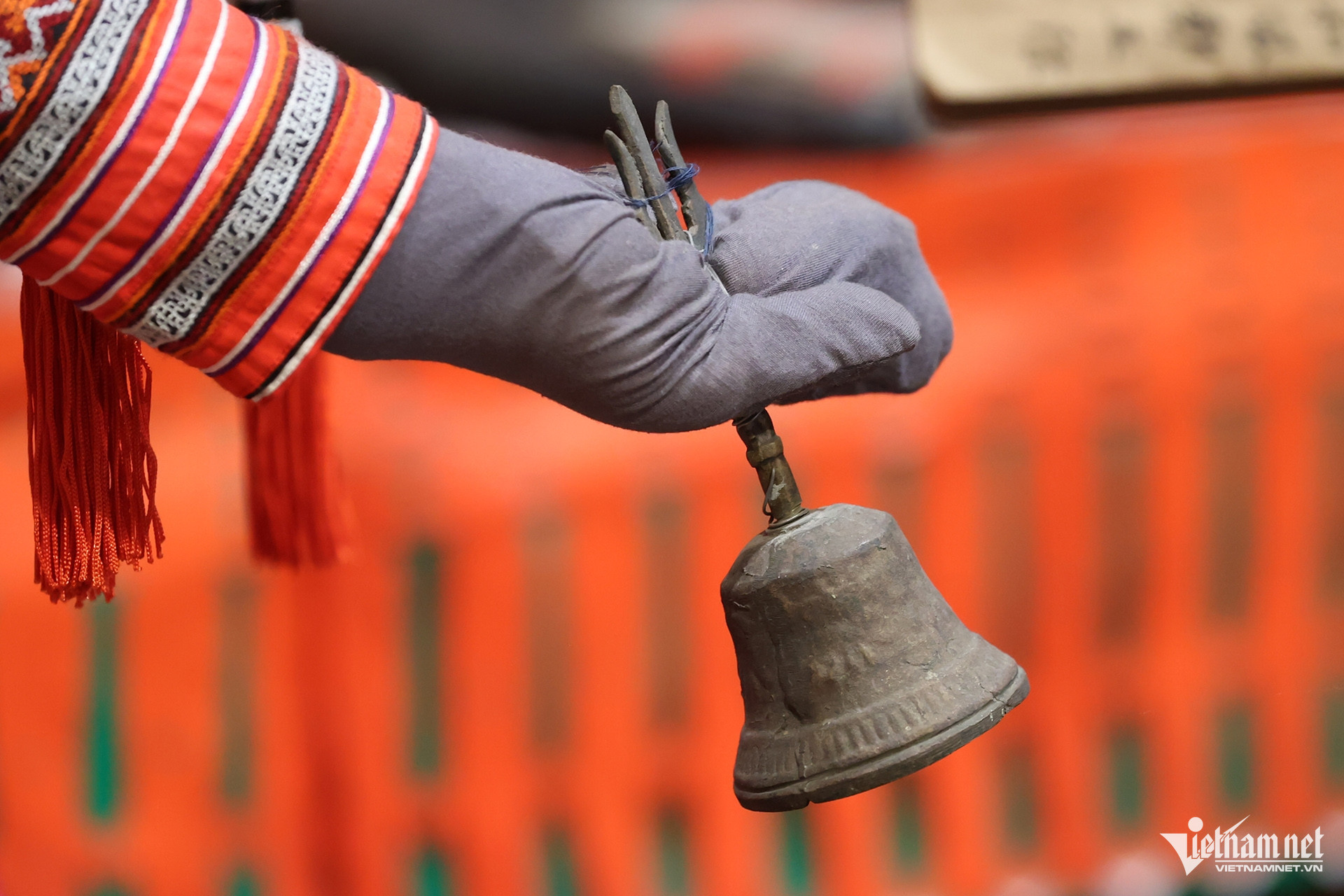
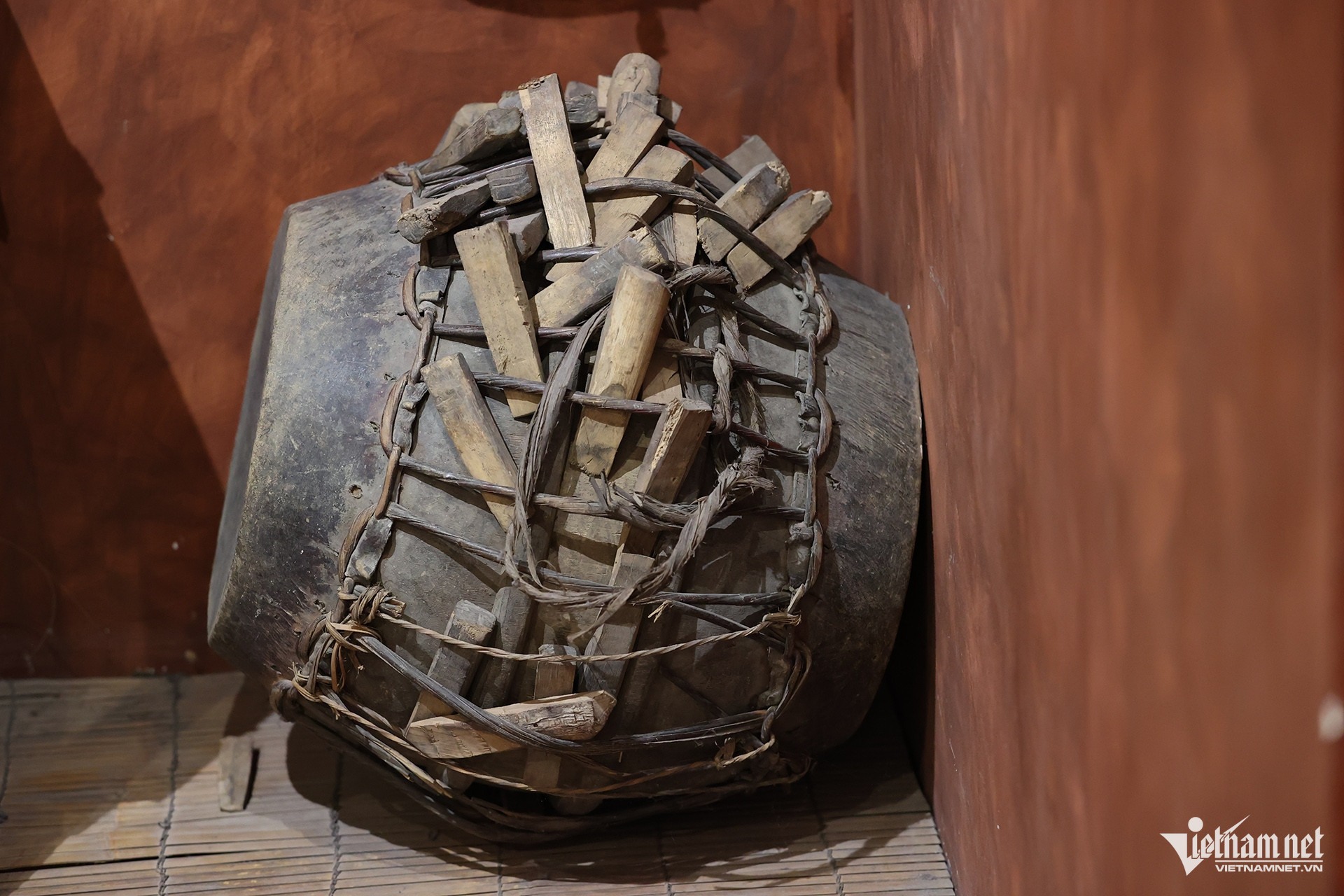
The exhibition also features ritual objects used during the initiation ceremony.
A Red Dao man seeking initiation must first learn Classical Chinese and the Dao Nom script in order to read ritual texts, master ceremonial procedures and observe various taboos intended to maintain ritual purity.
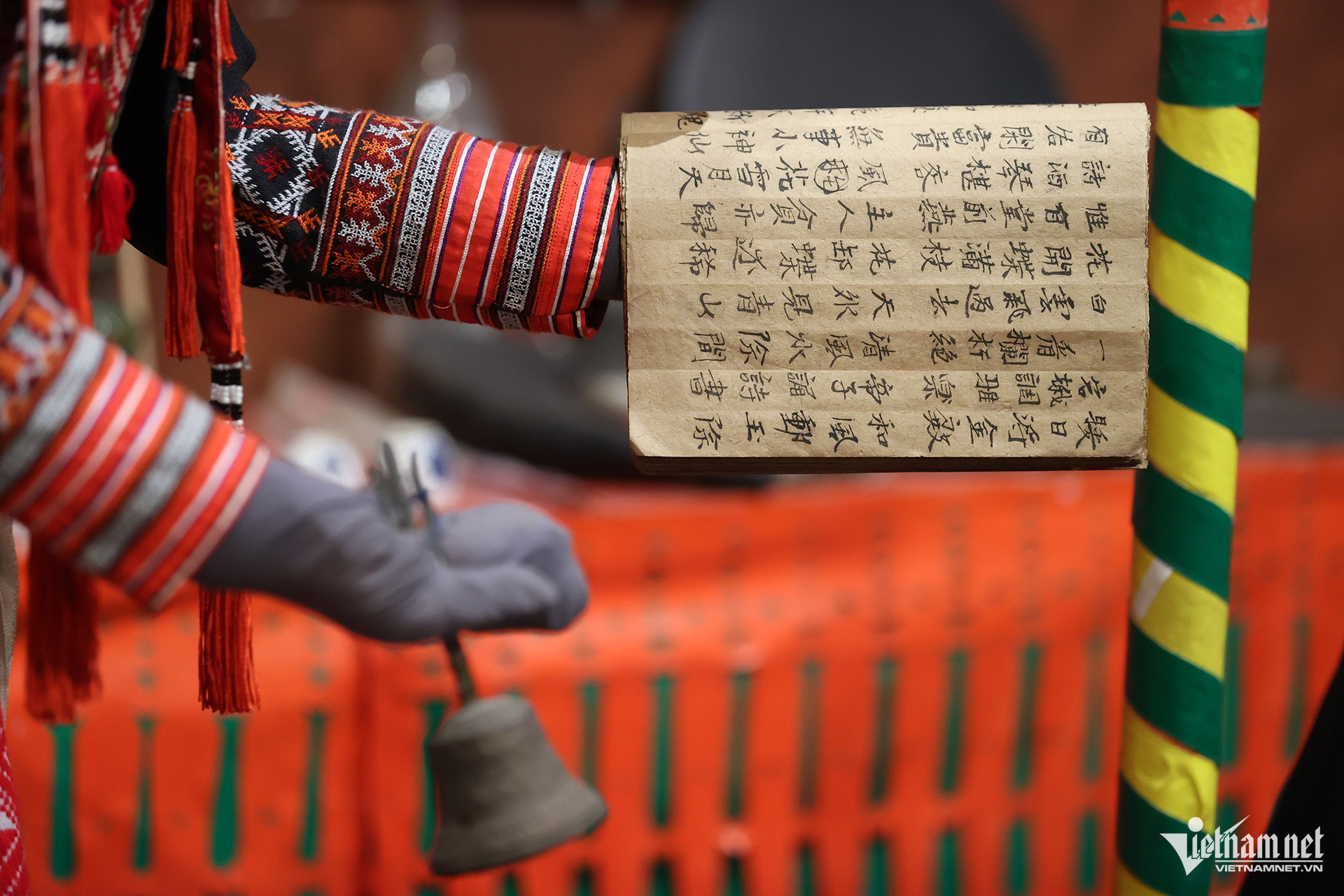
Among the exhibits is a traditional Red Dao ritual manuscript used during ceremonies.
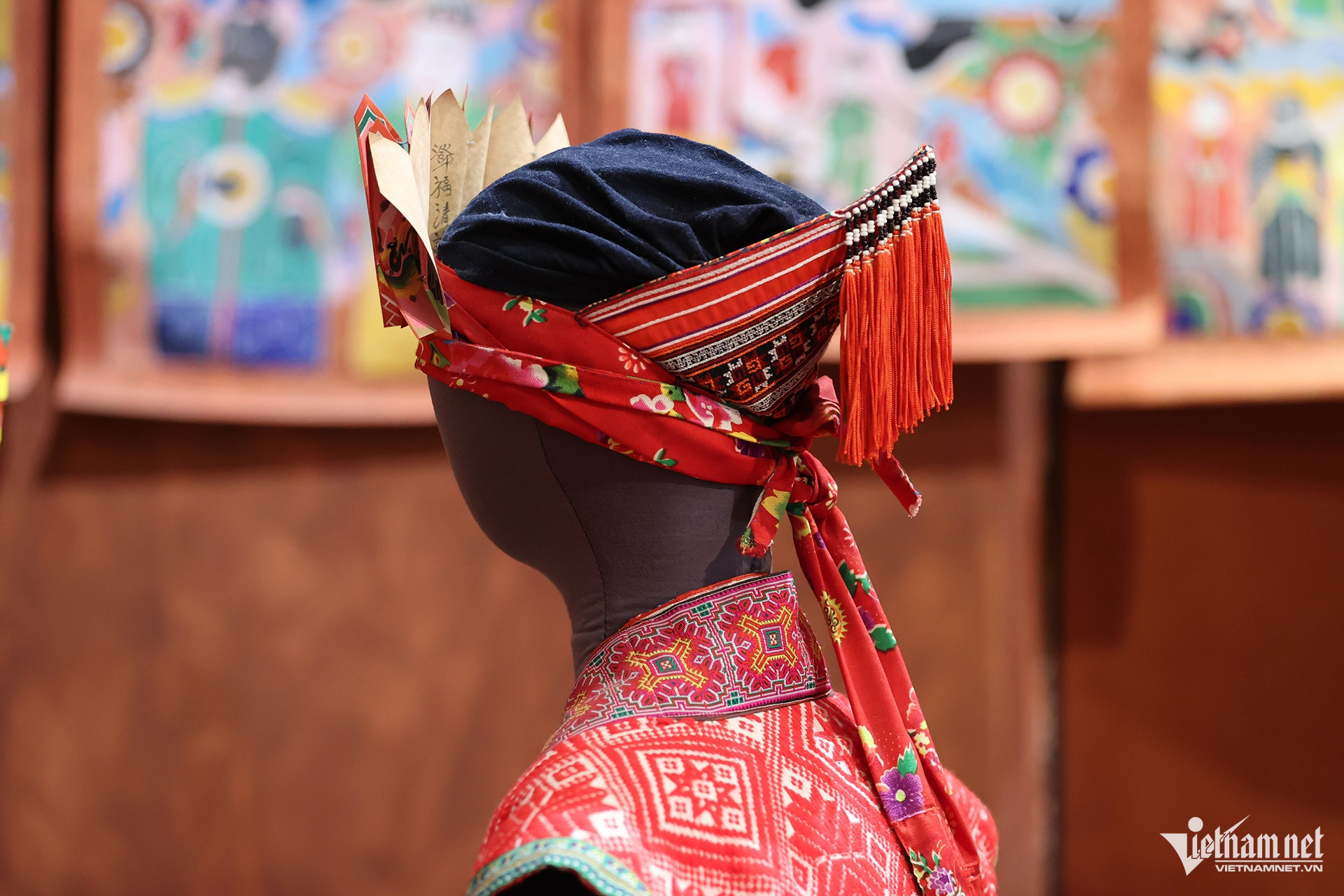
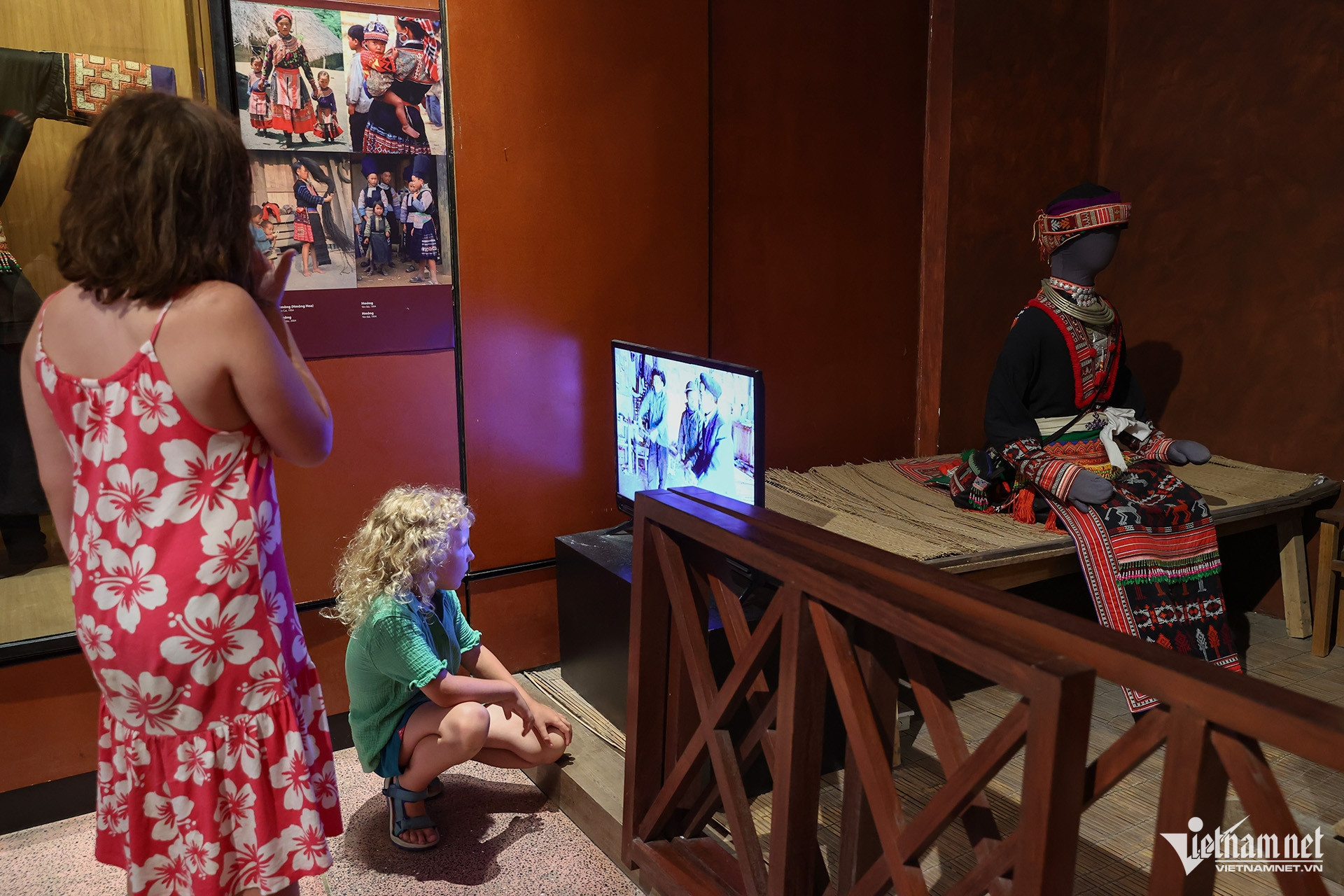
Ceremonial costumes and ritual implements are also on display.
There are three initiation levels: three lamps, seven lamps and 12 lamps.
Each level corresponds to a symbolic number of spiritual soldiers - 36, 72 and 120, respectively - who are believed to assist ritual masters during ceremonies.
The cap sac ceremony lasts three days and three nights, combining elements of Taoism, Buddhism and traditional Dao folk beliefs.
Its most important moment is the presentation of ceremonial lamps together with the sacred certificate and symbolic spiritual guardians to the initiate.
The cap sac ceremony is reserved exclusively for men.
Women do not assist in preparing ritual offerings but remain in separate rooms, reflecting a long-standing symbolic division of sacred space based on gender within Red Dao religious practice.
The ceremony therefore represents more than an individual's transition into adulthood.
It reaffirms social order, moral values and community cohesion while expressing the Red Dao people's belief in the protection of deities, the guidance of their ancestors and recognition by the community, ensuring the continuity of their cultural traditions across generations.
A multimedia display showing the complete cap sac ceremony allows visitors to gain a deeper understanding of this distinctive Red Dao tradition.
Beyond their religious function, the ritual paintings also reveal the community's worldview, philosophy of life and pantheon of deities.
They remain an invaluable cultural resource for understanding the spiritual life and enduring traditions preserved by the Red Dao through generations.
Information in this article is based on materials provided by the Vietnam Museum of Ethnology.
Le Anh Dung
.svg)
