 Vietnamnet.vn

 Podcast



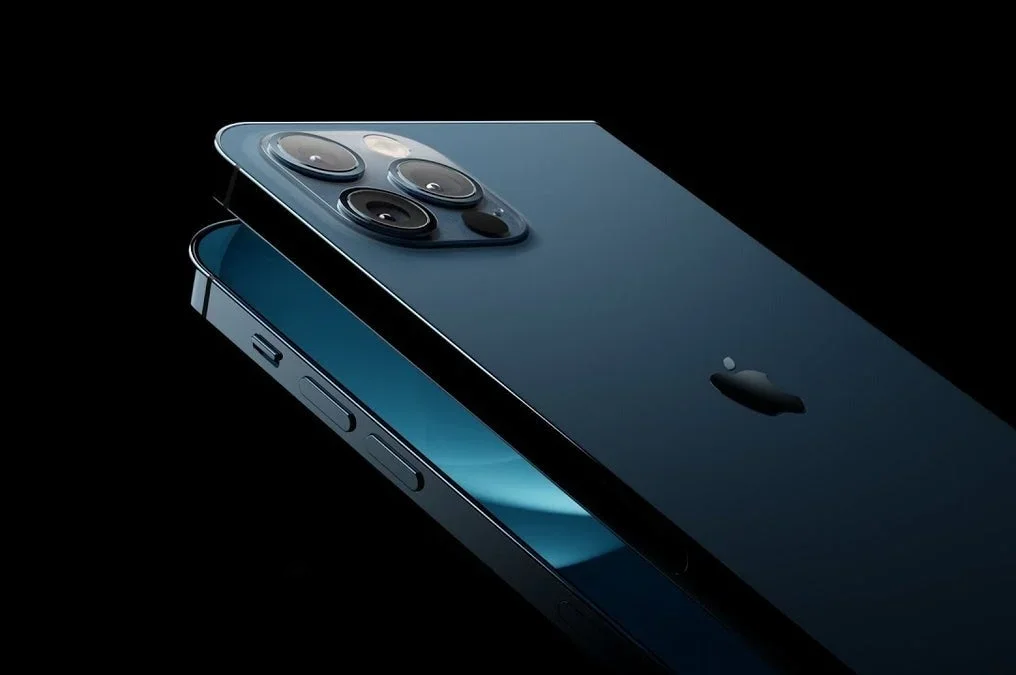
While Apple isn’t the pioneer in foldable smartphones, its position as a latecomer could be the company’s greatest advantage - allowing it to break away from Android norms and craft something uniquely Apple.
Recent leaks, especially from trusted source Instant Digital on Weibo, suggest Apple is exploring a drastically reimagined hardware setup. Among the most controversial changes: moving the volume buttons to the top edge of the phone, slightly to the right - a layout reminiscent of the iPad Mini.
This breaks a long-standing tradition. For over a decade, iPhones have featured volume controls on the left side - a default standard etched into muscle memory for millions.
The power button, reportedly integrating Touch ID, will remain on the right edge, alongside a new dedicated camera shutter button.
The rationale behind this unusual layout appears to be engineering-driven. Apple is rumored to house the main logic board on the phone’s right side, thereby avoiding the complexity and risk of routing cables across the hinge to the left. As a result, all buttons cluster to one side, leaving the left half primarily for battery and display components.
And it’s not just about symmetry - this redesign could pave the way for Apple’s largest iPhone battery yet. That would be a major asset for a large-format foldable, especially since Apple traditionally focuses on battery efficiency over raw capacity.
On the back, the camera design also takes a new direction. iPhone Fold may feature a horizontal camera bump housing two main lenses, a flash, and a microphone - a layout bearing striking resemblance to the rumored iPhone Air.
Curiously, this camera strip will remain black regardless of the phone’s body color. For now, white is the only confirmed option, but black is expected as a second, visually balanced choice.
This blend of the familiar and the radical could make iPhone Fold one of the most polarizing products Apple has ever released - part iPad Mini, part design experiment, all wrapped in a foldable shell.
The decision to relocate volume buttons may stir the most debate. Reaching the top edge to adjust sound - a basic daily task - may feel awkward, especially when using the device one-handed. Even on small tablets, top-edge controls aren't universally favored.
Apple could be envisioning the iPhone Fold as more of a mini-tablet than a phone, a device meant to be held with two hands. But that raises the ultimate question: is Apple breaking the mold to innovate, or just to be different?
In terms of hardware muscle, the rumored specs are formidable. The device is said to include a 7.8-inch internal display and a 5.5-inch outer screen. Powering this is the new A20 Pro chip, paired with 12GB of RAM - enough to handle even the most demanding tasks for years to come.
This kind of innovation doesn’t come cheap. The iPhone Fold is expected to be priced between $2,000 and $2,500, making it Apple’s most expensive phone ever. Clearly, this is a product aimed at premium users willing to pay for the future today.
Yet not all users may welcome the bold choices. The asymmetric button layout, the sheer size, and the high price point may alienate long-time iPhone fans.
But one thing is certain: if the leaks hold true, iPhone Fold will be Apple’s most intriguing - and divisive - mobile product in recent memory.
Hai Phong
.svg)
