 Vietnamnet.vn

 Podcast



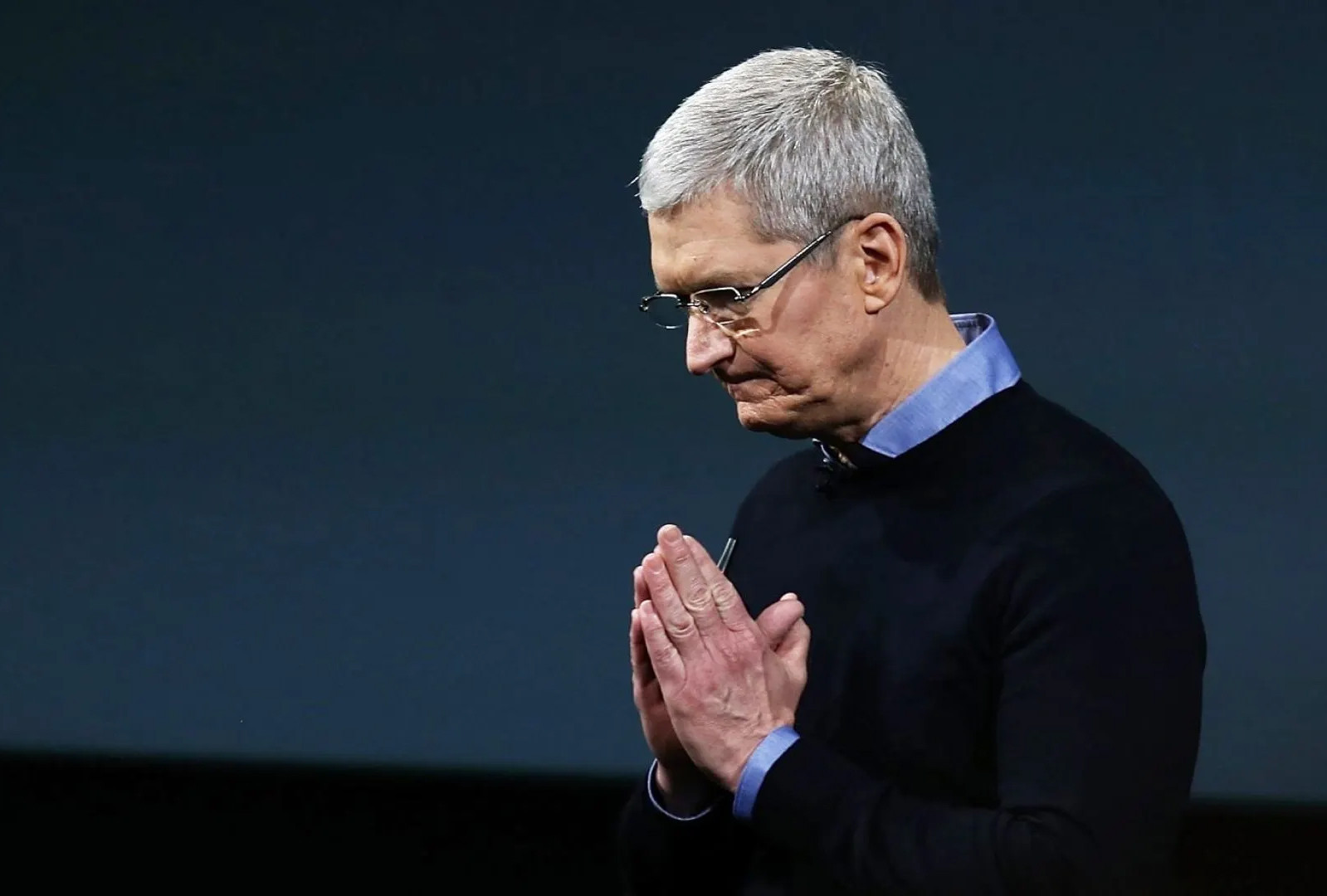
2025 will be remembered for what Apple failed to achieve. Photo: Medium
Apple had an impressive product lineup in 2025, but its struggles with artificial intelligence (AI) revealed an uncharacteristic stumble - one that could leave a lasting mark on its legacy.
Back in June 2024, Apple introduced "Apple Intelligence" at WWDC with fanfare and bold promises. But by the end of the year, the company had delivered little beyond grand advertisements showcasing features that didn’t yet exist.
Still, many believed Apple wouldn’t leave it at just words. 2025 was expected to be the year Siri was reborn and Apple Intelligence truly took flight. But that didn’t happen.
By March 2025, Apple was forced to admit that it couldn’t get things to work as intended. Siri’s promised deep personalization - initially slated for late 2024 - was postponed again, this time indefinitely, into “some point next year,” meaning 2026 at the earliest.
At the end of 2024, analysts still hoped Apple would fulfill its AI commitments and make 2025 the year its devices truly embraced the new wave. After all, Apple rarely makes promises it can’t keep. But then, just as Apple explained, these AI features “didn’t meet quality standards” - so they were quietly pushed back.
While Apple still launched many noteworthy products and services throughout 2025, history may remember the year as the moment when Apple openly admitted it couldn’t meet the standards it set for itself. If Apple’s lag in the AI race becomes a long-term blemish, then 2025 will be the milestone everyone looks back on.
Apple typically avoids overpromising. That it stumbled this time shows the enormous pressure it faced. The success of 2024 cast a shadow too large for the company to escape the following year. Many believed Apple would find a way. In the end, it couldn’t. This was perhaps the clearest admission of its own limitations in over a decade.
Signs of trouble had emerged as early as the end of 2024. Many suspected that Apple Intelligence, though attractive in concept, lacked real substance. Predictions that even an updated Siri would fall short by the end of 2025 turned out to be right. What no one expected was just how badly Apple would miss the mark.
At WWDC 2024, Apple also hinted at a possible partnership with Google’s Gemini, fueling anticipation that Siri might soon support both ChatGPT and Gemini. Executives repeatedly referenced Gemini in cryptic ways, making a collaboration seem inevitable. But it never happened. As of now, Apple has only managed partial integration of ChatGPT - and even that falls far behind the quality seen on other platforms.
According to Macworld, Siri’s underperformance wasn’t just a software issue. It disrupted Apple’s entire product strategy. Industry insiders were almost certain Apple would return to the smart home space with a major new device. That product, however, had been designed around a vastly more capable Siri. When Siri wasn’t ready, the entire project was shelved.
This highlighted a deeper imbalance inside Apple: the hardware team - efficient and always ahead of schedule - was now being held back by the software team, unable to match the standards the hardware demanded. Many devices were finished a year in advance, but couldn’t launch because the AI foundation simply wasn’t there.
Hardware and services save face
Fortunately, Apple’s hardware lineup served as a bright spot. As rumors had predicted, the company unveiled the thinnest iPhone in history. The base model was priced at USD 999, aligning with expectations that Apple would keep it under USD 1,000.
The iPhone Air, a pared-down model that sparked debate, was also exactly as forecast: good enough for the average user, but frustrating enough to keep tech circles buzzing with controversy.
Sales of the iPhone 17 series were strong.
In services, Apple continued to grow steadily. The company had a successful year in film and television, launching the blockbuster “F1” and critically acclaimed series like Severance and The Studio, reinforcing its position in the entertainment industry.
In a surprising turn, Apple also won broadcasting rights for Formula 1 in the U.S., beating out ESPN. This move may have been facilitated by the company’s involvement in the F1 movie project.
Despite this, Apple maintained its stance of not acquiring any film studios, staying out of the noisy wave of industry consolidation. The company seems content producing its own original content.
Looking back, the biggest surprise of 2025 wasn’t any of Apple’s new products - it was the company’s failure to fulfill promises made in 2024. A significant portion of Apple Intelligence was pushed into 2026.
In the end, 2025 was the year Apple reaffirmed its excellence in hardware, delivering a string of impressive new products. But the heavy weight of unfulfilled AI promises from WWDC 2024 hung over everything like a hangover that never quite lifted.
So, 2025 will be remembered not for what Apple accomplished, but for the moment it admitted it couldn’t keep up with the pace of artificial intelligence - not yet, and not in the way it once claimed it would.
Hai Phong
.svg)
