 Vietnamnet.vn

 Podcast



Apple is accelerating development of high-performance processors as it pursues an ambitious multi-year roadmap for Apple Silicon.
According to the latest edition of Bloomberg journalist Mark Gurman's Power On newsletter, Apple plans to introduce a Mac Studio powered by the M5 Ultra chip later next year.
At the same time, the company is reportedly working on an M7 Ultra processor capable of supporting up to 1.5TB of unified memory, a capacity never before seen on a commercial Mac.
However, the most powerful version of the chip may never be available to consumers. Instead, it is expected to be reserved for Apple's internal AI systems and data centers.
M5 Ultra expected to power next Mac Studio
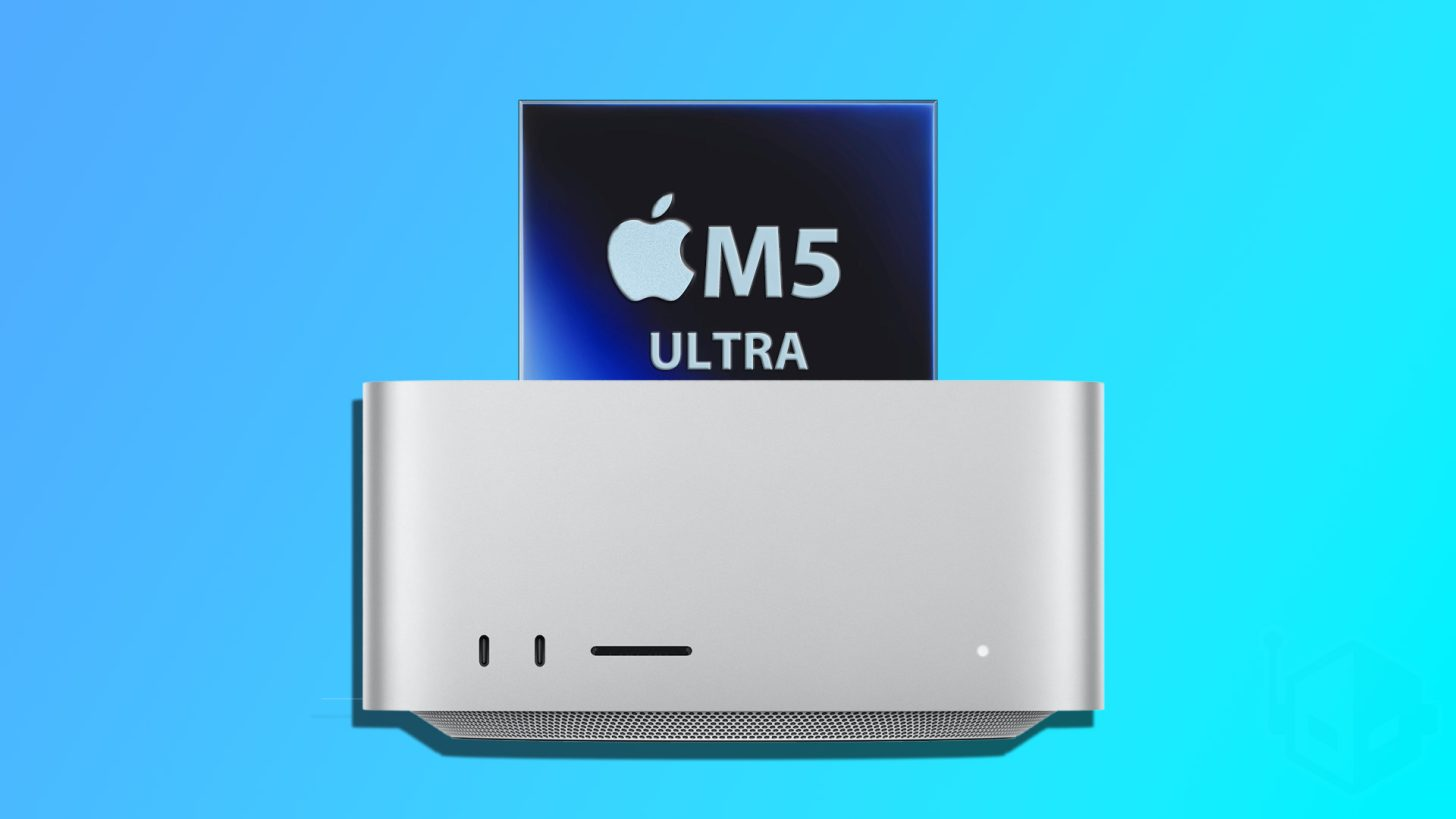
The Mac Studio powered by the M5 Ultra is expected to deliver a significant leap in performance. Photo: Wccftech
According to Gurman, Apple is preparing to launch a Mac Studio equipped with the M5 Ultra chip by the end of 2026, succeeding the current Mac Studio powered by the M3 Ultra.
If the reported specifications prove accurate, the M5 Ultra will feature a 36-core CPU, an 80-core GPU and support for up to 768GB of unified memory.
The processor is expected to target professionals working in areas such as 3D graphics, 8K video production, scientific simulation and AI development.
The new Mac Studio, identified internally by the codename J246, is expected to replace the M3 Ultra model Apple introduced in March 2025 alongside the M4 Max lineup.
Apple's decision to release the M3 Ultra surprised many industry observers.
Based on the company's usual product roadmap, many expected an M4 Ultra to align with the broader M4 family.
Instead, factors including component supply, the timing of new manufacturing technologies and product naming strategy reportedly led Apple to release the M3 Ultra, marking one of the few times the company departed from its usual Apple Silicon upgrade cycle.
With the M5 Ultra, Apple appears to be returning to its regular generational roadmap.
Ultra chips also destined for Apple's AI infrastructure
The M5 Ultra is reportedly being developed not only for the Mac Studio but also for Apple's internal AI servers.
According to Gurman, Apple is building server systems powered by the M5 Ultra to meet the increasing computational demands of large AI models.
Unlike Amazon, Google and Microsoft, Apple does not operate a commercial cloud server business. As a result, these systems are expected to be deployed exclusively in the company's own data centers to support AI services.
The report also suggests Apple's canceled self-driving car project has provided unexpected benefits.
Technologies and expertise developed for the Apple Car program have reportedly been repurposed to accelerate AI research, particularly in optimizing machine learning performance on Apple Silicon hardware.
The findings indicate that Apple's multibillion-dollar investment in the vehicle project has helped lay the groundwork for the company's next generation of AI technologies.
M7 Ultra could support 1.5TB of unified memory
Perhaps the most notable claim in the report is that Apple has already begun work on the M7 Ultra, a processor expected to arrive around 2029.
According to Gurman, the chip could support as much as 1.5TB of unified memory, nearly three times the M3 Ultra's maximum of 512GB and almost double the reported 768GB limit of the M5 Ultra.
If realized, the configuration would represent the largest memory capacity ever offered on an Apple Silicon platform, enabling workloads such as massive AI models, databases containing hundreds of billions of parameters and high-performance computing tasks typically reserved for supercomputers or enterprise servers.
However, Gurman cautioned that consumers may never be able to purchase a Mac configured with 1.5TB of unified memory.
Memory costs are expected to be the deciding factor. By the time the M7 Ultra reaches the market, RAM pricing and supply chain conditions will determine whether Apple can commercially offer such an extreme configuration.
If memory remains expensive or supply constraints persist, Apple is likely to reserve the 1.5TB configuration for its own AI infrastructure while offering lower-capacity versions to customers.
Hai Phong
.svg)
