 Vietnamnet.vn

 Podcast



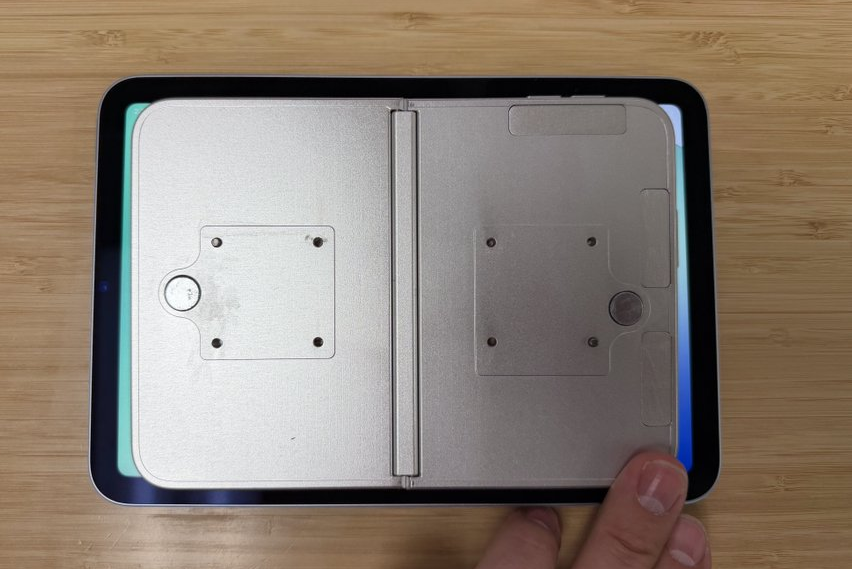
The first foldable iPhone from Apple, tentatively referred to as the iPhone Ultra, is gradually taking shape through a series of leaks. Yet what has emerged so far has left the tech world both intrigued and surprised.
Positioned as Apple’s most premium device, with a projected price reaching US$2,000, the foldable iPhone is expected to lack at least five key features that have become standard on modern Pro models.
Dummy models shared by well-known leakers Sonny Dickson and Vadim Yuryev have revealed two previously unreported omissions: MagSafe technology and the Action Button.
In the smartphone industry, such dummy models are often produced with high precision to support accessory manufacturers. As a result, they are generally considered more reliable than typical rumors.
One notable detail is the placement of the volume buttons. On the iPhone Ultra, they are expected to sit along the top edge, slightly offset to the right, mirroring the layout seen on the iPad mini.
Supply chain sources suggest the motherboard may be positioned on the right side of the device. To avoid routing cables across the foldable display - which could compromise durability and internal space - Apple appears to have opted for relocating these controls to the top.
No Action Button or MagSafe
While the power and volume buttons remain clearly visible, the Action Button - first introduced on the iPhone 15 Pro - is entirely absent. If accurate, this would make the foldable iPhone the first model without both the traditional mute switch and the Action Button.
Equally striking is the lack of MagSafe magnets on the back panel. On models like the iPhone 18 Pro and iPhone 18 Pro Max, these magnetic rings are prominently featured to help accessory makers align their products. On the iPhone Ultra, however, they are nowhere to be seen.
Analysts believe this omission may be driven by the device’s extreme thinness. Measuring just around 4.5mm, the foldable iPhone is expected to be the thinnest iPhone ever made, leaving little room for integrating a MagSafe system.
Dropping Face ID in favor of Touch ID?
One of the most significant potential changes is the removal of Face ID. Due to the ultra-slim design, the iPhone Ultra may not have sufficient space for the TrueDepth camera system, which powers Face ID and currently resides within the Dynamic Island.
Instead, Apple could bring back Touch ID. This would mark the first time in years that fingerprint recognition returns to a high-end iPhone.
Touch ID most recently appeared on the iPhone SE (3rd generation), a budget device. Its last appearance on a flagship model dates back to the era of the iPhone 7.
For a device positioned as Apple’s most expensive iPhone, relying solely on Touch ID rather than Face ID would likely spark considerable debate among users.
A scaled-back camera system
The compromises do not stop there. The iPhone Ultra is rumored to feature only two rear cameras: a wide and an ultra-wide lens, similar to standard iPhone models.
This means the absence of a telephoto lens, long considered a defining feature of Pro devices. While models like the iPhone 17 and Pro variants emphasize optical zoom and advanced photography, the removal of the telephoto camera could diminish the appeal of the foldable iPhone for photography enthusiasts.
eSIM only, no physical SIM slot
Another expected change is the complete removal of the physical SIM slot. Like the iPhone Air line, the iPhone Ultra is likely to support only eSIM.
While this aligns with global connectivity trends, it could still pose challenges in markets where eSIM adoption remains limited.
A bold design with difficult trade-offs
Overall, the iPhone Ultra is expected to feature an ultra-thin design with a titanium frame and glass back, closely resembling the aesthetics of the iPhone Air.
However, to achieve its striking thinness and foldable display, Apple appears to be making significant trade-offs in functionality.
Although there is no clear indication yet that stereo speakers will be removed, the growing list of compromises suggests that such a possibility cannot be ruled out.
The starting price is projected to be no less than US$1,999 - nearly double that of the iPhone 17 Pro. Notably, the Pro model is expected to retain all the features that the iPhone Ultra may lack.
This places Apple in a challenging position: will users be willing to pay a substantial premium for a foldable device that sacrifices many high-end features?
The foldable iPhone is expected to debut alongside the iPhone 18 Pro Max this fall. At that point, Apple’s strategy of “trading features for innovation” will finally be put to the test.
Hai Phong
.svg)
