 Vietnamnet.vn

 Podcast



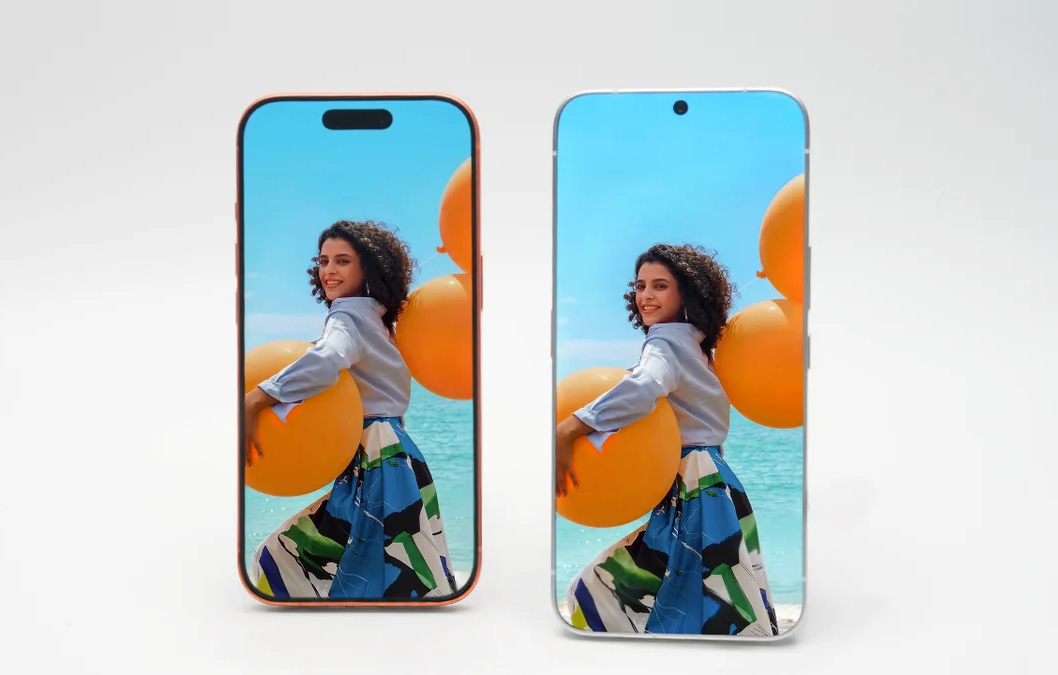
Is a curved-screen iPhone 20 Pro really practical?
The iPhone 18 Pro and the foldable iPhone Ultra are expected to arrive in just over a week. Yet rumors surrounding the special anniversary iPhone 20 Pro are already heating up, with a string of notable claims about its design.
According to leaks, Apple is believed to be adapting part of the manufacturing process previously used for the iPhone Air to create a new display that curves around all four edges.
The technology is expected to become a key element in giving the iPhone 20 Pro its biggest visual transformation since the iPhone X.
The idea, however, has not generated much excitement. While the phrase “all-screen iPhone” certainly sounds appealing, it is harder to understand why Apple would return to a design approach that even Samsung abandoned years ago.
More notably, a new concept smartphone from Tecno, a Chinese manufacturer still relatively unfamiliar to many US consumers, is making Apple’s rumored plans look even more questionable.
After unveiling its Next-Gen Bezelless Concept Phone, Tecno sent a prototype to prominent tech YouTuber MKBHD, showing that the device is more than an idea on paper. It is a working prototype that also demonstrates the Chinese manufacturer’s considerable engineering capabilities.
What stands out is that Tecno’s bezel-free smartphone design looks more convincing than almost any curved-screen phone users might imagine.
Nobody has really been asking for an “all-screen” phone, and the concept has never worked perfectly.
Samsung once took curved displays to their peak with the Galaxy S7 Edge. The device looked striking at the time, but the actual user experience was far less impressive.
Later generations significantly improved the experience of using curved screens, but many of their fundamental problems were never fully resolved.
Bringing the glass all the way to the edges makes a smartphone more vulnerable to damage. The display can also produce distracting reflections, while everyday usability is not necessarily better than with a flat screen.
One of the most frustrating problems with curved displays is accidental touches. This becomes particularly noticeable when users stretch their thumb toward the far side of the screen.
A palm or part of a finger brushing against the curved edge can be enough to interfere with an intended action on the display.
Everyone may hold their phone differently, but this remains a problem that curved screens have struggled to eliminate completely.
Protective cases also create something of a contradiction for curved-screen smartphones.
If a case covers the curved section, much of the point of the design disappears. But if users go without a case or choose a very slim one, the device receives less protection.
Flat displays, meanwhile, do not suffer from these problems. That may help explain why flat screens quickly returned to become the smartphone industry’s dominant design after curved displays were once expected to revolutionize the market.
Unless Apple has truly found a way to solve all these issues, launching a premium iPhone with a display curved on all four sides could be a risky move.
Should Apple learn from Tecno?
According to YouTuber MKBHD, the very idea of a completely bezel-free smartphone remains open to question. But if there is a less problematic way to bring such a design to life, Apple could take a cue from Tecno’s approach.
Tecno’s prototype design could address some of the inherent weaknesses of curved displays, from durability and accidental touches to distracting reflections along the edges of the screen.
More importantly, this approach would allow Apple to preserve the design language behind several successful generations of iPhones, including models such as the iPhone 4 and iPhone 17.
An iPhone combining a nearly bezel-free display with a squared-off frame could create a particularly striking look.
It might even be more appealing than the recent iPhone 20 Pro renders circulating online, which have a futuristic feel but also risk looking dated relatively quickly.
Of course, Tecno has so far produced only a prototype of its concept design. Apple could potentially develop the idea into something more practical while improving both durability and aesthetics.
Even then, a bezel-free iPhone could still leave consumers thinking twice before spending their money. But at least it would represent a form of “all-screen iPhone” that could work in the real world rather than merely look attractive in renders.
The iPhone 20 Pro still needs a design revolution
Skepticism toward curved screens does not mean a major design overhaul is unnecessary.
On the contrary, an all-screen iPhone could be an exciting step forward if Apple finds a way to avoid repeating the mistakes of earlier generations of curved-screen smartphones.
The question is whether Apple can fully overcome all those limitations. But if there is ever a fitting moment for the company to create a genuinely distinctive and groundbreaking design, it is with an anniversary iPhone.
The iPhone 20 Pro will not simply be another routine upgrade. It could be Apple’s opportunity to reshape the look of smartphones for years to come.
Instead of reviving a technology that has already revealed numerous weaknesses, Apple may therefore be better off looking at new experiments such as Tecno’s to find a way to make the “all-screen” concept a reality without sacrificing the user experience.
Hai Phong
.svg)
