 Vietnamnet.vn

 Podcast



For the Ba Na people living in the western region of Quang Ngai Province, epic storytelling is far more than a collection of heroic legends. It preserves the community's collective memory, the history of its villages, and cultural values that have been passed down through generations.
Today, however, as the number of master storytellers continues to dwindle and the traditional performance spaces gradually disappear, this priceless cultural treasure is at risk of fading away.
Safeguarding Ba Na epics is not simply about preserving ancient stories. It is about protecting a vital part of the community's cultural identity.
The soul of the village lives on through epic storytelling
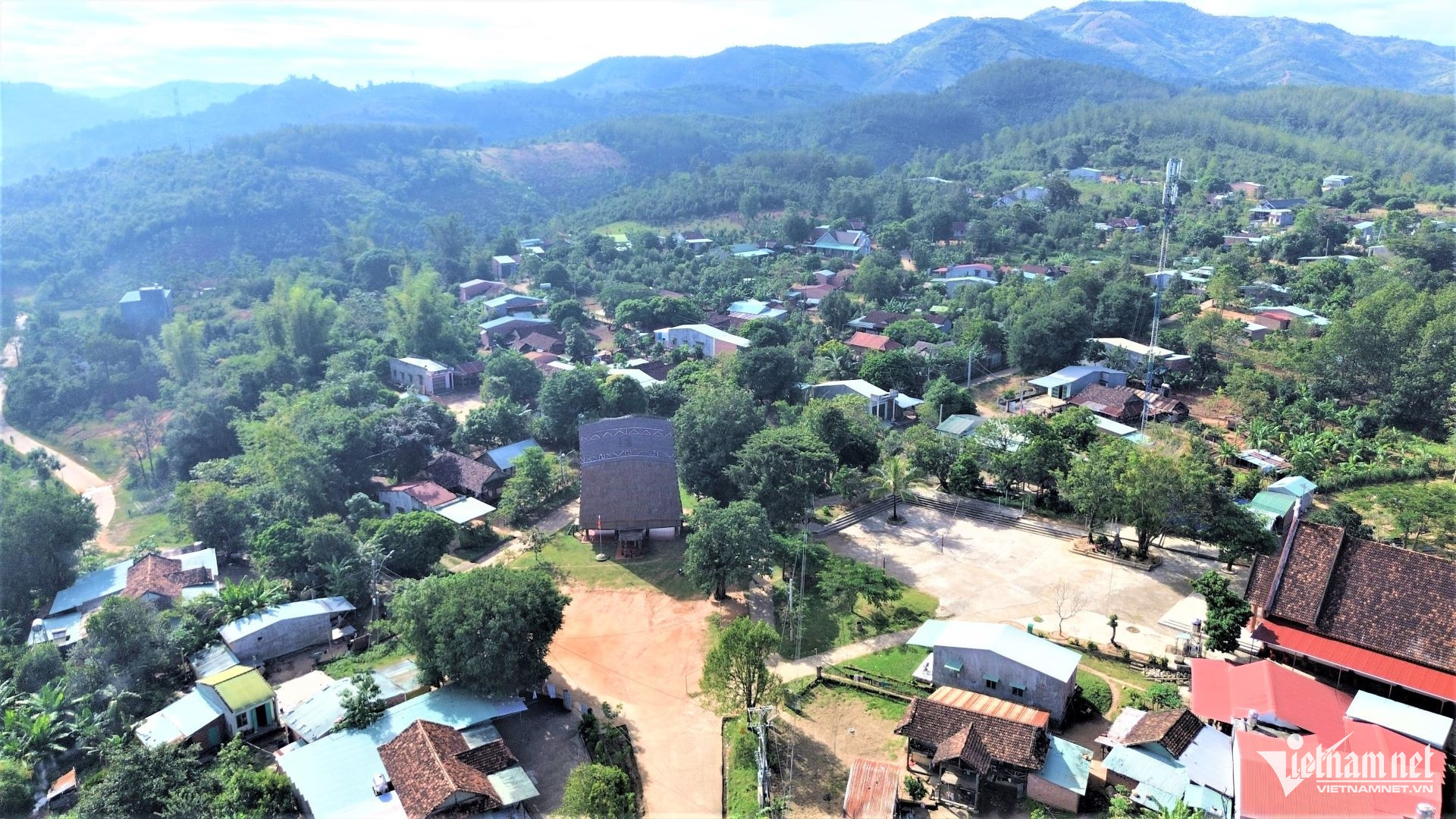
In 2001, Vietnam launched the project Surveying, Collecting, Preserving, Translating and Publishing Central Highlands Epics, opening the door to the remarkable epic heritage of ethnic minority communities in what was then Kon Tum Province, now part of Quang Ngai Province.
The findings surprised many researchers. Hundreds of epic narratives had survived entirely through the memories of folk artists across numerous villages. Among them, the Ba Na and Xo Dang communities were found to possess especially rich and diverse epic traditions.
A Jar, from Plei Don Village in Kon Tum Ward, Quang Ngai Province, who participated in translating epics for the project, said the central figure in many Ba Na epics is Dam Giong, a legendary hero of extraordinary strength who embodies the people's aspiration to conquer nature, defeat evil, and protect the village.
According to A Jar, storytellers portray Dam Giong as a towering figure whose courage and devotion to the community set him apart. More than a mythical hero, he represents the virtues that the Ba Na people have long cherished.
Among the best-known Ba Na epics are Giong Gio, The Glang Mam Brothers, Ko Tam Gring Mah, Giong Rescues Rang Hu, Giong Defeats the Bung Lung Demon, and Giong Pom Po.
A single epic can stretch across hundreds or even thousands of pages when fully documented. In the past, storytellers would recite these epics over several consecutive nights inside the village's rong communal house, where families gathered around the fire and immersed themselves in the world of legendary heroes.
"In the flickering firelight of the rong house, the storyteller's voice would rise with heroism before softening into moments of reflection, echoing through the mountains and forests. The stories carried listeners on journeys of overcoming nature while celebrating love, solidarity, and village life. The epics truly hold the soul of the Ba Na community," A Jar said.
Beyond their literary value, Ba Na epics serve as a living archive of indigenous knowledge. Embedded within each story are lessons on farming, codes of conduct, customary law, traditions, spiritual beliefs, and the Ba Na worldview.
Living treasures are becoming increasingly rare
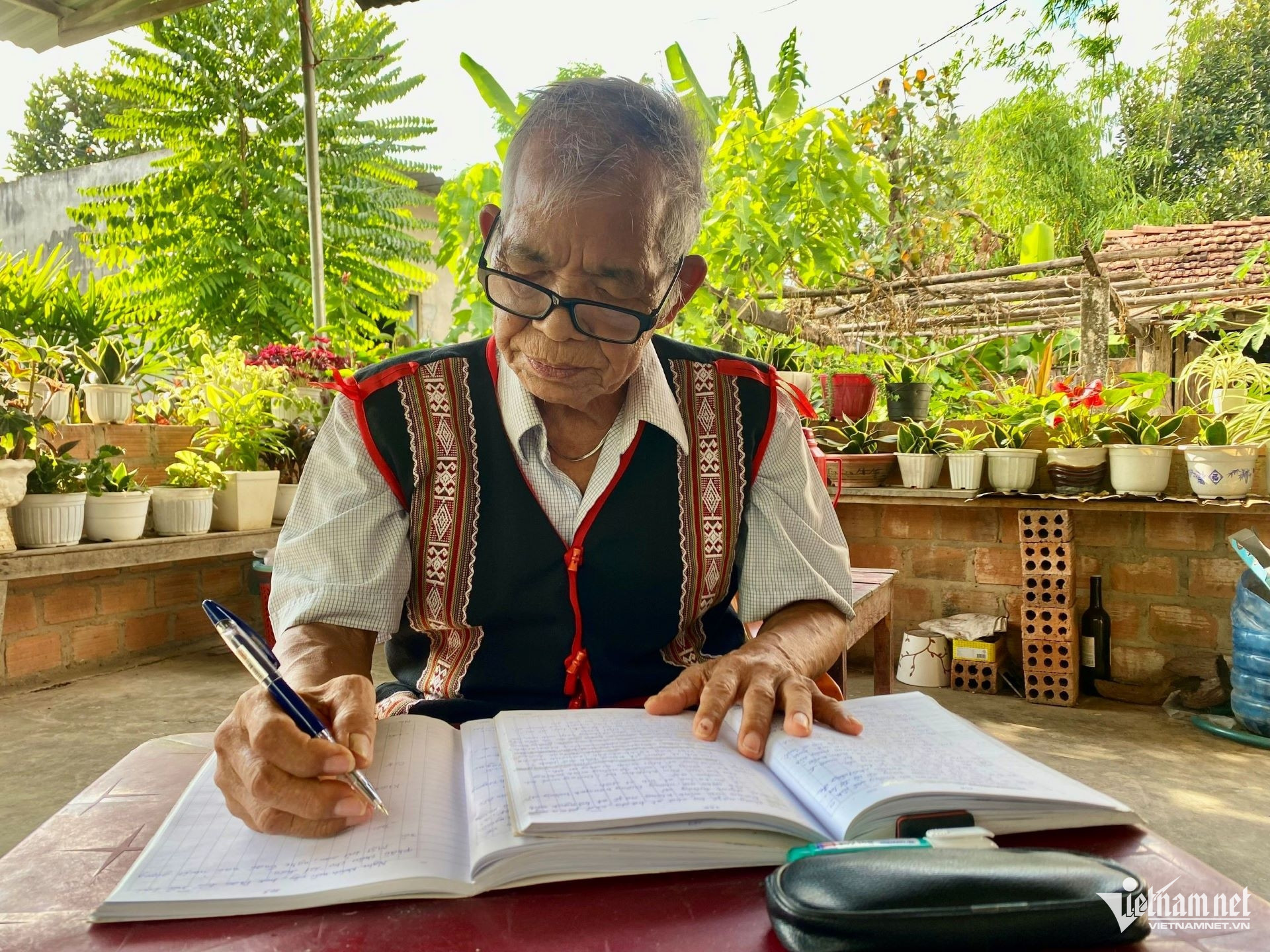
A Jar has spent more than 20 years collecting and translating Ba Na epic narratives. Photo by Ngoc Chi.
Following A Jar's recommendation, we traveled to Kon Klor Hamlet in Dak Ro Wa Commune to meet Meritorious Artisan A Luu, one of the few remaining masters capable of performing Ba Na epic chants.
His modest home sits quietly beneath the shade of towering trees. At 84, his hair has turned completely white and his eyesight has weakened, yet his voice comes alive whenever the conversation turns to epic storytelling.
A Luu recalled that in earlier times, whenever an epic performance was held, the entire village gathered at the rong house. Elders sat beside the fire while young people filled the communal space. Some performances lasted until dawn, yet few listeners wanted to leave.
"Life has changed. Young people rarely sit down to listen to epic storytelling the way previous generations did. As a result, the space where these epics once flourished has continued to shrink," he said.
Sitting beside the window, A Luu slowly began singing the opening verses of Giong Pom Po, the story of the legendary hero Dam Giong, part of the Ba Na people's vast interconnected cycle of epic narratives.
His voice shifted effortlessly between deep, resonant passages and soaring melodies, transporting listeners back to the communal nights once shared inside the rong houses of the Central Highlands decades ago.
Many people regard A Luu as a living repository of Ba Na epics because he once memorized entire cycles of stories about Dam Giong and Dam Gio.
Ensuring the epics live beyond memory
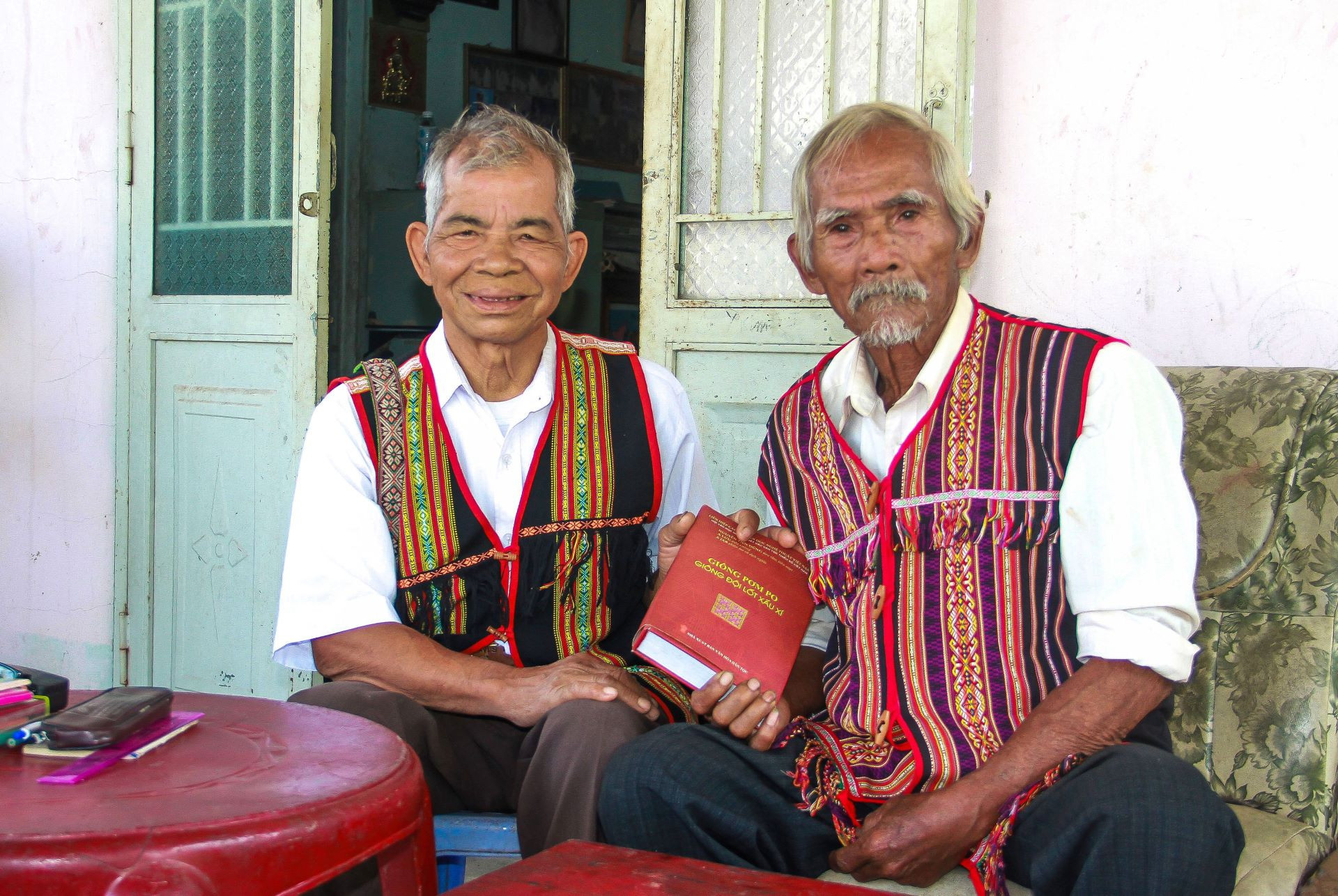
As society continues to evolve, the traditional setting for epic performances has steadily diminished. Nights of storytelling inside the rong house have become increasingly rare, while many master storytellers who once memorized dozens or even hundreds of epics have passed away.
With the death of each storyteller, communities lose far more than a respected elder. Unique stories, storytelling techniques, melodies, and performance styles disappear as well, many of them impossible to fully recover.
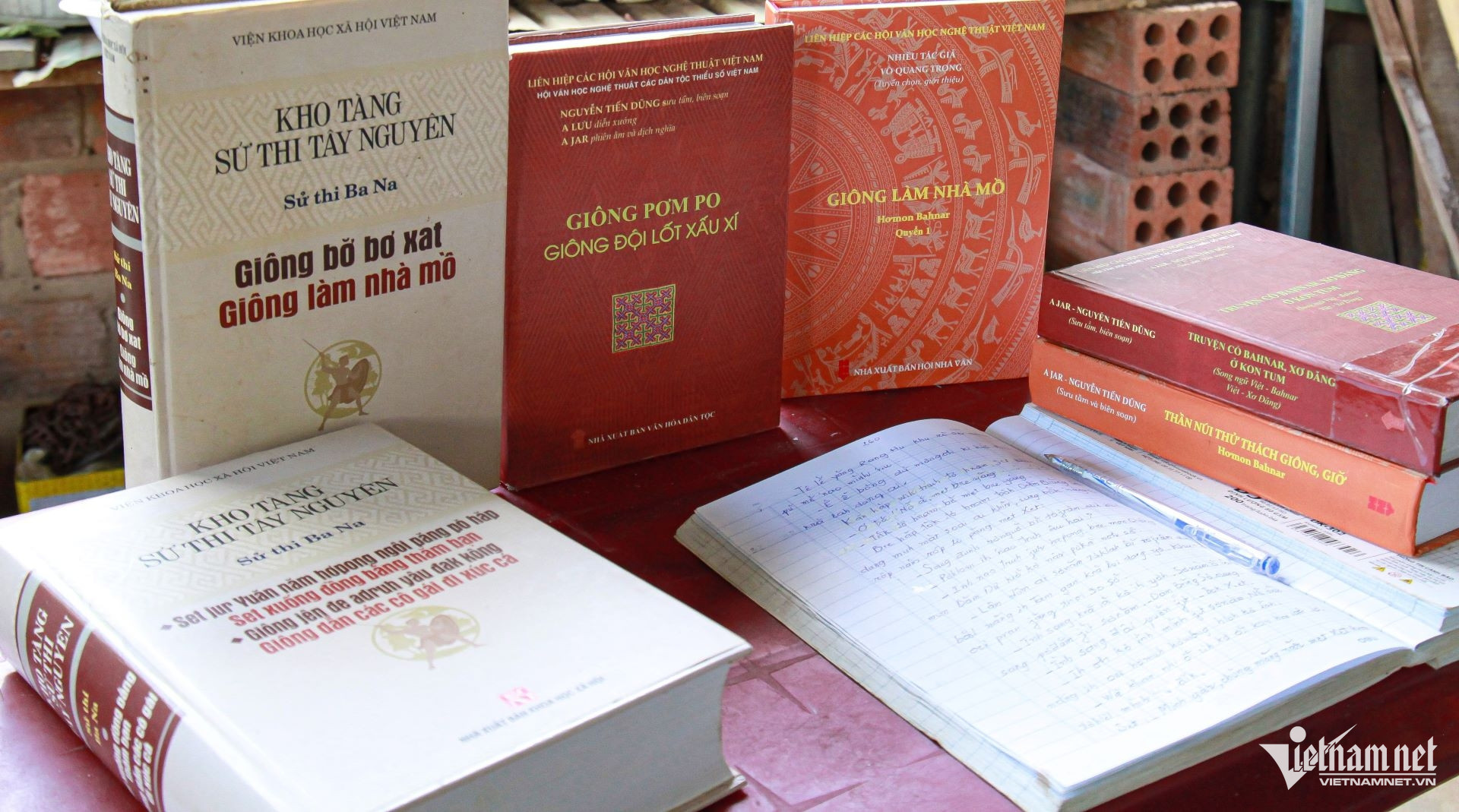
Today, the Central Highlands epic tradition, including the Ba Na epics, has been recognized as part of Vietnam's National Intangible Cultural Heritage. Researchers note, however, that collecting, translating, and archiving these works is only the first step. The greater challenge is bringing the epics back into everyday community life.
According to A Jar, efforts should continue through storytelling classes for younger generations, epic performance festivals and competitions, the inclusion of epic traditions in school education and community cultural activities, and initiatives that connect the heritage with sustainable tourism.
"Protecting these epics today is about much more than preserving a form of folk literature. It is about safeguarding the voice of history, the collective memory of the community, and the cultural values that have shaped the identity of the peoples of Vietnam's Central Highlands for generations," A Jar said.
Ngoc Chi
.svg)
