 Vietnamnet.vn

 Podcast




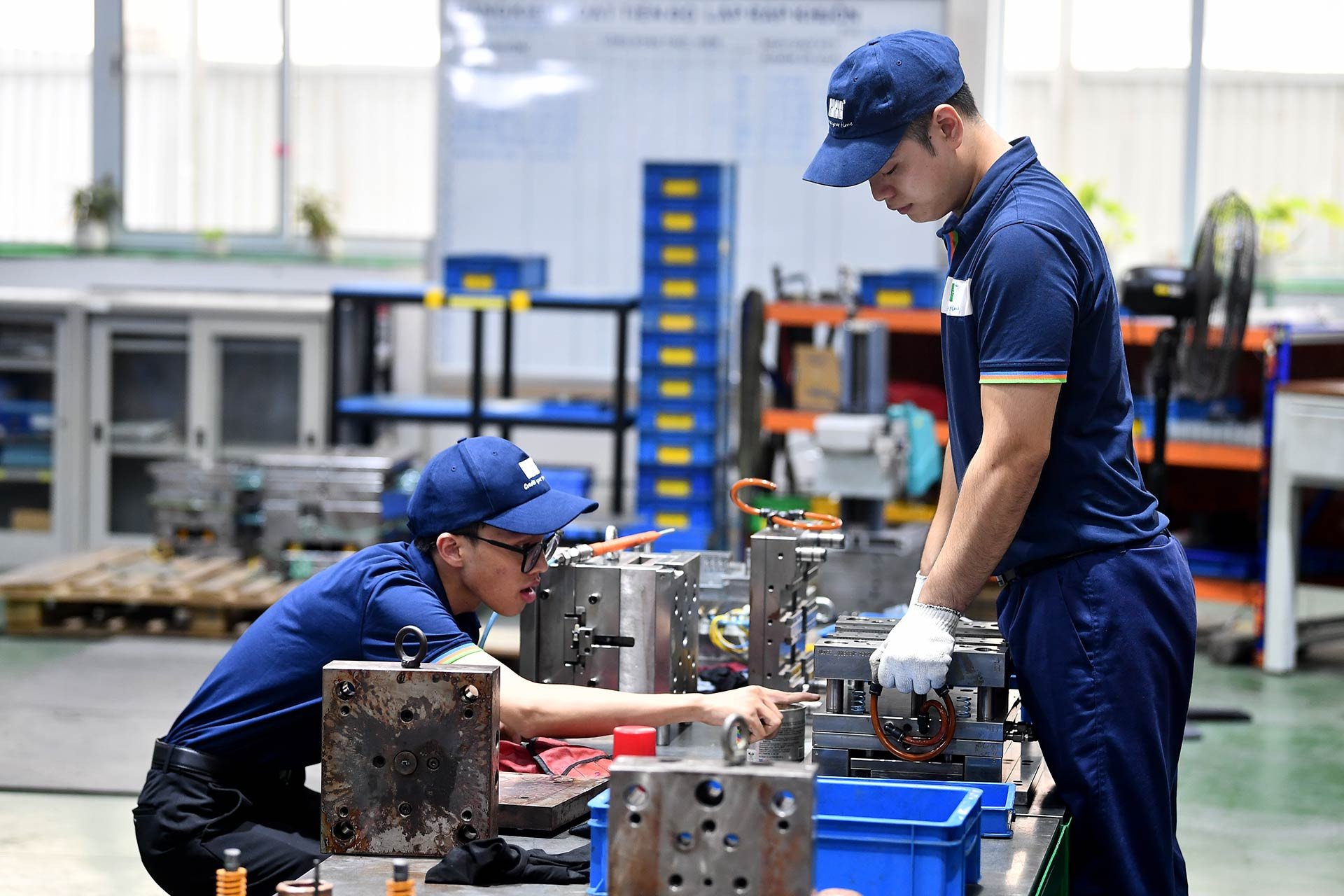
For many years, Vietnam has maintained GDP growth of 6-7 percent based on exports, foreign direct investment and consumption. However, the country is approaching the limits of a labor-intensive production model. The current framework is insufficient to meet the 2030 targets.
According to Dr. Adeel Ahmed, lecturer at the Business School of RMIT Vietnam, the country must shift toward higher-productivity industries, invest in human capital, modernize infrastructure and upgrade its position in global value chains.
Moving beyond a low-cost labor model requires transitioning into higher value-added sectors such as electronics and digital services. By deepening international integration, Vietnam can capture greater value within supply chains and sustain long-term growth momentum.
Yet China has previously warned of the risk of “growing old before growing rich,” and Vietnam faces a similar challenge as its population ages rapidly, with declining fertility, rising life expectancy and a labor force projected to peak in the near future.
The United Nations Population Fund in Vietnam forecasts that by 2036, Vietnam will enter the stage of an aged society, shifting from an “aging” to an “aged” society.
Dr. Adeel Ahmed noted that population aging could reduce labor supply, place heavy pressure on public finances and weaken economic dynamism. If productivity does not rise sufficiently, Vietnam risks being trapped at middle-income levels with a shrinking workforce. This risk can be mitigated through productivity-driven growth, supported by technology, a more skilled workforce and the development of small and medium-sized enterprises.
To achieve the US$8,500 GDP per capita target by 2030, the Government must address structural challenges and transition from a labor-based growth model to one driven by productivity. The foremost priority is enhancing productivity and technology.
Associate Professor Nguyen Huu Huan of the University of Economics Ho Chi Minh City argued that Vietnam needs a focused economic strategy rather than broad expansion. Concentration, not dispersion, should guide policy.
South Korea, for example, is known for consumer electronics. Taiwan is renowned for semiconductors and bubble tea. Vietnam needs to position itself with a defining industry, channeling resources into leapfrogging and achieving breakthroughs. Quantum technology represents a promising new direction.
“The success of South Korea’s chaebol model is a case in point. Vietnam has issued Resolution 68 with an orientation toward private sector development. The task now is to build strong private conglomerates capable of leading key industries and acting as locomotives for the domestic economy,” Huan said.
Nguyen Thi Mai Thanh, Chairwoman of REE Corporation, observed that rising GDP per capita implies higher incomes paid by businesses to workers. When enterprises thrive, individuals prosper. Therefore, any barriers hindering business growth must be removed swiftly, without prolonged administrative procedures.
Nguyen Ba Diep, Co-founder and Vice Chairman of MoMo Financial Technology Group, emphasized that labor productivity is central to achieving the US$8,500 target. Vietnam needs to accelerate the application of technology, automation, artificial intelligence and data analytics across both large enterprises and SMEs.
International research suggests that companies adopting technology can increase productivity two to three times. This means GDP growth would rely less on expanding labor or capital and more on production efficiency, enabling faster and more sustainable gains in per capita income.
Beyond large corporations and FDI firms, a crucial yet recently highlighted component is the SME sector, household businesses and small traders, which contribute 40-50 percent of GDP. Despite their scale, productivity remains low due to constraints in technology, capital and market access. If strongly supported in digital transformation, management tools, credit access and integration into modern supply chains, their contribution to GDP growth would rise significantly.
Dr. Tu Minh Thien, Vice Rector of Hoa Sen University, offered a broader reflection: GDP per capita is an important figure, but the ultimate goal is to live better, not merely richer. At certain stages, sacrificing some growth speed for sustainable stability may be necessary. In that context, happiness indicators would also improve.
Tran Chung
.svg)
