 Vietnamnet.vn

 Podcast



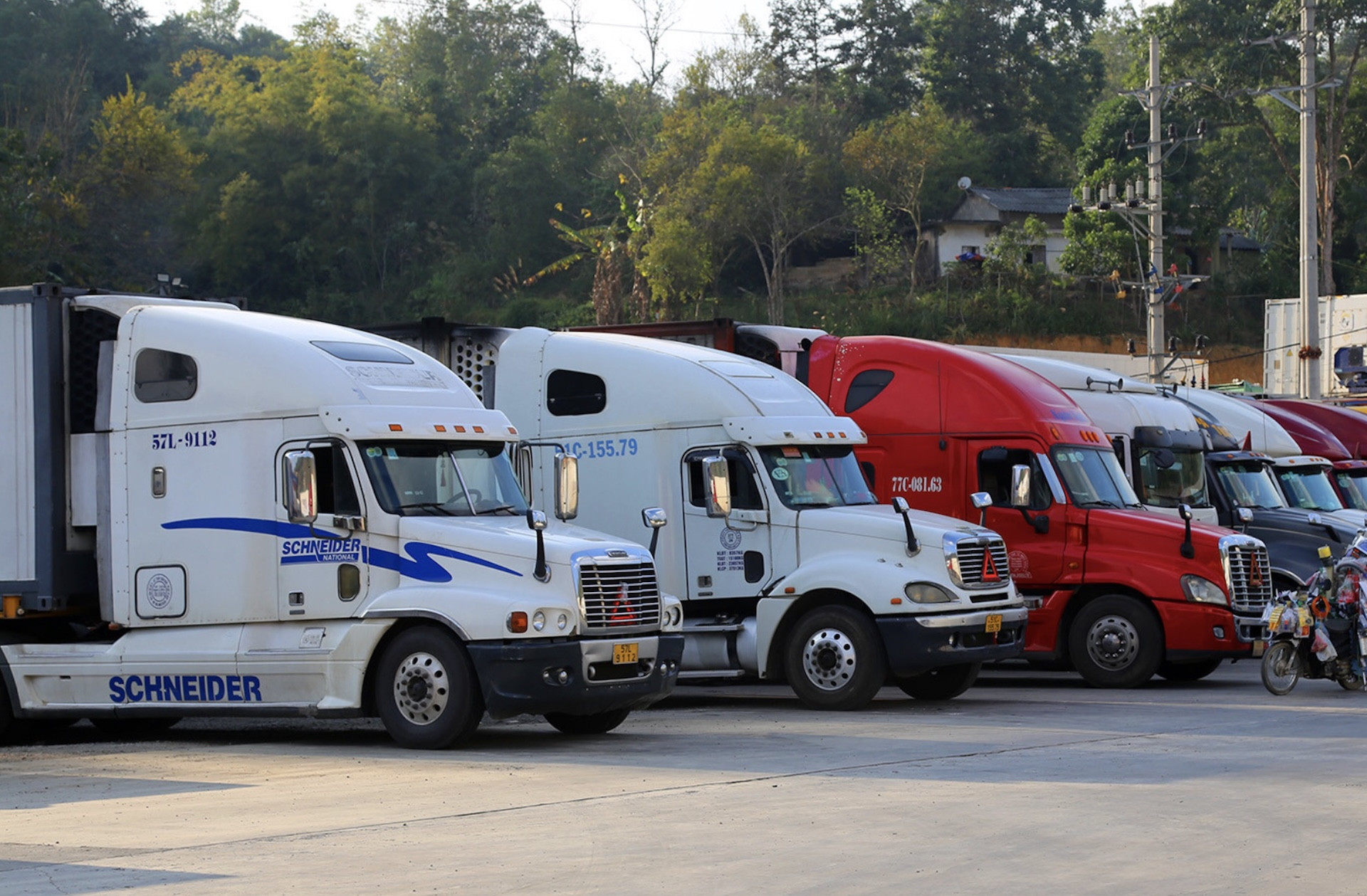
On the evening of February 5, Kim T., owner of a food import business in Ho Chi Minh City, said the Ho Chi Minh City Institute of Public Health, the focal agency for food safety inspections, had accepted her company’s import registration dossier.
The institute confirmed it would process the application in accordance with the old Decree 15/2018.
Similarly, a representative of another Ho Chi Minh City-based enterprise told VietNamNet that the company’s goods were allowed to clear customs late in the afternoon of February 5.
One week earlier, three containers of walnuts imported from the US, worth about $510,000, had been held at Cat Lai Port in Ho Chi Minh City.
The bottleneck arose when Government Decree No.46/2026/ND-CP, detailing the implementation of the Law on Food Safety, took effect on January 26, 2026, replacing Decree 15/2018.
Under Decree 46, agencies designated to conduct state inspections on imported food safety were to continue their inspection duties only until March 31, 2026.
However, due to the lack of specific guidance after the decree took effect, all designated inspection agencies refused to accept enterprises’ dossiers.
Without food safety certificates issued by these agencies, customs authorities could not clear imported food shipments.
On February 4, after the Government issued Resolution No.09/2026/NQ-CP to temporarily suspend the effectiveness of Decree 46 and adjust its implementation timeline, goods began to clear customs again.
During this suspension period, Decree 15/2018 and its implementing regulations remain in force.
“This timely decision shows that the Government and relevant agencies listened carefully to feedback from businesses,” an enterprise representative said.
However, she added that a large volume of imports from other companies remains piled up at ports.
For dry goods, storage time can be longer, but fresh products face a high risk of spoilage.
Therefore, the speed of cargo clearance at ports is especially critical at this time.
From a policy perspective, enterprises have urged that new regulations allow businesses sufficient time to absorb and adjust.
Decree 46 was signed on January 26, 2026, and took effect immediately, placing importers in a passive position.
Imported goods often take two to three months to travel by sea.
When shipments departed foreign ports, the decree was not yet in effect, but by the time they arrived in Vietnam, it was already enforceable.
As a result, importers and their overseas partners could not prepare the required food safety certificates in time for customs clearance.
According to incomplete data, by noon on February 4, about 90,000 tonnes of goods belonging to members of the Vietnam Beer–Alcohol–Beverage Association were stuck at ports.
Nearly 3,000 tonnes were linked to the Ho Chi Minh City Food and Foodstuff Association.
Around 30,000 tonnes belonged to the Vietnam Dairy Association, and about 400 tonnes to the Vietnam Pepper and Spice Association.
Policy needs a buffer period
Commenting on the issue, Dr. Dang Thao Quyen, Deputy Head of the Management discipline group and Senior Lecturer in International Business at RMIT University Vietnam, said the disruptions caused by Decree 46 offer important lessons for policymakers when drafting food safety regulations.
For policymakers, the core requirement is to build an implementation roadmap with foresight.
Regulations should be issued well before full enforcement and accompanied by buffer periods to handle delays in implementation.
The abrupt shift in inspection mechanisms without a transition phase, detailed guidance or pilot programs intensified congestion, especially for perishable goods.
“Future decrees should stipulate transition periods, for example six to twelve months, and pilot implementation at major ports to identify gaps in infrastructure, personnel and procedures before nationwide application,” she told VietNamNet.
According to Dr. Quyen, identifying all stakeholders before issuing policy is equally important.
Impact assessments should extend beyond importers and customs authorities to include testing laboratories, logistics providers, retailers and end consumers, who may be indirectly affected through supply delays and price fluctuations.
Economic modelling prior to policy issuance would also help quantify impacts on GDP caused by trade disruptions.
This should become standard practice to avoid similar short-term shocks.
The RMIT lecturer noted that several international models could serve as useful references for Vietnam.
The European Union’s legal framework under Regulation (EC) No.178/2002 and Regulation (EU) 2017/625 combines strict risk-based controls with phased implementation, extensive business consultation, tiered enforcement and periodic review cycles.
In addition, the Rapid Alert System for Food and Feed (RASFF) and targeted enhanced controls for high-risk sources allow authorities to intervene precisely without causing widespread trade disruption.
Vietnam could adopt similar principles by strengthening data-driven risk classification by product group, country of origin and importer compliance history.
This would help accelerate clearance for low-risk shipments while concentrating resources on genuine hazards.
At the macro level, policy stability and predictability underpin national competitiveness and investor confidence.
Amid global supply chain volatility and domestic economic recovery challenges, sudden changes and unclear communication can have outsized impacts on businesses operating on thin margins.
“Even well-intentioned reforms can signal instability to foreign investors who prioritize consistency in laws and policies,” Dr. Quyen emphasized.
Integrating mandatory impact assessments, public–private dialogue mechanisms and transparent communication strategies into the law-making process would help safeguard Vietnam’s image as a reliable trade and investment partner.
Amid the urgent need to clear goods quickly at ports, on February 5 the Vietnam Customs issued an urgent directive.
Regional customs departments and subordinate units were instructed to arrange leadership and staff on duty 24/7 to ensure rapid clearance, prioritizing backlogged imported food shipments.
Heads of regional customs offices will be held accountable to the Director General of Vietnam Customs if negative practices, harassment or prolonged clearance procedures occur.
Tran Chung
.svg)
