 Vietnamnet.vn

 Podcast



Vietnam’s used-car dealers are struggling to remain competitive as aggressive discounts on new vehicles erode their pricing advantage, forcing showrooms to hold prices while offering more warranties and incentives to attract buyers and avoid losses.
New-car discounts leave used-car dealers under pressure
As new-car dealers continue to cut prices to clear inventory, offering 50-100% support for vehicle registration fees as well as cash discounts and gifts, used-car businesses are being forced to defend their prices while expanding warranty services to stimulate demand and avoid mounting losses.
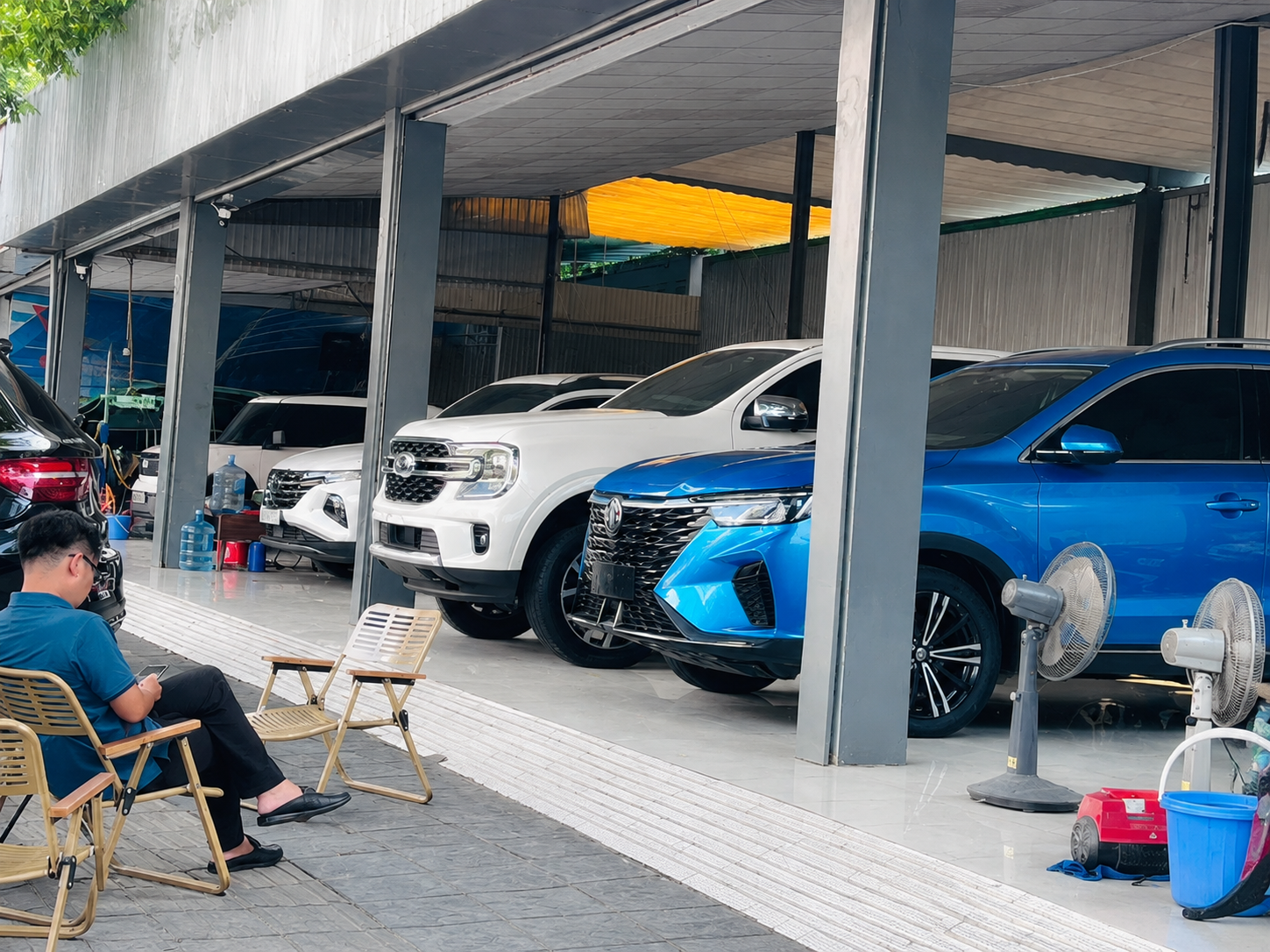
At K. A. Auto, a dealership specializing in used vehicles on Nguyen Van Huyen Street in Cau Giay, Hanoi, owner Tran A. said further price cuts were becoming increasingly difficult.
“After the steep declines in the first and second quarters caused by weaker demand, if we cut our selling prices any further now, we will suffer heavy losses,” he said.
“When the new-car market entered its discount season and dealerships began clearing inventory from early June, used-car dealers like us really started feeling the pressure. We have been forced to introduce additional warranty policies in the hope of continuing to sell cars without losing money,” Tran A. added.
His dealership is now putting greater emphasis on after-sales guarantees for used vehicles, including a one-week return or exchange policy, guarantees covering undisclosed collision damage and water damage, assistance with ownership transfer procedures, and even complimentary engine oil, all aimed at reassuring customers about vehicle quality.
Nguyen B., who owns a used-car showroom on Nguyen Van Cu Street in Long Bien, Hanoi, said the sector is facing pressure not only from the new-car market but also from recent sales of repossessed used vehicles by commercial banks as they dispose of assets linked to bad debts.
According to him, prices for several popular, affordable used models have already fallen significantly. A used 2018-2019 Mazda CX-5 2.5 AT has dropped by 10-15% to an average of around $17,300-$20,400, while a 2017 Honda Civic 1.8 AT is down 9.5-10% to about $11,500. A 2018 Chevrolet Spark 1.2 LS has fallen 15-20% year on year and now averages around $4,600-$5,800.
“To prevent prices from being pushed down too far while still attracting customers, used-car dealerships are increasingly turning to additional gifts, free vehicle inspections and, for newer used cars, even covering comprehensive vehicle insurance,” Nguyen B. said.
Buyers wait for better deals, adding to market difficulties
Tran Minh Huong, a resident of Gia Lam, Hanoi, said her family is holding off on buying a used car while waiting to see how the market develops.
In her view, if bank interest rates continue to rise, some borrowers who financed their vehicle purchases may no longer be able to keep up with monthly repayments and could be forced to sell their cars to ease financial pressure.
“My family is considering buying a used car for around $9,600-$11,500 for our daily travel needs. But I don’t think we need to rush into buying one right now,” Huong said. “If bank interest rates rise in the coming period, many people who borrowed money to buy cars may struggle with their monthly repayments and be forced to sell. That would increase the supply of used cars, potentially bring prices down and give buyers more choices.”
Beyond interest rates, Huong believes the seventh lunar month could also offer opportunities for genuine buyers looking for better deals on used vehicles.
A traditional reluctance among some Vietnamese consumers to make major purchases during the seventh lunar month, sometimes known as the “Ghost Month,” could weaken demand and prompt some vehicle owners or showrooms to lower prices to secure buyers.
“I don’t place too much importance on those seventh-month superstitions, so if I find the right car at a good price, I would still buy it,” Huong said. “In fact, I’m hoping I might be able to get a cheaper car now than a few months ago. If I can’t find one that meets my needs, I’ll simply wait. There’s no reason to buy at any cost.”
Vinh Nam, an automotive business expert, said lower new-car prices would inevitably put pressure on the used-car market.
When new vehicles become more attractive in price - and some models cost only slightly more when new than their used equivalents - buyers naturally expect second-hand prices to adjust accordingly.
“Psychologically, customers will tend to wait for further promotions, delaying their purchase decisions,” Nam said. “That is something neither new-car manufacturers nor used-car dealers want, because it can slow the pace of sales.”
Nam advised buyers not to focus solely on headline discounts. Instead, they should assess the total cost of ownership, including the purchase price, loan interest if applicable, running and maintenance costs, and the vehicle’s potential resale value after several years.
Those factors, he said, provide a more sensible basis for making a purchase decision. A lower upfront price is an advantage, but long-term usability and total ownership costs ultimately matter most when buyers decide whether a vehicle represents good value.
Y Nhuy
.svg)
