 Vietnamnet.vn

 Podcast



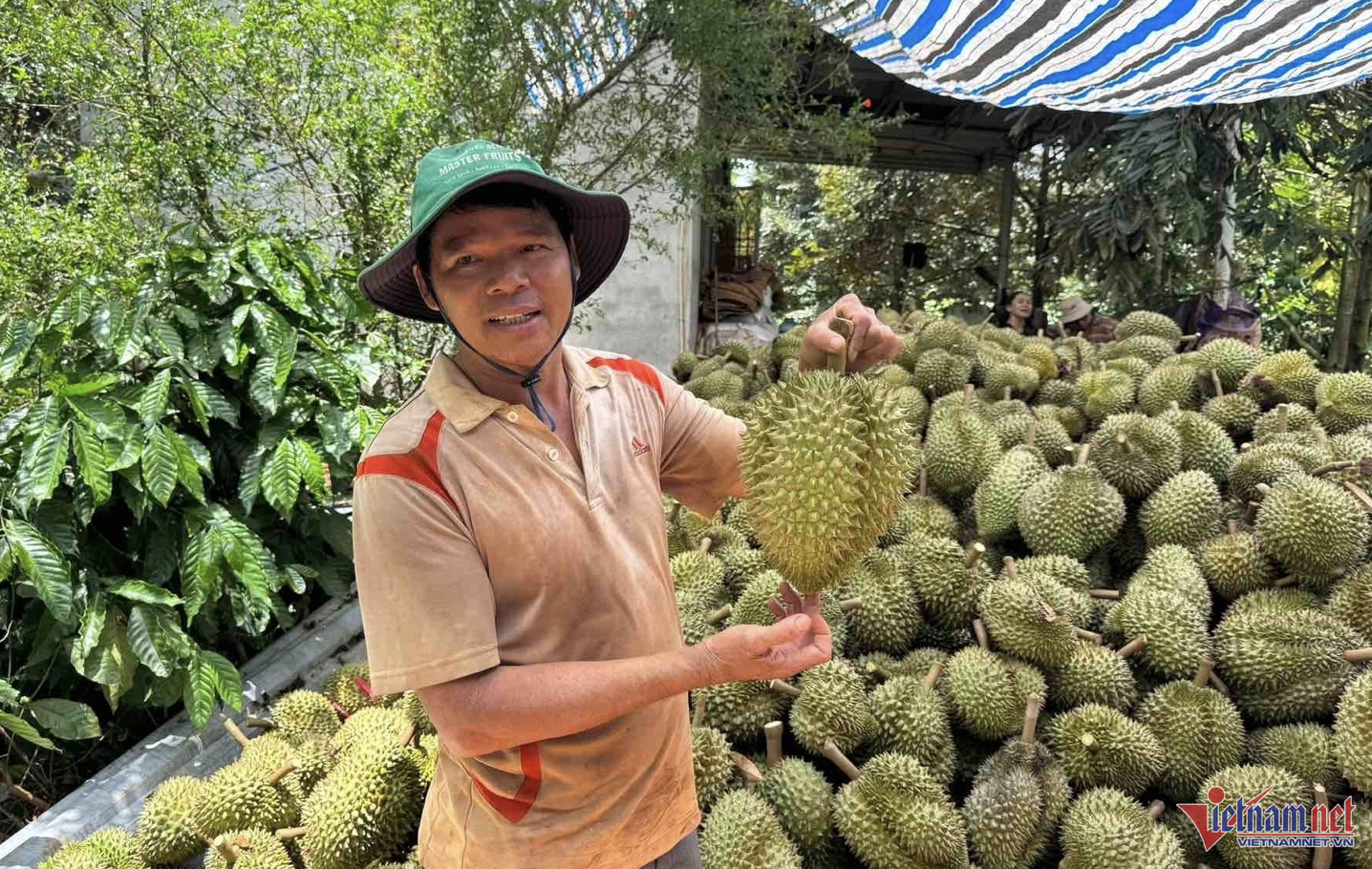
A recent agricultural, forestry and fisheries market bulletin from the Agency of Foreign Trade under the Ministry of Industry and Trade, citing data from Chinese customs authorities, showed that China imported 1.07 million tons of durian in the first six months of this year, a sharp increase of 51.1% from 708,000 tons in the same period of 2025.
Of the total, China spent $3.79 billion on durian imports from Thailand, up 48% year on year, equivalent to an increase of $1.23 billion. At that value, Thai durian accounted for as much as 81% of China’s total durian import turnover.
Vietnam was China’s second-largest durian supplier in the first half of 2026, with exports valued at $846 million, representing an 18% share.
The figures show that Thailand was far ahead of Vietnam in durian export value to China during the first half of this year. The performance was underpinned by Thailand’s advantages in production volume, logistics infrastructure and quality control.
Meanwhile, since gaining approval to export fresh durian to China in 2022, Vietnam’s durian industry has rapidly expanded both its cultivation area and output. However, exports continue to be affected by a number of quality-control issues, weighing on the fruit’s competitiveness in the market.
Notably, Vietnam also faces growing competition from Malaysia. In the first half of this year, Malaysia’s fresh durian exports to China reached $30.26 million, surging 342% from the same period in 2025. While the figure remains relatively small, the result indicates that Malaysia is gradually making inroads into China, the world’s largest durian-consuming market.
According to the Agency of Foreign Trade, Chinese consumer demand remains the main driver of Southeast Asia’s durian industry. China currently consumes around 90% of the world’s durian. However, rapidly rising harvest volumes across several producing countries have led to oversupply, pushing durian prices lower.
In the Chinese market, Monthong durians from Thailand and Vietnam are currently selling for CNY20-30 per 0.5kg ($2.79-4.18), well below the CNY35-45 per 0.5kg recorded during the same period last year.
At Chinese wholesale markets, the price of Vietnam’s grade-A Monthong durian plunged from CNY36.5 per 0.5kg ($5.09) to CNY13 ($1.81) between April and June. The price of Thailand’s grade-A Monthong durian also fell, from CNY26.5 per 0.5kg ($3.69) to CNY18.
Speaking to VietNamNet, the head of a company exporting durian to China said the quality of Vietnamese durian remains inconsistent, while rival Thailand has managed the issue much more effectively.
“Even at the orchard, Thailand has a higher proportion of grade-A fruit than Vietnam,” the executive said. Thailand also applies maturity standards for durian at harvest. As a result, the country has been able to maintain a stable share of China’s durian market.
Beyond quality, Thailand’s durian harvest season largely peaks between April and June, while Vietnam’s main harvest peaks in July and September. According to the executive, the difference in harvest timing also gives Thai durian an advantage in terms of supply during the first half of the year.
Tam An
.svg)
