 Vietnamnet.vn

 Podcast



Tran Tuyen
Stretching about 150 meters along the road leading to Lan Chau Island, the area has transformed over the past month into a lively night market dedicated to “jumping squid.” From around 8pm each evening, the once-quiet walkway fills with vendors and tourists.
There are no permanent stalls, tents, or signboards. Sellers simply pick a spot, place a small stool, set down a basin of squid, and begin trading. Under the glow of flashlights or portable LED lamps, the freshly caught squid shimmer and shift colors, creating a striking visual draw.
What sets the market apart is not just its presentation, but also its trading style. Squid are not sold by weight but bundled into small portions of six to nine pieces, roughly the size of a thumb.
Nguyen Thi Van, 37, a local resident, said the squid are mostly caught by line, a method prized for preserving freshness and natural sweetness. “They’re called ‘jumping squid’ because they’re so fresh - their skin is translucent and changes color under the light. The meat is firm, crisp, and very flavorful,” she explained.
The squid fishing season in Cua Lo typically runs from March to August. Each afternoon around 2pm, fishermen head out to sea and return after three to four hours. Because the catch relies on manual methods like line fishing or scooping, yields are limited, usually just 2-3kg per trip.
After landing, the squid are brought to the market by family members, while fishermen often head back out for another trip. On good days, additional batches arrive late at night; otherwise, the next supply comes early the following morning.
Prices typically range from VND150,000 to VND170,000 (US$6-7) per bundle, depending on size. During peak tourism season, fishermen can earn between VND1 million and VND2 million (approximately US$40-80) per night, providing a stable income for many coastal households.
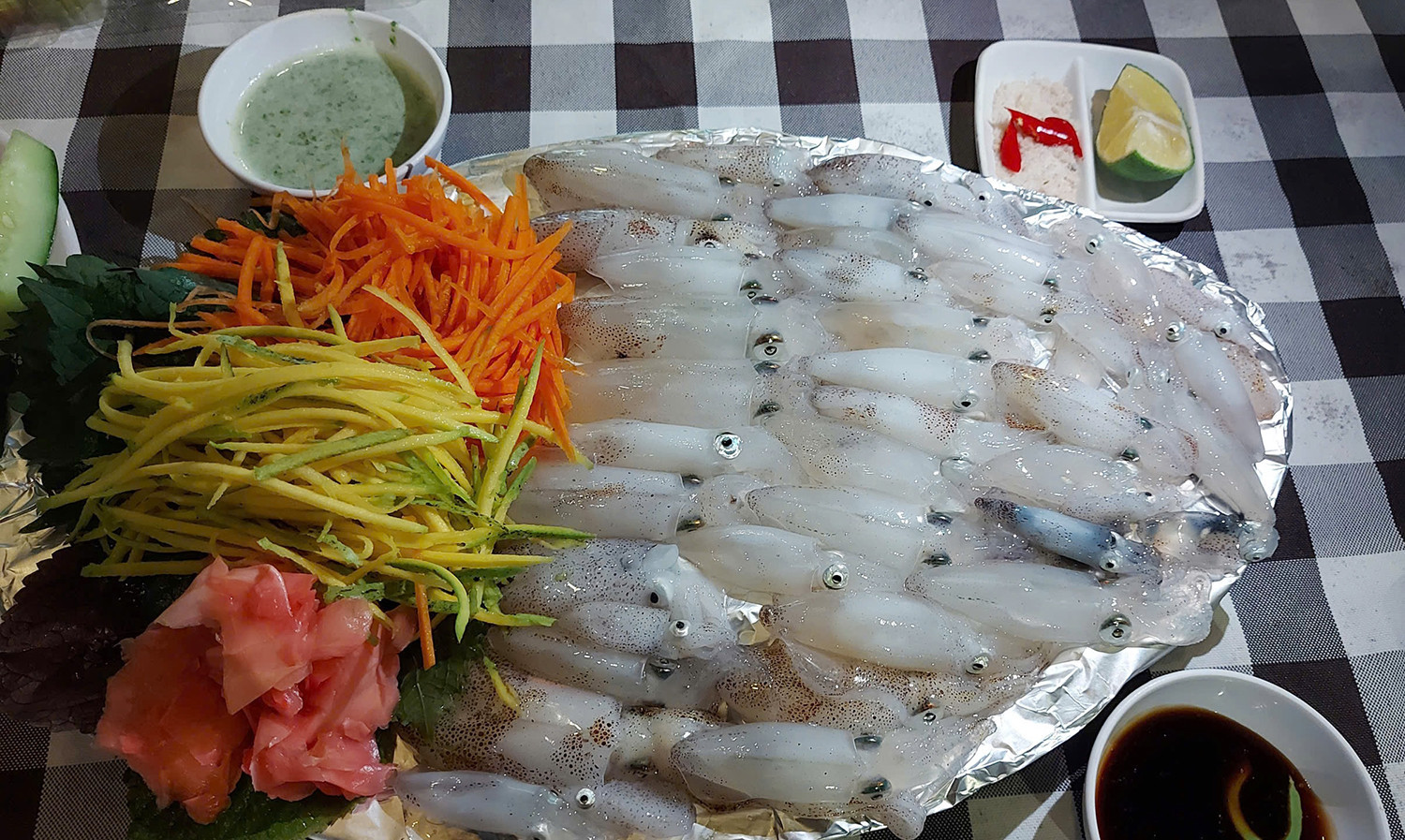
After purchasing, visitors can take the squid to nearby eateries for cooking on request. Locals recommend enjoying it simply as a fresh salad with lime and seasoning to fully appreciate its natural taste. Steaming or lightly grilling also preserves its sweetness, while some adventurous diners opt to eat it raw with soy sauce and wasabi - a style gaining popularity.
Nguyen Xuan Ha, a visitor from nearby Nghi Loc district, shared that the squid is exceptionally fresh, with firm texture and natural sweetness. “Prices are flexible, and the experience is fun. You can walk around, pick what you like, and enjoy the lively atmosphere,” he said.
Since 2023, local authorities have designated a centralized area for selling “jumping squid” to both serve tourists and maintain urban order. The market operates daily from 7pm to 11pm along the southern section of the road to Lan Chau Island.
Authorities have also implemented measures to ensure hygiene, lighting, signage, and security during operating hours. Waste collection and wastewater treatment are strictly managed to protect the environment.
Vendors are required to avoid selling outside the designated zone to maintain safety and urban aesthetics. Violations, especially along Binh Minh Street and nearby intersections, are subject to strict enforcement.
According to the Nghe An Department of Culture, Sports and Tourism, Cua Lo’s “jumping squid” has been recognized among Vietnam’s top 10 seafood specialties. Beyond its culinary appeal, the market offers a vivid glimpse into local coastal life, enriching the travel experience for visitors.
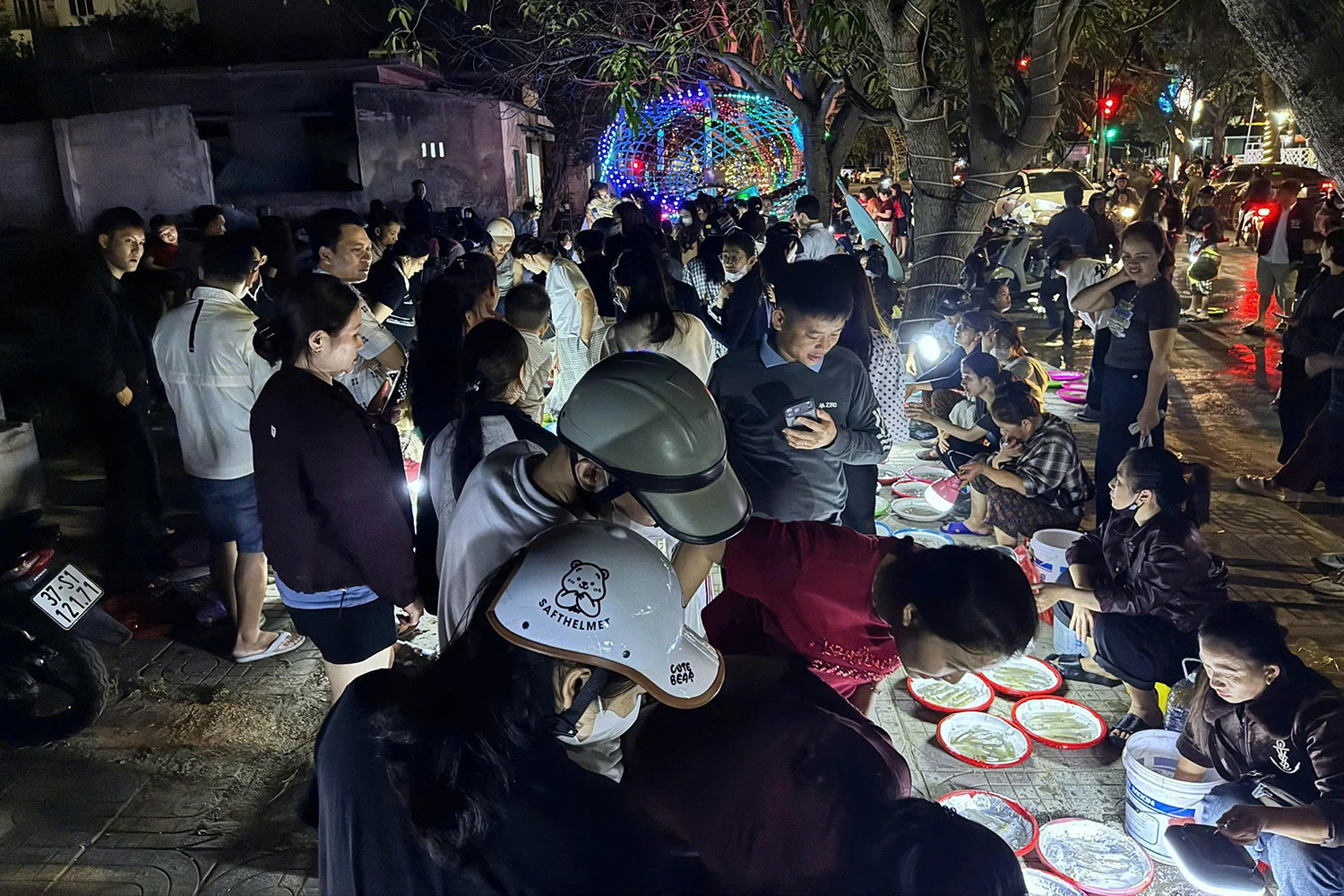
The “jumping squid” market comes alive each evening along the road leading to Lan Chau Island. Photo: T.T
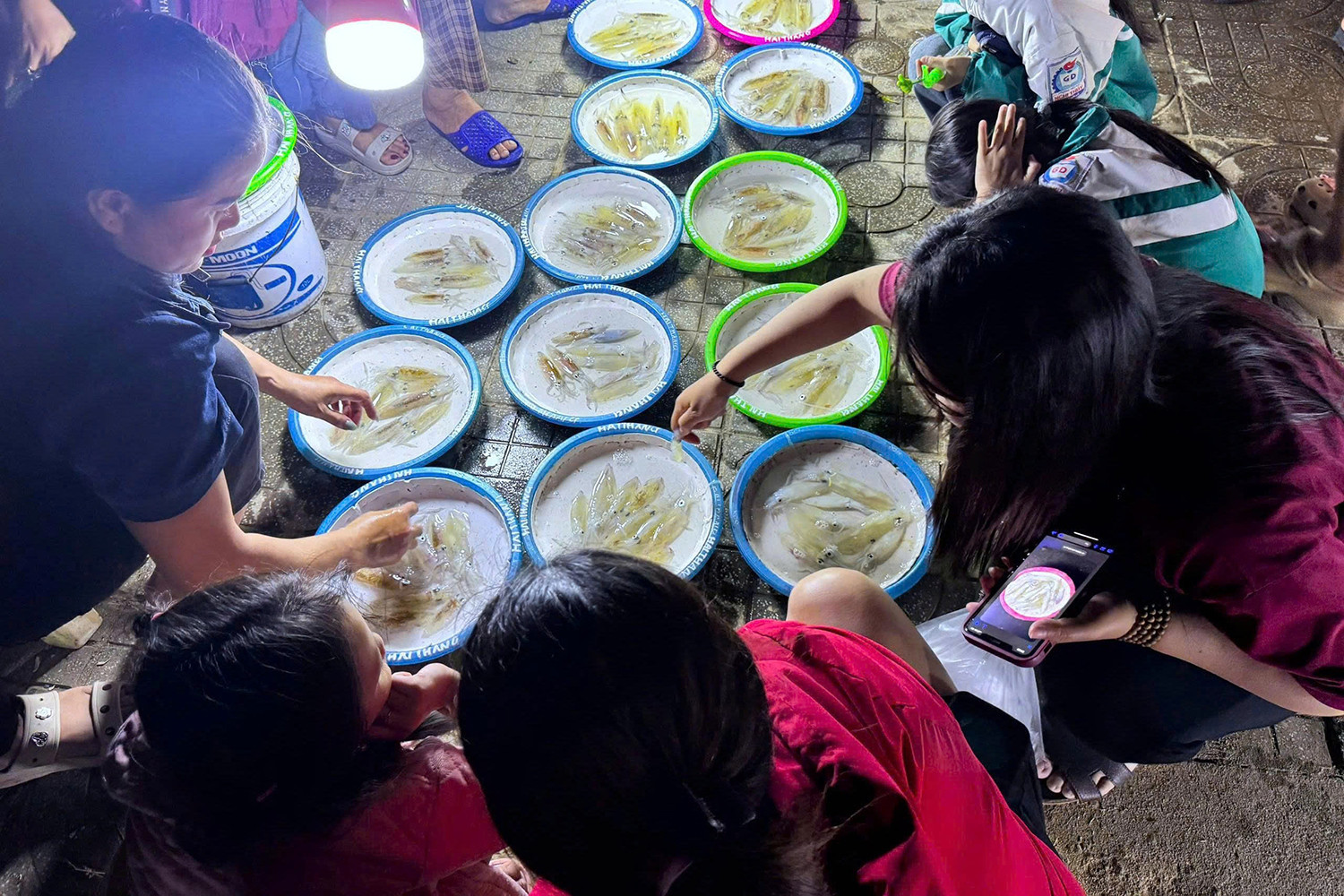
Vendors sell squid without stalls or signboards, using handheld LED lights to illuminate their catch. Photo: T.T
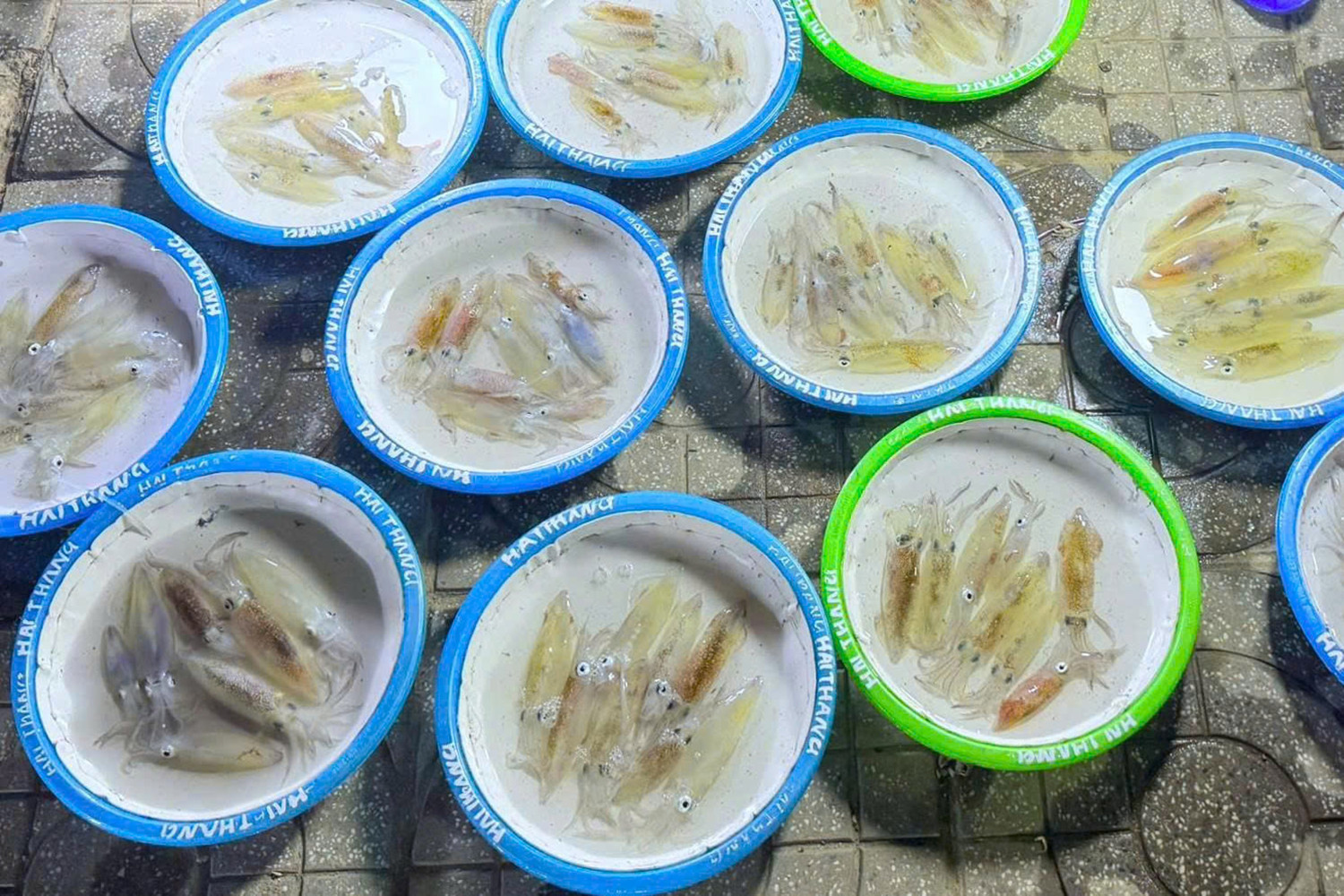
Fresh squid are arranged in small bundles inside plastic basins for sale. Photo: T.T
.svg)
