 Vietnamnet.vn

 Podcast



Clouds of smoke billow from the kitchen counter near the entrance, where the owners are busy steaming delicate rice sheets over two large steam pots.
“Many passersby think we’re selling banh cuon. Some customers walk in because they’re drawn by the irresistible aroma of grilled pork,” said sisters Dang Thi Phuong and Dang Thi Lan, the shop’s owners.
In fact, the restaurant serves a dish rarely seen in Hanoi: banh uot-a specialty from Buon Ma Thuot in Dak Lak Province. The dish is more commonly found in cities like Nha Trang, Da Lat, and Vung Tau.
Phuong discovered banh uot on a trip to Buon Ma Thuot and was instantly hooked by its soft, translucent rice sheets, typically paired with grilled pork, pork sausage, pickled vegetables, fresh herbs, and a sweetened fish sauce.
“Lan and I had long wanted to open a restaurant, but we hadn’t found a dish that was both delicious and distinctive enough to compete in Hanoi’s food scene. When I tasted banh uot, I knew this was it-light, flavorful, and not at all cloying,” Phuong said.
Not long after, the two traveled to Buon Ma Thuot to learn the trade from a renowned banh uot maker.
At their eatery, rice sheets are only steamed upon order. While the technique resembles that of banh cuon, the batter is different.
Each day, the owners soak and ferment a carefully selected type of rice-neither too hard nor too sticky. Starting at 8 a.m., Phuong begins grinding and filtering the rice.
“The rice must be chosen meticulously so that the sheets are thin, smooth, yet elastic. They must not tear or fall apart when rolled,” she explained.
Mastering the steaming process took Phuong and Lan three weeks. “The chef must use just the right amount of batter, spread it evenly, and have flexible wrists to lift the sheet from the steam pot to the plate without tearing it,” they said.
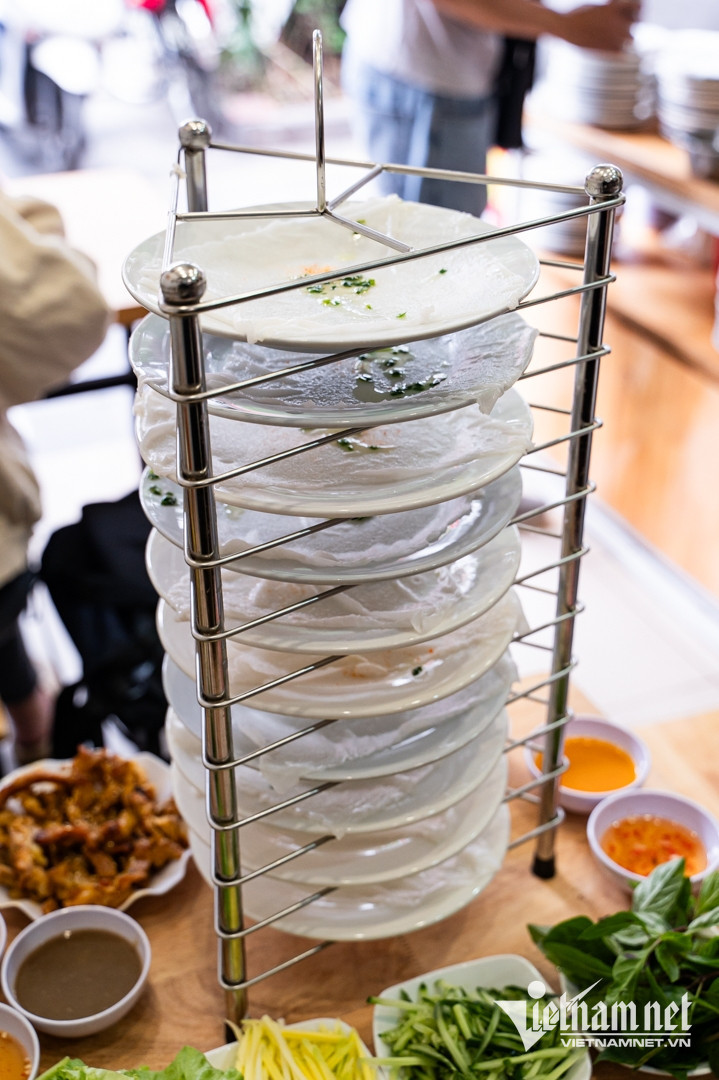
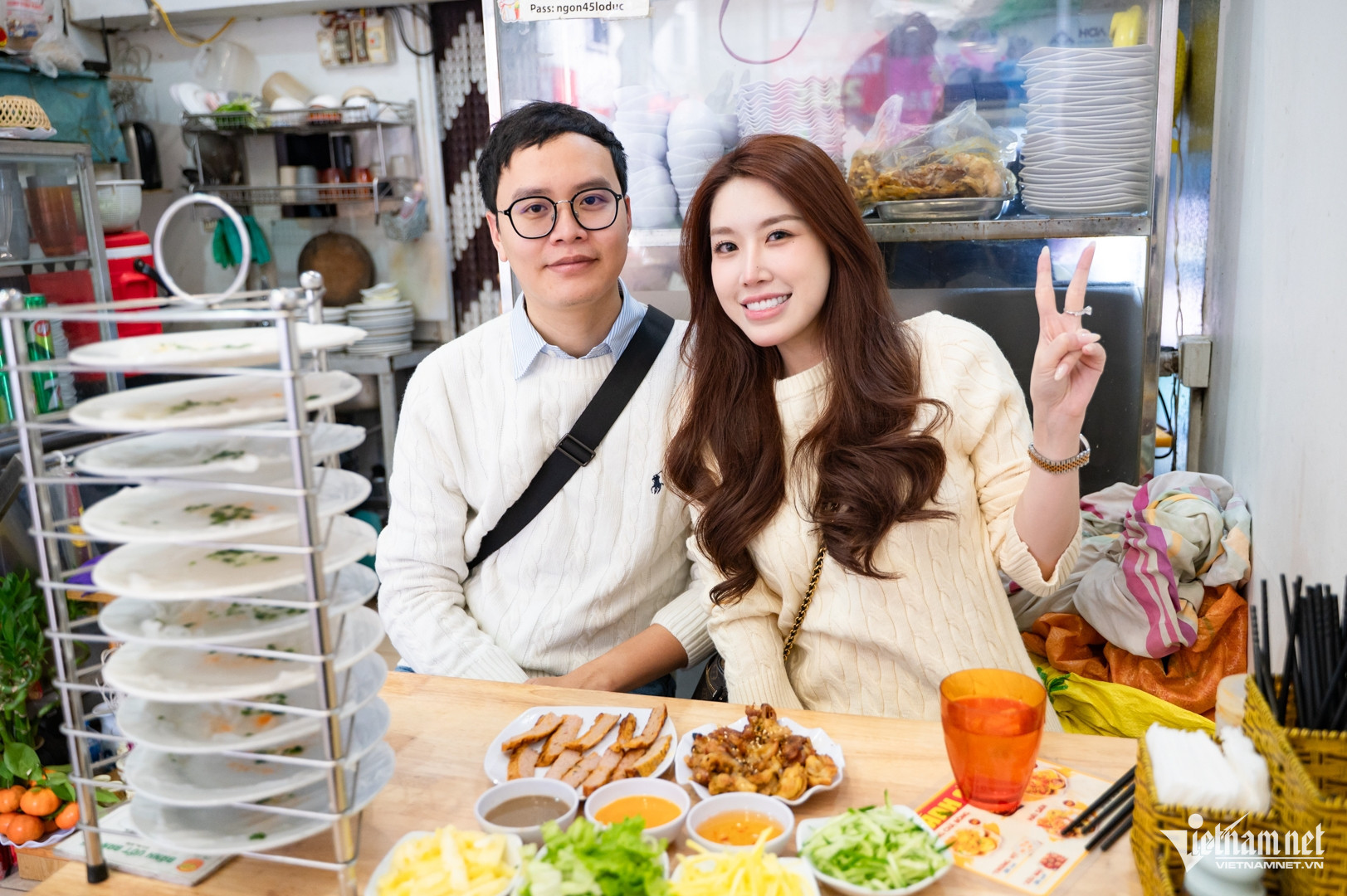
The finished rice sheet is ultra-thin and neatly round. It’s topped with scallion oil or shallot oil and their homemade shrimp powder. Each pristine white sheet is placed on a multi-tiered stainless steel tray to serve. When they reach the customer’s table, the sheets are still warm, soft, and glistening.
The eatery offers six topping options with banh uot: grilled pork, Nha Trang-style grilled sausage, corn rolls (ram bap), Central Highlands fermented pork (nem chua), pork patties with green rice (cha com), and traditional pork sausage (gio lua). The grilled pork and ram bap, both homemade, are the top sellers.
The grilled pork is made from shoulder cuts with minimal fat, marinated for at least two hours, and grilled over charcoal until evenly golden but not burnt. Just before serving, it’s reheated in an electric oven to keep it piping hot.
“Our version is less sweet than the original Ban Me-style grilled pork,” Phuong noted.
Ram bap is a type of crispy spring roll made with sweet corn, sticky corn, minced pork, shiitake mushrooms, scallions, and pepper, wrapped in thin rice paper. Unlike typical rolls, it contains no glass noodles or other vegetables. The result: a crunchy exterior and a soft, naturally sweet interior.
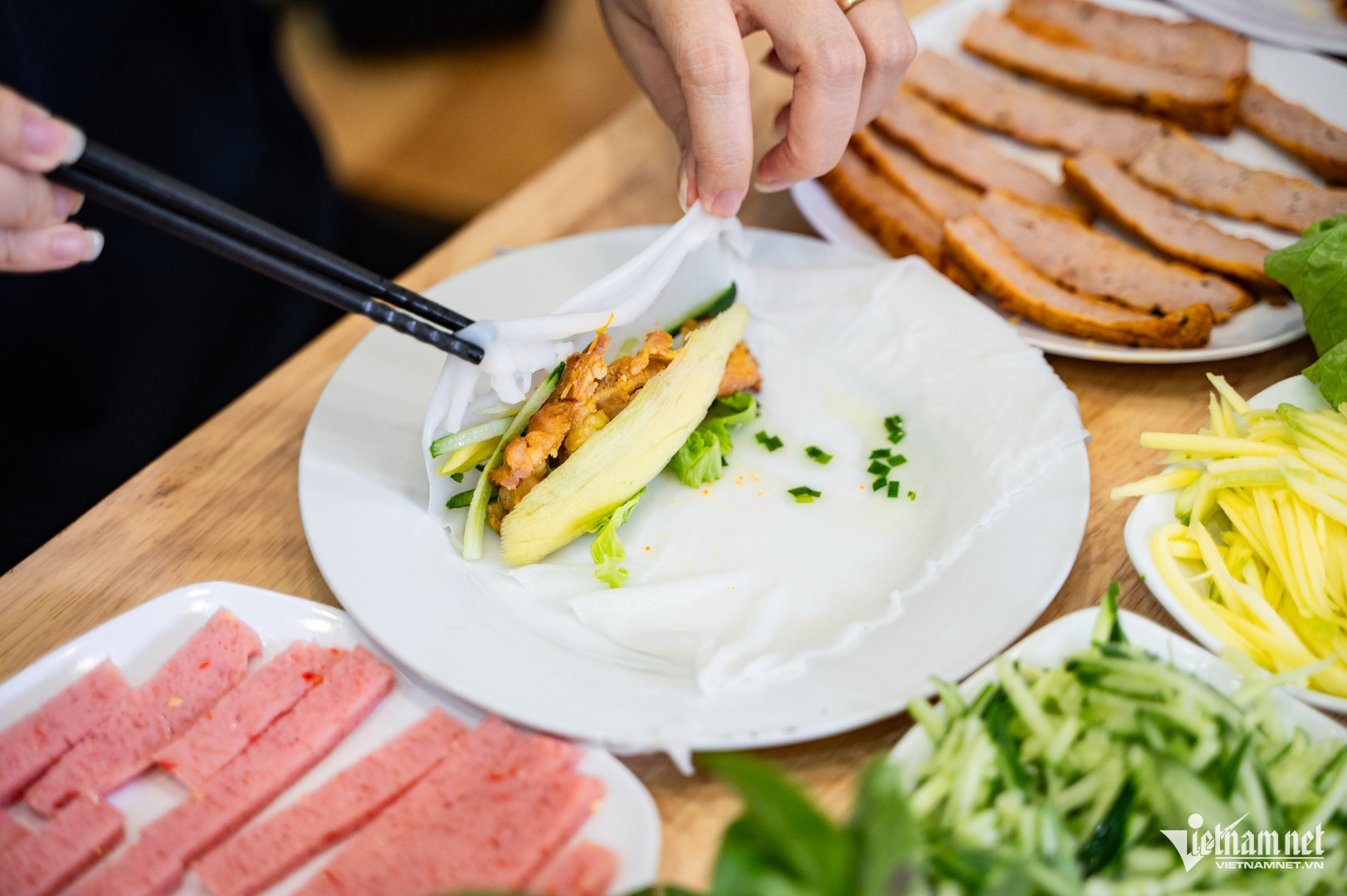
The dish is incomplete without accompaniments like mango, cucumber, lettuce, pineapple, coriander, and basil. Interestingly, this eatery does not serve pickled vegetables-a staple in traditional banh uot from Buon Ma Thuot.
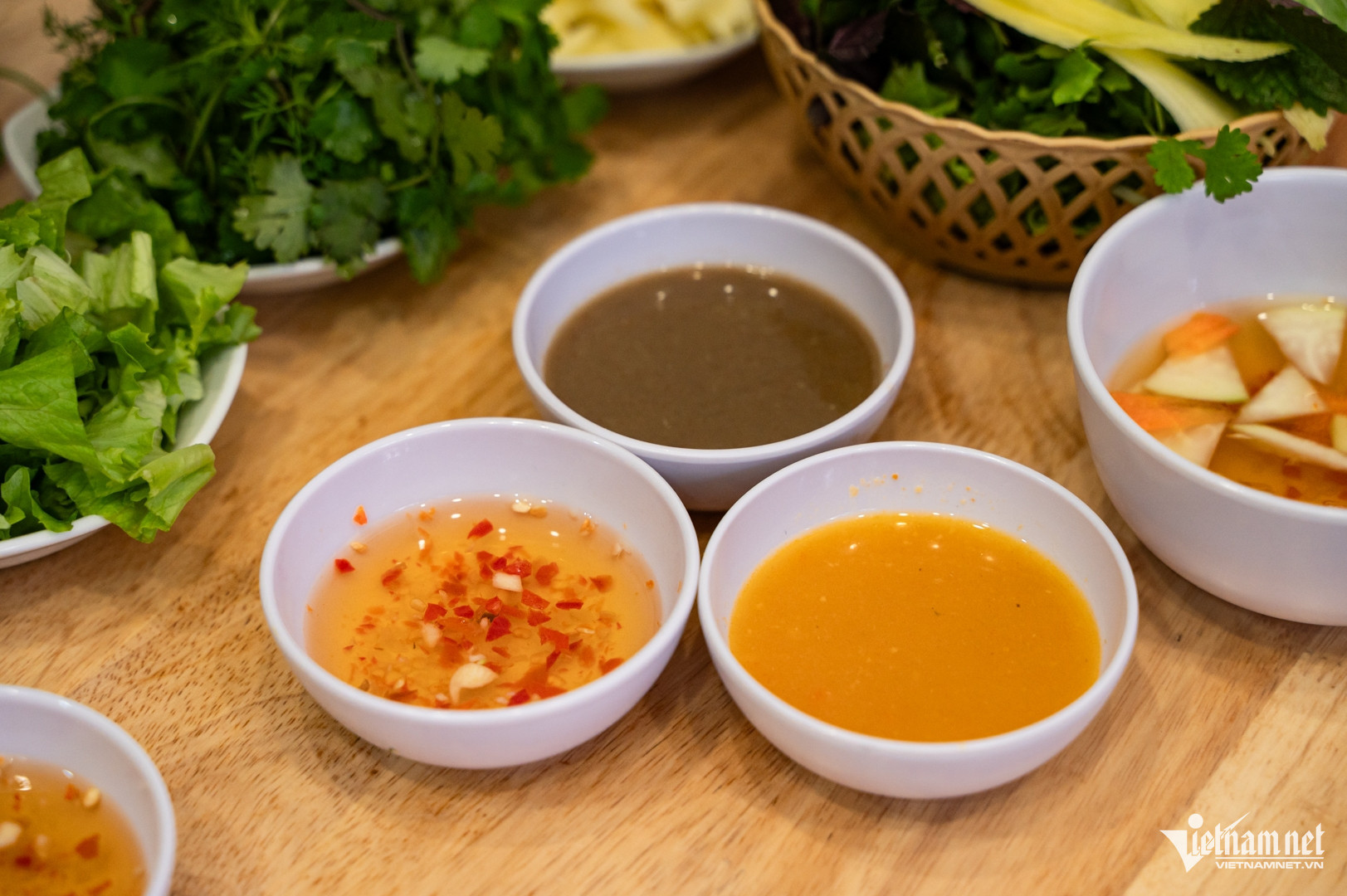
At the table, diners pick their preferred toppings, place them on the rice sheet, and gently roll them up before dipping them in one of four types of sauces.
While banh uot Ban Me is usually served with a sweetened fish sauce, the owners adapted their recipe to suit northern palates, adding garlic and chili. They also offer a pork-based dipping sauce similar to the one used for Nha Trang’s grilled sausage, as well as fermented anchovy sauce (mam nem).
Soft and warm, the rice sheet melts in the mouth, complemented by savory toppings, aromatic scallion oil, umami-rich shrimp powder, and fresh vegetables. It’s a well-balanced mix that customers say they can’t get enough of.
Most diners eat 10 to 15 plates per meal. “One guest once devoured 39 plates,” said the owner.
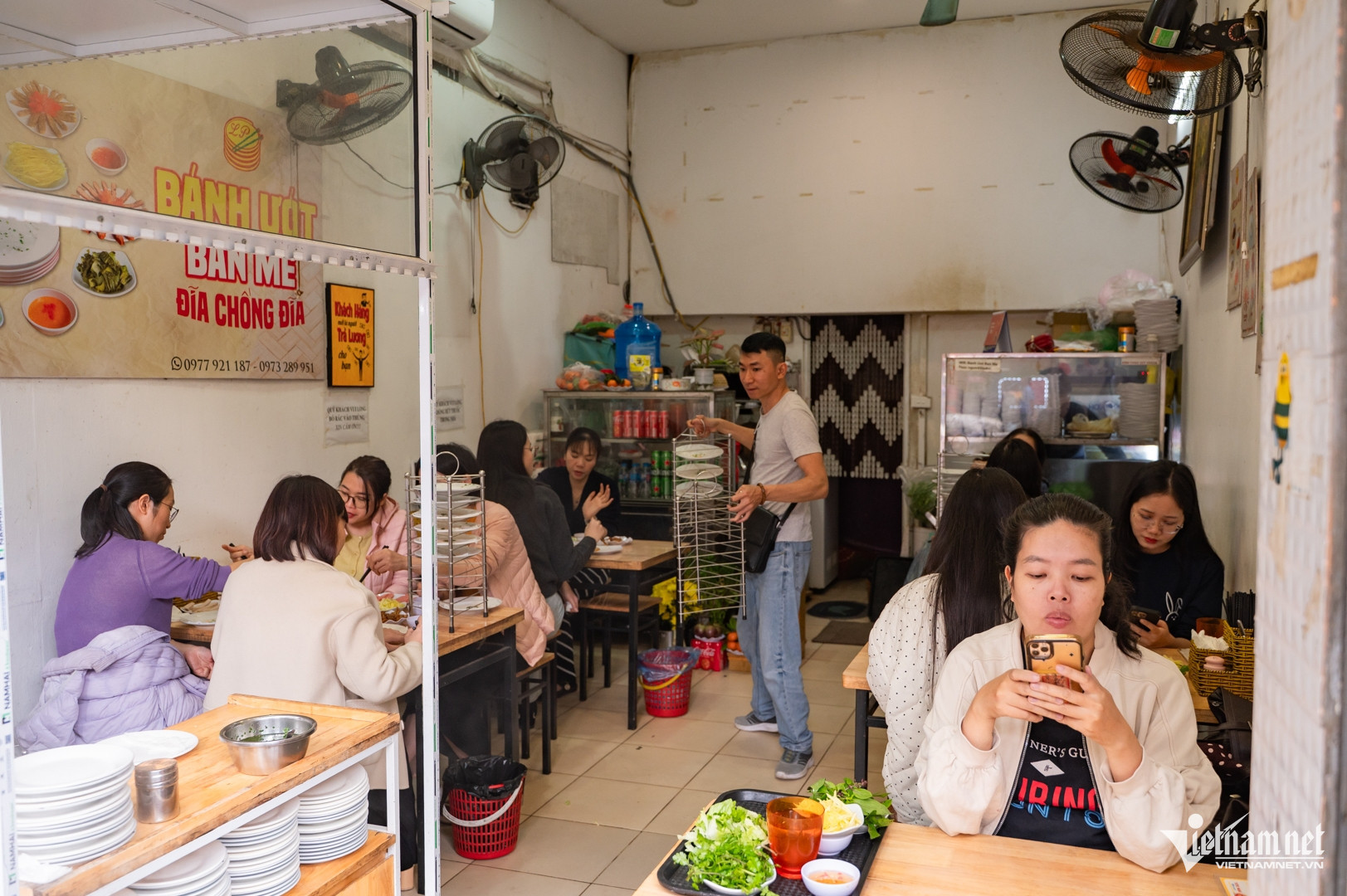
Some say this might be the most dish-intensive food in Vietnam. After a meal, stacks of empty plates pile up-sometimes as tall as a person. That’s why the dish is nicknamed banh uot chong dia-literally, “stacked-plate rice rolls.”
“We prepare about 1,000 plates daily to keep up with demand,” the owner said.
Each tray holds ten plates. As customers near the end of their tray, the kitchen steams fresh batches to ensure every bite is served hot.
Nguyen Oanh, originally from Da Nang and now living in Hanoi, discovered the eatery online. Having tried the dish in Ho Chi Minh City and Da Nang, this was her first experience in the capital.
“The rice sheets are thin and chewy, the toppings are great-especially the grilled pork. My favorite is the sweet fish sauce in Ban Me style. The fermented sauce also tastes authentically Central. I could eat 10 to 12 plates easily,” Oanh shared.
Each rice sheet costs 2,500 VND (about $0.10). Customers pay based on how many they eat. Each topping portion is priced at 35,000 VND (about $1.40), and a plate of vegetables costs 5,000 VND (about $0.20).
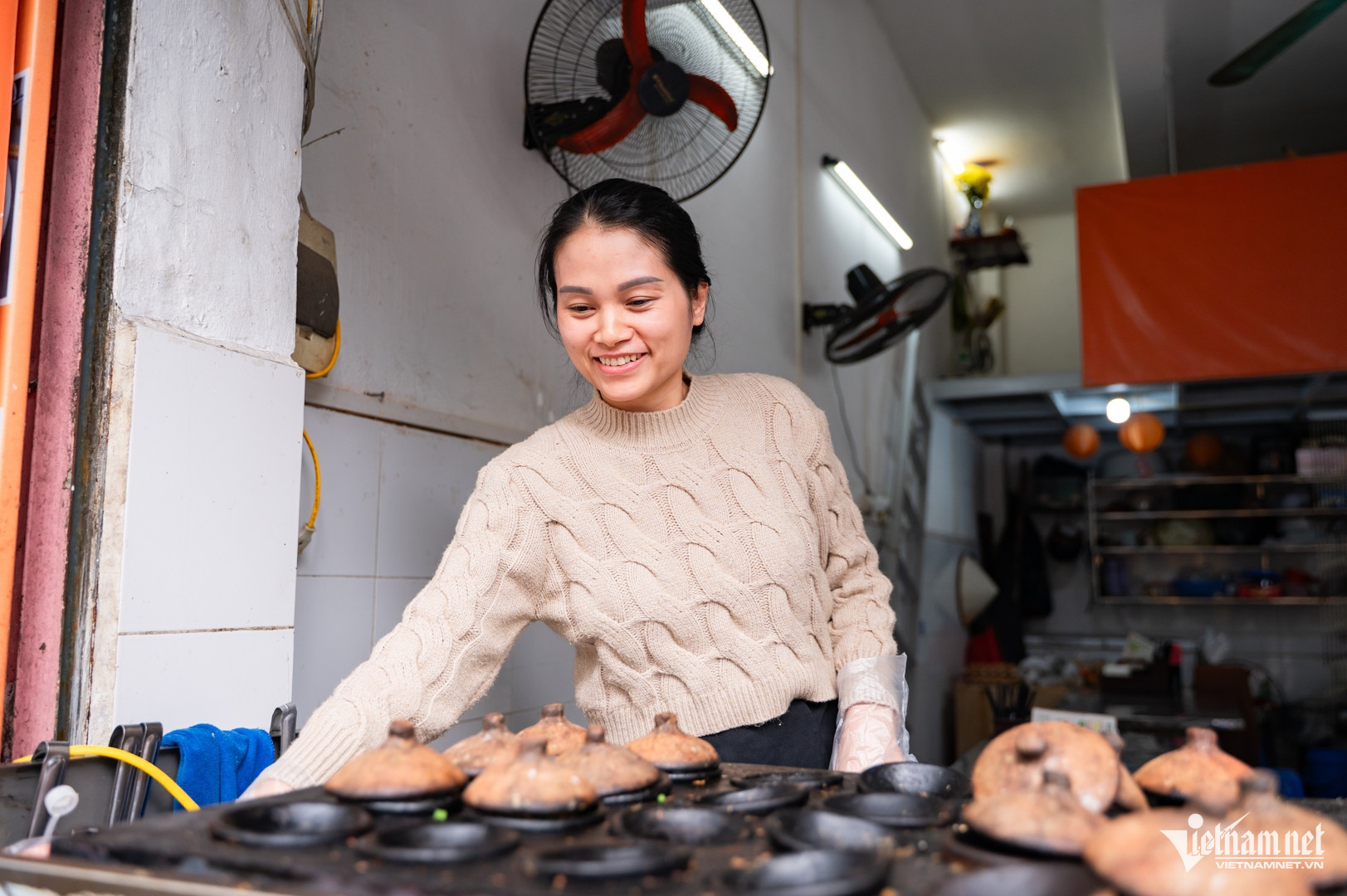
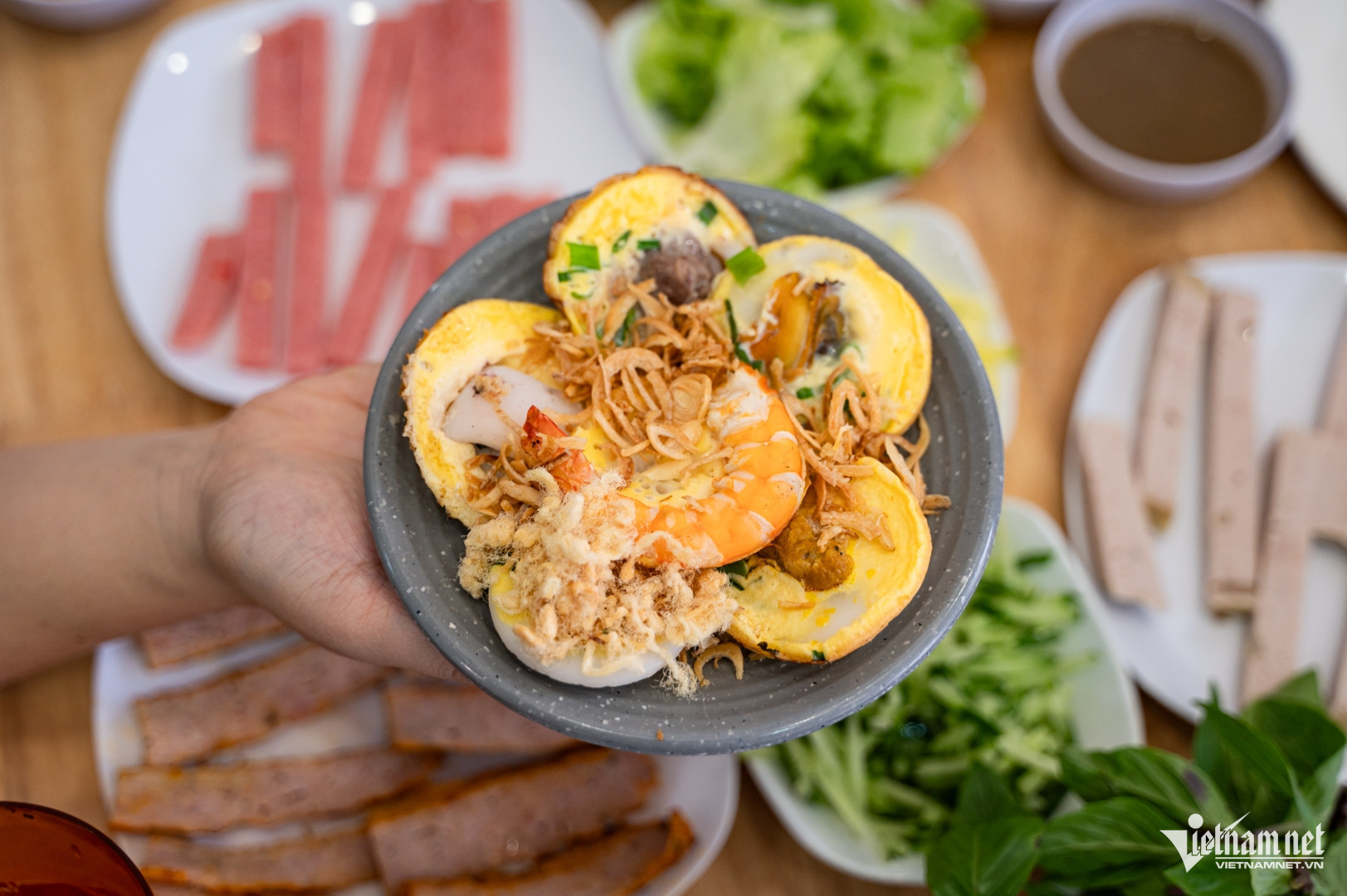
Recently, the owners introduced another southern specialty: banh can, a mini pancake from Phan Thiet. They use traditional clay molds brought from Phan Thiet to cook the pancakes.
Made with diluted rice batter, banh can differs from banh khot as it’s cooked without oil. This gives it a thin, lightly crispy shell and the signature aroma of baked rice.
“We add leftover rice to the batter so it stays firm while blending and doesn’t burn during cooking-even without oil,” Lan explained.
Fillings include shrimp, squid, scallops, beef, or homemade meatballs. They’re served with garlic-chili fish sauce and fresh herbs.
A mixed plate of six pancakes costs 65,000 VND (about $2.60), due to the use of fresh seafood and homemade fillings.
The restaurant operates from 11 a.m. to 2 p.m. and 5 p.m. to 9 p.m. daily, peaking between noon and 1 p.m. and during weekend evenings. Despite a seating capacity of 60, customers often queue during peak hours.
Online reviews generally praise the eatery for offering a unique flavor in Hanoi’s food scene, though some say it doesn’t quite match the bold tastes of similar dishes in the central or southern regions. A few customers found the sauces underwhelming, lacking a standout flavor.
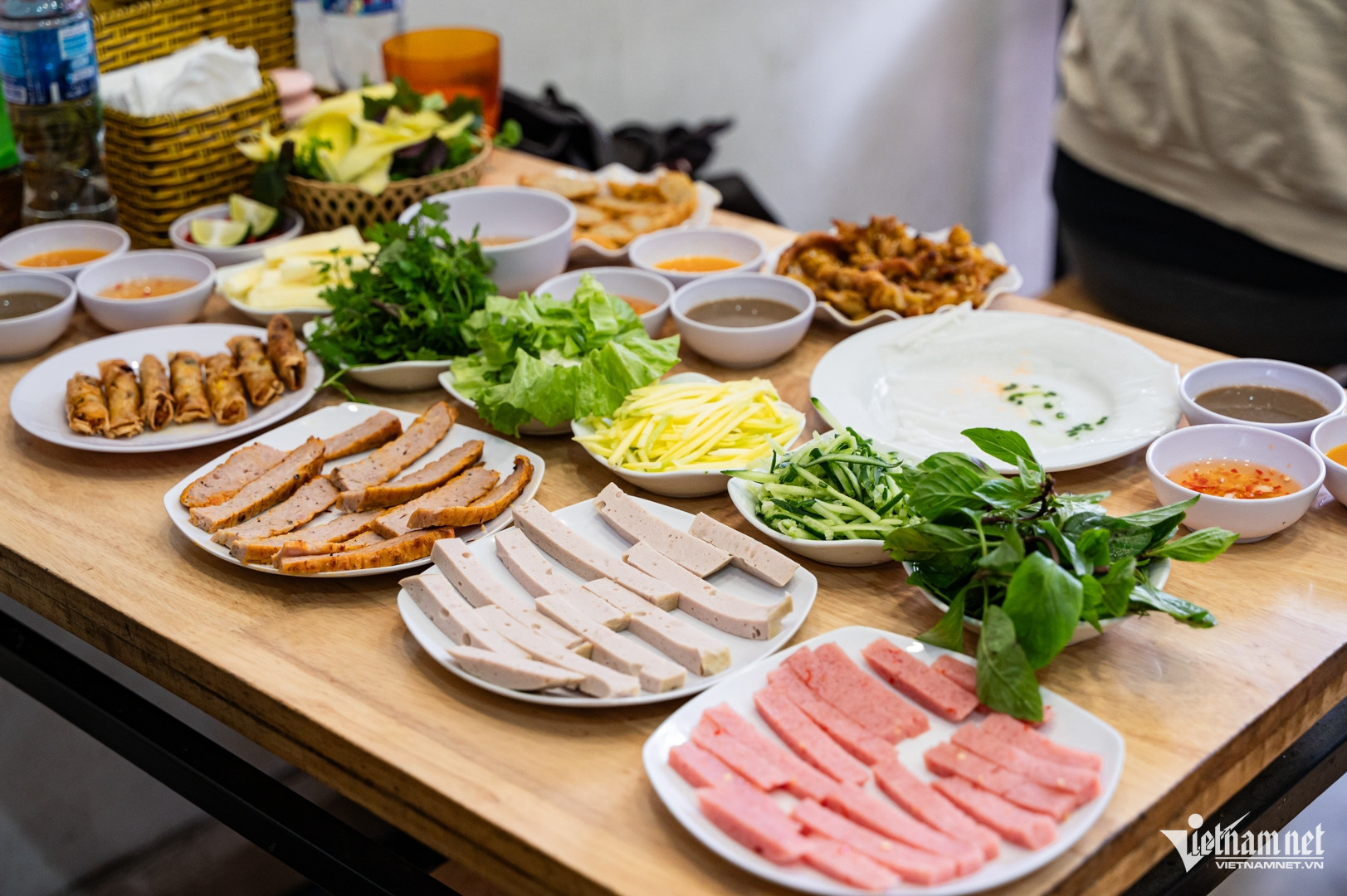
Photo: Huy Nguyen
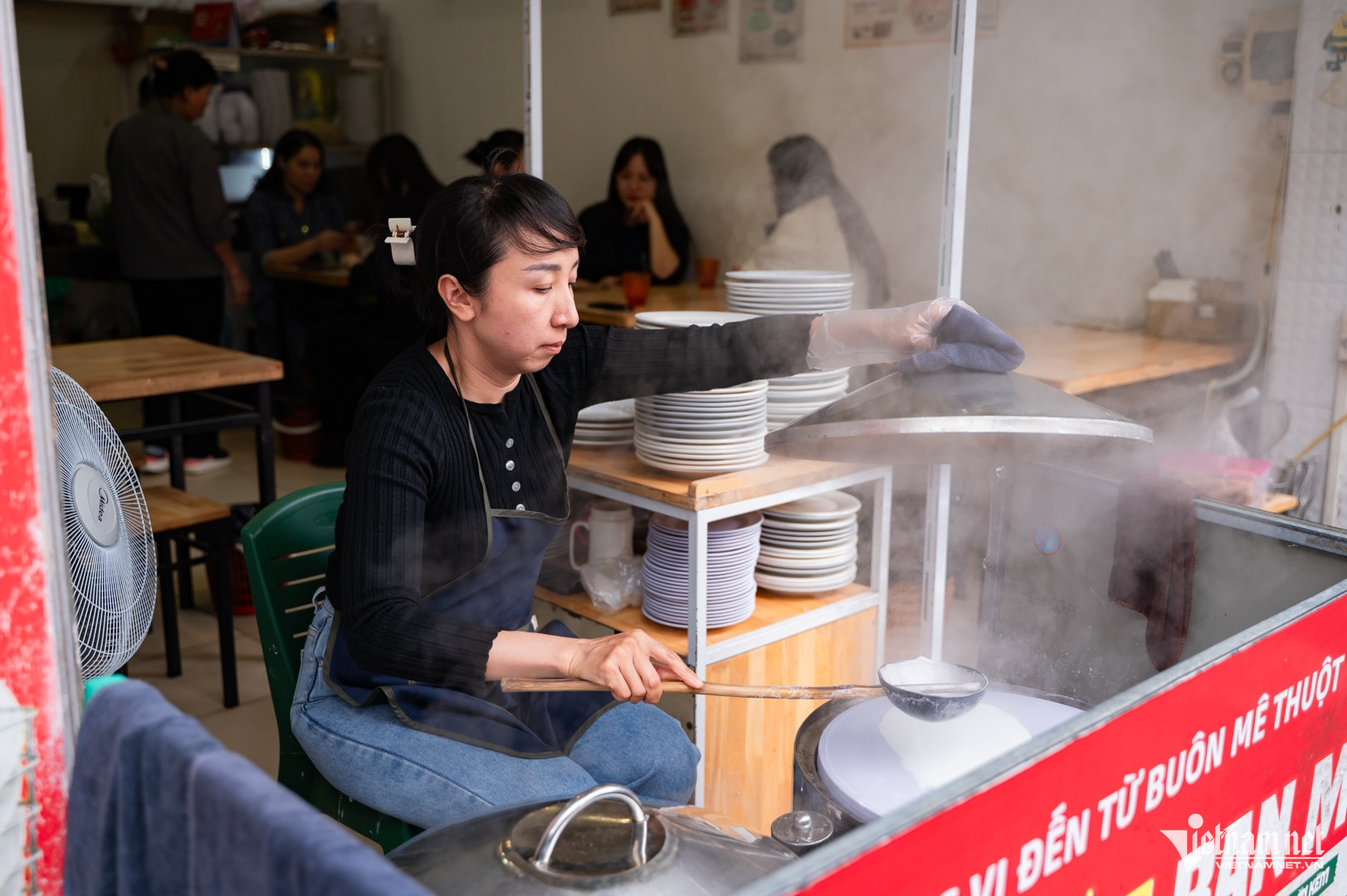
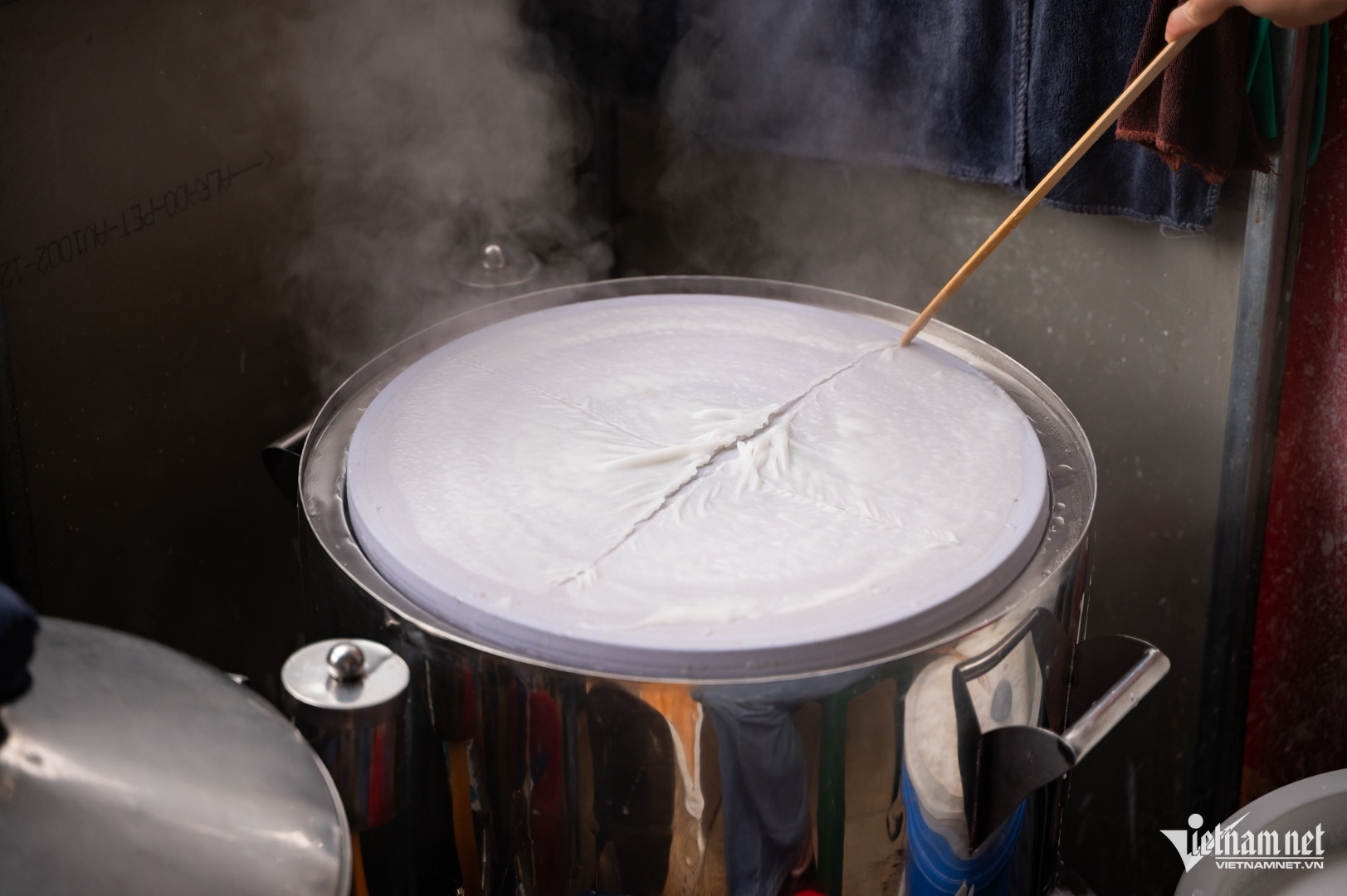
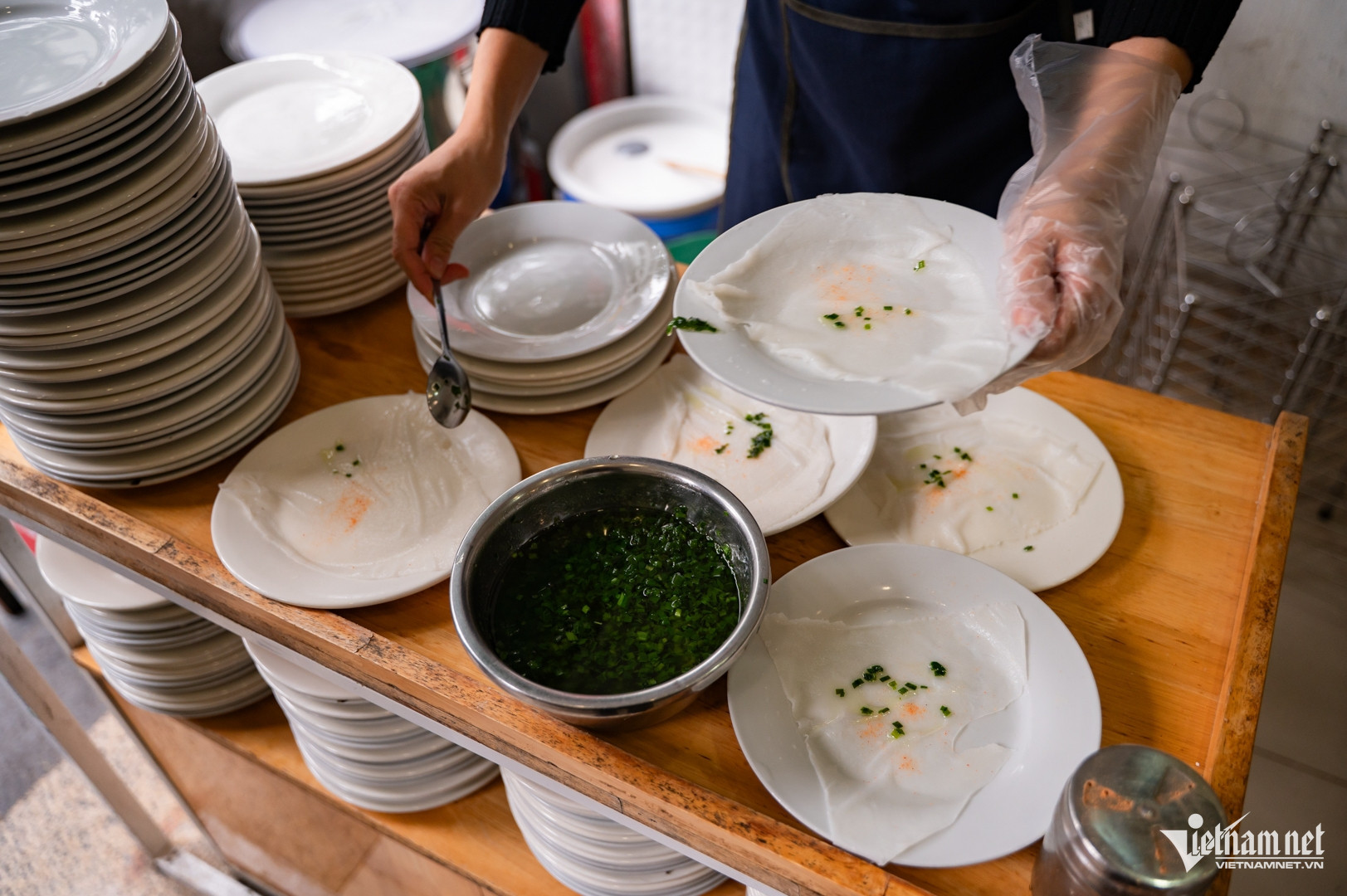
Photo: Huy Nguyen
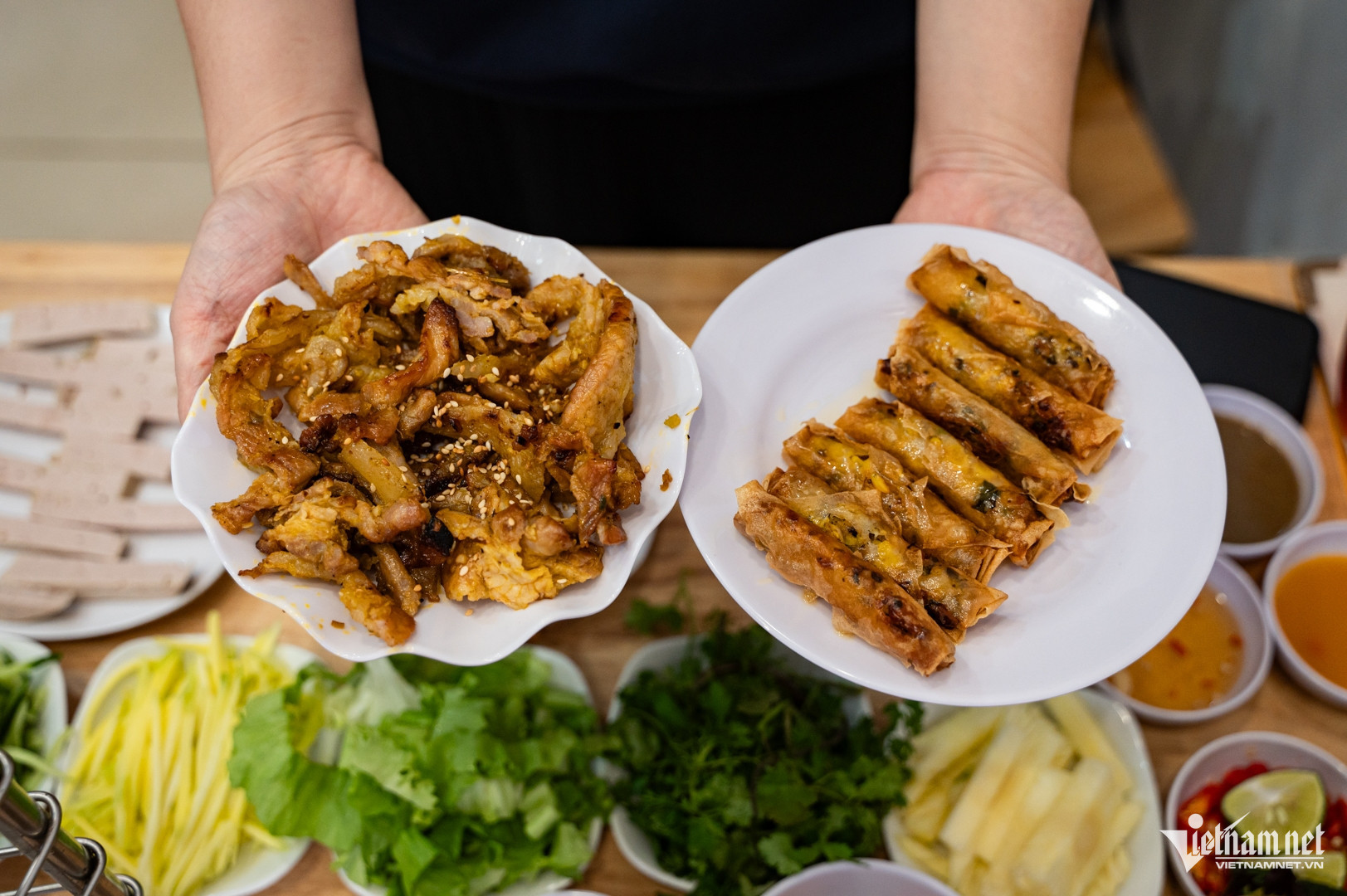
Photo: Huy Nguyen
Linh Trang
.svg)
