One of Vietnam's oldest craft villages is drawing a new generation of travelers eager to experience its 400-year-old folk painting tradition.
Just 30km from Hanoi, Dong Ho Painting Village sits on the southern bank of the Duong River in Thuan Thanh Ward, Bac Ninh Province (formerly Song Ho Ward, Thuan Thanh Town). It is one of the oldest traditional craft villages in the historic Kinh Bac region.
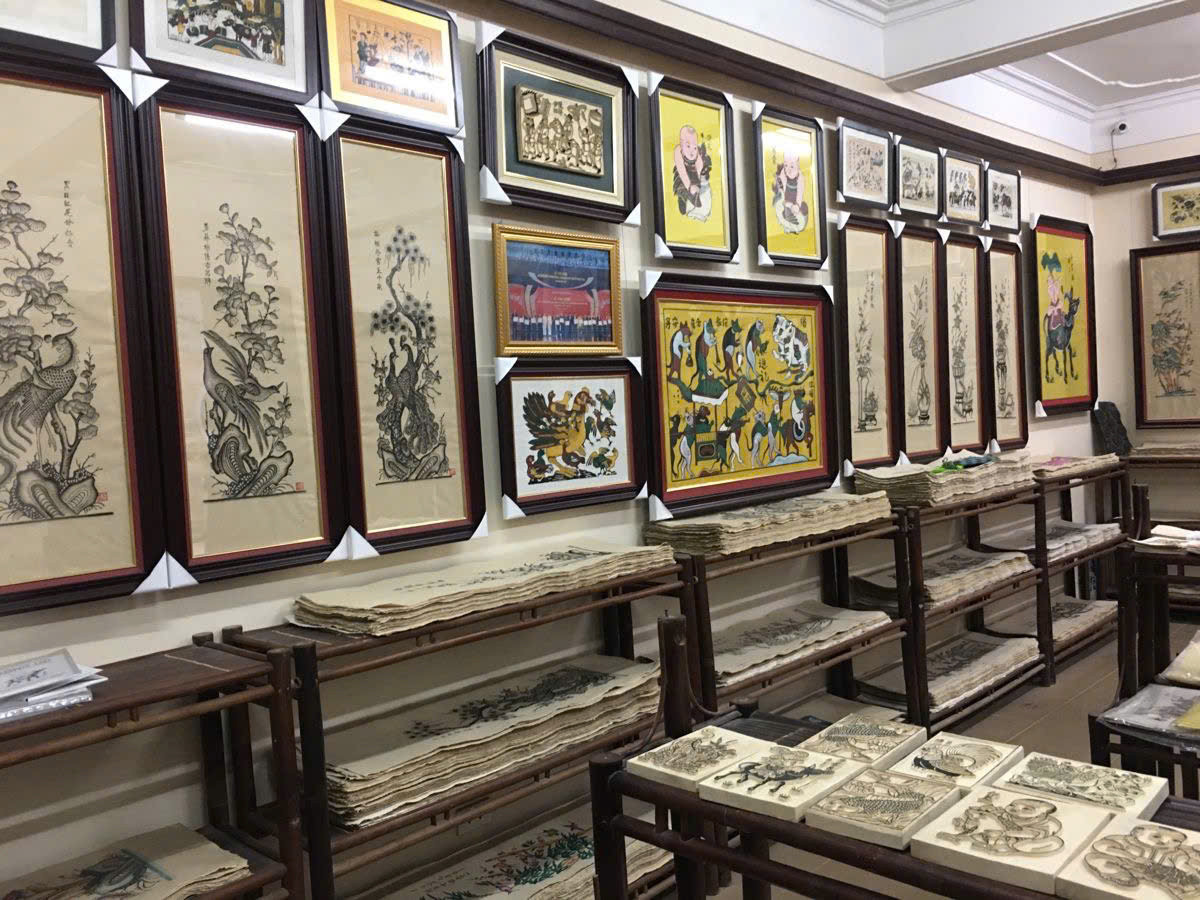
According to the Bac Ninh Department of Culture, Sports and Tourism, Dong Ho folk paintings have a history spanning more than 400 years and continue to be preserved in this riverside village.
In recent years, the village has become a popular weekend destination for young travelers from nearby cities such as Hanoi and Hai Phong, thanks to its distinctive atmosphere and immersive cultural experiences.
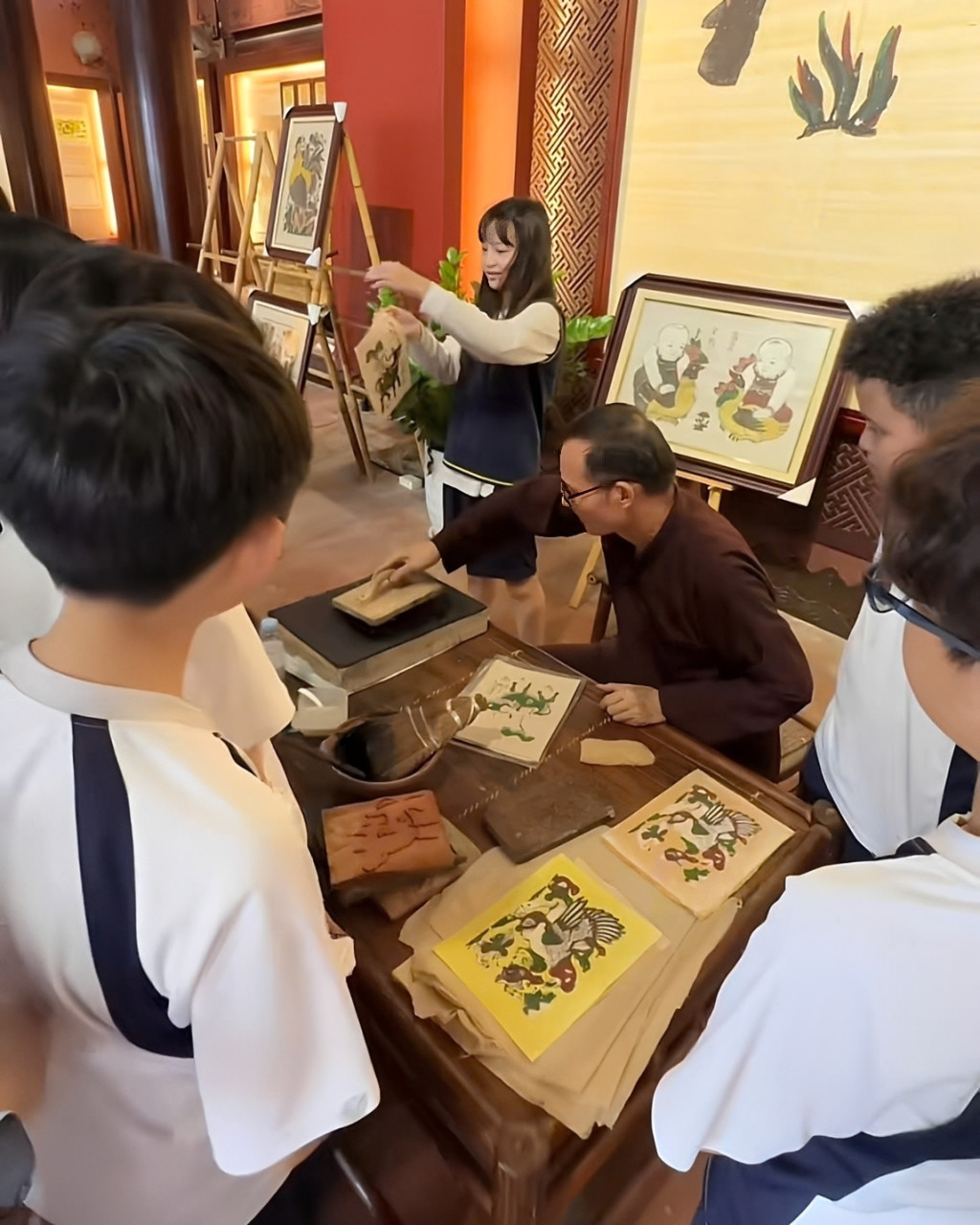
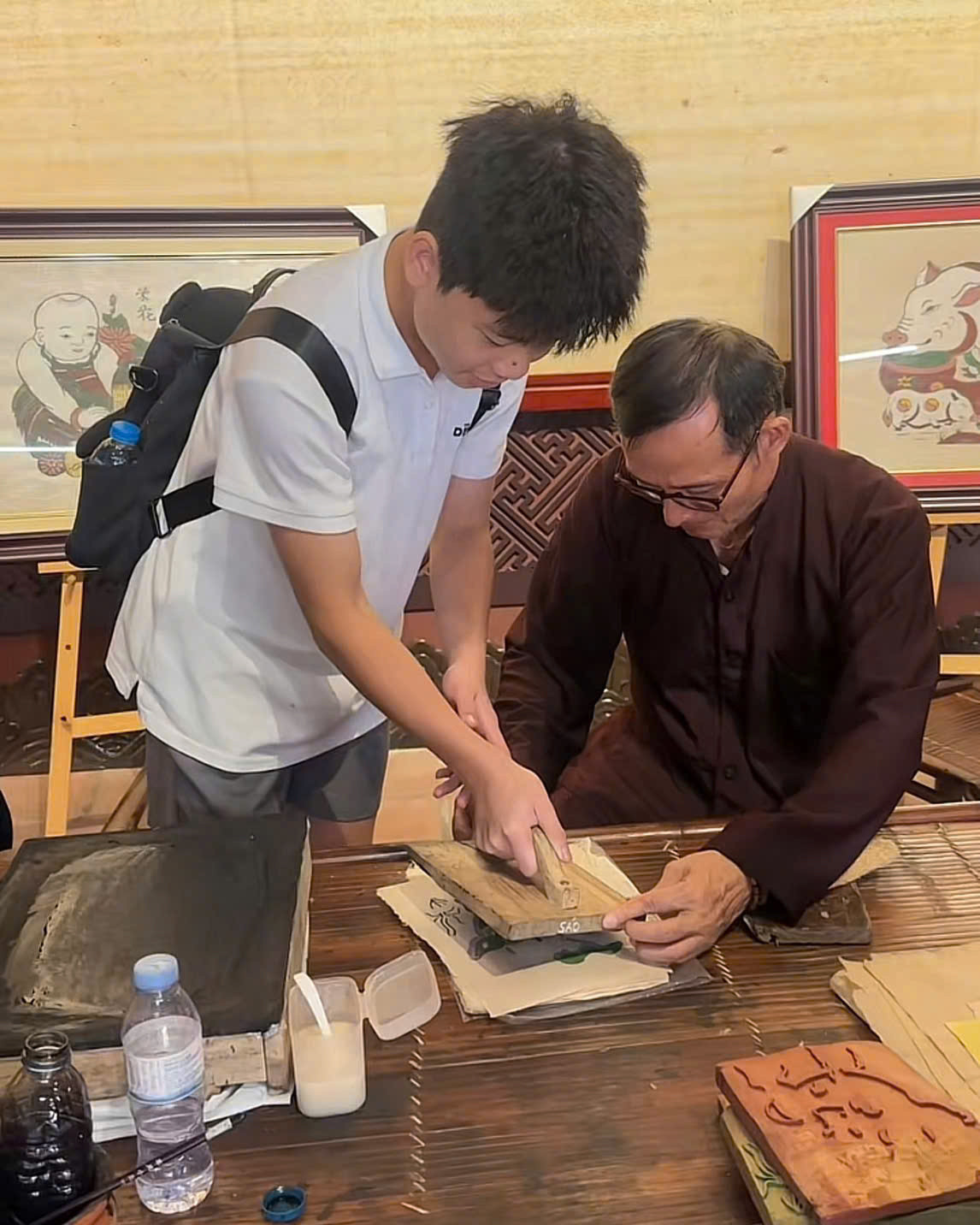
In addition to chatting with local artisans and learning the stories behind each traditional folk painting, visitors can watch the centuries-old handcrafted printing process firsthand.
Dong Ho Painting Village has become a popular cultural destination near Hanoi, attracting young travelers eager to experience Vietnam's traditional crafts.
One of the village's best-known stops is the home of Meritorious Artisan Nguyen Dang Che, where many visitors begin their journey into the world of Dong Ho paintings.
In the courtyard, sheets of do paper coated with shimmering crushed shell powder dry under the sun, while the aroma of freshly cooked sticky rice glue blends with the distinctive scent of finely ground shell powder used to create the paintings' signature background.
According to local artisans, this specially treated do paper is the "treasure" that has defined Dong Ho paintings for more than four centuries.
Made from the bark of the do tree, the paper is exceptionally durable, retains color well, and allows the artwork to be preserved for many years without damage from insects or termites.
The paintings' colors are also made entirely from natural materials.
Black comes from burnt bamboo leaves, blue from indigo leaves, yellow from pagoda flower blossoms, and red from naturally occurring minerals.
These earthy pigments give Dong Ho folk paintings their unmistakable character and timeless appeal.
Alongside guided tours, many families now host hands-on workshops where visitors can print their own paintings on traditional do paper.
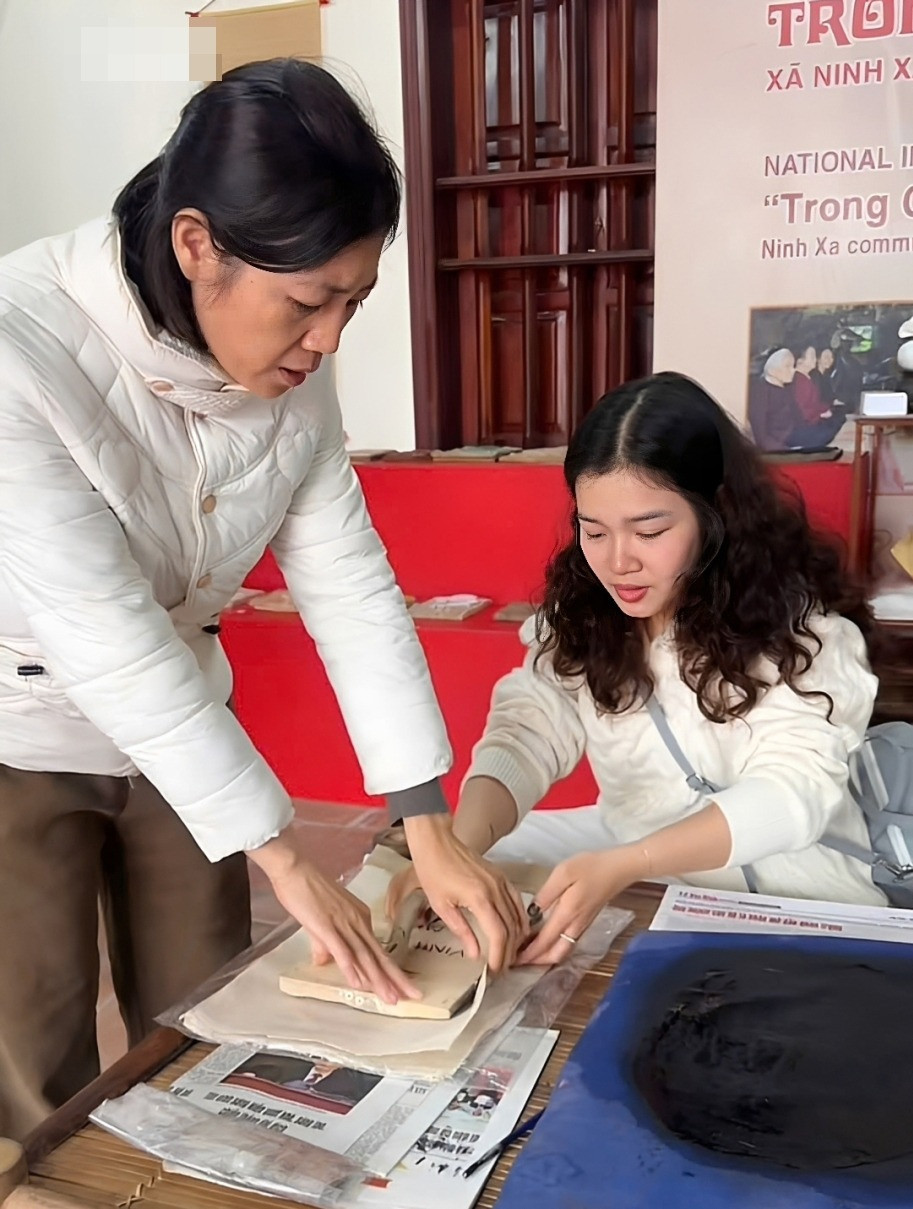
Under the guidance of artisans, participants brush natural pigments onto carved wooden printing blocks before carefully pressing them onto the paper.
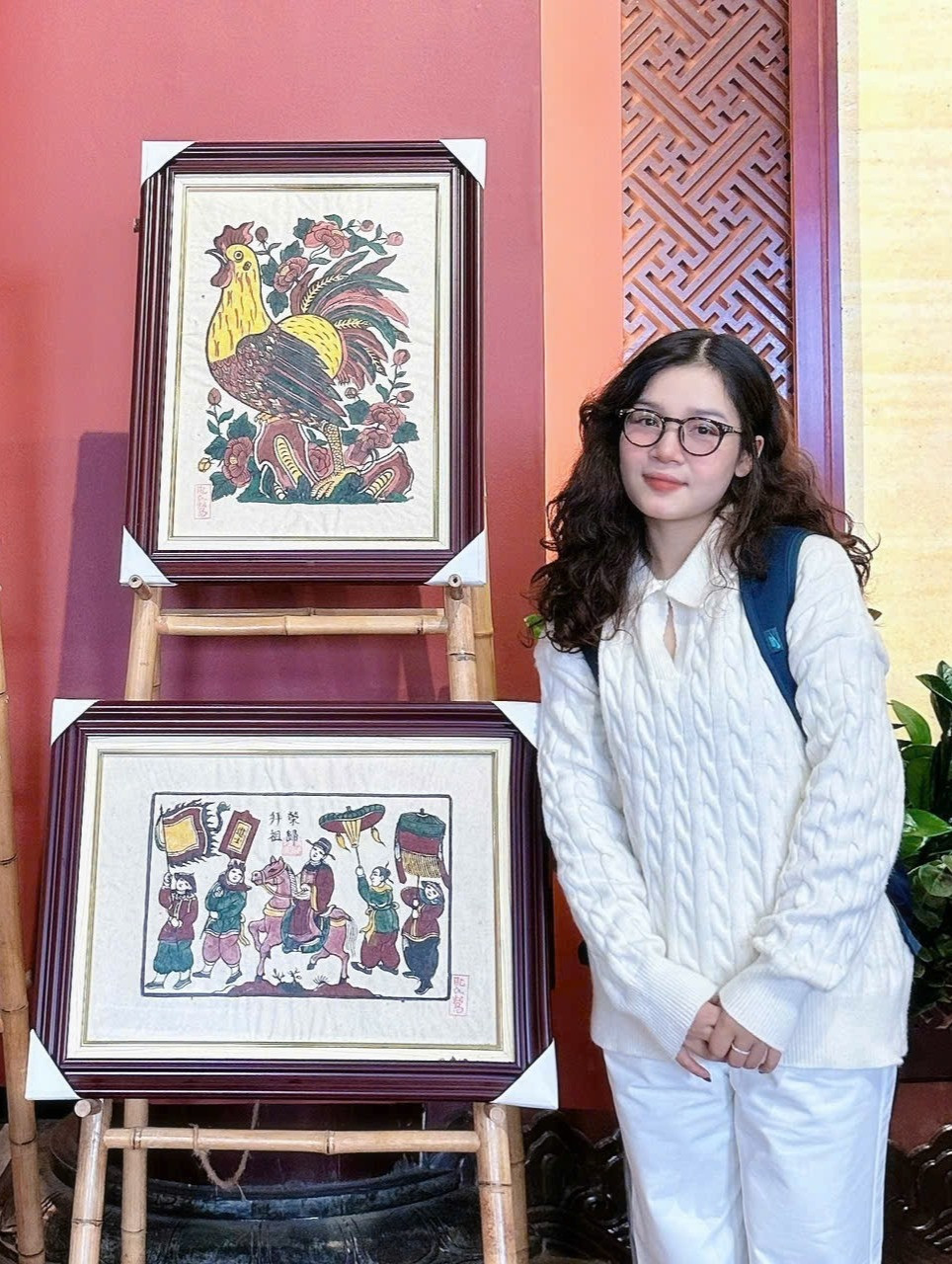
The satisfying thump of the woodblock meeting the paper is often the highlight of the experience. After just a few simple steps, iconic images such as "Prosperous Rooster" and "The Rat's Wedding" gradually appear on the page.
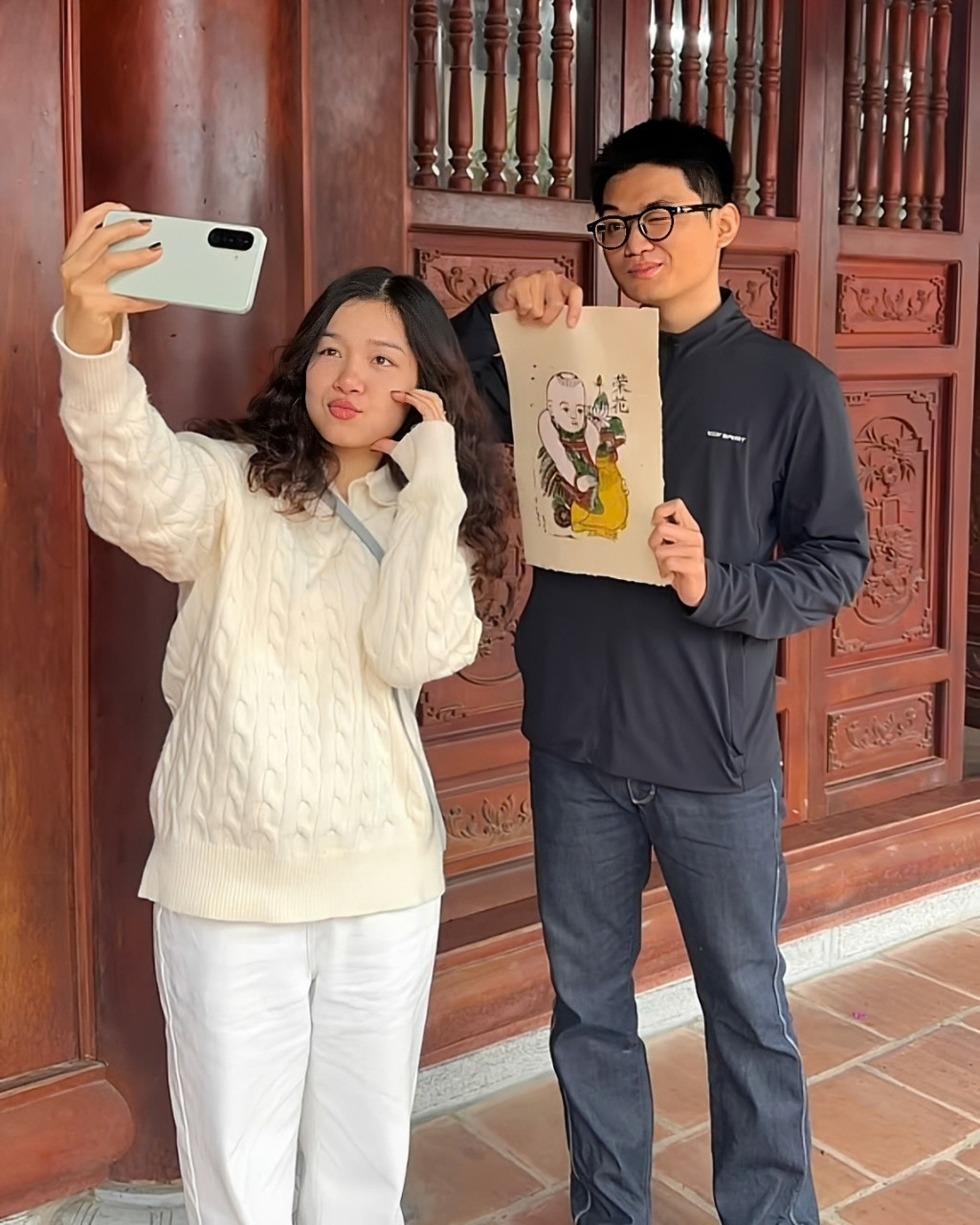
Local artisans introduce visitors to the traditional techniques of Dong Ho woodblock printing.Nhung (left, in white) and a friend pose with the folk print they created during the workshop. Photos: @Nhungthichdi
Nhung, a 23-year-old visitor from Hanoi, said creating her first Dong Ho print was an unforgettable experience.
"When I lifted the woodblock and saw the image appear on the do paper, it felt as though I was touching a piece of Kinh Bac's long history. My first print wasn't perfect, but that handmade imperfection gave it even more character and meaning," she said.
For Nhung, the most impressive aspect of the visit was the unique do paper and the entirely handcrafted production process.
"Do paper feels incredibly light and soft, yet it's remarkably strong and durable. The natural colors create a rustic beauty that's completely different from modern printing," she added.
She believes more young people are visiting traditional craft villages such as Dong Ho because they want to slow down and reconnect with Vietnam's cultural heritage amid the pace of modern life.
"It's not just a place to visit," she said. "It helps people better understand Vietnam's history, culture, and traditional values."
If she were recommending Dong Ho Painting Village to friends or international visitors, she said the first thing she would highlight is the authentic handmade craftsmanship that defines the village.
"Everything - from the do paper and natural pigments to the woodblock printing technique - reflects Vietnamese culture. Each painting is more than just an artwork; it tells stories about the daily life, customs, and traditions of generations of Vietnamese people," Nhung said.
 Vietnamnet.vn

 Podcast



.svg)
