 Vietnamnet.vn

 Podcast



Editor's note:
In Vietnam's northeastern border province of Quang Ninh, where rugged mountains rise above scattered villages, the Dao community remains an inseparable part of the region's social and economic development.
Their story is not told through grand events, but through the quiet rhythms of daily life: an embroidery frame outside a family home, a village meeting to discuss a new road, a border patrol alongside frontier guards, or a small livelihood built from local traditions.
Together, these seemingly ordinary moments reveal a larger truth: national unity is not simply a policy, but a lived experience - one built through cooperation among Vietnam's ethnic communities as they pursue development while safeguarding peace and stability.
This series, "The Dao People of Quang Ninh – Unity and Strength from Mountain Villages," explores how the Dao community is preserving its cultural identity while actively contributing to the province's development.
Preserving tradition in the mountains
On a summer morning in Quang La Commune, women from the Dao Thanh Y community sit patiently beside embroidery frames.
Against indigo fabric, delicate threads of red, yellow and white gradually form intricate patterns that tell stories passed down through generations.
For them, traditional clothing is more than ceremonial attire. It is a living expression of cultural memory handed from mothers to daughters.
In Tan Dan 1 Village, Trieu Thi Tuyet has become a familiar figure among the Dao Thanh Phan community.
After nearly four decades devoted to traditional embroidery, she is regarded not only as a skilled artisan but also as a guardian of her people's cultural heritage.
Born into a family of embroiderers, Tuyet learned her first stitches from her mother and grandmother at the age of 12.
Each vibrant textile she creates represents more than craftsmanship - it preserves generations of collective memory.
The traditional attire of Dao Thanh Phan women includes a jacket, trousers, headscarf and jewelry, with the embroidered jacket being the most elaborate component.
Five principal colors - red, blue, white, yellow and black - are used, with red symbolizing good fortune and happiness.
Completing a single outfit can take several months, or even years.
Despite life's challenges, Tuyet continues to embroider every day.
Long after the rest of her family has gone to sleep, she often remains at her work under the light of a lamp, carefully completing each stitch.
For her, preserving embroidery means preserving her people's roots.
Beyond practicing the craft herself, Tuyet is equally committed to passing it on.
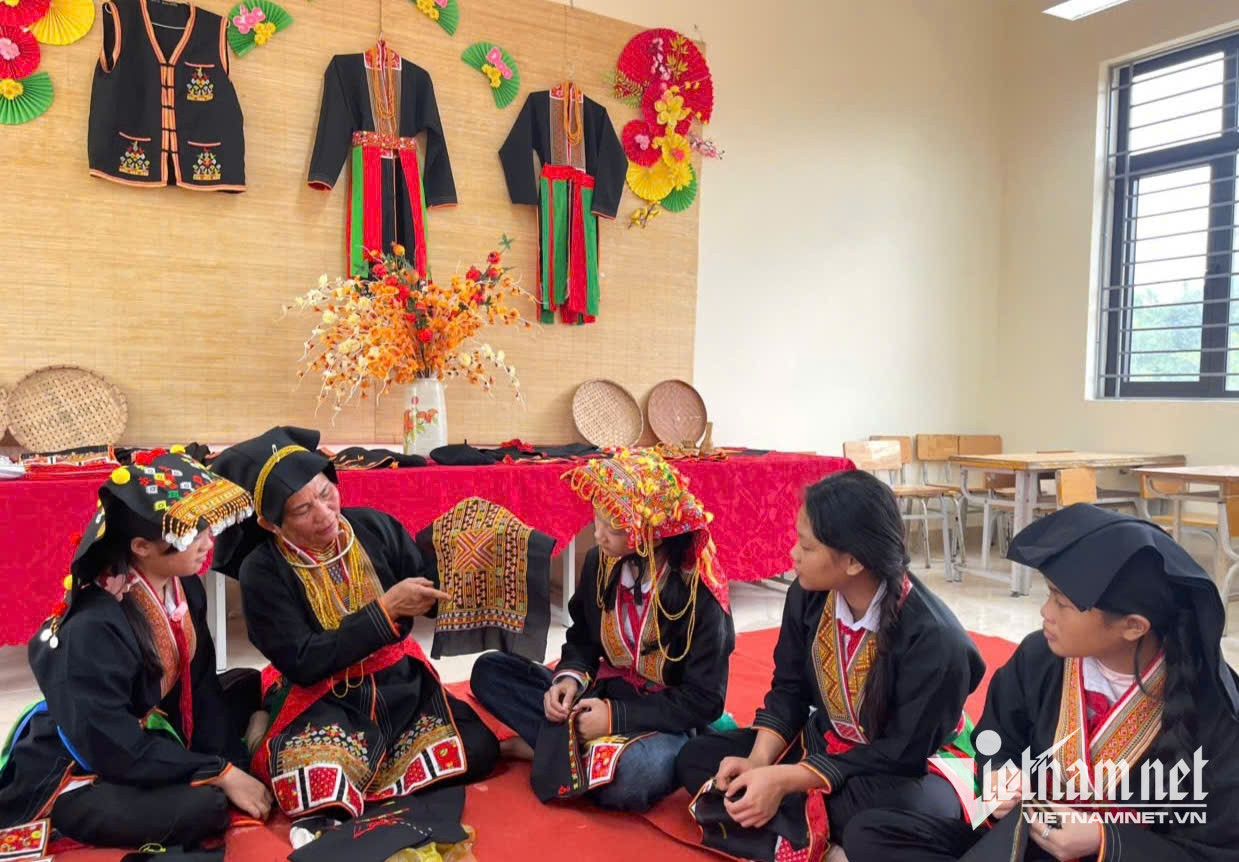
At the Dao Thanh Phan Cultural Preservation Club in Quang La Commune, she teaches women and schoolchildren everything from basic stitching techniques to the symbolism embedded in traditional motifs.
The classes regularly attract enthusiastic participants.
For many children, they are more than lessons in handicrafts - they are a first step toward understanding their own cultural identity.
Each stitch not only preserves Dao embroidery but also quietly extends traditions that have endured for generations.
Today, that same spirit of preservation and shared responsibility is reflected in the way villagers work together to build roads, donate land, discuss community affairs and improve life in their mountain settlements.
Unity through everyday actions
If culture connects the past with the present, community solidarity provides the foundation for the future.
Across localities including Ba Che, Ky Thuong and Hoanh Mo, residents have become accustomed to working together to build roads, contribute land and participate in rural development programs.
Village meetings serve not only as forums for discussing economic development but also as opportunities to reach consensus on issues affecting the wider community.
According to Tang Dau Tinh, a respected community leader in Phai Lau Village, Hoanh Mo Commune, cooperation has long been part of everyday life among local ethnic communities.
"When new policies are introduced, people discuss them together and work together," he said. "When difficult issues arise, respected community members help build consensus."
That spirit is reflected in campaigns promoting cultural life, environmental protection, economic development and public security.
Many members of the Dao community have become influential grassroots leaders, helping bring Party policies and government programs closer to local residents.
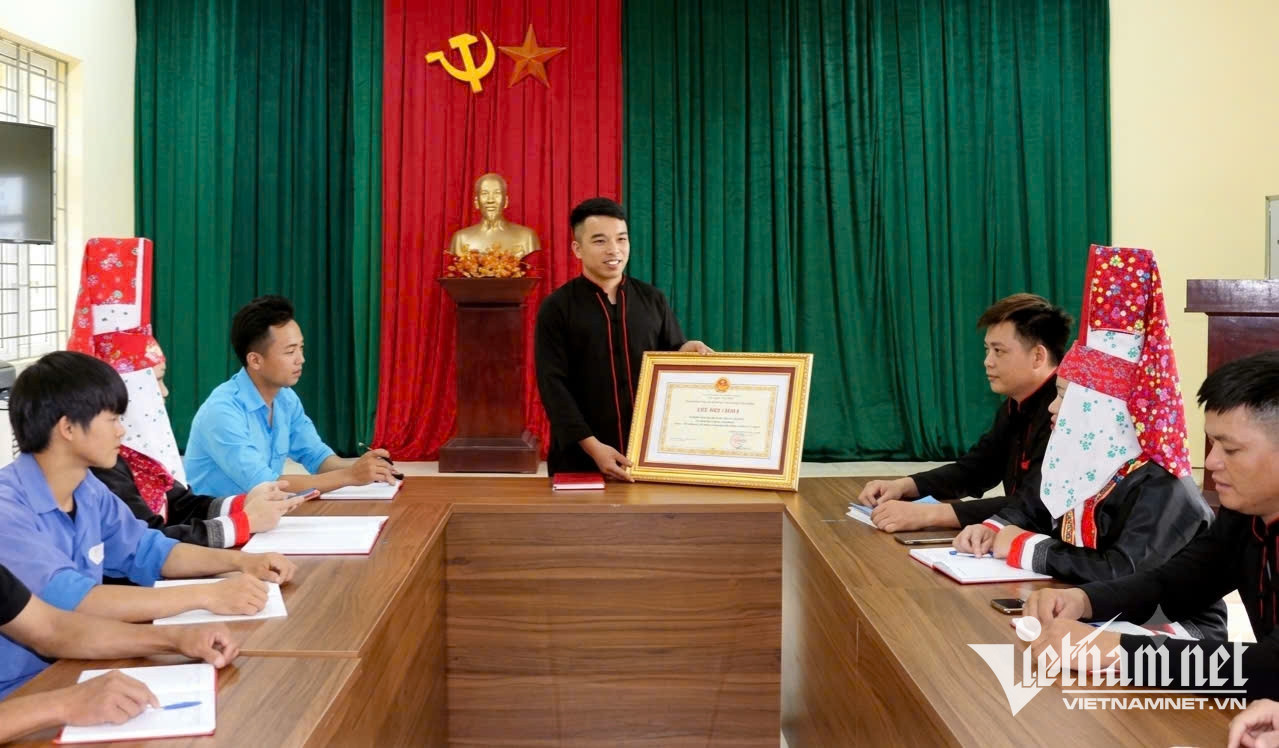
According to the Quang Ninh provincial government, the province is home to 43 ethnic groups, including the Kinh majority and 42 ethnic minority communities.
The Dao are the largest ethnic minority group in Quang Ninh, accounting for 45.3% of the province's ethnic minority population.
The community consists mainly of the Dao Thanh Y and Dao Thanh Phan subgroups, who live in concentrated villages across several localities.
From village heads and Party cell secretaries to women's union members and youth volunteers, local residents all contribute to maintaining community cohesion.
That shared commitment has become a key driver of sustainable development in ethnic minority areas.
In Ky Thuong Commune, where nearly 98% of residents belong to ethnic minority groups - predominantly Dao- community solidarity has become central to local socio-economic development.
According to Khieu Anh Tu, Chairman of the Ky Thuong Commune People's Committee, many public infrastructure projects have progressed smoothly because residents have willingly contributed land and labor after reaching consensus.
"When people agree, rural development programs become much more effective," he said.
A living expression of national unity
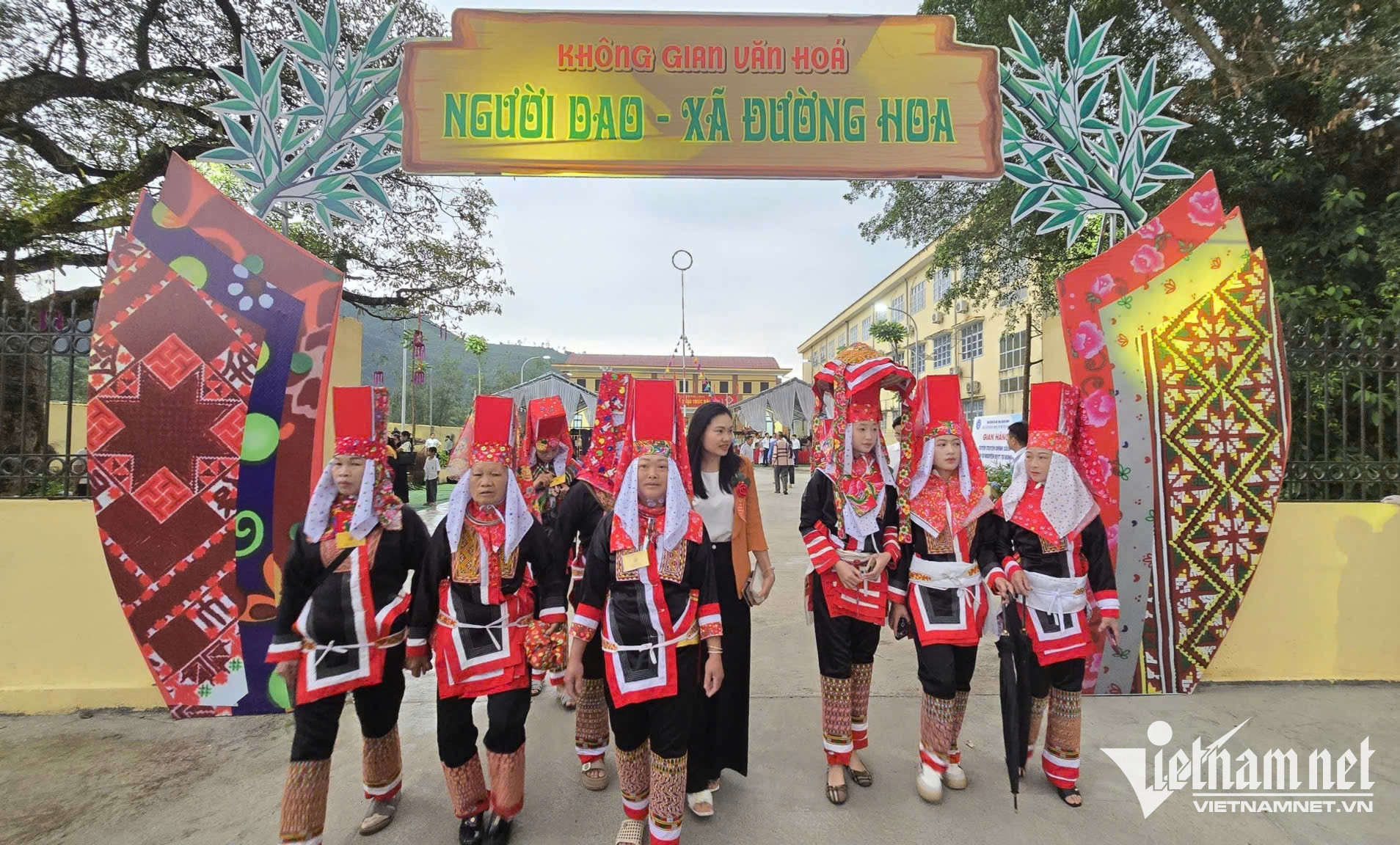
The Dao community is not only one of Quang Ninh's principal custodians of traditional culture but also its largest ethnic minority group, numbering more than 73,000 people.
They account for 5.57% of the province's total population and 45.3% of its ethnic minority population.
According to Dr. Tran Quoc Hung of the Vietnam Academy for Ethnic Minorities, the Dao community has made significant economic progress in recent years through successful agricultural initiatives and community tourism models.
He believes the Dao have become important contributors not only to preserving traditional culture but also to strengthening Vietnam's broader national solidarity while helping maintain political stability and social order in border areas.
The embroidery frames in Quang La, the village meetings in Hoanh Mo and the collective efforts to build new rural communities in Ky Thuong are no longer isolated stories.
Together, they illustrate how unity is nurtured in Quang Ninh's mountain villages - one conversation, one stitch and one shared project at a time.
As the province continues to develop, the Dao community is demonstrating that preserving cultural identity and building social cohesion are complementary goals that can support long-term, sustainable development.
My Dung
.svg)
