 Vietnamnet.vn

 Podcast


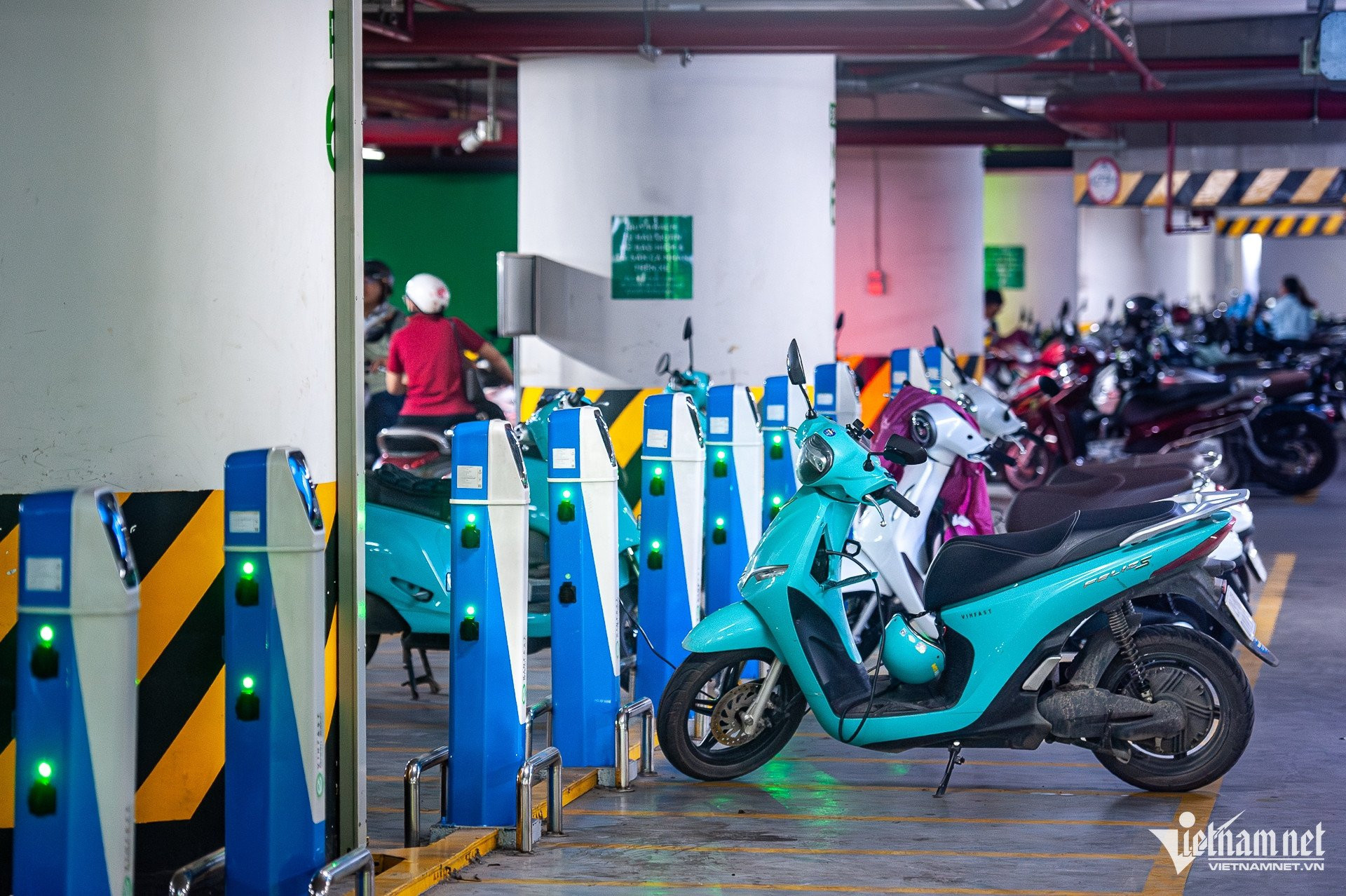
According to the Hanoi Department of Construction, the city has 2,313 charging station locations, 10,209 charging ports and 1,650 battery-swapping cabinets. However, citywide figures do not fully reflect how easily residents can access charging infrastructure where they live.
In existing apartment buildings, limited basement space, building design and electrical systems can make it difficult to install additional charging facilities. Implementation plans also involve shared property, residents' interests, and the responsibilities of building management boards and property management operators.
Pham Xuan Diep, head of the management board at Skyline in the Van Quan urban area of Ha Dong, said existing infrastructure was under growing pressure as the number of electric vehicles increased rapidly, while the building had not been designed with demand for these vehicles in mind.
Citing figures from the building under his management, Diep said the number of electric motorbikes had risen from around 30 at the end of 2024 to more than 100 today. The number of vehicles has more than tripled in two years, increasing demand for parking and charging space.
The existing area and infrastructure are difficult to expand, creating conflicts over management and use.
“Even allocating a separate area for electric vehicles to keep them apart from other vehicles is already a difficult problem. Meanwhile, plans for installing charging points have also encountered numerous problems,” Diep said.
He said that before new guidance was issued, the building management board had to move its electric vehicle charging area from the basement to ground level. However, the new location has no roof, and monitoring electricity consumption and controlling access remain difficult. Electric motorbikes belonging to residents have also frequently gone missing while charging, highlighting the need to consider security and safety alongside infrastructure development.
So, the challenges are not limited to charging stations. More importantly, they concerned static transport infrastructure, particularly the amount of parking space available in apartment complexes.
How can the bottlenecks be removed?
Hoang Duong Tung, chair of the Vietnam Clean Air Network, said environmental pollution, particularly construction dust and air pollution, remained a major problem in Hanoi. Vehicles running on fossil fuels, including gasoline-powered motorbikes, also contributed to PM2.5 fine particulate pollution.
Hanoi needs to implement a series of measures to promote green transport, including reducing private vehicle use and expanding public transport.
“Green transition is not simply a matter of replacing each gasoline-powered vehicle with an electric one. It should aim to change travel habits and encourage people to use public transport more frequently,” Tung said.
He added the city needed to improve access to charging points, shorten charging times and make charging more convenient. In apartment buildings, electrical safety, fire prevention and firefighting, and parking arrangements that comply with official guidance are practical issues that must be resolved before charging infrastructure can be expanded.
Nguyen Tuyen, deputy head of the Transport Management and Traffic Safety Division under the Hanoi Department of Construction, said Circular No. 31/2026/TT-BXD had clarified the responsibilities of relevant parties, from specialized agencies to apartment building management boards. Technical requirements concerning electrical systems, fire prevention and firefighting, and emergency exits and evacuation routes must be considered together.
However, for the regulations to be implemented effectively, departments and agencies need to provide consistent guidance. This would help apartment buildings understand the requirements correctly and implement measures suited to their individual circumstances.
Experts also said that resolving infrastructure problems in apartment buildings would not only meet the demand for green vehicles but also improve safety, helping Hanoi's transition to green transport proceed more quickly and in a way that better reflects practical conditions.
|
Hanoi steps up green transport measures The city is implementing a coordinated range of measures to promote green transport, focusing on developing public transportation and gradually reducing dependence on private vehicles. Hanoi is accelerating urban railway projects and implementing plans to transition buses and taxis to cleaner energy sources. All buses in Hanoi are expected to run on electricity by 2030. As of 2026, electric buses account for more than 47 percent of the city's fleet, with the proportion expected to reach 60 percent by the end of this year. The share of taxis switching to green vehicles has also reached around 60 percent, exceeding the target set. |
Hoang Hiep

