 Vietnamnet.vn

 Podcast



From a chance meeting in Mang Den more than six years ago, Thanh, 36, from Quang Ninh and Tra My, 33, from HCMC fell in love. After getting married, the couple decided to live and work in Da Lat.
The couple developed a habit of traveling, while turning their hobby into interesting stories through two social media channels, "Nguoi lon Thong dong" and "Xe Bon Bon," focusing on cultural experiences, travel and driving.
For them, traveling is not just for relaxing, but a way to connect, experience, and better serve their work.
"Since buying a car in 2020, almost every year we travel across Vietnam 1-2 times, totaling about a dozen trips so far. Instead of flying to the North for Tet, we often drive home, combining it with a month-long trip," Thanh said.
After having a child, their moving pace of life did not stop. Just a few months after birth, the family began their first trips to HCMC and Phu Yen. When the baby was over 8 months old, they decided to carry out a 3-week long journey (from March 15 to April 7) with a cross-Vietnam trip from Da Lat to Hanoi and back in their Isuzu D-Max pickup truck.
The route stretched from Da Lat down to the South Central Coast and then up to the Central and Northern regions, passing through familiar names like Cam Ranh, Nha Trang, Tuy Hoa, Lo Dieu, Hoi An, Da Nang, Hue, Quang Tri, and Cua Lo with a total distance of 1,400km, which was truly memorable for the small family.
But what was worth noting was the way they moved: no fixed schedule - stopping when they saw beautiful scenery and resting when tired. This seemingly spontaneous way of traveling actually required high preparation. With an 8-month-old baby, everything needed to be planned in advance, from rest times and meals to stopover points.
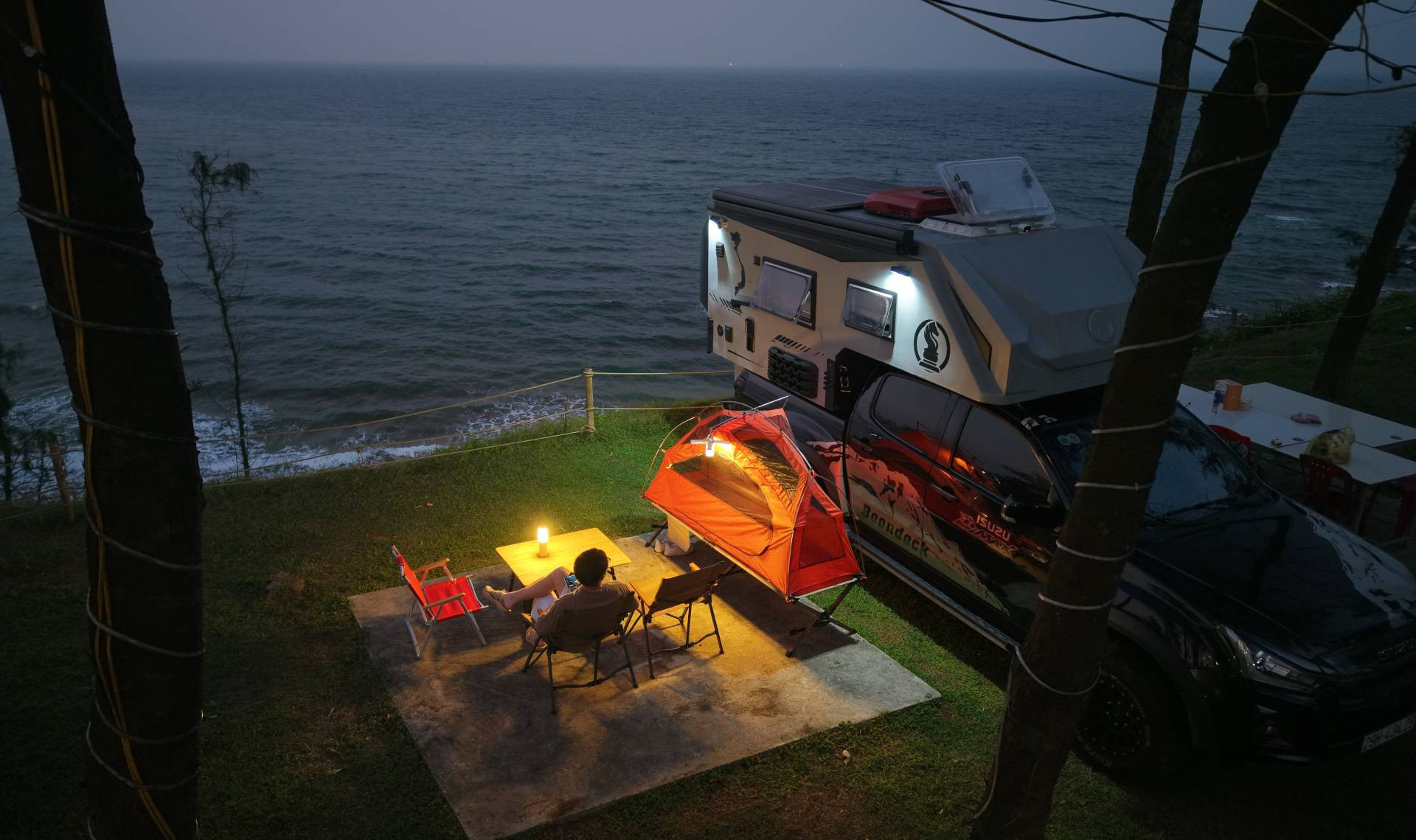
One of the most memorable moments came in Lo Dieu (Binh Dinh). After two days of traveling, the family could not find accommodation. Crossing a mountain pass at night with a heavy vehicle was not a safe option. They decided to find a temporary parking spot, right by the sea. That night, there were no lights or services, only the sound of crashing waves.
The next morning, right at the foot of the slope, they found a small fish market. Boats had just docked carrying fresh seafood. A simple breakfast with squid instant noodles, with chairs set up right on the beach, became an unforgettable memory.
Pickup truck transformer
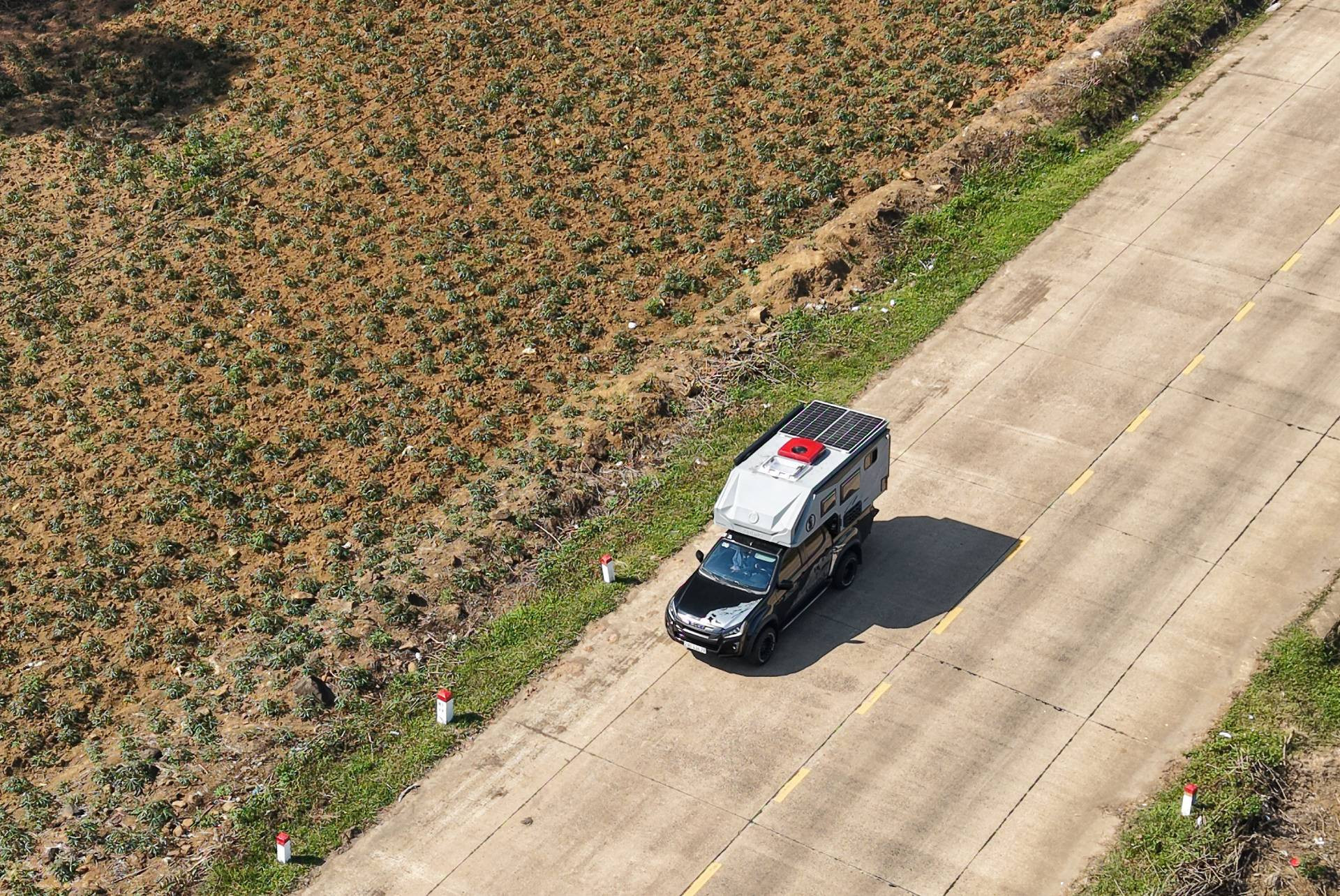
Behind the freedom of the 3-week journey was their "companion", an Isuzu D-Max pickup truck converted into a mobile home with a detachable Truck Camper at the back.
According to the 36-year-old owner, the total cost of installing the Sunlimo camper unit on his D-Max was around VND600-700 million.
The mobile home uses a hard-wall structure with secure locks, allowing the family to feel safe even when sleeping in remote areas. The “miniature home” includes a bed, kitchen, bathroom, and other essentials, while still complying with technical safety limits.
Inside, the space is organized according to the principle of being practical but efficient. The sleeping area is positioned above, spacious enough for the family while remaining windproof and safe for the baby. The compact kitchen prioritizes quick operation, suitable for simple cooking on the road. The compact bathroom has full shower facilities, an important feature during long journeys.
To operate the mobile home, the power system is the most notable feature. The vehicle is equipped with an 8kW electrical system, enough to support daily living for two to three days without an external power supply. The battery recharges while driving, while solar panels provide additional power when the vehicle is parked.
The water tank is designed to hold up to 250 liters, though the family usually stores only around 100 liters to reduce weight. This helps the vehicle remain more stable on long routes, especially on mountain passes.
“The difference between a mobile home and traditional camping is the ability to ‘be ready instantly.’ There’s no need to set up tents or make complicated preparations - once the car stops, we can immediately eat, rest, shower, or sleep.”
Hoang Hiep
.svg)
