 Vietnamnet.vn

 Podcast



In 2019, Nguyen Huu Huan, born in 1986 and originally from Dan Phuong, Hanoi, moved to South Korea with his wife, Tran Thi Nhung, for work. By chance, he found a job at a vineyard run by a South Korean grower who had also just started his business.
Over the next five years, the couple took part in nearly every stage of production, from preparing the soil and planting vines to installing greenhouses and irrigation systems, tending the plants and harvesting the fruit. Working at the farm from its early days allowed Huan to gradually master modern South Korean cultivation techniques.
“From the time we first prepared the soil until the vineyard began producing fruit, I had already been thinking about bringing these grape varieties back to Vietnam to start my own business. Knowing how passionate I was about agriculture, the farm owner carefully taught me the techniques needed to achieve the best possible yields and fruit quality,” Huan said.
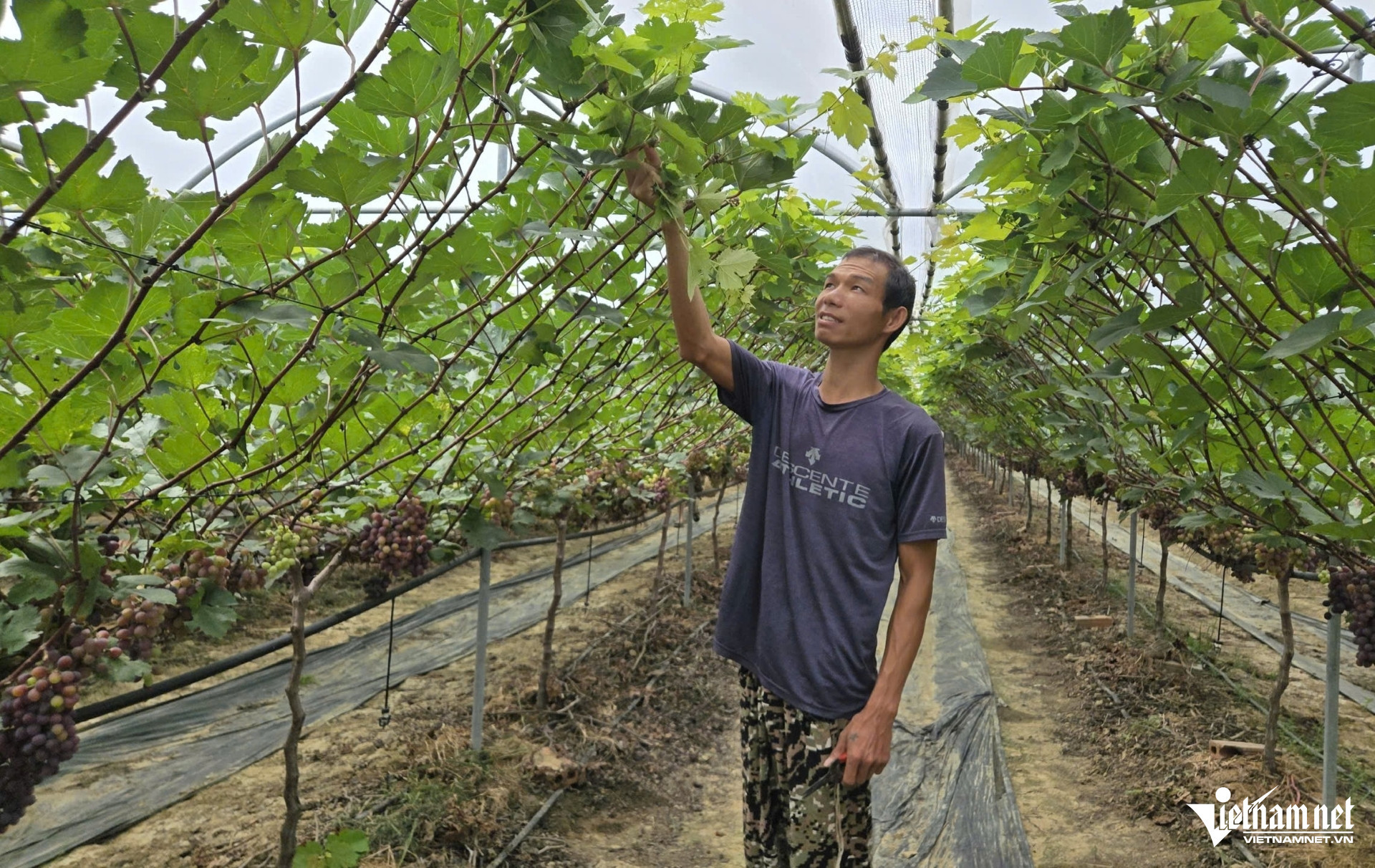
In early 2024, after returning to Vietnam, Huan chose not to settle in Hanoi. Instead, he and his wife moved to her hometown in Dong Tien Ward, Thanh Hoa, to look for an opportunity to build their own business.
After surveying several locations, he leased more than one hectare of underperforming agricultural land in Nguyen Hanh Village to develop the vineyard.
His close relationship with his former South Korean employer gave him an additional advantage. When the farm owner learned that Huan was returning home to start his own venture, he not only supplied high-quality grape varieties, including milk grapes and BK grapes, but also continued providing technical advice whenever Huan encountered difficulties.
From the outset, Huan decided to pursue organic agriculture, minimizing the use of chemical fertilizers and pesticides.
The entire greenhouse system was built with steel frames assembled using bolts rather than permanent welds, allowing the structures to be dismantled when necessary. Before planting, Huan spent months improving the soil, raising earthworms to produce organic fertilizer and buying sugarcane residue to compost into humus, creating a natural source of nutrients for the vines.
More than 1,200 milk grape and BK grape vines were imported directly from the South Korean farm where he had previously worked.
Nearly VND4 billion invested in an organic vineyard
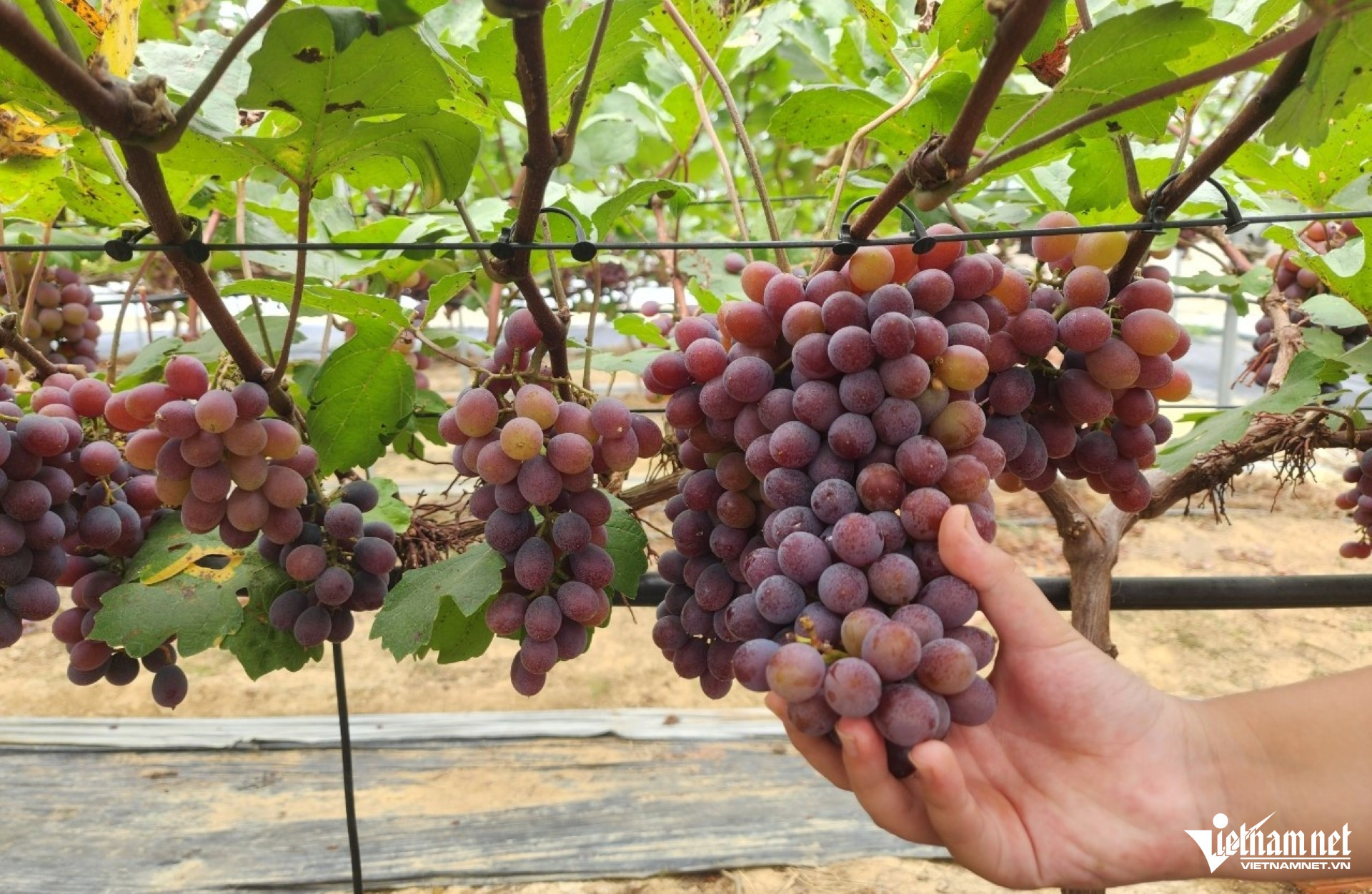
According to Huan, total investment in grape vines, greenhouses, irrigation systems and supporting infrastructure has so far reached around VND3-4 billion.
“It was my first time doing this on my own, and I essentially replicated the South Korean model, so I made the mistake of designing the greenhouses too low. That caused temperatures inside the vineyard to rise too high, making the system unsuitable for Vietnam’s climate,” he said.
Before he had time to fully address the problem, storms in 2025 severely damaged the entire grape-growing area just as it was approaching harvest, wiping out nearly the entire crop.
Huan did not give up. He continued upgrading the greenhouse system and remained committed to the organic production model.
One distinctive feature of the farm is its use of dozens of tonnes of self-produced vermicompost every year to improve the soil. Huan also makes his own nitrogen-rich fertilizer from worms and potassium fertilizer from bananas to nourish the vines.
“This approach requires higher initial investment and considerably more work, but in return, the plants are healthier and develop strong, sustainable root systems. If they are not pushed beyond their capacity, a grapevine can remain productive for 30-40 years without needing to be replaced,” Huan said.
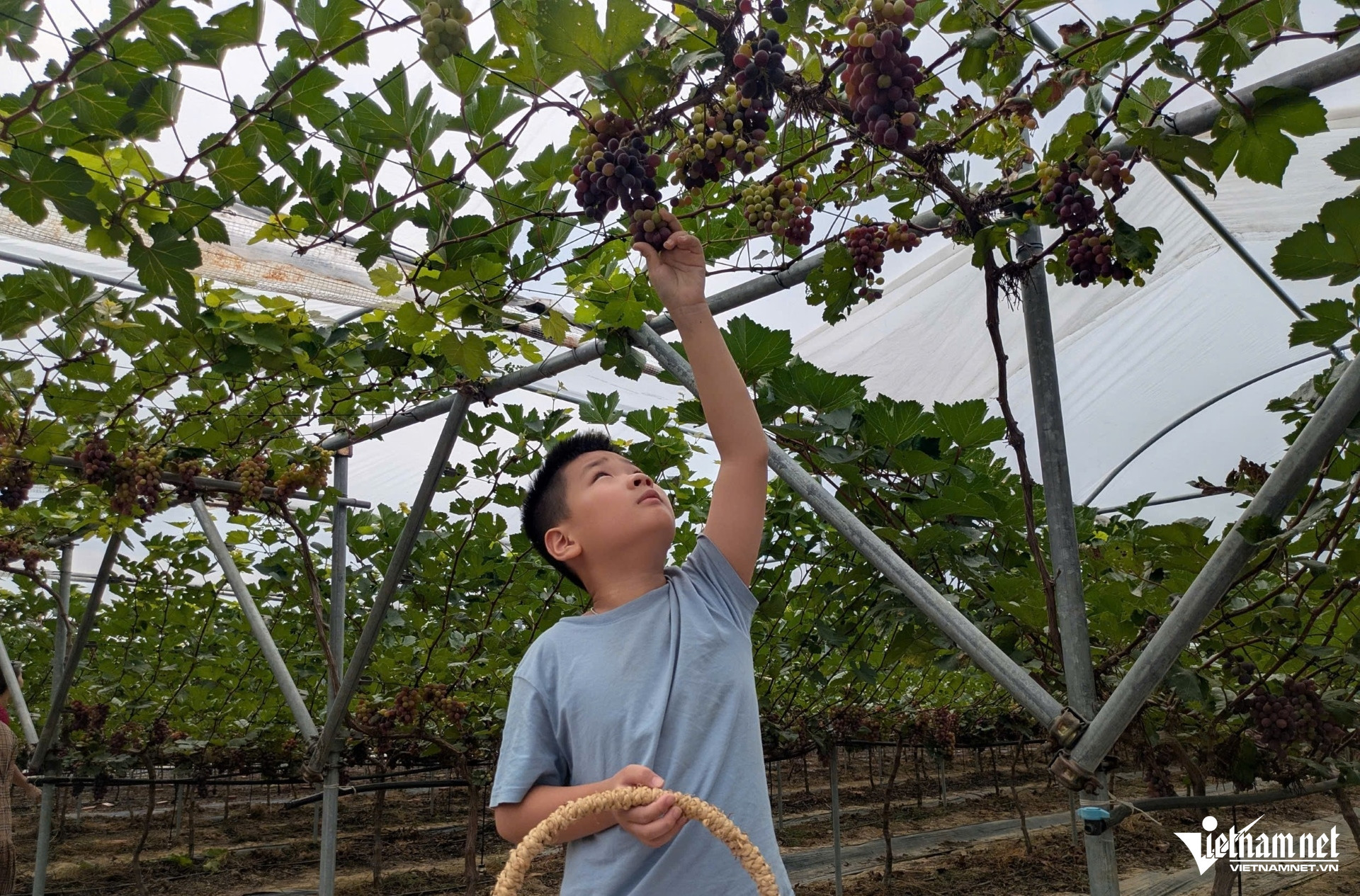
Around 5,000 square meters of the vineyard has now entered the harvesting stage. The farm is expected to produce two crops a year, with total annual output of around 15 tonnes. Wholesale prices are about VND250,000 per kilogram, while retail prices range from VND300,000 to VND450,000 per kilogram, depending on the variety.
Huan estimates that under favorable weather conditions, the vineyard could generate nearly VND4 billion in annual revenue, allowing the farm to recover its investment after around one year of stable production.
In addition to selling fresh grapes, Huan has opened the vineyard to visitors for tours and hands-on experiences as a way to promote his products. Looking ahead, he plans to further improve the greenhouse system to better suit Vietnam’s weather conditions while expanding production alongside experiential tourism.
Le Thi Van Anh, Vice Chairwoman of the Dong Tien Ward Farmers’ Association, described the farm as a sustainable organic production model capable of supplying much of its own agricultural inputs through homemade fertilizers and biological preparations.
According to Van Anh, the model has the potential to generate billions of dong in annual revenue. Agricultural production, however, remains highly vulnerable to natural disasters. Continued investment in infrastructure, combined with experiential tourism, could therefore help increase economic value, reduce risks and improve overall efficiency while supporting more sustainable development.
Le Duong
.svg)
