 Vietnamnet.vn

 Podcast



Toan built his business on land inherited from his grandfather. (Photo: Sy Thong)
Located in the border commune of Son Hong, once considered a difficult area where most residents relied on forest work, Toan’s farm has become a bright spot in the region’s rural development.
Once a day laborer who tried many times to start a business and failed, Toan eventually succeeded with a model he describes as “plants below, solar panels above, livestock in between.” His venture not only brought wealth to his family but also created stable jobs for dozens of locals.
Born and raised in this mountainous borderland, Toan’s family had long depended on forest resources. When forest access became restricted, he struggled to make ends meet.
In 2015, noticing that his late grandfather’s 2,000-square-meter plot - surrounded by forest and located near a stream - was lying idle, he decided to build his future on that very land.
Without hesitation, he borrowed roughly 2 billion VND (about 80,000 USD) to clear the land, build infrastructure, and raise 100 sows and 50 cows. But during 2017–2018, plunging pork prices left his pigs unsold.
“At that time, continuing would mean deeper losses. Selling wasn’t an option - no one would buy. Bankruptcy loomed. I spent sleepless nights beside the pigsties, staring at them in helpless silence, sure I would lose everything,” he recalled.
In that crisis, local officials and residents stepped in to help “rescue” his pigs. Teachers and villagers bought meat to freeze, helping him avoid collapse.
Even though the pigs were sold, the weight of his debts drove Toan to leave home in search of a new start in the South. Encouraged by family, he returned in 2019 to begin again. This time, he borrowed more money to shift into deer farming and expanded his land area from 2 to 5 hectares.
Today, Toan’s farm maintains 100 sows, 80 deer, and 10 cows. The setup is fully integrated: solar panels on the roof, livestock operations below. Open spaces are used to cultivate nearly 70,000 đinh lăng plants across 4 hectares - used for medicinal purposes and liquor production.
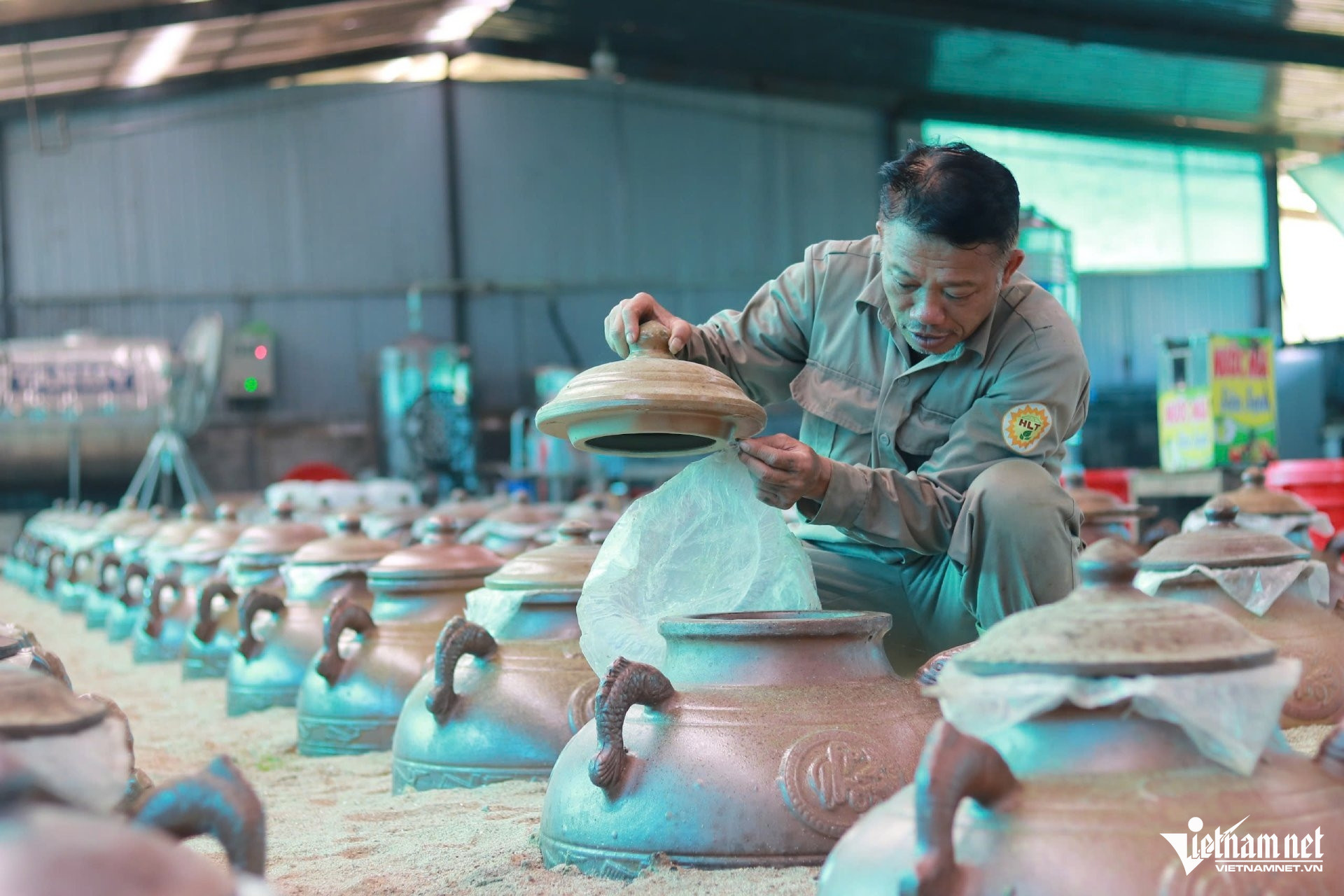
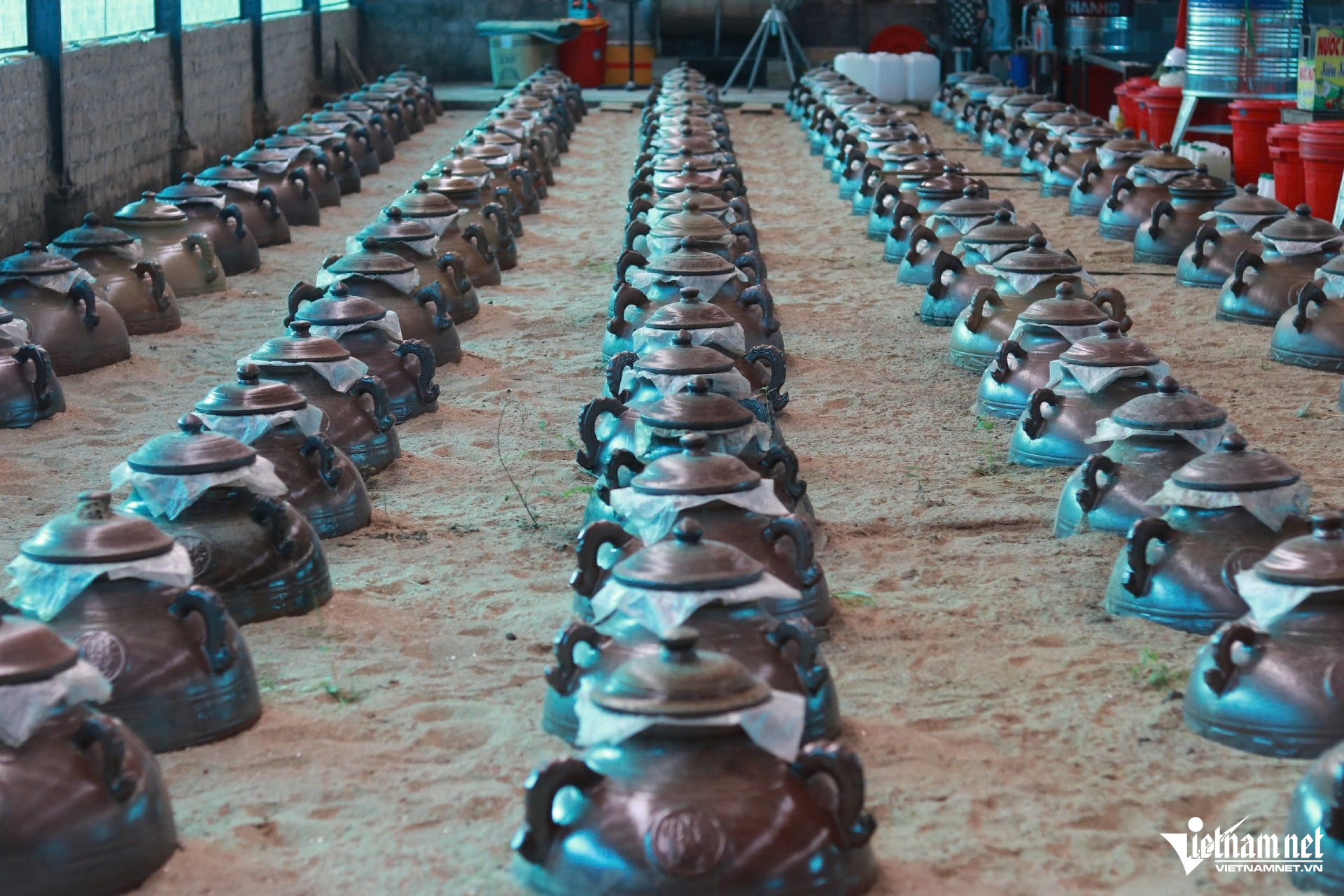
Toan didn’t stop at animal husbandry. He invested in equipment to produce đòng đòng liquor right on the farm. Each year, the facility produces 15,000–20,000 liters of rice liquor at 70,000 VND (2.80 USD) per liter, generating revenue between 1.2 and 1.4 billion VND (48,000–56,000 USD).
The liquor is made from Lao glutinous rice, distilled and aged in clay jars with young rice grains from Bac Ninh, yielding a distinctive flavor favored by local markets. He is currently completing paperwork to register his product as an OCOP (One Commune One Product) item under the name “Rượu đòng đòng hạ thổ.”
In 2024 alone, his family earned about 1.5 billion VND from piglet sales - 300 to 400 piglets per batch. He also sold 40 deer for 14–20 million VND each and 34 pairs of deer antlers (0.8–1.2kg each), adding over 300 million VND to his income.
The farm provides regular jobs for eight local workers, each earning around 8 million VND (320 USD) per month. During peak seasons, Toan hires up to 30 additional seasonal workers, paying 300,000 VND (12 USD) per day.
Looking ahead, Toan plans to expand operations by reclaiming an additional 20 hectares of forested land to grow medicinal herbs such as ba kich, đinh lăng, and trầm gió.
“Through training sessions organized by the Farmers’ Union, I realized that using forest land for herb cultivation has enormous potential,” he said.
Nguyen Thanh Dong, Secretary of the Party Committee of Son Hong Commune, described Toan’s farm as a model example - effectively combining animal husbandry, herbal farming, liquor production, and solar energy. The result: billions in revenue and many local jobs.
Toan’s success is more than a personal triumph - it’s a pathfinder for sustainable rural development in Vietnam’s most rugged corners.
Thien Luong
.svg)
