 Vietnamnet.vn

 Podcast


From preserving village memories to attracting visitors
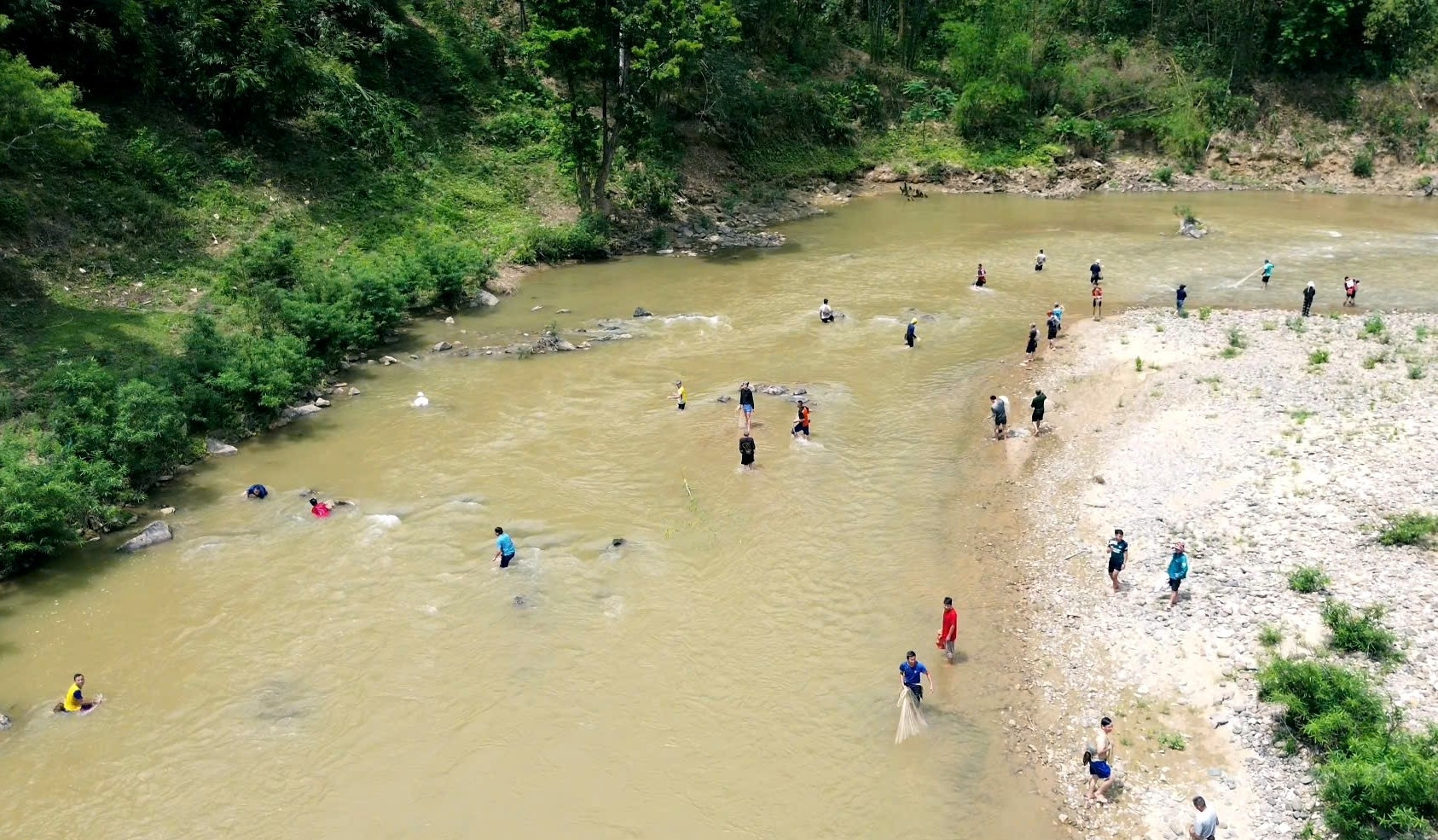
Residents of Ngam village participate in communal fishing, a longstanding local tradition.
With no formal training in communications or tourism, Lo Van Nhu, born in 1993, began promoting his hometown of Ngam village in Son Dien commune, Thanh Hoa province, with a small video camera.
Initially, the young man from the Thai ethnic group simply wanted to preserve images of village life through videos shared on social media. Little did he expect that his unpretentious footage would open up new economic opportunities, introducing local freshwater fish and cultural traditions to a wider audience.
After graduating from high school in 2011, Nhu was unable to pursue further education due to his family's financial difficulties. He worked as a factory worker before taking construction jobs in various localities.
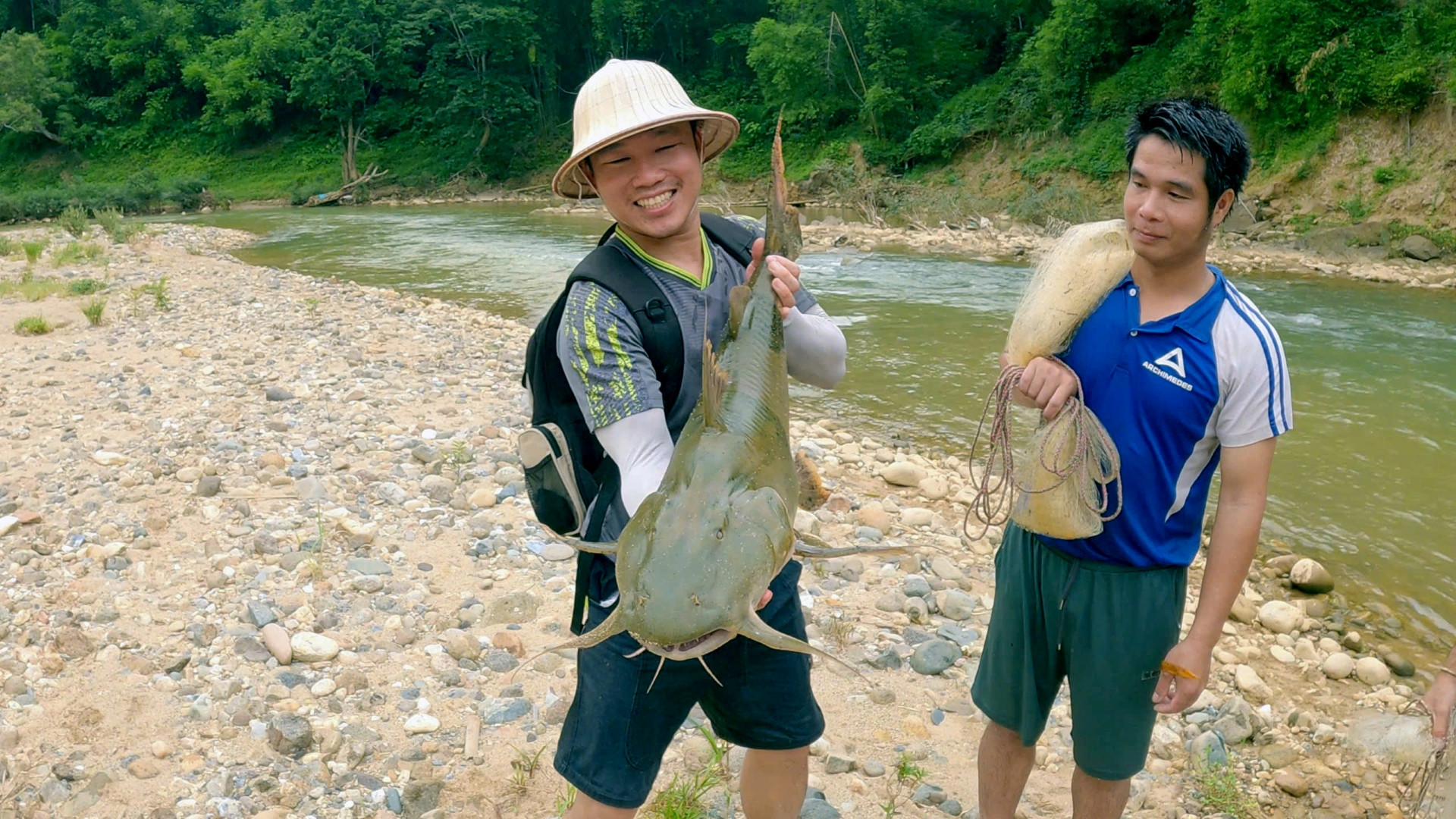
Lo Van Nhu (left) proudly displays a large fish he has just caught.
His years away from home made him realize that his hometown possessed beautiful landscapes and distinctive cultural traditions that remained largely unknown to outsiders.
In 2021, he decided to invest in a small camera to document the mountainous scenery, daily life and traditional customs of his village.
Among his most popular videos are those showing villagers fishing together along a stretch of river protected by the community to conserve aquatic resources.
According to Nhu, communal fishing usually takes place on specific occasions throughout the year, such as before the Lunar New Year, on April 30 (Vietnam's Reunification Day), during the Great National Unity Festival and at traditional village celebrations.
The fish are subsequently distributed among households or prepared for communal meals.
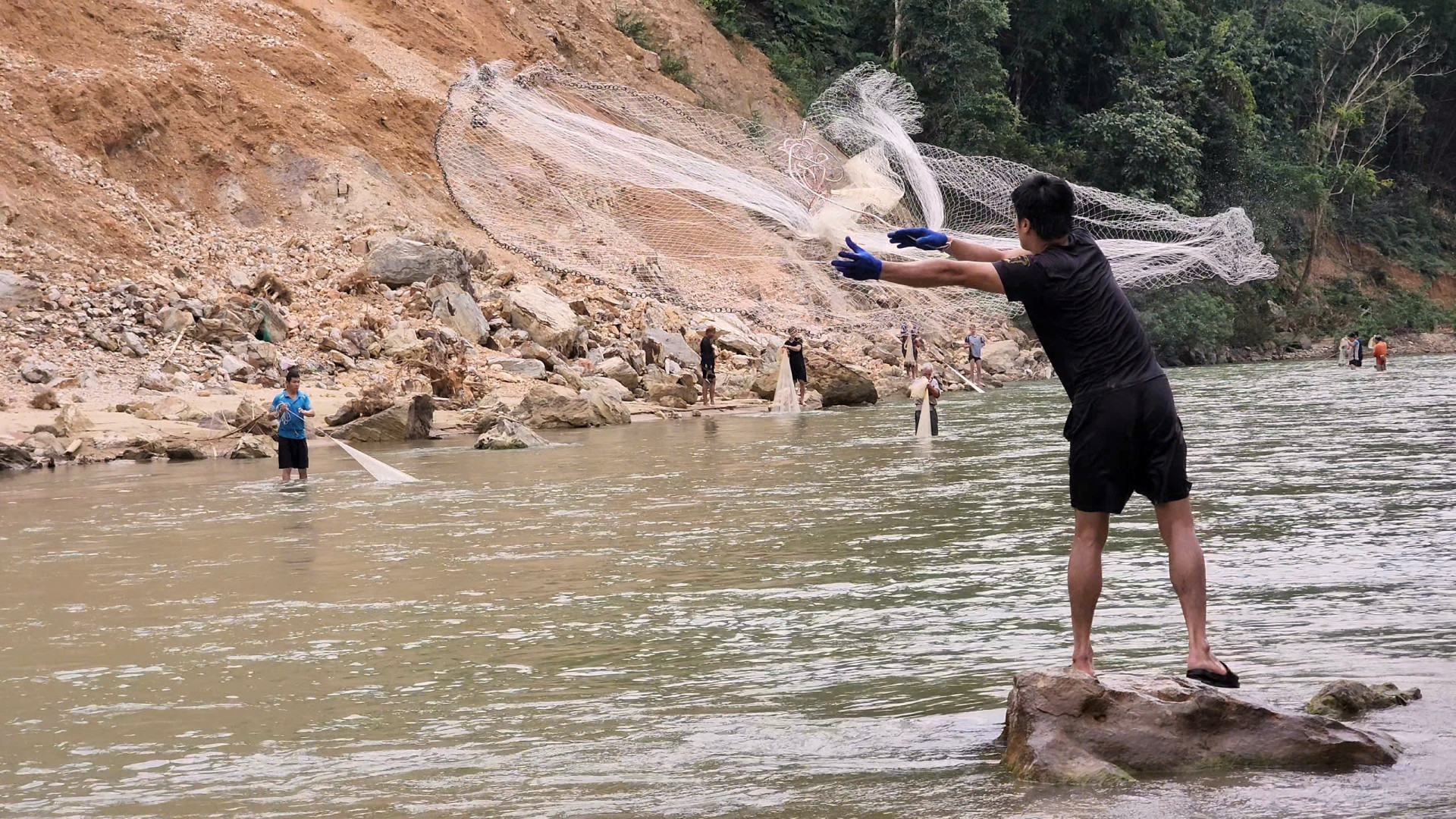
A stretch of river protected by the entire village to support tourism development.
Nhu captures scenes of villagers casting fishing nets and catching fish amid cheerful conversations and laughter along the river. He then edits the footage and shares it on YouTube, Facebook and TikTok.
"Some fishing sessions last half a day along a three- to four-kilometer stretch of river. I usually record a lot of footage in one session, then edit it into videos lasting 20 to 30 minutes and release them gradually," Nhu said.
"Although viewers frequently see fishing activities on my channels, they actually take place only on certain occasions, not every day. Through these videos, I hope more visitors will discover our village and come to experience traditional fishing alongside local residents."
Initially, Nhu never imagined that making videos could generate income. His only intention was to preserve beautiful memories of village life.
However, as his videos attracted more attention, people from distant localities began contacting him to purchase freshwater fish. This prompted him to explore ways of connecting customer demand with economic opportunities for the community.
Traditional fishing generates income for the village
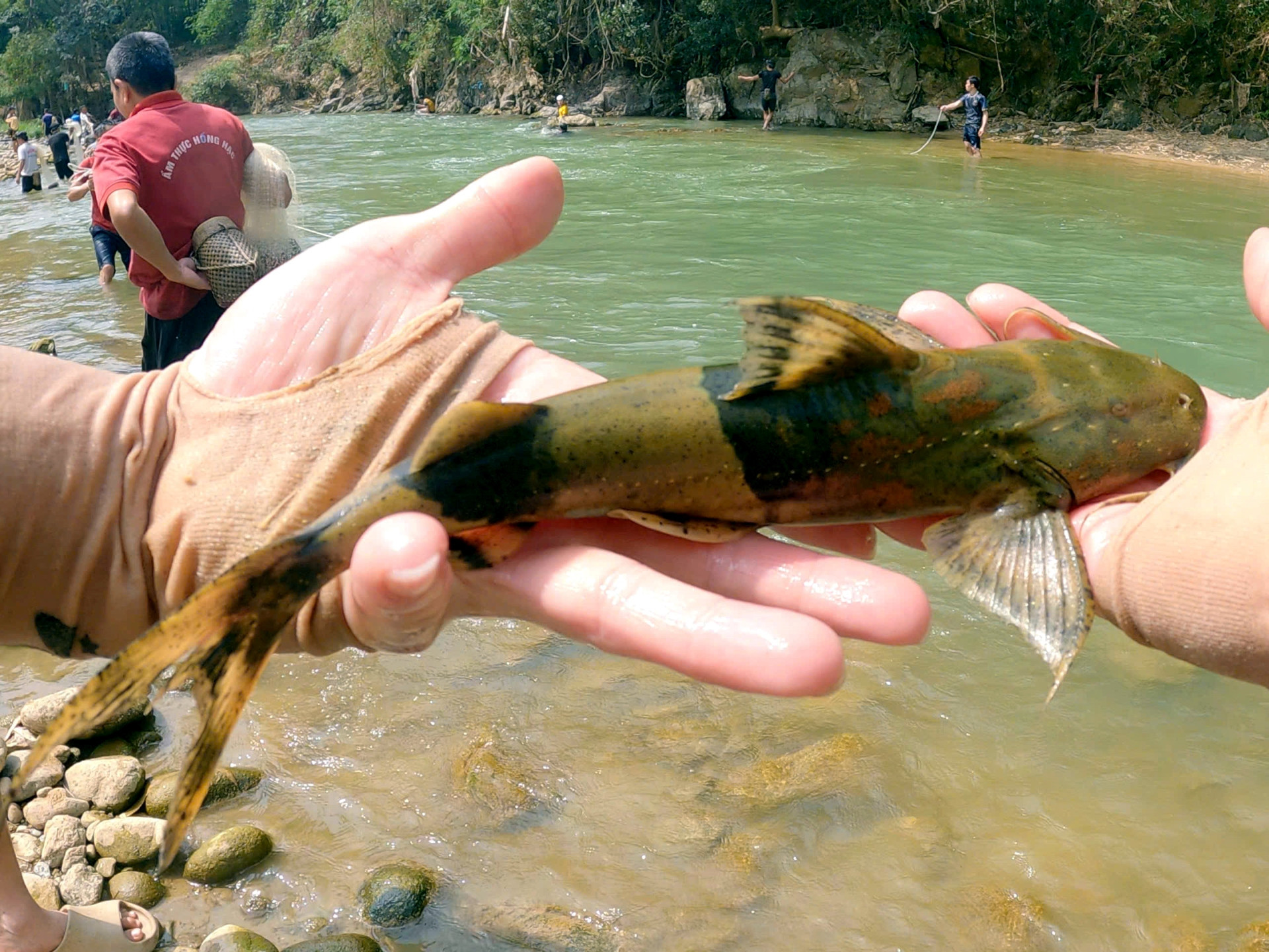
Smaller fish are released back into the river to allow them to reproduce.
Recognizing growing demand from his viewers, Nhu proposed that the village management board organize fishing sessions to supply customers.
Instead of being reserved exclusively for communal meals, locally caught freshwater fish gradually became a product promoted to a wider market through social media.
The most sought-after fish is locally known as ca mai, also called ca mat or ca xinh by the Thai ethnic community.
Fishing is organized periodically, often in conjunction with fairs and night markets, approximately once every one to three months, or when customers place orders for fish or meals.
Villagers retain only fish of suitable size, releasing smaller ones back into the river so they can continue to reproduce. The catch is cleaned, frozen, packed in insulated foam boxes and shipped to customers across various provinces and cities.
According to Luong Van Duan, secretary of the Ngam village Party cell, Nhu's social media content has helped promote the village and attract visitors.
"Two visitors from Dien Bien province once watched Nhu's videos and traveled to Ngam village to meet local residents, go fishing and join the Lunar New Year celebrations of the Lo clan," Duan said.
"This demonstrates the reach of these simple, authentic videos, which have encouraged more people to discover and experience life in our village."
The economic benefits have also become increasingly evident.
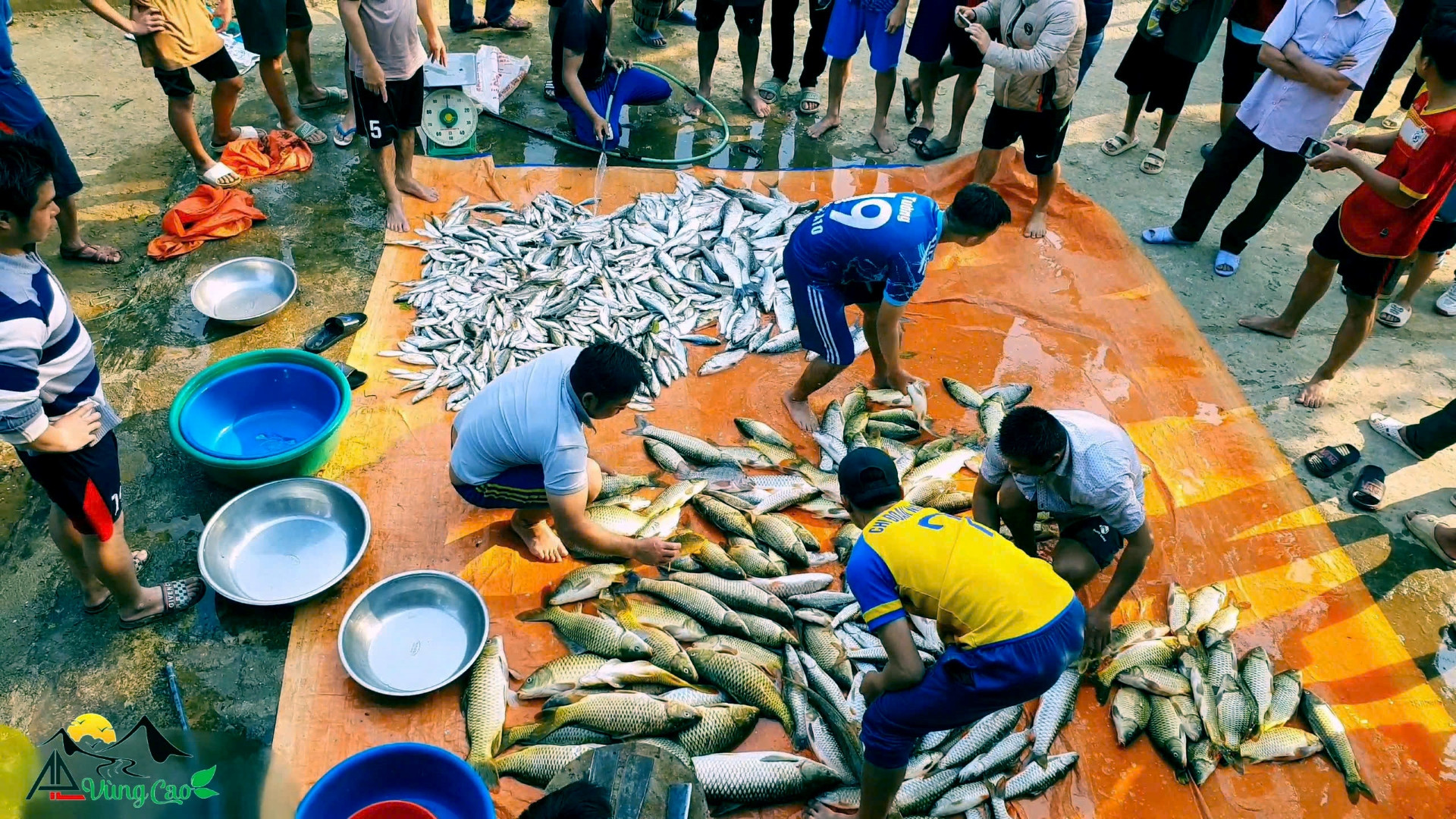
Fishing activities have generated more than VND40 million for the mountain village's communal fund.
According to Duan, last year, Ngam village generated more than VND40 million ($1,500) for its communal fund by organizing fishing activities for visitors and selling fish to customers.
For a remote mountain village, this represents a meaningful source of funding for community activities.
By building on a longstanding communal fishing tradition, villagers have found a way to generate economic value while continuing to protect their aquatic resources.
Duan said local authorities encourage young people like Nhu to promote the natural beauty, customs and everyday life of ethnic minority communities.
Village and commune authorities also regularly support and facilitate his efforts to document local events and cultural activities.
Le Duong

