 Vietnamnet.vn

 Podcast



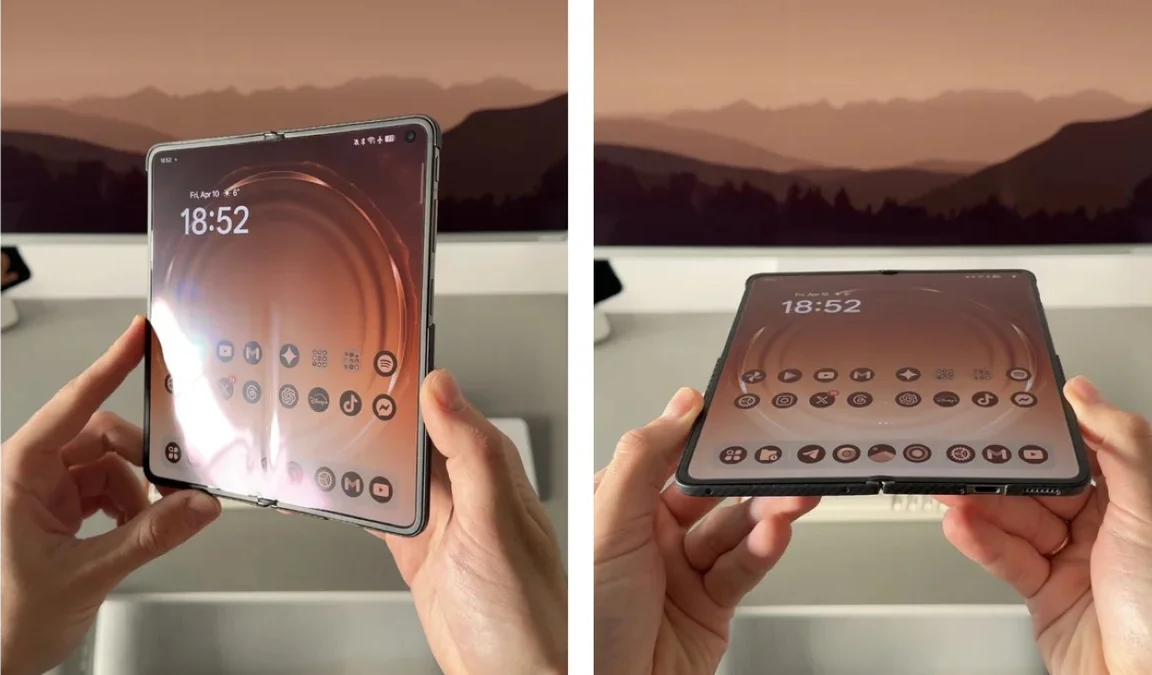
The race to eliminate the visible crease on foldable smartphone screens is intensifying, to the point of becoming an obsession within the tech industry. Yet the real question lies elsewhere - does this feature truly define what users want?
In recent years, major players such as Samsung and Apple appear to be pouring resources into a singular goal: creating a foldable smartphone with a perfectly flat inner display, free of any crease.
But whether this aligns with user priorities remains an open question.
The industry has undeniably made rapid progress. Today’s foldable devices are significantly improved in terms of design, durability, and performance.
Still, a closer look at product strategies suggests that manufacturers may be placing disproportionate emphasis on eliminating the crease - an important detail, but not necessarily the top concern for every user.
What do users actually want from foldables?
Ask a foldable phone user whether they are satisfied, and the answer is rarely straightforward. Is the battery good enough? Does the camera match flagship standards? Does the display truly stand out? These questions often outweigh concerns about the presence of a crease.
Of course, a perfectly flat screen remains an ideal. Yet in reality, many users accept - and sometimes barely notice - the crease on current foldable devices, including models released in 2025 and 2026. For them, the overall experience is what ultimately matters.
The challenge is that the market has yet to deliver a truly crease-free foldable device.
Even highly regarded products such as the Oppo Find N6 still exhibit a visible crease when unfolded, albeit significantly reduced in depth and visibility.
This makes it difficult to determine genuine user priorities. Consumers are choosing from what exists, not from a lineup of perfect options. As a result, the debate over “crease or no crease” remains somewhat hypothetical.
Looking back, early foldable phones were often seen as half-finished products, plagued by deep creases, limited durability, and incomplete user experiences.
Yet they still attracted two distinct groups: users who needed larger screens for multitasking, and those drawn to unique, premium devices that reflect personal style.
Both groups accepted trade-offs. No first-generation product is flawless. But the pace of improvement has been striking.
In recent years, foldable smartphones have become thinner, more durable, and more powerful. Devices like the Oppo Find N5 demonstrate that flagship-level experiences are no longer exclusive to traditional slab phones.
Today, the industry stands at a critical turning point. With foldables reaching a more mature, well-rounded stage, manufacturers must decide what comes next.
Should they push battery capacity to 8,000-9,000 mAh? Introduce quad-camera systems? Improve display brightness, audio quality, gaming performance, thermal management, or software optimization?
In reality, many companies are betting heavily on the goal of a crease-free display. Not only Oppo, but also Samsung and Apple are reportedly pursuing this ambition.
But every choice comes with trade-offs. Focusing resources on one feature inevitably means others may receive less attention.
Is “no crease” the ultimate destination?
At some point, a truly crease-free foldable phone will likely arrive. But even then, a fundamental question remains - is this the most pressing issue users face?
Such devices will almost certainly come with extremely high price tags in their early stages, limiting accessibility for the broader market.
The trajectory of foldable smartphones is becoming clearer. Early generations struggled with durability and pronounced creases.
By the 2025-2026 period, creases still exist but have been significantly minimized. In the future, crease-free designs may become reality, albeit at a premium cost.
Even if a perfectly flat foldable launches in 2027, many users may still opt for current models.
Simply because the crease is now “good enough,” while the overall experience continues to improve.
Ultimately, the race in technology is not just about eliminating a small detail like a crease. It is about achieving the right balance between design, performance, battery, camera, and real-world value.
And that balance will determine the success of foldable smartphones in the years ahead.
Hai Phong
.svg)
