 Vietnamnet.vn

 Podcast


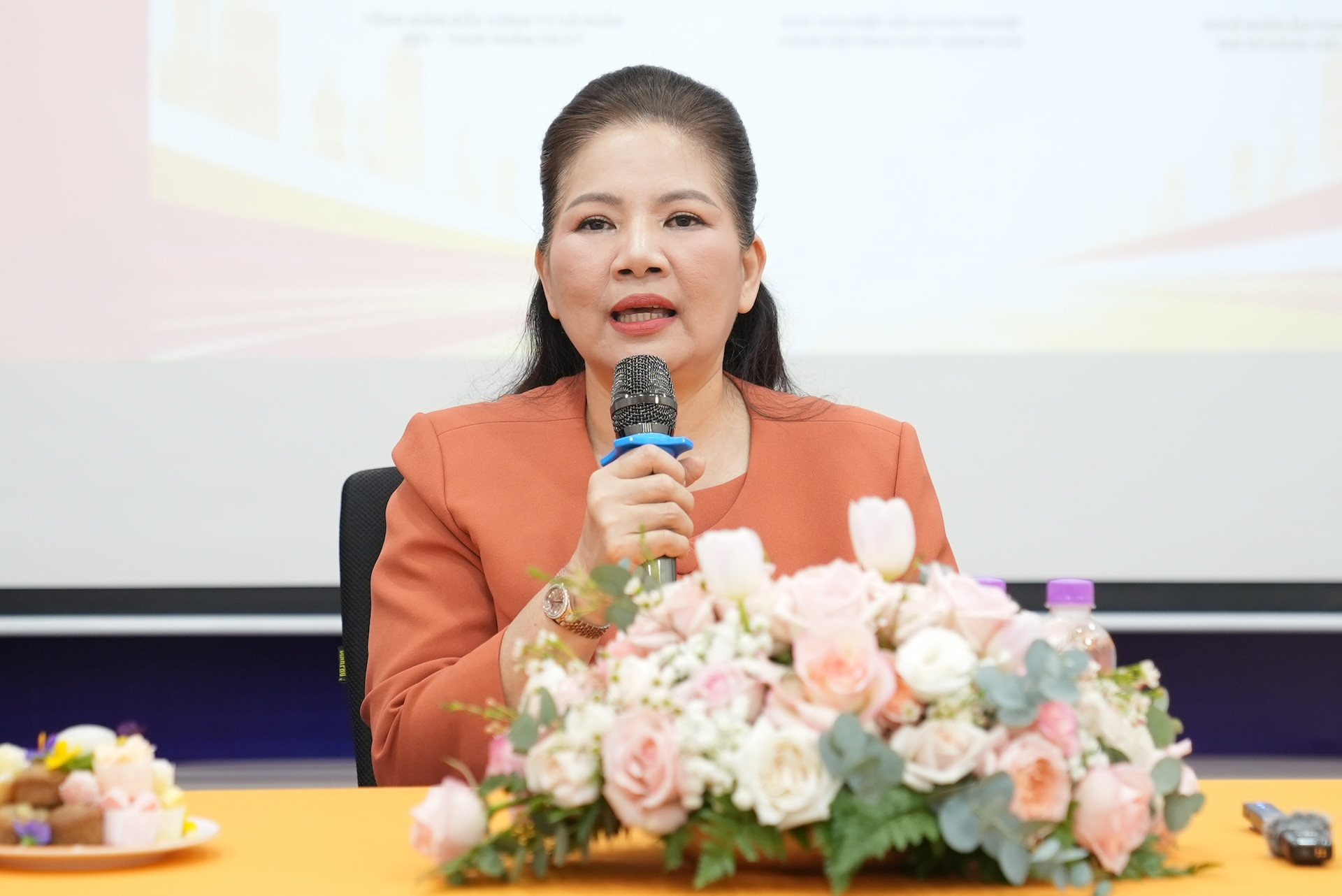
We met Bui Thi Thuy Loan, General Director of Tai Ky Food Flour Joint Stock Company, and her two sons, who are carrying forward the family business, in a cozy meeting room in Ho Chi Minh City.
It was a meaningful October for the family, as Tai Ky had just been named a Vietnam National Brand for the third consecutive time.
Reflecting on half a century of working with flour and Vietnamese agricultural products, Loan said her journey as the family's second-generation business leader began not with billion-dong business plans or luxurious boardrooms, but with a simple struggle for survival in her family's kitchen.
From a single cassava root to markets around the world
One of Loan's most vivid childhood memories dates back to a night in 1976, when her mother grated the last cassava root left in the kitchen under the dim light of an oil lamp.
With a little sugar and boiling water, her mother hurriedly prepared a bowl of sweet tapioca dessert and spoon-fed it to her five children.
What stayed with Loan was how the dessert remained clear, fragrant and smooth until the very last spoonful, without breaking down or separating into water.
The family later began grating cassava roots, carefully wrapping the starch in old calendar paper and selling the small packets to local grocery stores.
Meanwhile, her father built the family's first grinding, filtering and flour-blowing machines.
That was how Tai Ky was born near Thi Nghe Market in Saigon, operating as a household business where everyday family life and the struggle to earn a living were inseparable.
Loan recalled how her mother's bowl of dessert and the rattling three-wheeled cart she rode with her father through Saigon's markets to sell flour planted an enduring lesson in the eldest daughter's mind.
For the family business to survive, product quality had to remain as consistent as that bowl of dessert her mother had prepared during difficult times.
In 1992, shortly after graduating with an accounting degree, Loan took over the family business from her parents.
At the time, Vietnam's market was dominated by basic, single-ingredient flours, while supermarket shelves were filled with imported premixed flour products from Thailand.
She found herself asking a simple question: "Why does a country so rich in agricultural products not have its own value-added processed food products?"
Determined to find an answer, the young entrepreneur approached Ho Chi Minh City University of Technology and persuaded a lecturer specializing in food chemistry to help her standardize product formulas.
Her first research laboratory was little more than a makeshift tent on the rooftop.
It was there that she developed premixed flours for crispy fried foods, banh xeo (Vietnamese savory pancakes) and banh cuon (steamed rice rolls), laying the foundation for a business that would eventually reach more than 34 countries and territories.
"Of Tai Ky's 10 best-selling flour products that have been exported, I personally developed four formulas through research and development. They are the red-packaged crispy frying flour, green-packaged banh xeo mix, banh cuon flour and non-dairy creamer," Loan said.
Preserving Vietnamese agricultural roots while modernizing management
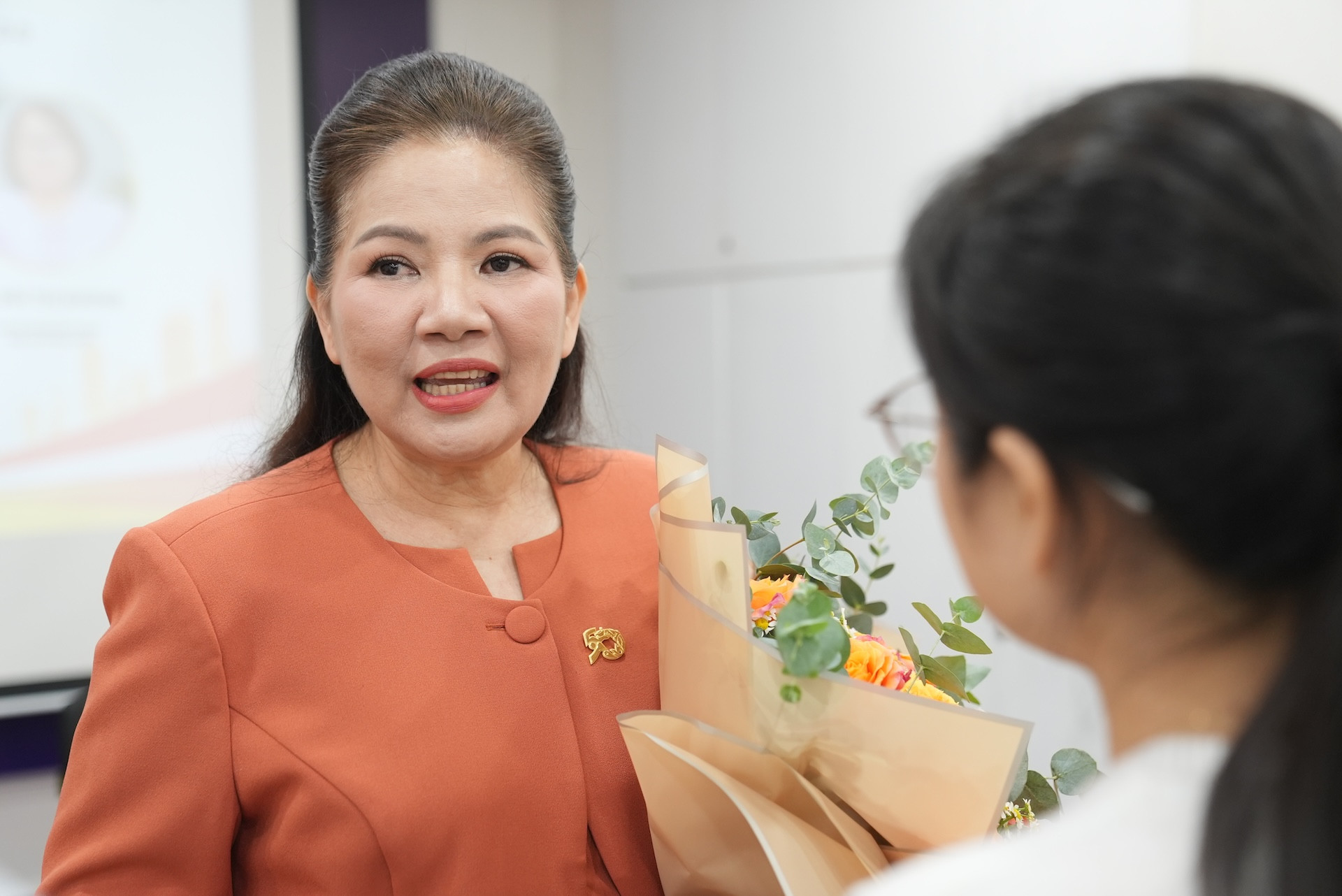
Through half a century of change, Loan has remained guided by one belief: "Taking over a family business means preserving its spiritual legacy."
For her, quality is the heart of that inheritance.
While production methods and business strategies may evolve, she insists on maintaining Vietnamese agricultural ingredients at the core of Tai Ky's products.
Locally sourced rice, glutinous rice and cassava consistently account for more than 70% of the company's raw material mix.
Drawing on her understanding of Vietnam's soil conditions and the characteristics of local crops, Loan and her research team have standardized processing techniques to ensure consistent product quality, regardless of changes in weather or growing conditions.
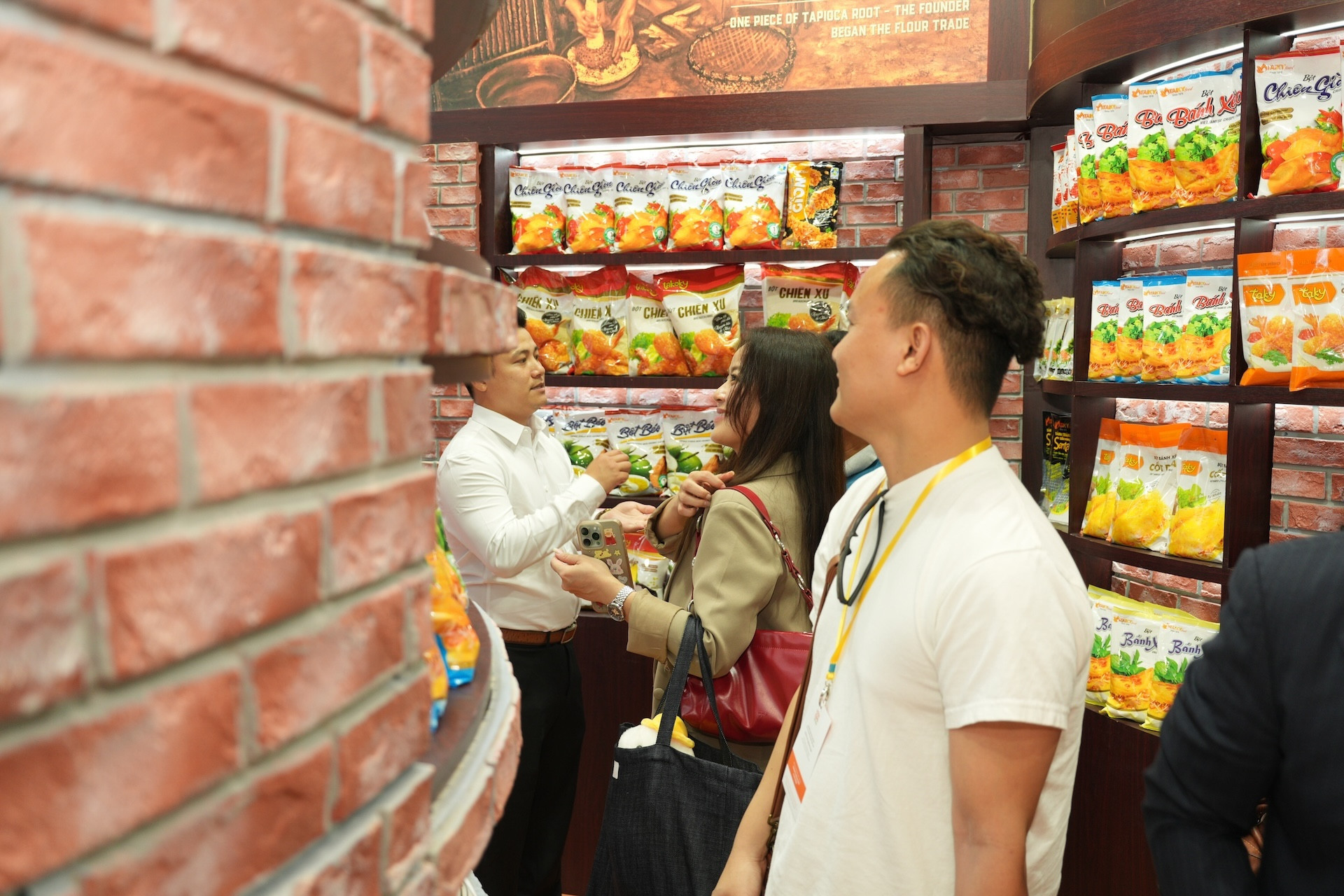
Under her leadership, Tai Ky has grown from a small manual production facility into a nationwide distribution network with 125 distributors across 34 provinces and cities.
Its products are now available in approximately 90% of modern retail systems in Vietnam.
The company has also focused on developing convenient new products that make traditional Vietnamese dishes more accessible to Generation Z, overseas Vietnamese communities and Western consumers interested in preparing Vietnamese food at home.
Recognizing that traditional market sales were gradually reaching saturation after the pandemic, Loan began charting a new growth strategy.
The company is expanding its business-to-business export operations, supplying ingredients to demanding food-processing industries such as seafood, while also developing original equipment manufacturing (OEM) services.
Tai Ky is targeting revenue of VND1.5 trillion (approximately $57 million) by 2029 and VND2 trillion (around $76 million) by 2030.
Loan's approach to management has also been shaped by an early willingness to embrace technology.
In 2012, when she formally assumed leadership of the company, she invested in multinational enterprise management software before upgrading to an SAP system with direct data connections to banks.
The digital infrastructure allows her to manage the business remotely, even while spending time with her children overseas.
It has also helped improve transparency and enabled her to delegate greater authority to her management team.
Giving the next generation room to build its own future
Loan's combination of warmth and determination also shapes her approach to passing the business on to the family's third generation.
Rather than pressuring her children to follow a predetermined path, she has established separate legal entities, allowing them to choose their own ventures once they have developed sufficient interest and experience.
Her eldest son, who studied creative arts in Australia, has been entrusted with contributing to a cultural project featuring artistic photographs of Vietnam's 54 ethnic groups and completing a museum dedicated to traditional Vietnamese cakes.
Her second son, a graduate in international business, began by selling Tai Ky products through e-commerce platforms.
The business generated daily sales exceeding VND100 million (approximately $3,800) before he expanded into logistics and manufacturing.
Loan has a clear vision for succession: the family's core flour business must retain its original mission, while the next generation should have the freedom to develop subsidiaries producing downstream products.
These could include rice paper, rice noodles and frozen Vietnamese cakes.
She encourages her children to follow three principles: observe carefully, explore deeply and maintain strong discipline.
Her greatest ambition is to see traditional Vietnamese cakes sold at international airport gateways, bringing the flavors of Vietnam to travelers from around the world.
For Loan, that dream is also about taking Vietnam's agricultural products beyond raw ingredients and introducing their value-added potential to the global market.
Thu Ha

