 Vietnamnet.vn

 Podcast


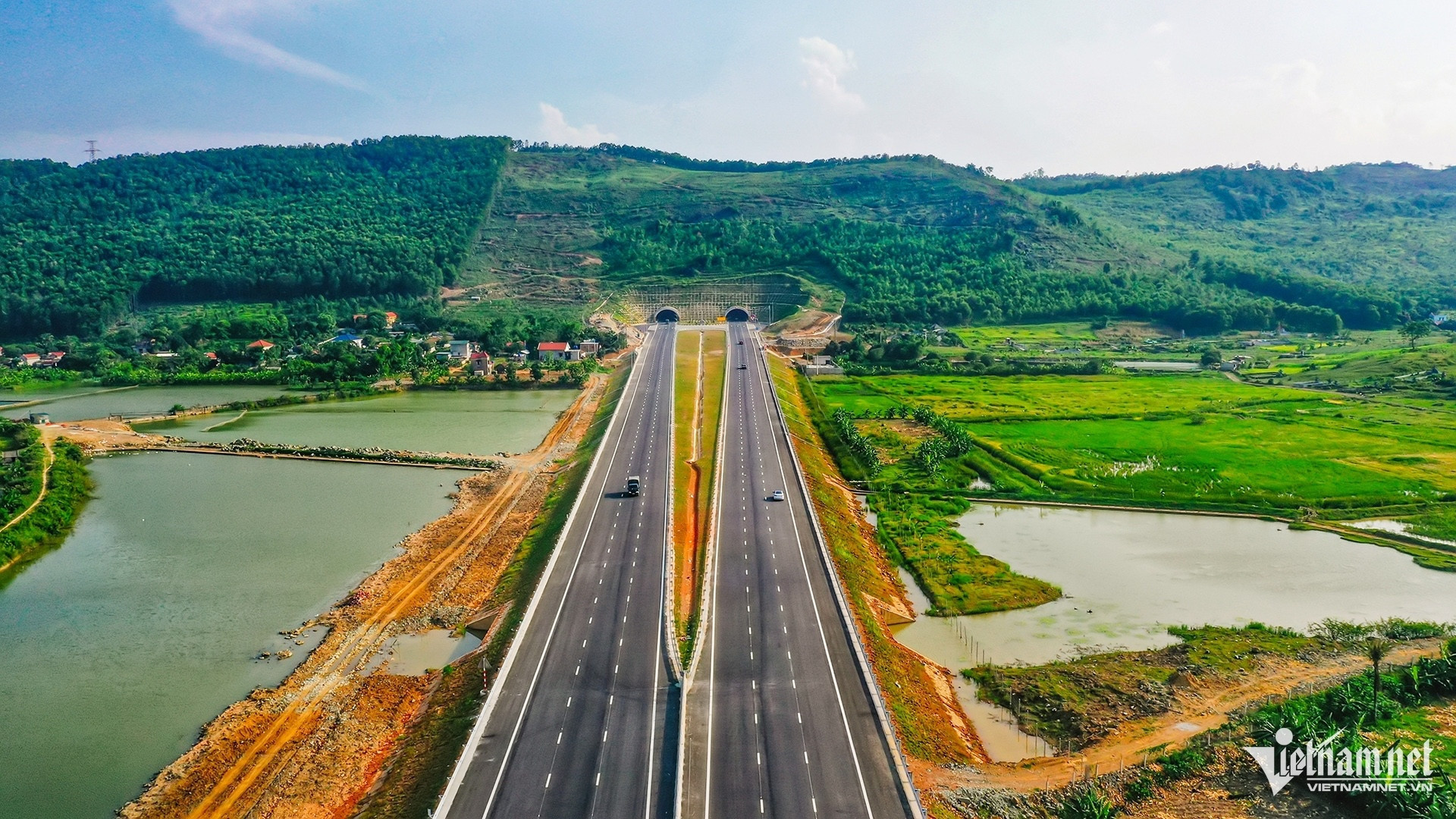
While several Eastern North-South Expressway sections were originally built with state budget funds, put into operation, and are currently collecting tolls, the Ministry of Construction (MOC) has proposed expanding them to six lanes under the Public-Private Partnership (PPP) model to leverage private sector resources for infrastructure upgrades.
This approach aims to mobilize private capital while balancing financial efficiency across different segments to ensure project feasibility. Grouping expressway sections into large-scale projects can enhance attractiveness to investors, rather than executing individual segments with varying financial returns.
Merging 15 expressway sections into 2 PPP projects
MOC recently submitted a proposal to the Prime Minister regarding the expansion of the Eastern North-South Expressway corridor under the PPP model, outlining project division and capital mobilization solutions.
Under the proposed plan, the Hanoi – HCMC expressway corridor will be expanded across 18 sections totaling approximately 1,144 km, primarily upgrading from limited 4-lane segments to a full 6-lane design as planned.
Specifically, the Phan Thiet - Dau Giay section will be expanded from a full 4-lane layout to 6 lanes to maintain consistency with adjacent segments. The preliminary total investment required is estimated at VND178,357 billio. Meanwhile, the My Thuan - Can Tho and Can Tho - Ca Mau sections are being studied under separate projects.
For the three operating sections currently collecting tolls, including Dien Chau - Bai Vot, Nha Trang - Cam Lam, and Cam Lam - Vinh Hao, the Ministry proposes treating them as 3 independent projects covering about 178 km, with a preliminary expansion cost of VND27,948 billion.
The specific investment model and government support level will be determined based on signed PPP contracts, traffic volume forecasts, and financial analysis for each segment.
Notably, for the 15 expressway sections previously built with public funds and currently generating toll revenue for the state, the Ministry proposes grouping them into two large-scale Build-Operate-Transfer (BOT) projects under the PPP framework, without requiring state budget support.
These 15 sections span 966 km with a preliminary total investment of VND150,409 billion. The expanded routes are planned to feature a full 6-lane cross-section with design speeds ranging from 100 to 120 km/h.
For thr Northern Project (Mai Son to Cam Lo): Spans approximately 415 km, with a preliminary investment of VND72,186 billion and an estimated payback period of 20 years.
For the Southern Project (Quang Ngai to Dau Giay): Spans approximately 551 km, with a preliminary investment of 78,223 billion VND and an estimated payback period of 15 years.
Under this framework, investors would collect tolls for a specified duration following project completion to recover their investment. The expansion aims to boost capacity, accommodate growing transport demand along the key North-South corridor, enhance connectivity between economic centers, and improve traffic safety.
However, a question might be raised about why not continue to expand the expressway sections which have been invested with the state budget, put into operation and collecting tolls with public investment capital?
Addressing this issue, a representative from MOC’s Project Management Unit 2 stated that the investment strategy is evaluated holistically, taking into account state budget balance capabilities and individual segment financial viability.
During the initial study phase, using 100 percent public investment to expand the entire corridor to six lanes was considered. The advantage of this approach is direct state control over execution and tolling policies, which can help lower logistics costs and support business activities.
However, the primary constraint is that state budget resources are insufficient to meet total capital requirements. Thus, mobilizing private capital via the PPP model emerged as a practical solution to achieve the expansion goals.
Balancing financial viability across expressway segments
According to Project Management Unit 2, implementing PPP projects individually across the 15 sections would result in uneven investor interest. High-traffic sections offer strong revenue potential, whereas low-traffic sections struggle to ensure capital recovery.
"If individual component projects were implemented separately under PPP, some would be highly lucrative while others would fail to attract private investors due to low traffic volumes and extended payback periods," the representative noted.
Therefore, organizing these segments into two large-scale packages combines high-revenue segments with less financially viable ones. This cross-subsidization strategy is expected to enhance overall project feasibility and increase attractiveness to private investors.
Another key objective is avoiding a scenario where investors cherry-pick highly profitable routes while low-traffic segments remain underfunded. Relying on piecemeal private investment could lead to disjointed construction timelines, compromising the overall operational efficiency of the entire expressway network.
Nevertheless, this proposal remains subject to further review. Final feasibility will depend on detailed financial modeling, capital procurement capacity, PPP contractual terms, and final approval from competent state authorities.
Vu Diep

