 Vietnamnet.vn

 Podcast


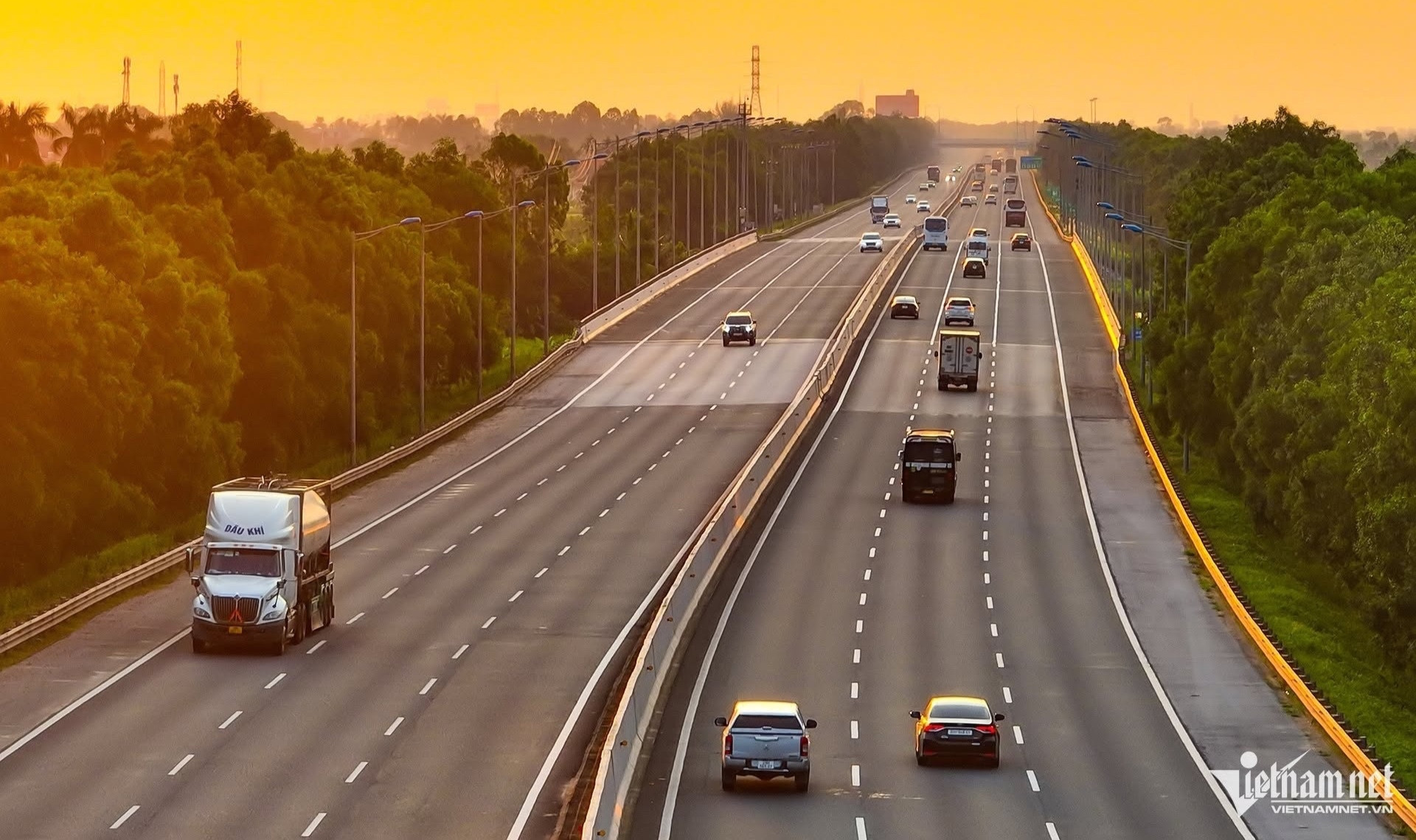
The reluctance of heavy-duty and container trucks appears to be a paradox given that the expressway was built with modern infrastructure capable of significantly cutting travel times.
According to H., a container transport business owner who regularly operates along the Hanoi-Hai Phong route, expressway tolls represent a primary factor influencing business decisions.
Trucks ranging from 10 tons to under 18 tons and 20-foot container trucks (Group 4) are charged VND675,000 for a full-length one-way trip; for trucks weighing 18 tons and above and 40-foot containers (Group 5), the toll reaches VND870,000 per trip.
For a round trip, the largest vehicle group spends VND1.74 million on tolls, whereas traveling via National Highway 5 costs VND1.42 million.
The toll gap between the two routes stands at roughly VND320,000 per round trip, a substantial figure for logistics firms.
Furthermore, H. noted that numerous cargo pickup and delivery points are located directly along National Highway 5, allowing vehicles to reach seaports, warehouses, and industrial parks directly. If taking the expressway, vehicles might need to detour through interchanges and travel on connecting roads, increasing mileage, transit time, and overall operating expenses.
Statistics from the Vietnam Infrastructure Development and Financial Investment Corporation (VIDIFI) show that in the third quarter of 2026, National Highway 5 recorded an average of 15,206 vehicle trips per day at Toll Plaza No. 1, with Group 4 and Group 5 vehicles accounting for 1,129 and 1,245 trips, respectively, making up 15.6 percent of total plaza throughput.
At Toll Plaza No. 2, daily traffic volume reached 15,062 trips, including 865 Group 4 vehicles and 8,269 Group 5 vehicles, representing approximately 60 percent of total throughput.
Meanwhile, Group 4 and 5 vehicles on the Hanoi-Hai Phong Expressway averaged only about 4,300 trips per day, accounting for just 6 percent of total traffic.
According to VIDIFI, this disparity is largely attributable to itinerary characteristics, road user costs, and connectivity to industrial zones, seaports, and warehouses along National Highway 5.
Nguyen Van Quyen, Chair of the Vietnam Auto Transport Association, said that over the long run, economic efficiency ultimately dictates route choices for transport businesses.
Therefore, the Hanoi-Hai Phong Expressway and National Highway 5 should be viewed through a complementary lens within the broader transport network: the expressway draws private passenger cars, easing the burden on National Highway 5, while the national highway retains its strategic advantage in direct connectivity to seaports, storage facilities, and industrial parks, satisfying the freight needs of heavy trucks.
National Highway 5 maintains advantages
A VIDIFI representative highlighted that route selection by transport firms along National Highway 5 stems not only from lower toll costs but also from travel pattern characteristics. Most heavy-duty trucks and container vehicles do not traverse the full length of the Hanoi-Hai Phong Expressway, operating primarily between industrial parks, yards, ports, and inland container depots (ICDs) situated along National Highway 5.
Key areas with high freight demand include Pho Noi – My Hao, Cam Giang, former Hai Duong City, Kim Thanh, An Duong, Hai An, and Dinh Vu. Major industrial clusters are concentrated here, such as Pho Noi A, Dai An, Lai Vu, Nomura, and An Duong.
For routes running from Dinh Vu ports and ICDs to industrial zones in Lai Vu, Kim Thanh, Cam Giang, or Pho Noi, National Highway 5 offers direct access benefits. If using the expressway, vehicles often must travel additional distance from ports or warehouses to reach an interchange before proceeding on connecting roads to reach delivery points.
For instance, vehicles heading to the former Hai Duong City area may need to travel an extra 10km from the NH38B interchange to access National Highway 5; vehicles bound for Pho Noi must likewise cover an additional 10km from the NH39 interchange.
Meanwhile, the terminal section of National Highway 5 passing through Le Thanh Tong - Chua Ve - Nguyen Binh Khiem - Dinh Vu sees heavy container traffic density due to transport demand between depots, container yards, and port terminals. This category of vehicles operates primarily within the intra-port zone and does not require full-length expressway travel.
Another factor highlighted by the VIDIFI representative is weight limit enforcement. On the Hanoi-Hai Phong Expressway, the operator conducts weigh-in checks at 100 percent of entrance gates and denies access to oversized or overloaded vehicles. Conversely, National Highway 5 currently does not implement weigh checks in this manner.
Vu Diep

