 Vietnamnet.vn

 Podcast



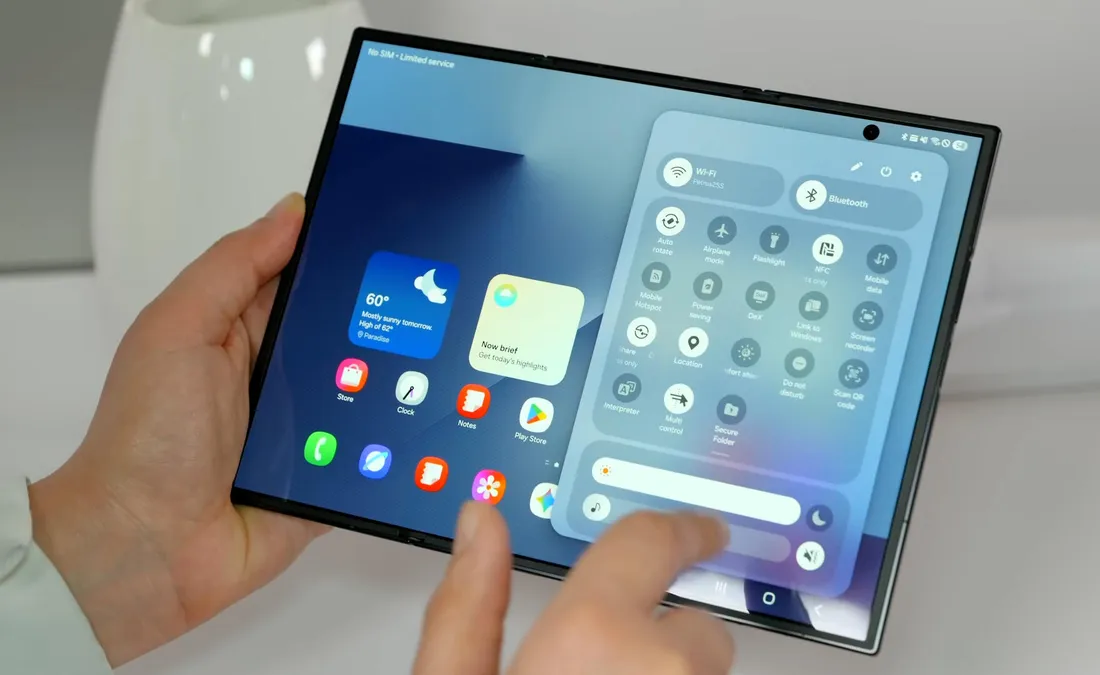
However, positive user feedback appears to have prompted a strategic rethink. A successor, the Galaxy Z TriFold 2, is now gradually coming into view, bringing a series of notable upgrades - particularly in design and real-world usability.
According to leaks from South Korea, Samsung is currently developing a crucial component for the device: an entirely new hinge system. This is seen as the key to addressing the biggest drawback of the first generation.
A new hinge as the foundation for a slimmer design
The original Galaxy Z TriFold was widely regarded as an engineering feat thanks to its unique triple-fold mechanism. However, the use of two hinges made the device noticeably thick when folded, reducing its practicality.
To overcome this limitation, Samsung is reportedly working on a redesigned hinge system that not only reduces thickness but could also be applied to other foldable devices in the future. If successful, this would mark a significant step forward in foldable design, which has long struggled to balance durability with slimness.
Despite its sleek appearance when unfolded, the first-generation device measured up to 12.9mm in thickness when folded - significantly more than the Galaxy Z Fold 7 at 8.9mm and the Galaxy S26 Ultra at 7.9mm. Its weight of 309g also made it considerably heavier than conventional flagship smartphones.
With the second generation, Samsung is said to have a clear goal: create a device that is both thinner and lighter. The new hinge system is expected to play a central role in reducing overall bulk, making the TriFold 2 more practical for everyday use.
That said, some reports suggest the device may still be thicker than the current Z Fold lineup. It could even be wider than its predecessor, indicating that Samsung continues to prioritize a larger display area over a more compact form factor.
Challenges: durability and software
The first-generation Galaxy Z TriFold was produced in very limited quantities, estimated at just 100,000 to 200,000 units. As a result, its frequent sell-outs did not necessarily reflect large-scale commercial success.
Still, with a price tag of up to US$2,900 and repeated instances of selling out within minutes, the device’s appeal is undeniable. This suggests that there remains strong demand for breakthrough form factors.
Despite its innovative design, the TriFold faces significant challenges. Durability remains a key concern, as the complex structure with multiple folding points increases the risk of mechanical failure. At least three cases of device malfunction have already been reported.
Software is another major hurdle. While the hardware pushes boundaries, developers have yet to identify truly compelling use cases that fully leverage the tri-fold design.
This gap has made it difficult for the device to convince premium users, who expect clearly superior experiences.
To achieve broader success, Samsung will need not only to refine the hardware but also to optimize its software ecosystem, creating meaningful experiences that take full advantage of the tri-fold display.
According to current plans, the Galaxy Z TriFold 2 could launch in mid-2027. Although still some time away, early leaks suggest Samsung is seriously re-entering the tri-fold smartphone space - a segment full of potential, but also considerable risk.
If the company can effectively address design, durability and software challenges, the Galaxy Z TriFold 2 could mark a turning point, not only for Samsung but for the entire smartphone industry in the post-flat-screen era.
Hai Phong
.svg)
